Kenmore 600 Series Washing Machine Instruction Manual

Kenmore 600 Series Washing Machine

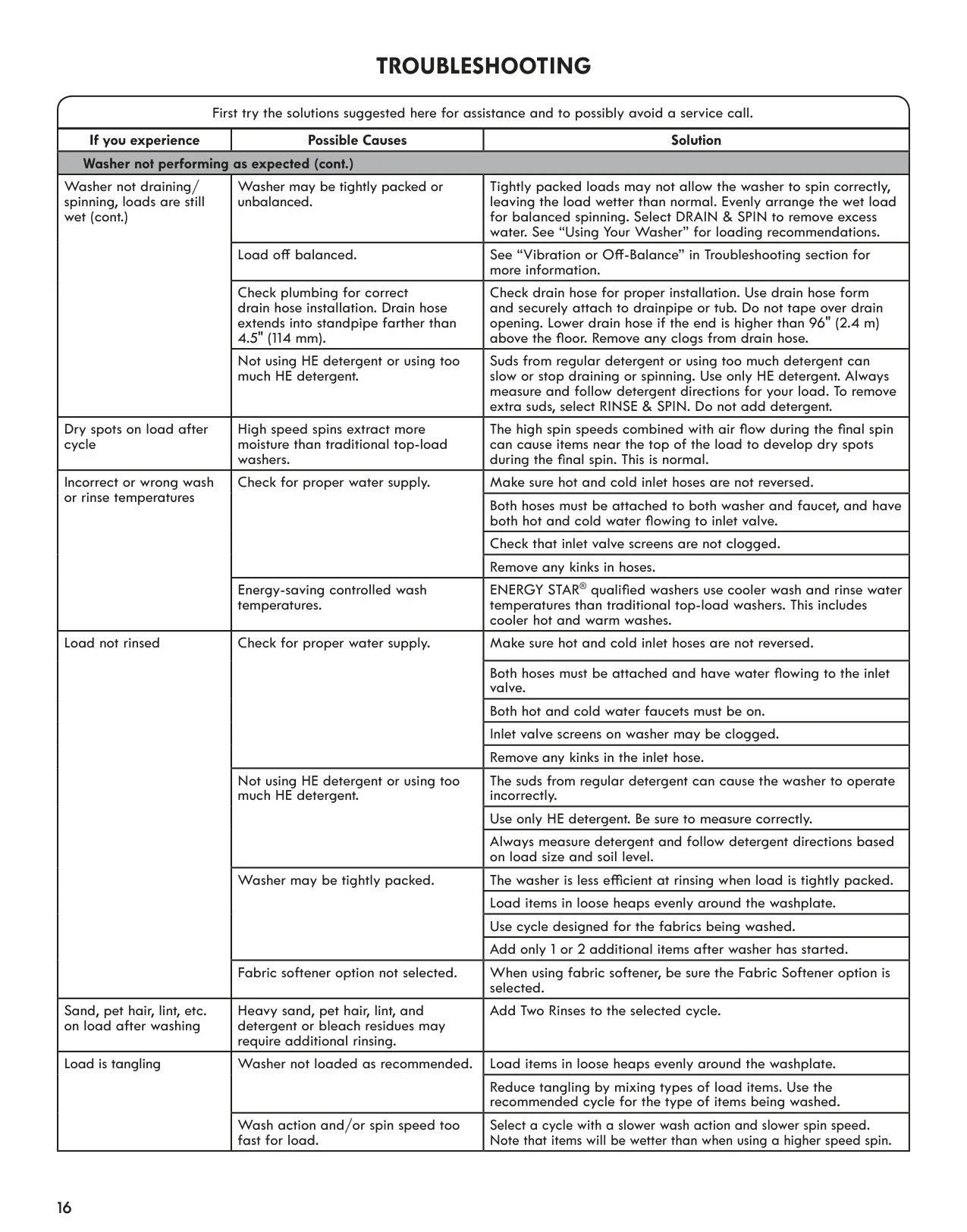
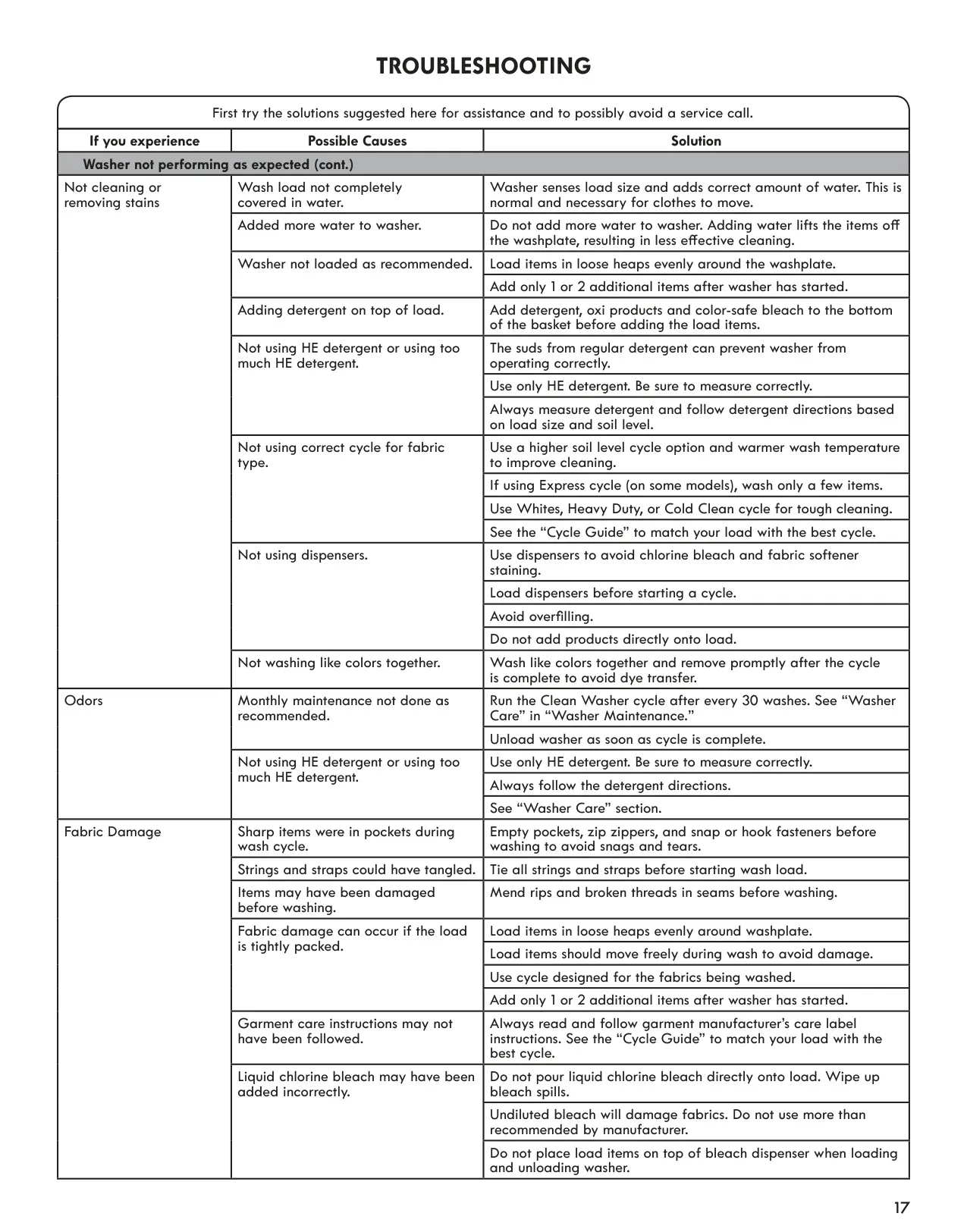
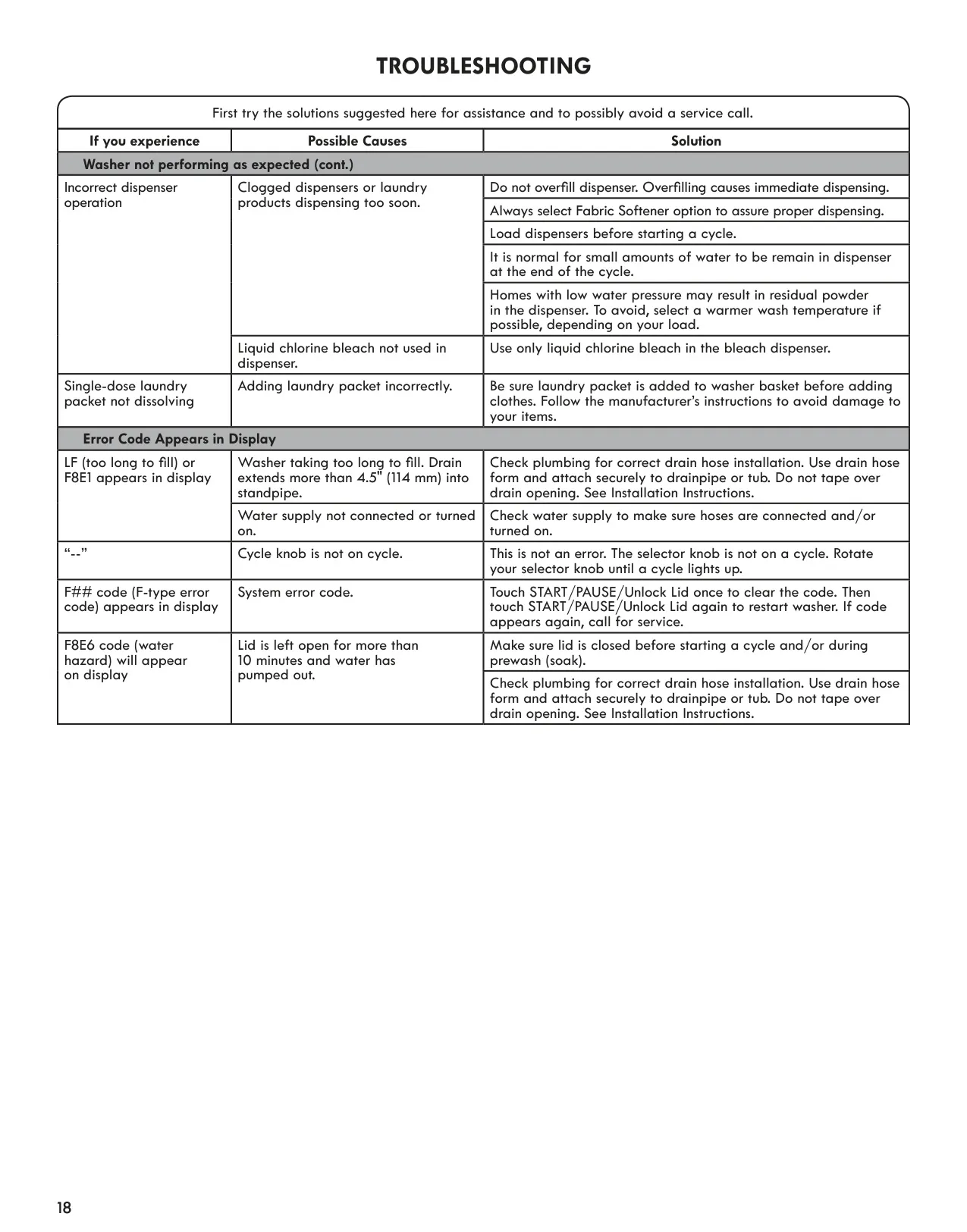
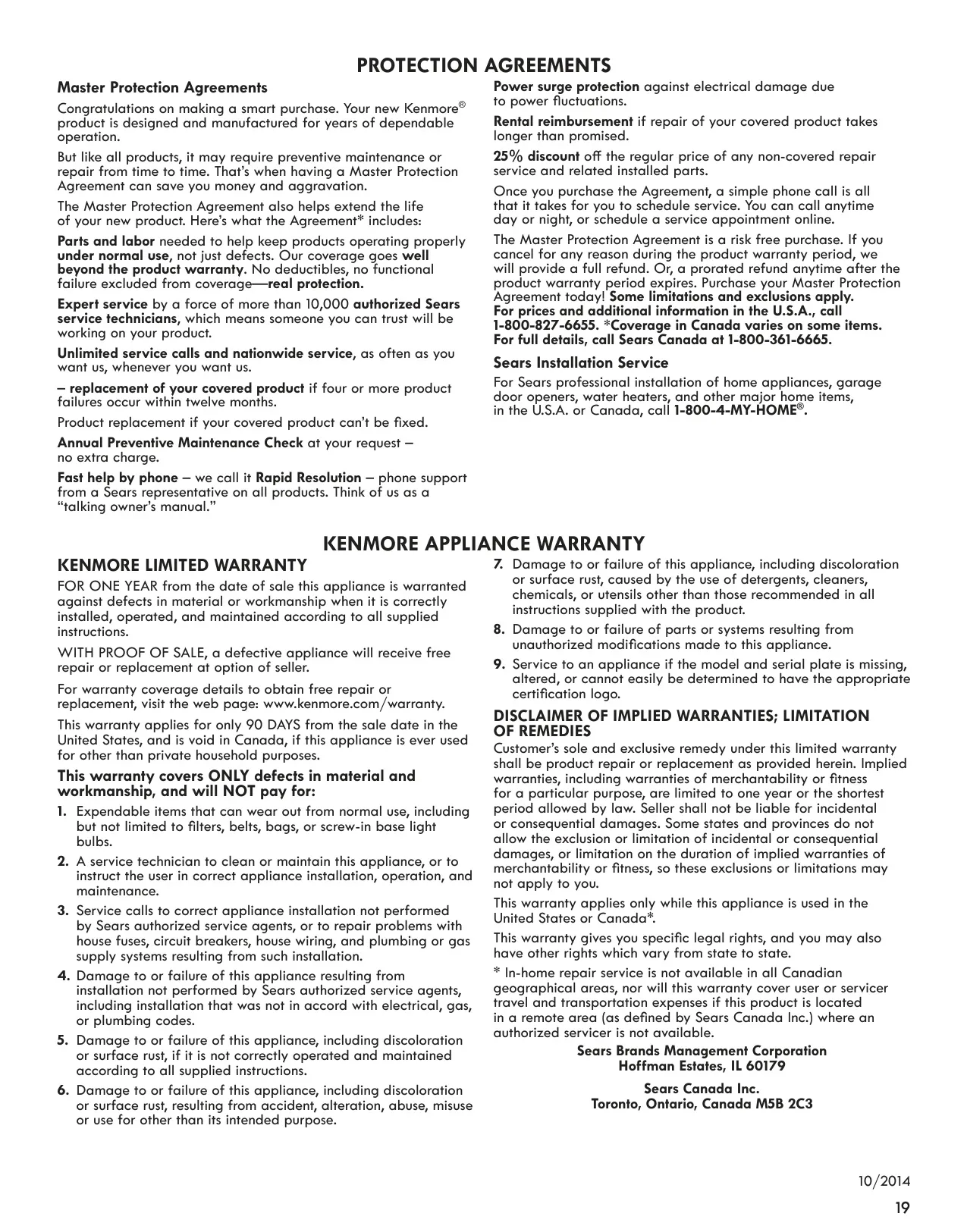


Kenmore 600 Series Washer Instructions
Here we offer the Kenmore 600 Series Washing Machine manual completely free and in English. We have cataloged this manual in the Washing Machines section on Manualverse, and it has been rated by 1 users with an average rating of 5. If you have any specific questions about Kenmore 600 Series Washing Machine, we suggest checking the Frequently Asked Questions (FAQs) section of this manual.
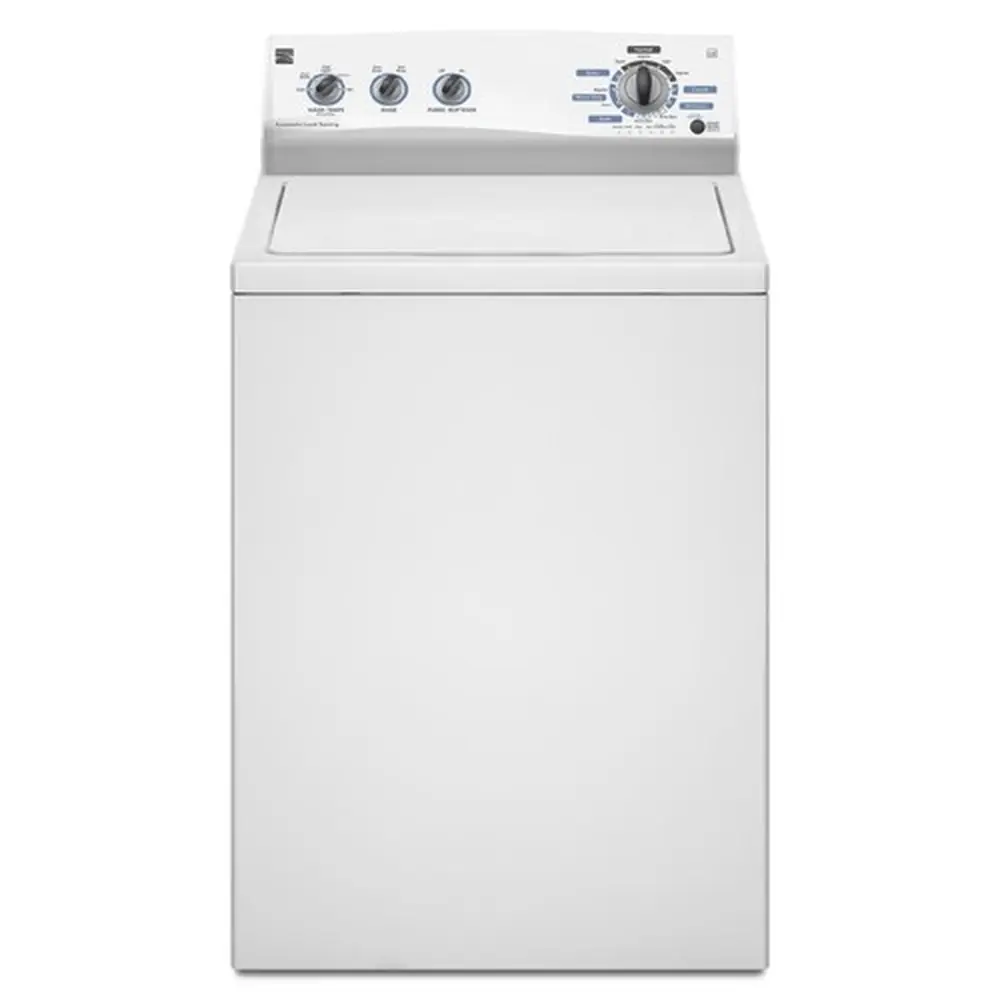
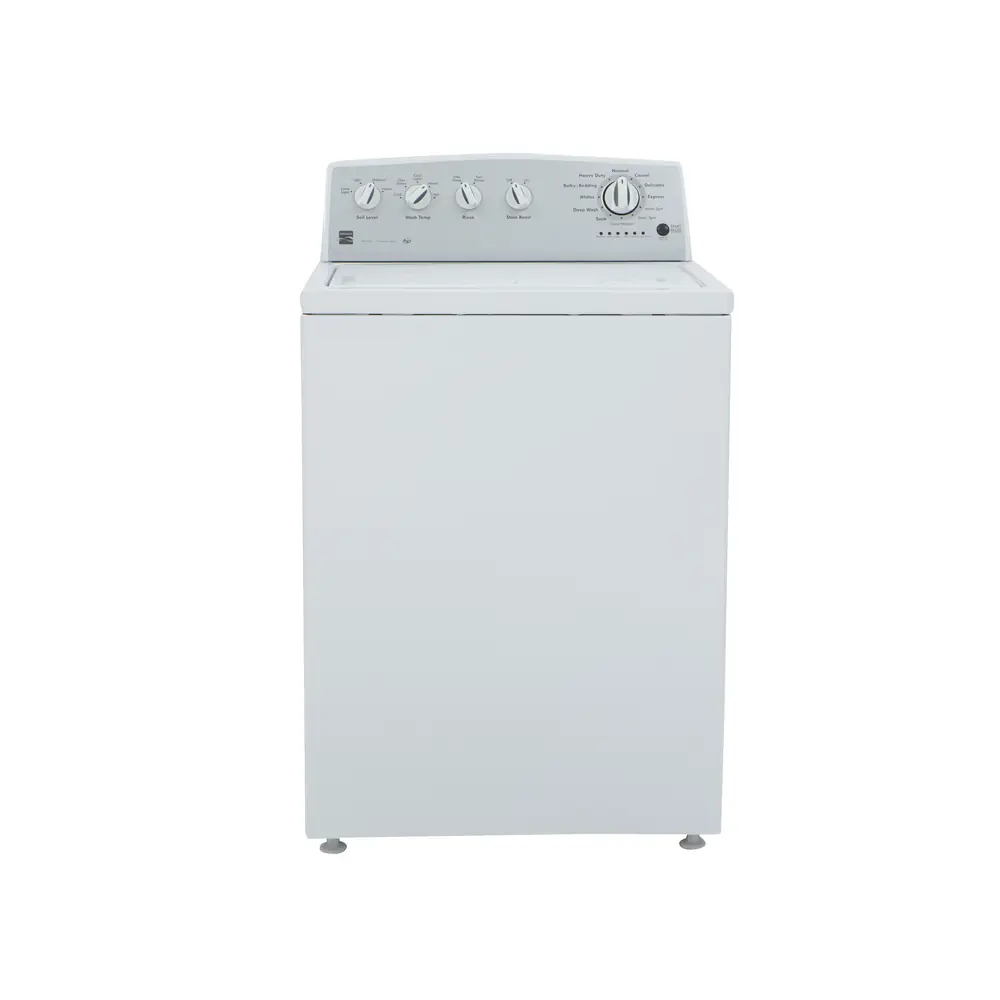
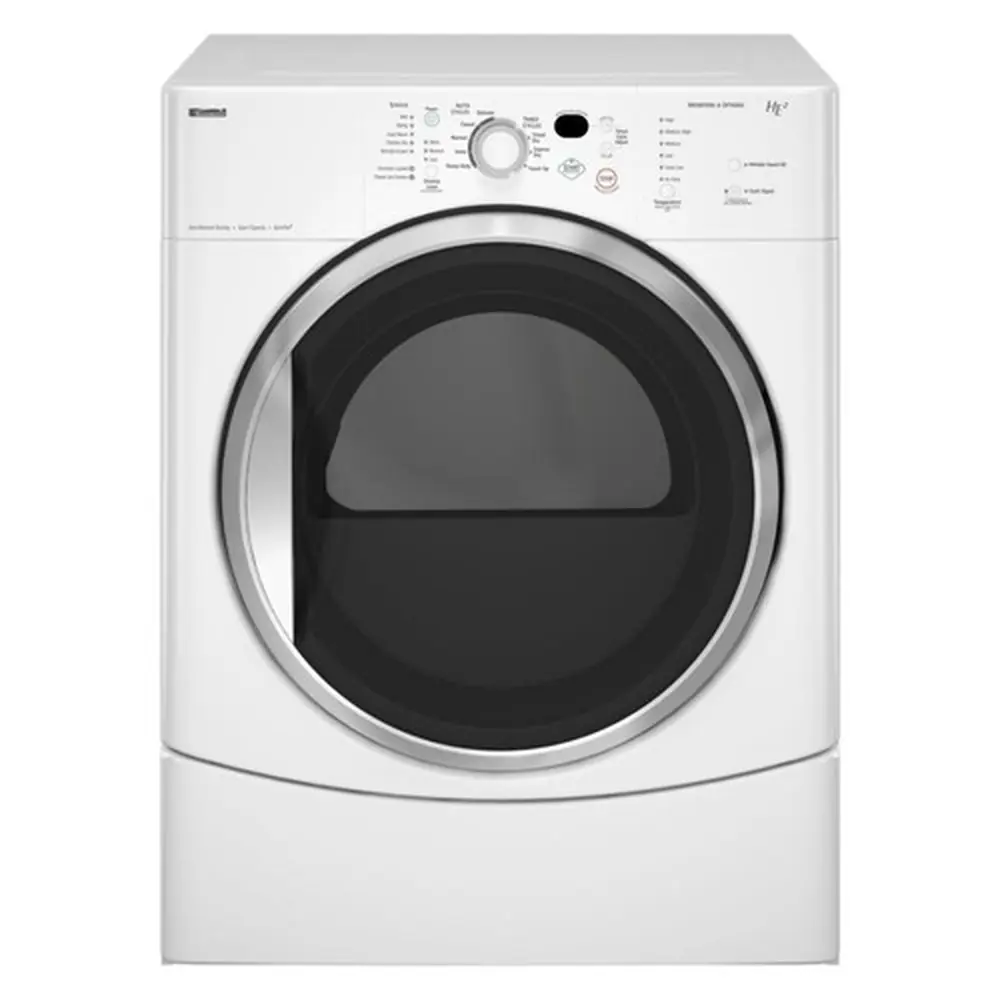
Product Images
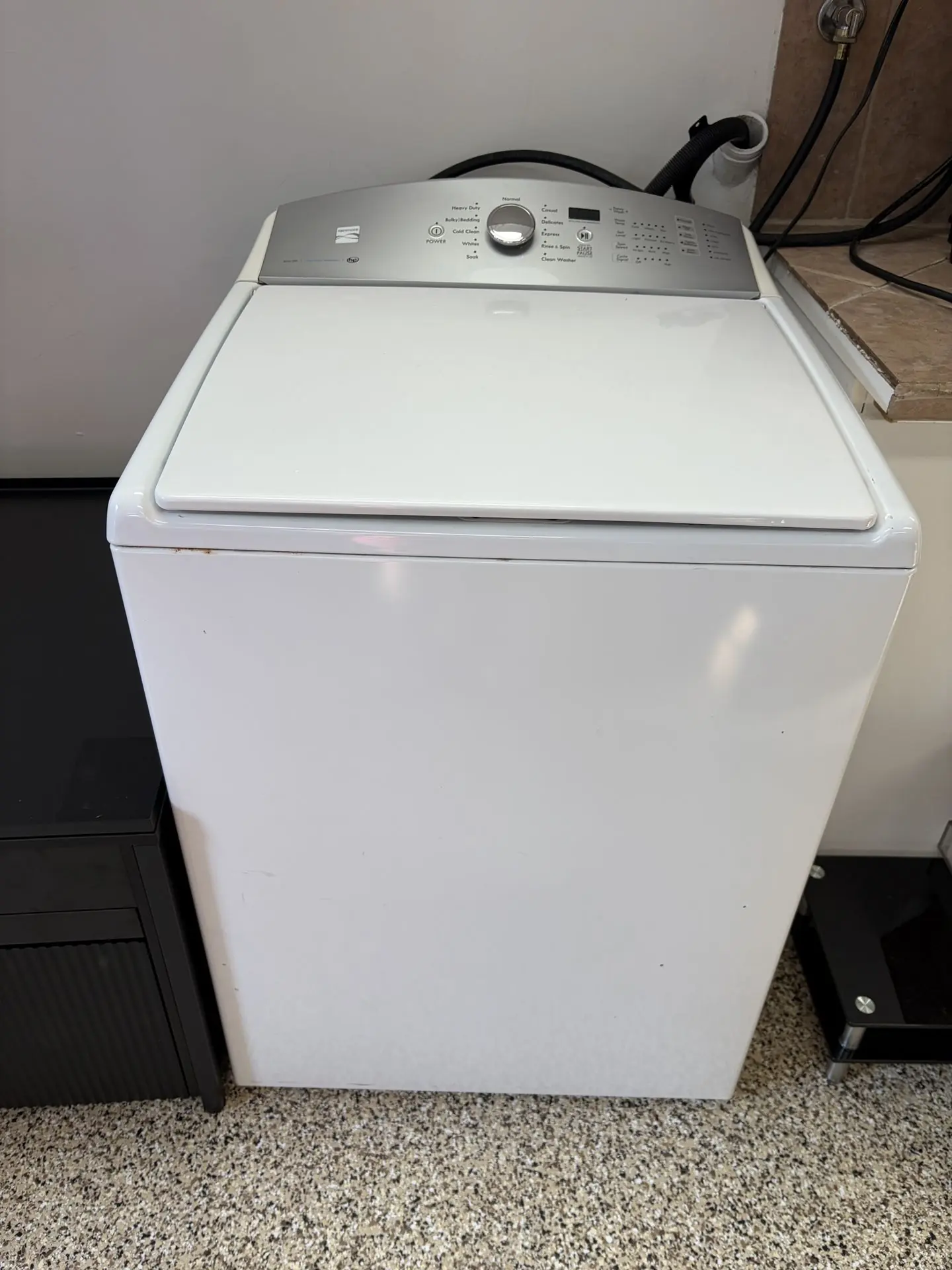
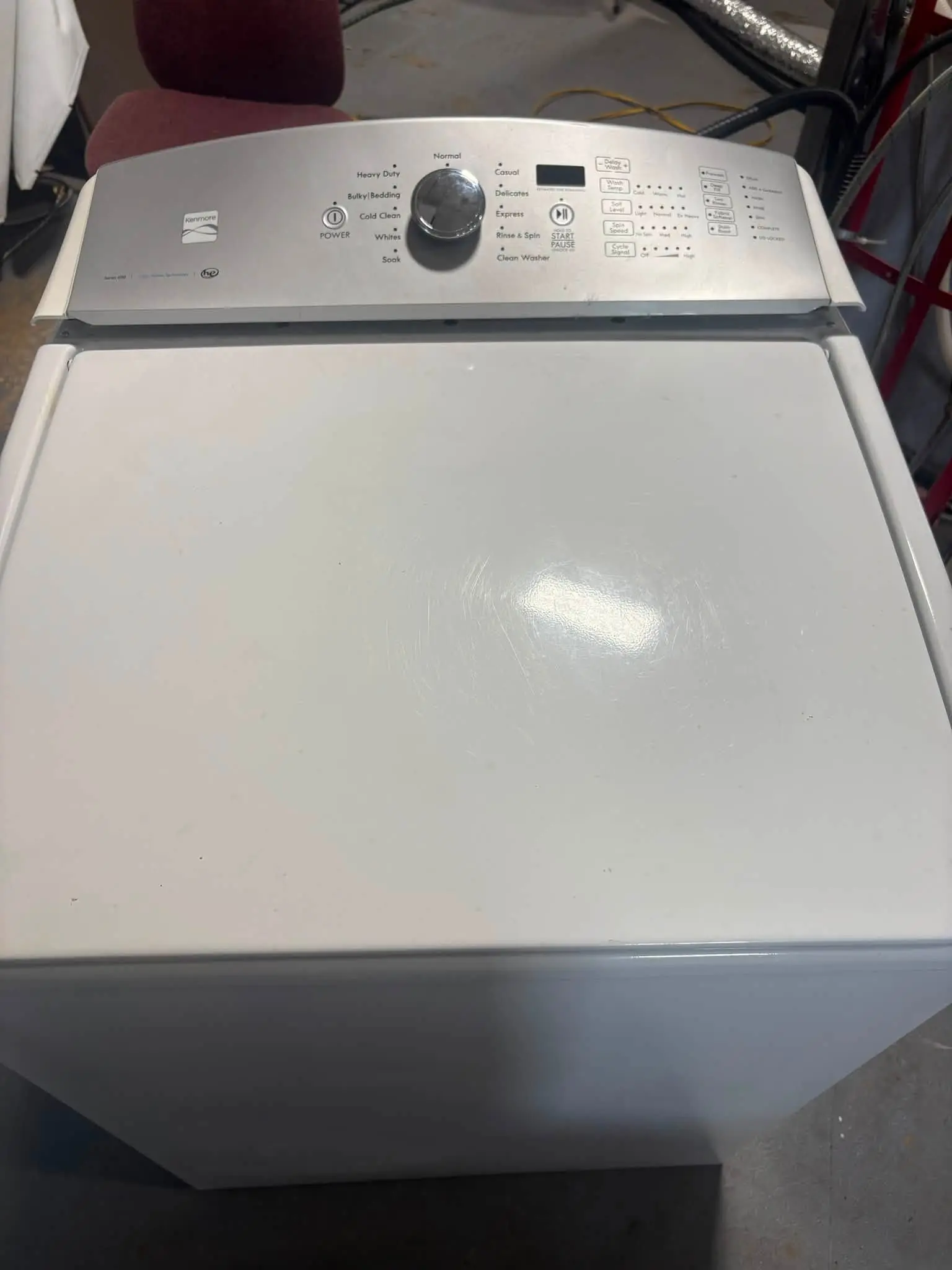
Kenmore 600 Series Washing Machine Specifications
| Feature | Specification |
|---|---|
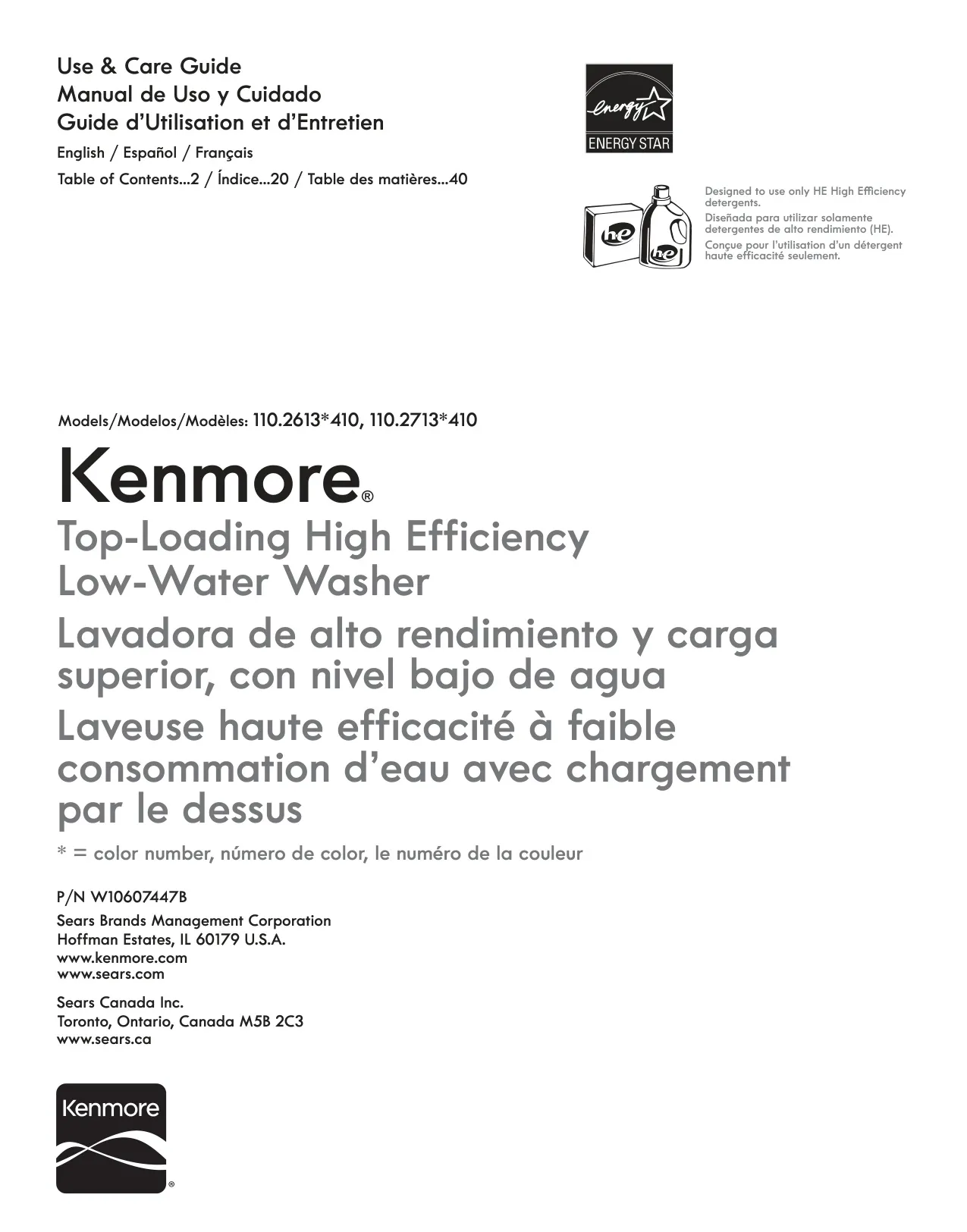
| Models | 110.2613*410, 110.2713*410 (* = color number) |
| Washer Type | Top-Loading, High Efficiency (HE), Low-Water Washer |
| Detergent Compatibility | Exclusively HE High Efficiency detergents |
| Liquid Bleach Dispenser Capacity | Up to 3/4 cup (180 mL) |
| HE Detergent Tray Capacity | 3 oz (89 mL) for liquid (removable tray for powder) |
| Minimum Cleaning Frequency | Clean Washer cycle every 30 washes or once per month |
| Inlet Hose Replacement Interval | Every 5 years (hoses not included with washer) |
| Warranty (Private Household Use) | 1-Year Limited Warranty (parts and workmanship) |
| Warranty (Non-Private Household Use) | 90-Day Limited Warranty (U.S.A. only, void in Canada) |
| Manufacturer (U.S.A.) | Sears Brands Management Corporation |
| Manufacturer (Canada) | Sears Canada Inc. |
| Part Number | W10607447B |
Kenmore 600 Series Washer Details
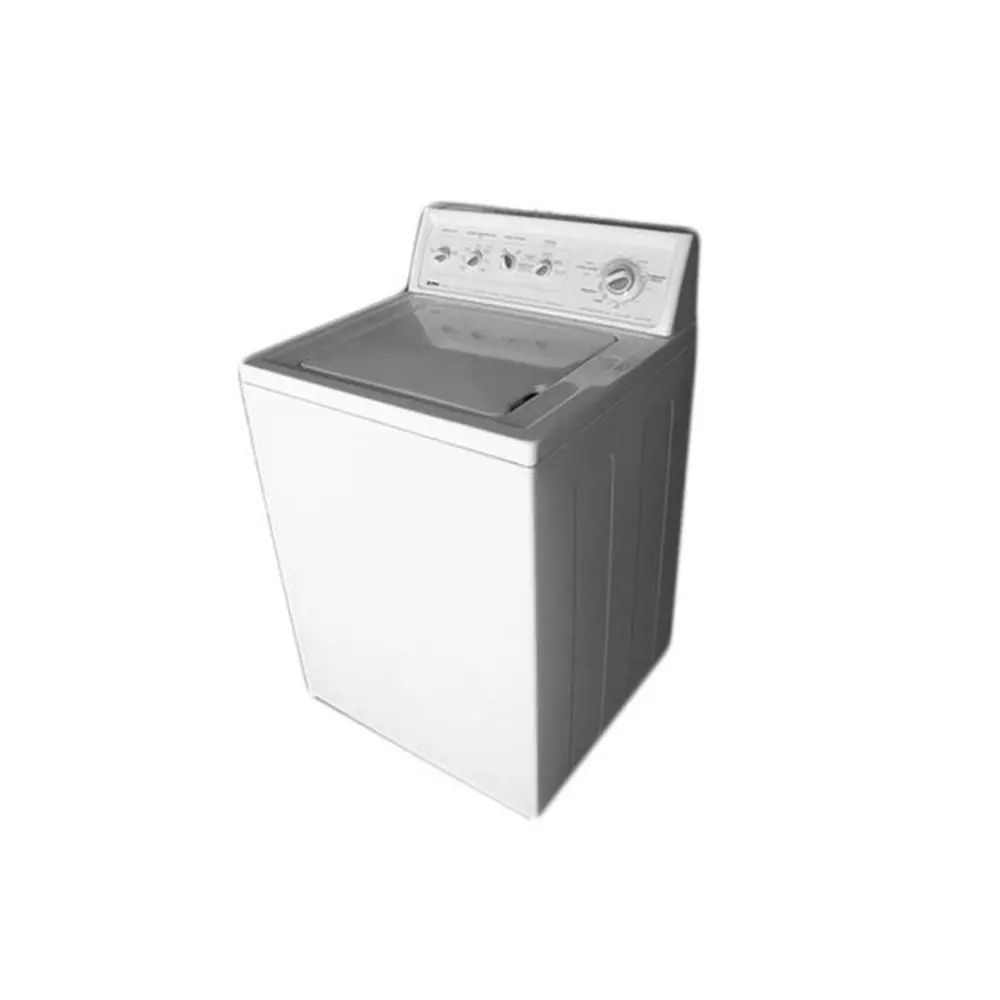
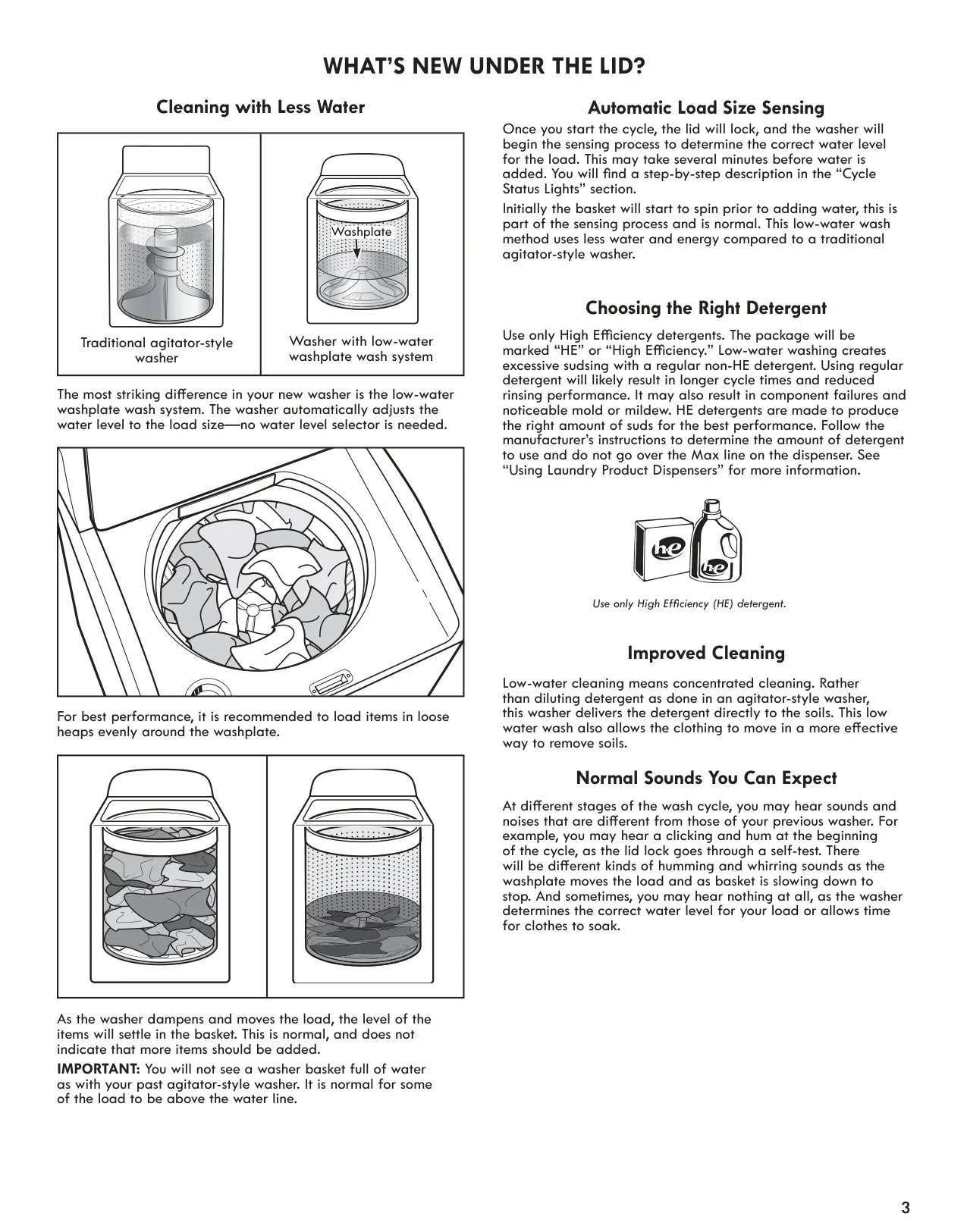
The Kenmore 600 Series Washing Machine introduces a sophisticated low-water washplate system that automatically adjusts water levels to match the load size, eliminating the need for a manual water level selector. This design, which replaces a traditional agitator, optimizes cleaning by allowing items to be loaded in loose heaps evenly around the washplate, ensuring thorough saturation and movement.
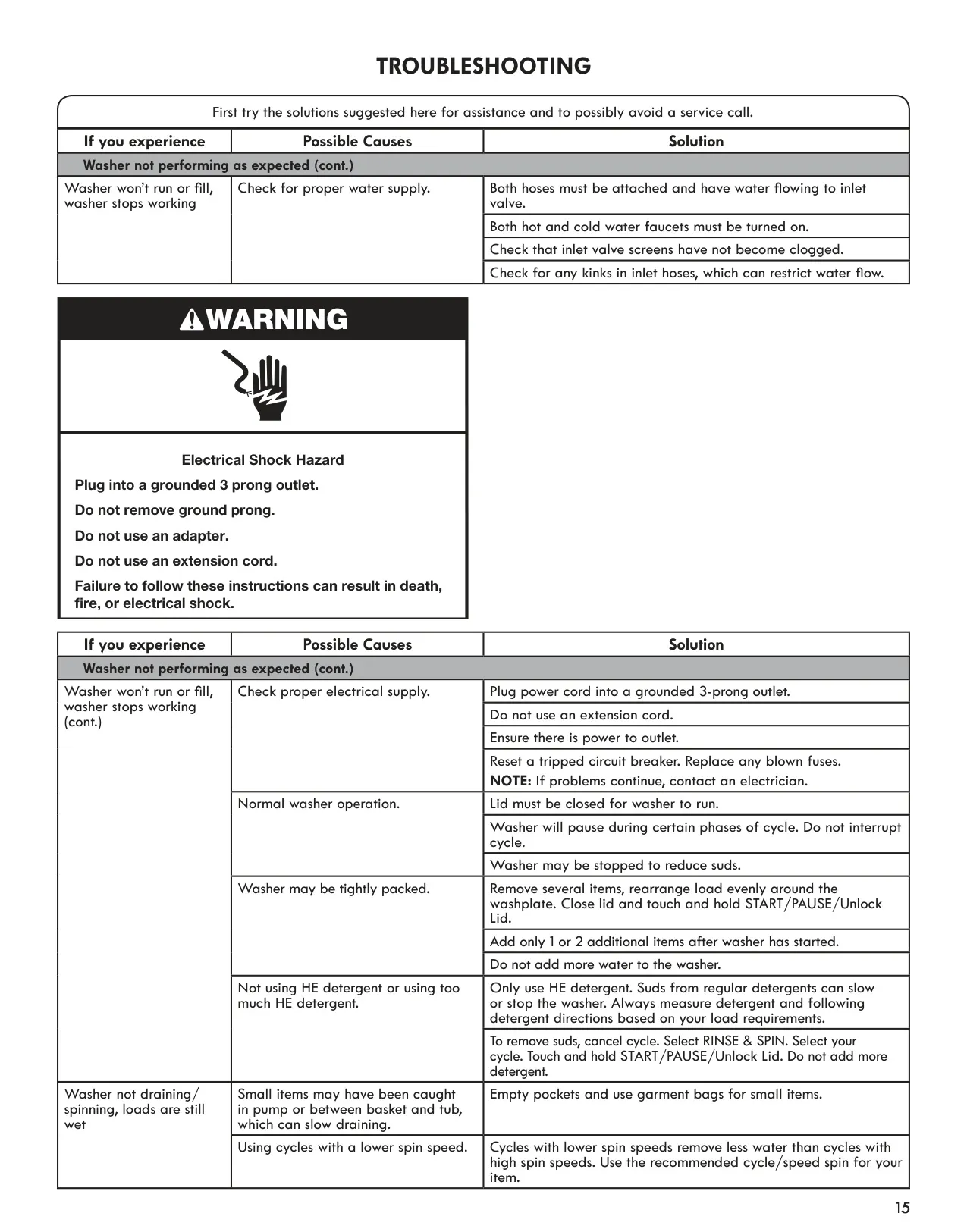
A critical aspect of this washing machine's operation is its strict requirement for High Efficiency (HE) detergents. Using regular, non-HE detergents will lead to excessive sudsing, potentially resulting in prolonged cycle times, diminished rinsing performance, and even component failures or the development of mold and mildew. HE detergents are formulated to produce the precise amount of suds necessary for optimal performance in a low-water environment.
The low-water cleaning method facilitates a highly concentrated cleaning action. Instead of diluting the detergent in a large volume of water, as with agitator-style washers, this system delivers detergent directly to the soils. This concentrated approach, combined with the effective movement of clothing within the reduced water volume, enhances soil removal and overall cleaning efficacy.
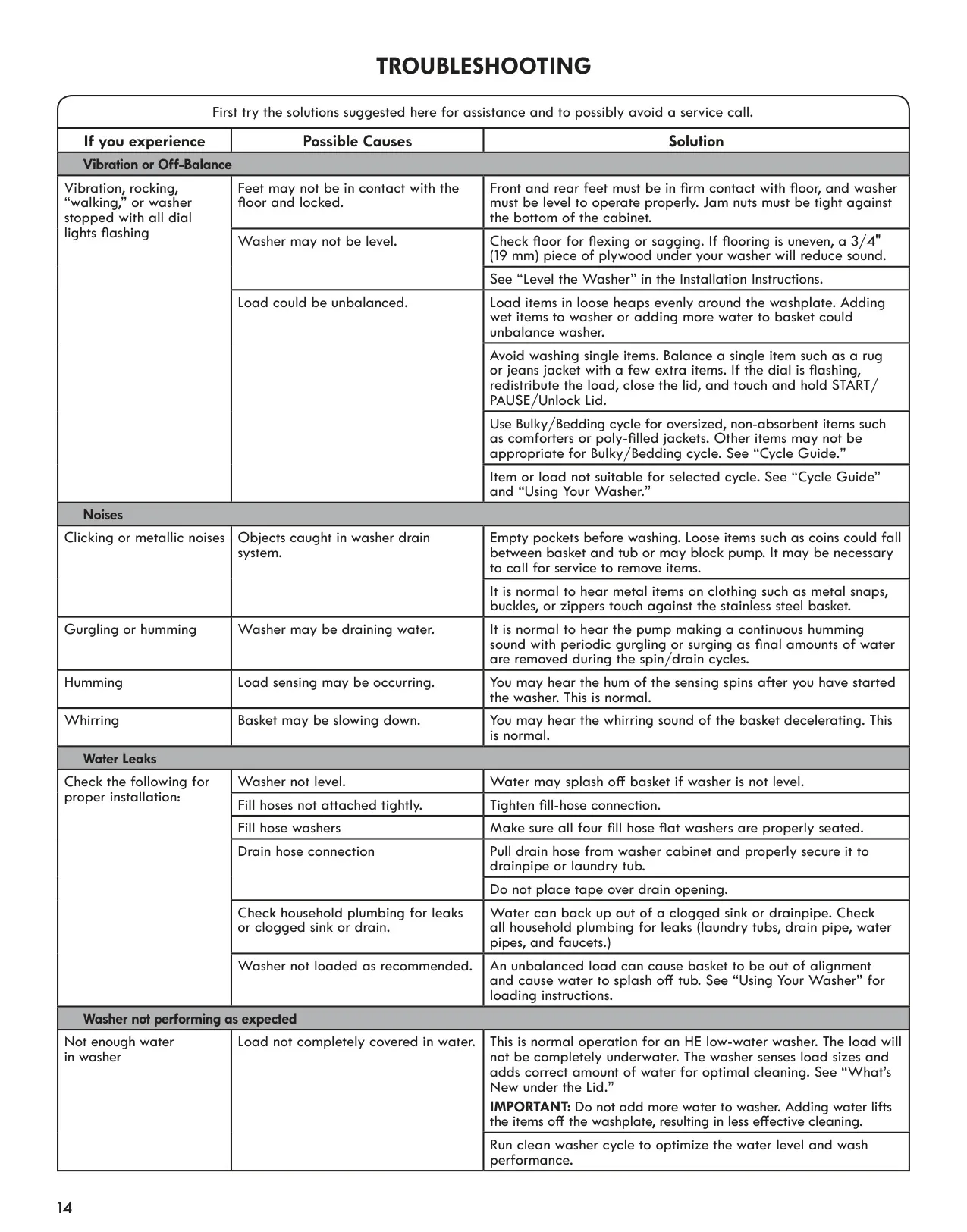
Users should anticipate a variety of normal operational sounds different from older washers. These can include clicking and humming during lid lock self-tests, various humming and whirring sounds as the washplate moves the load or the basket decelerates, and even periods of silence during load sensing or soaking. It is also normal for some of the laundry load to remain above the water line, as the washer efficiently uses minimal water.
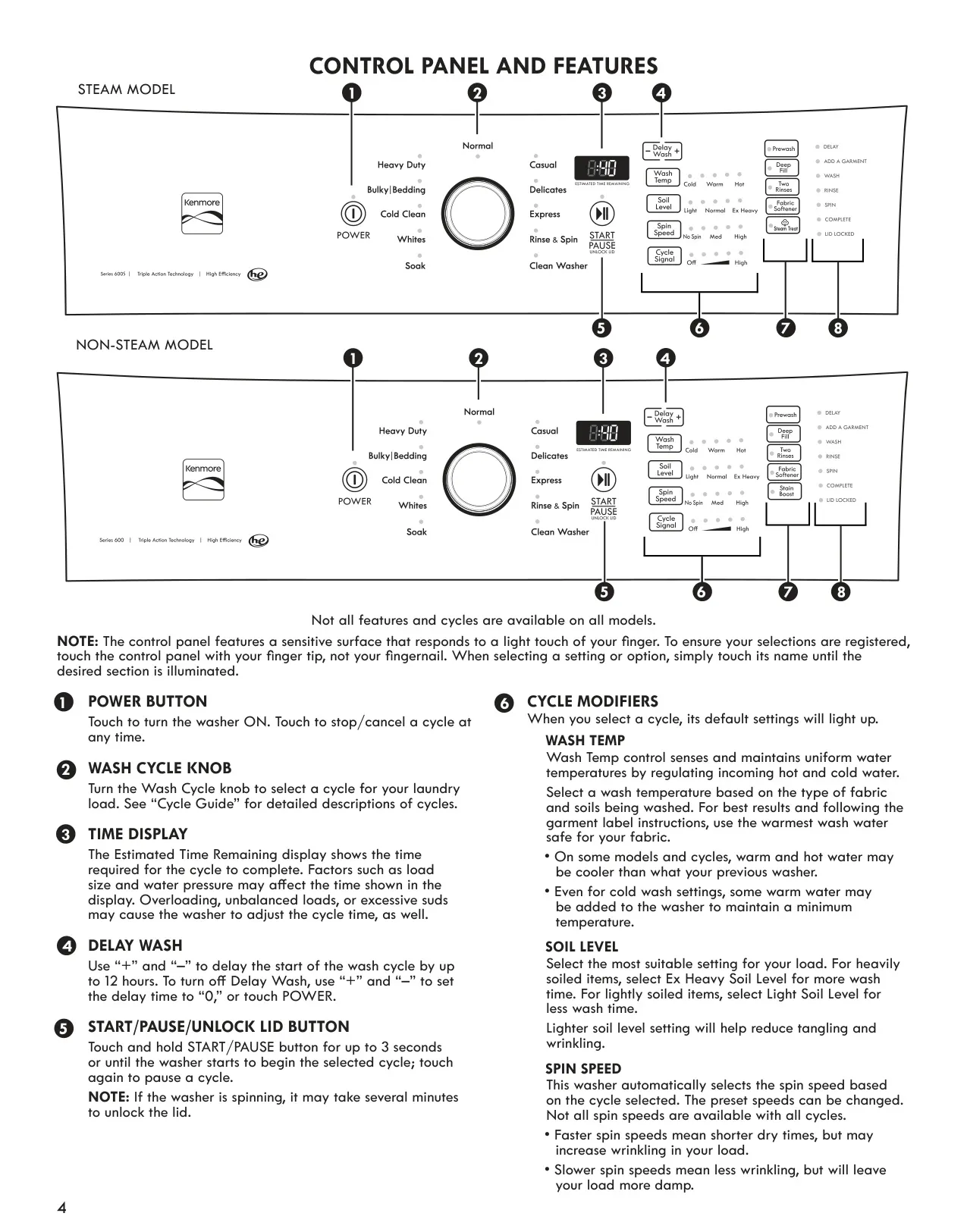
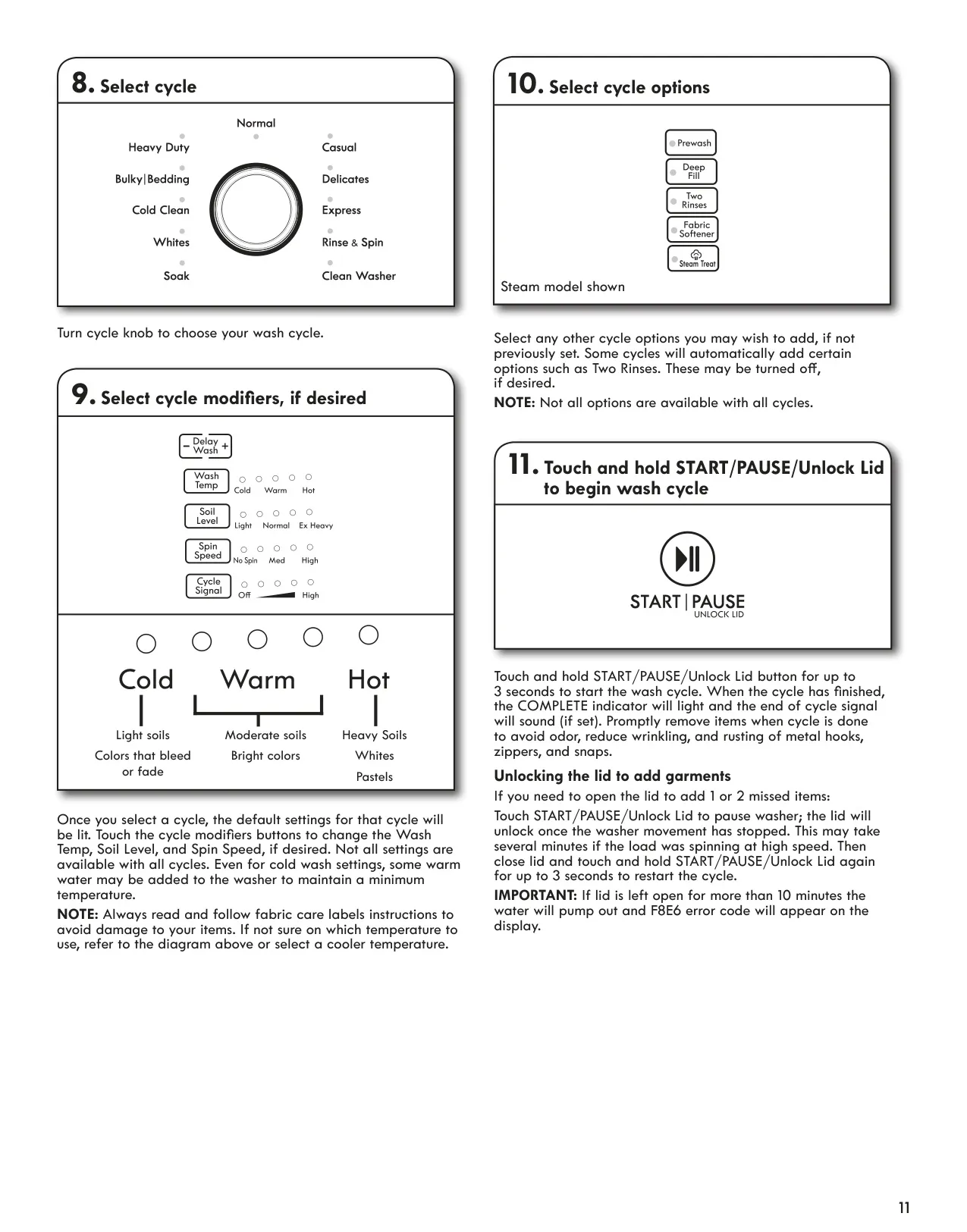
The intuitive control panel features a sensitive surface designed for a light touch. Key controls include the POWER button for turning the washer on/off or canceling a cycle, the WASH CYCLE knob for selecting specific wash programs, and a TIME DISPLAY that shows the estimated cycle duration, which can be influenced by load size, water pressure, and load balance. A DELAY WASH function allows users to postpone the cycle start for up to 12 hours.
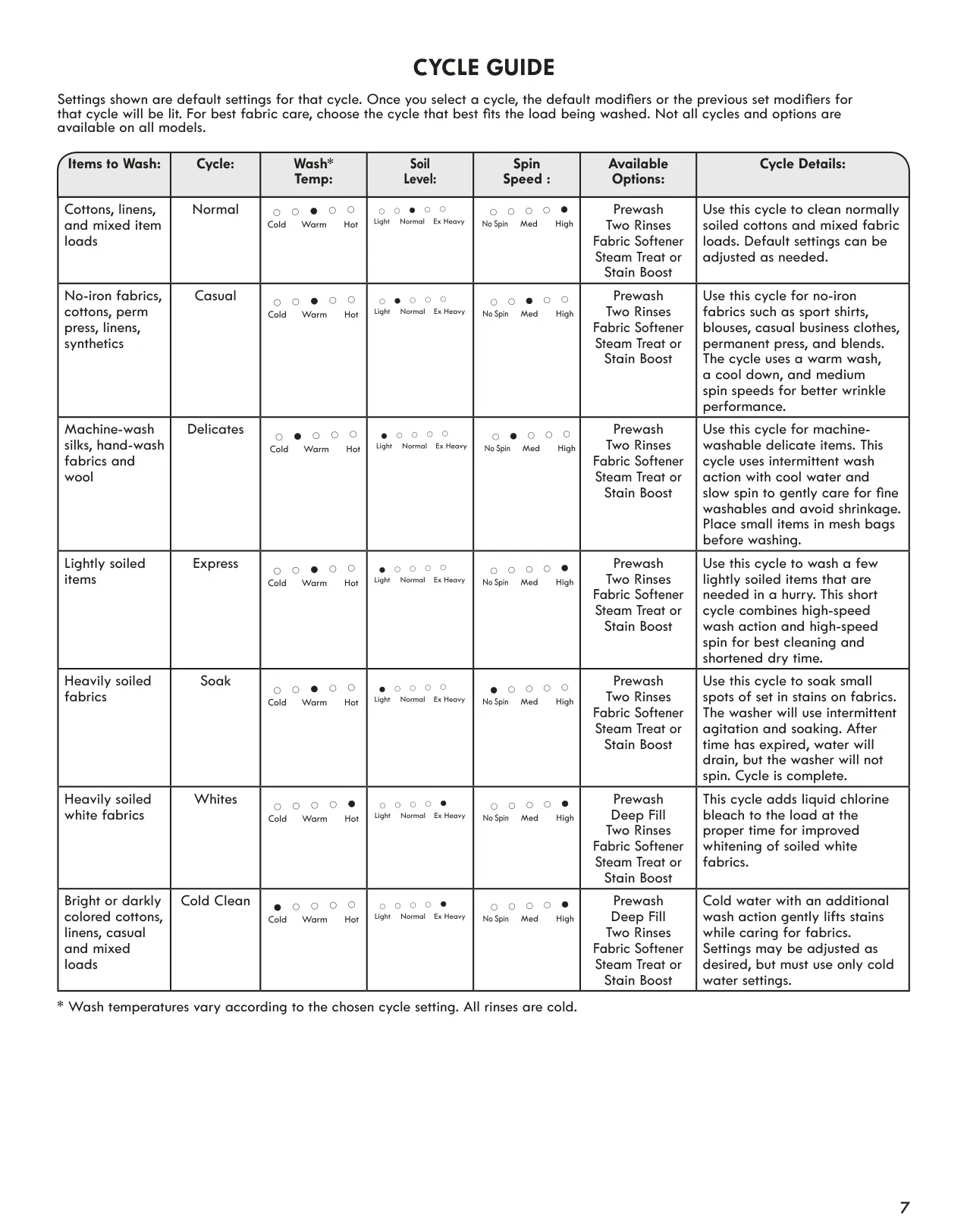
Cycle modifiers offer precise control over wash parameters. Wash Temp settings regulate incoming hot and cold water, though warm and hot temperatures may be cooler than those in older washers, and even cold washes may add some warm water to maintain a minimum temperature. The Soil Level option adjusts wash time, with lighter settings helping to reduce tangling and wrinkling. Spin Speed is automatically selected but can be manually changed; faster spins reduce drying time but may increase wrinkles, while slower spins have the opposite effect.
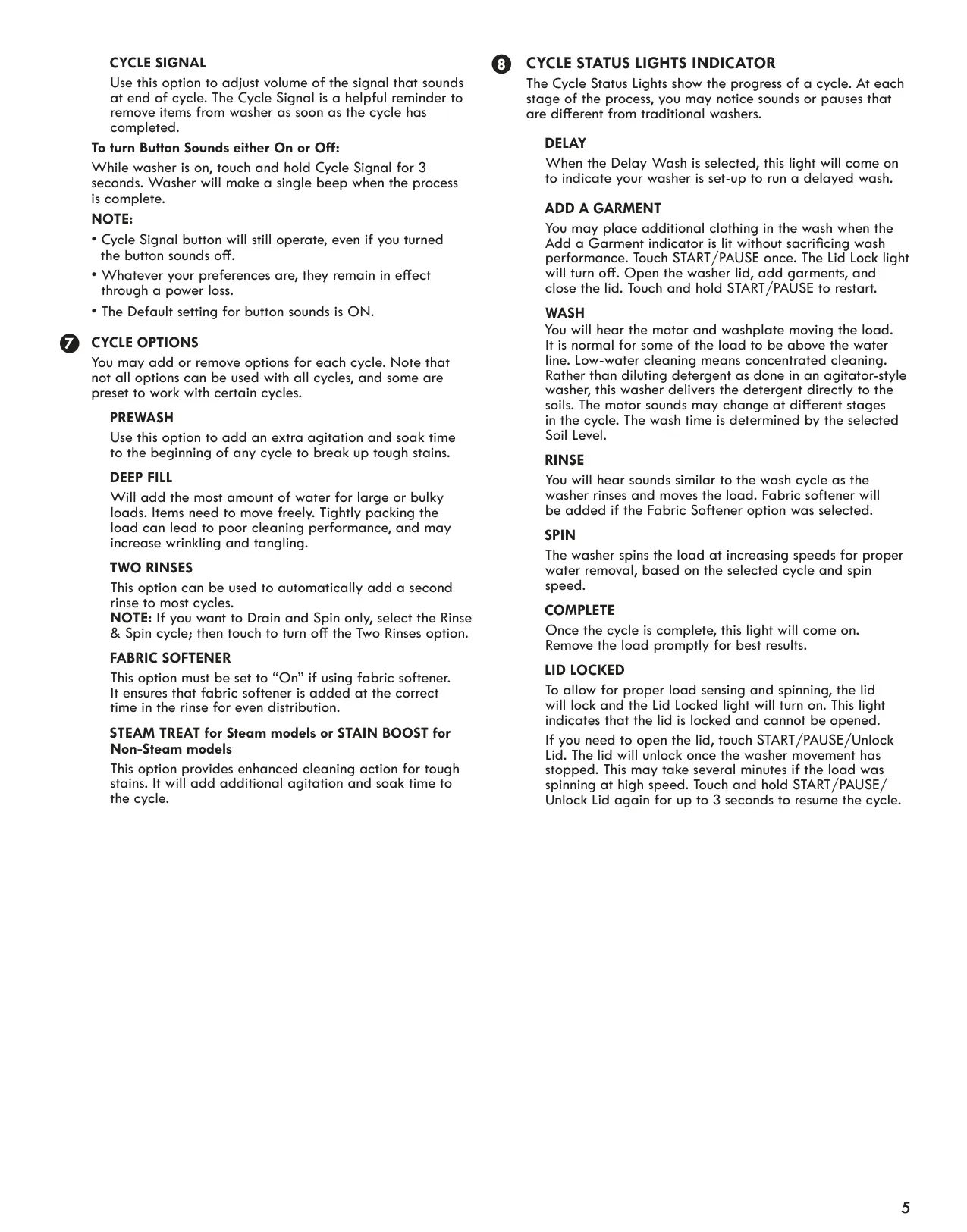
Additional options enhance the washing process. The Cycle Signal volume can be adjusted, and button sounds can be toggled on or off. Optional features include PREWASH for tough stains, DEEP FILL for larger loads requiring more water, and TWO RINSES for thorough rinsing. The FABRIC SOFTENER option ensures proper dispensing timing, while STEAM TREAT (for steam models) or STAIN BOOST (for non-steam models) provides enhanced cleaning for stubborn stains.
Cycle Status Lights provide real-time progress updates, indicating DELAY, ADD A GARMENT (allowing items to be added mid-cycle after pausing), WASH, RINSE, SPIN, and COMPLETE. The LID LOCKED light indicates when the lid is secured for safety and proper operation, unlocking once washer movement ceases, which may take a few minutes if the drum was spinning at high speed.
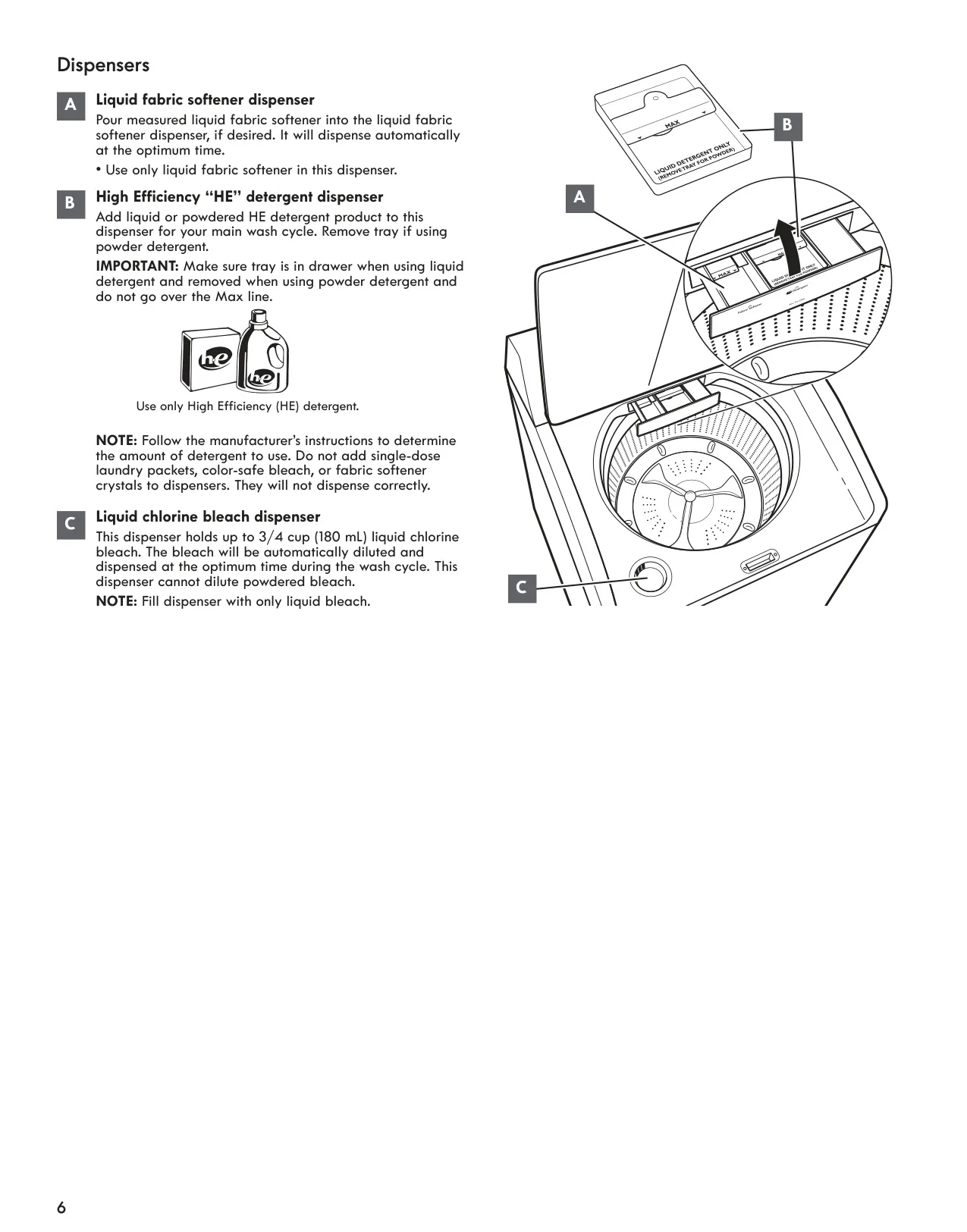
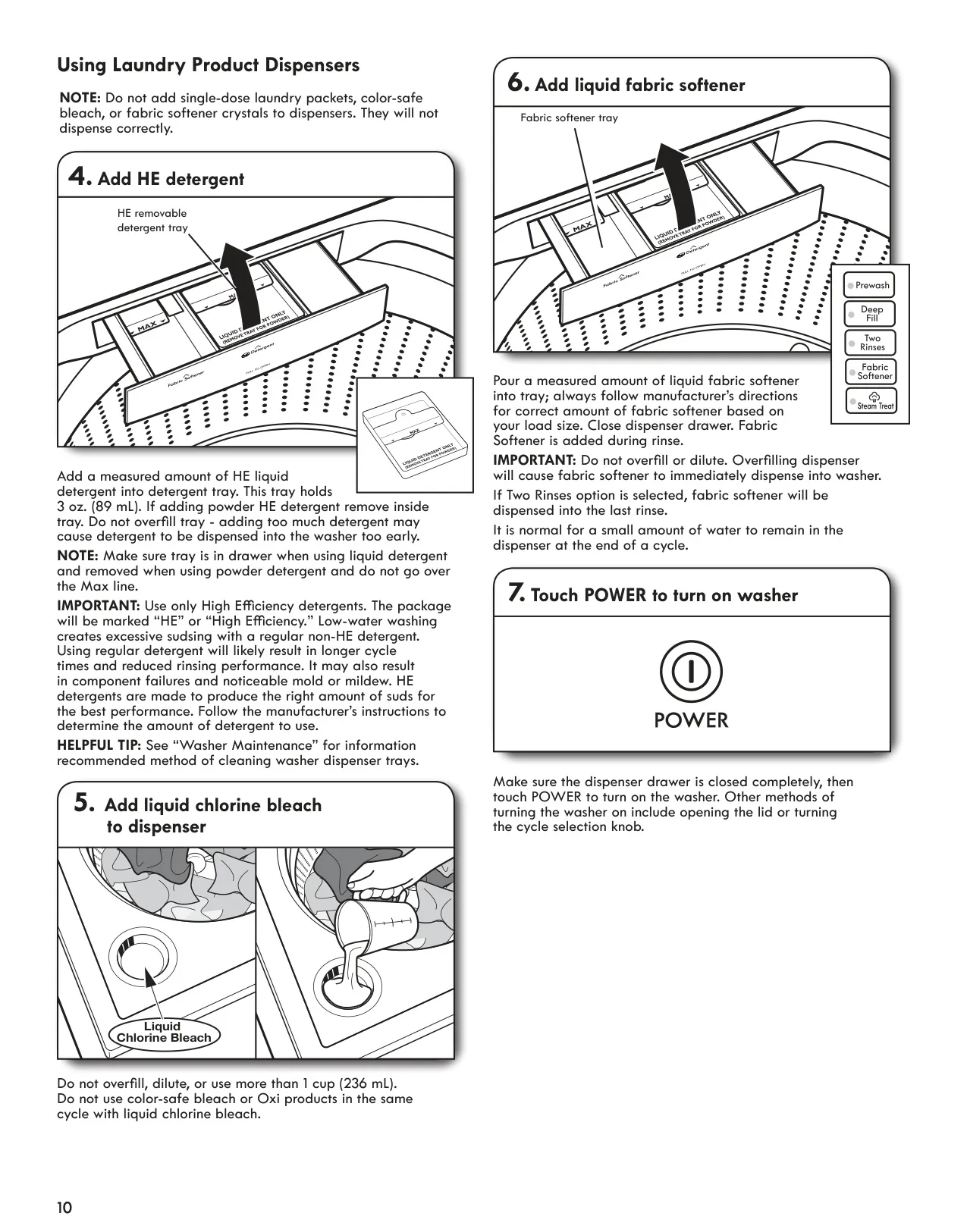
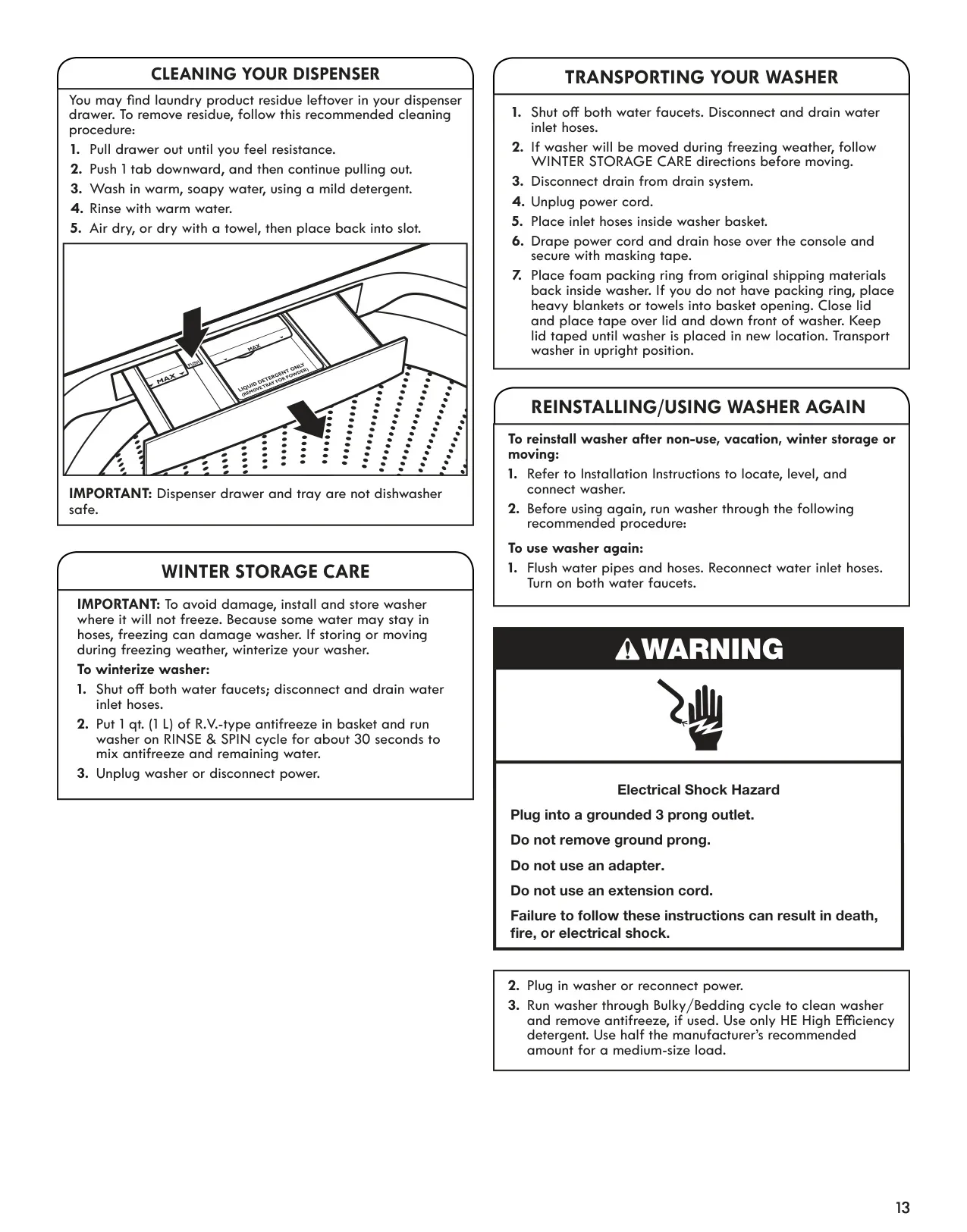
The washer features dedicated dispensers for optimal product delivery. A liquid fabric softener dispenser precisely releases softener at the correct time. The HE detergent dispenser accommodates both liquid and powdered HE detergents, with a removable tray for powder. Additionally, a liquid chlorine bleach dispenser, with a capacity of up to 3/4 cup (180 mL), automatically dilutes and dispenses bleach at the optimal moment during the wash cycle.
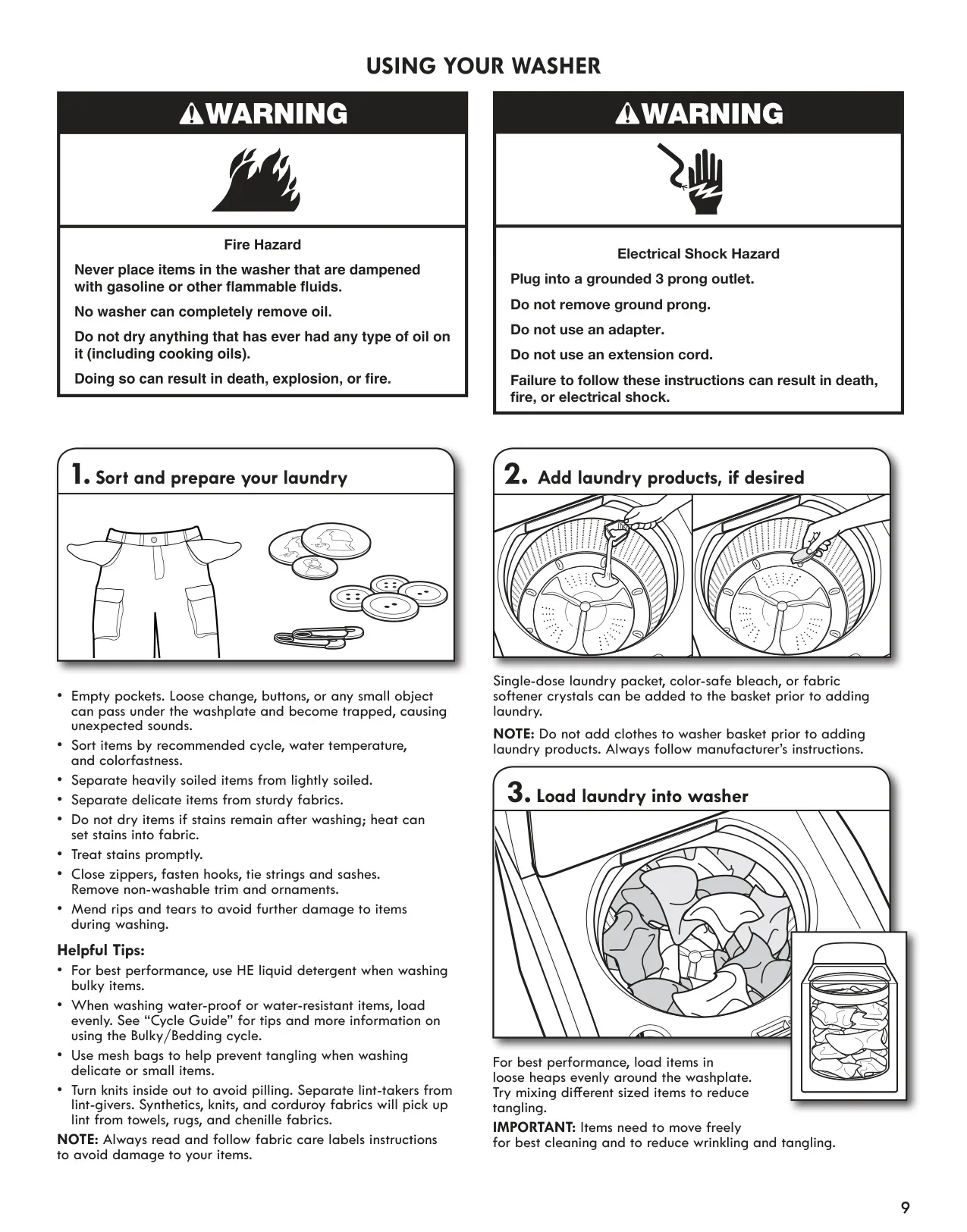
For optimal performance, proper laundry preparation and loading are crucial. Users should empty pockets, sort items by fabric type and colorfastness, and mend any rips or tears. Loading items in loose, even heaps around the washplate ensures free movement, which is essential for effective cleaning and minimizing tangling and wrinkling. Using mesh bags for delicate or small items is also recommended.
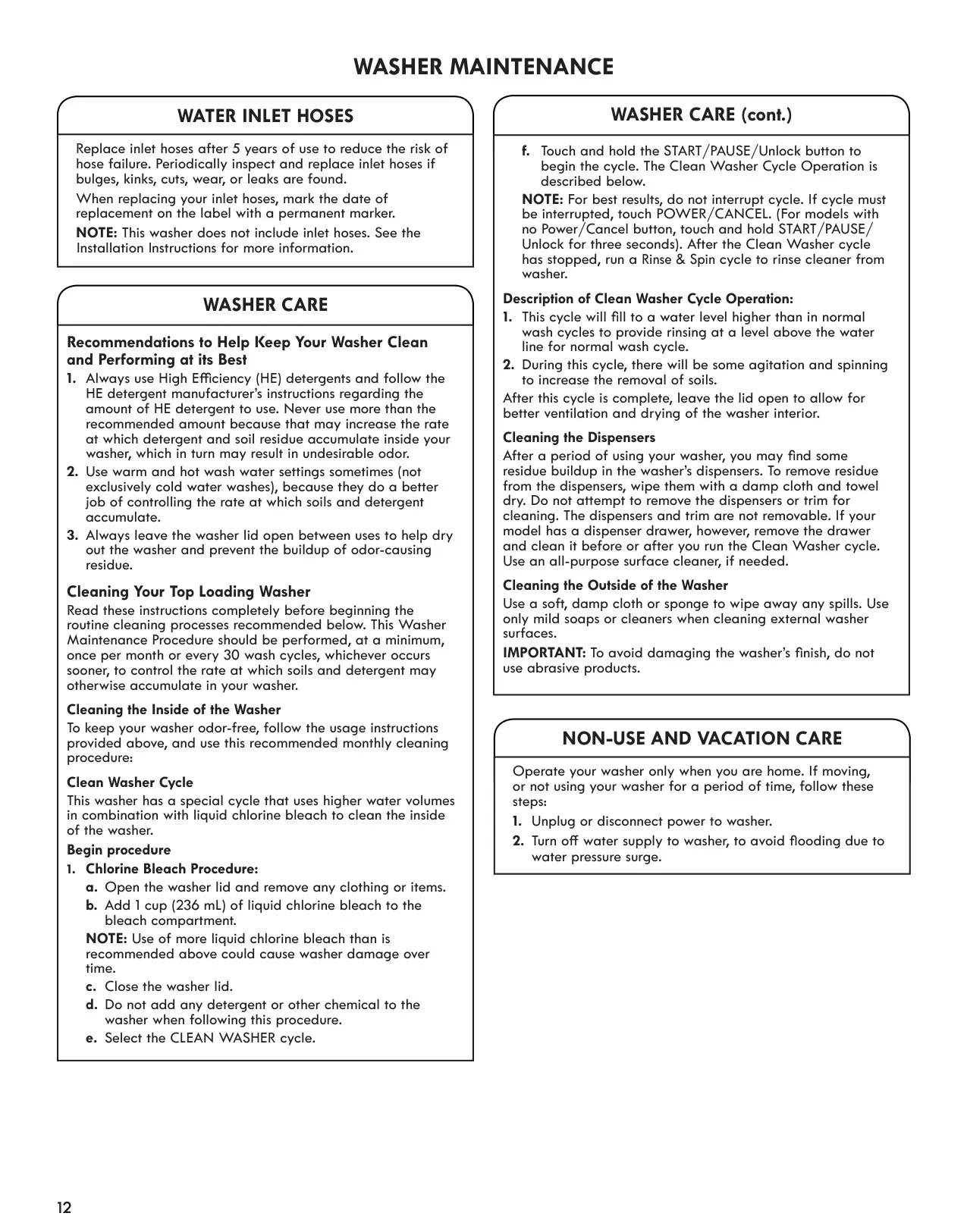
Maintenance routines include replacing water inlet hoses every five years and performing the Clean Washer cycle monthly or every 30 washes to prevent residue buildup and odors. For non-use or vacation care, unplugging the unit and turning off the water supply is advised. During winter storage or transportation in freezing weather, the washer must be winterized using R.V.-type antifreeze to prevent damage from residual water.
Frequently Asked Questions (FAQs)
Can't find the answer you need? Here are some frequently asked questions about the Kenmore 600 Series Washing Machine, and we answer them below.