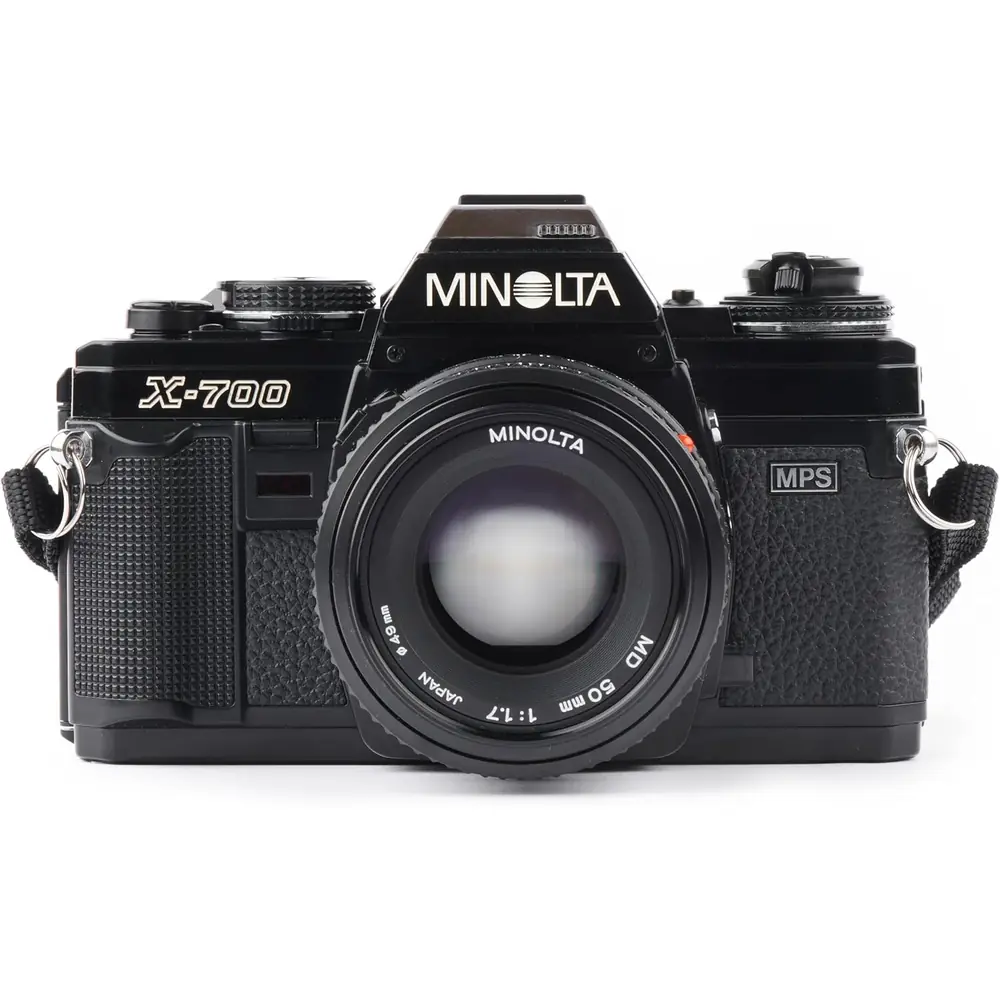
Minolta SRT 201 Analog SLR Camera Instruction Manual

Minolta SRT 201 Analog SLR Camera


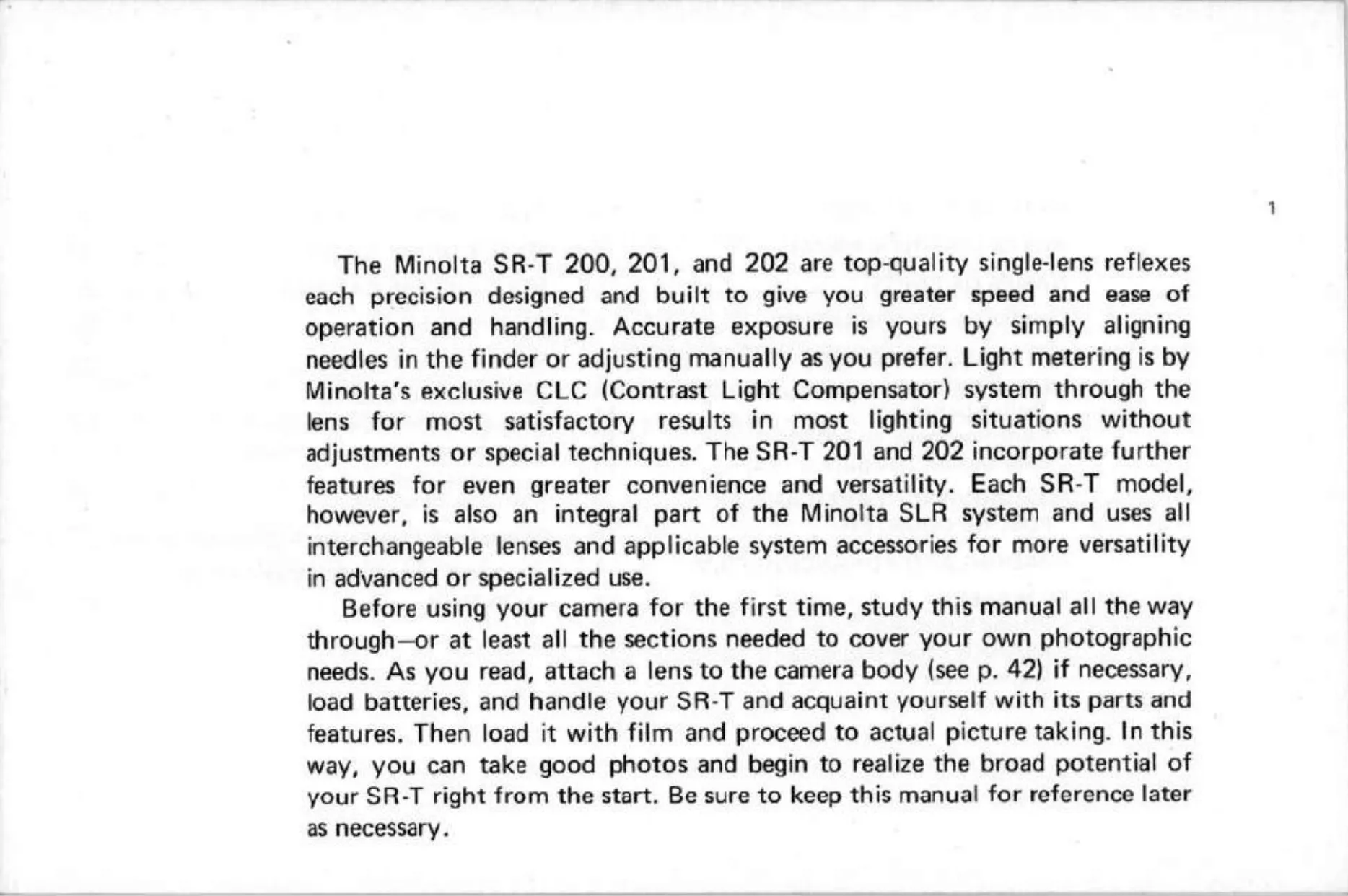


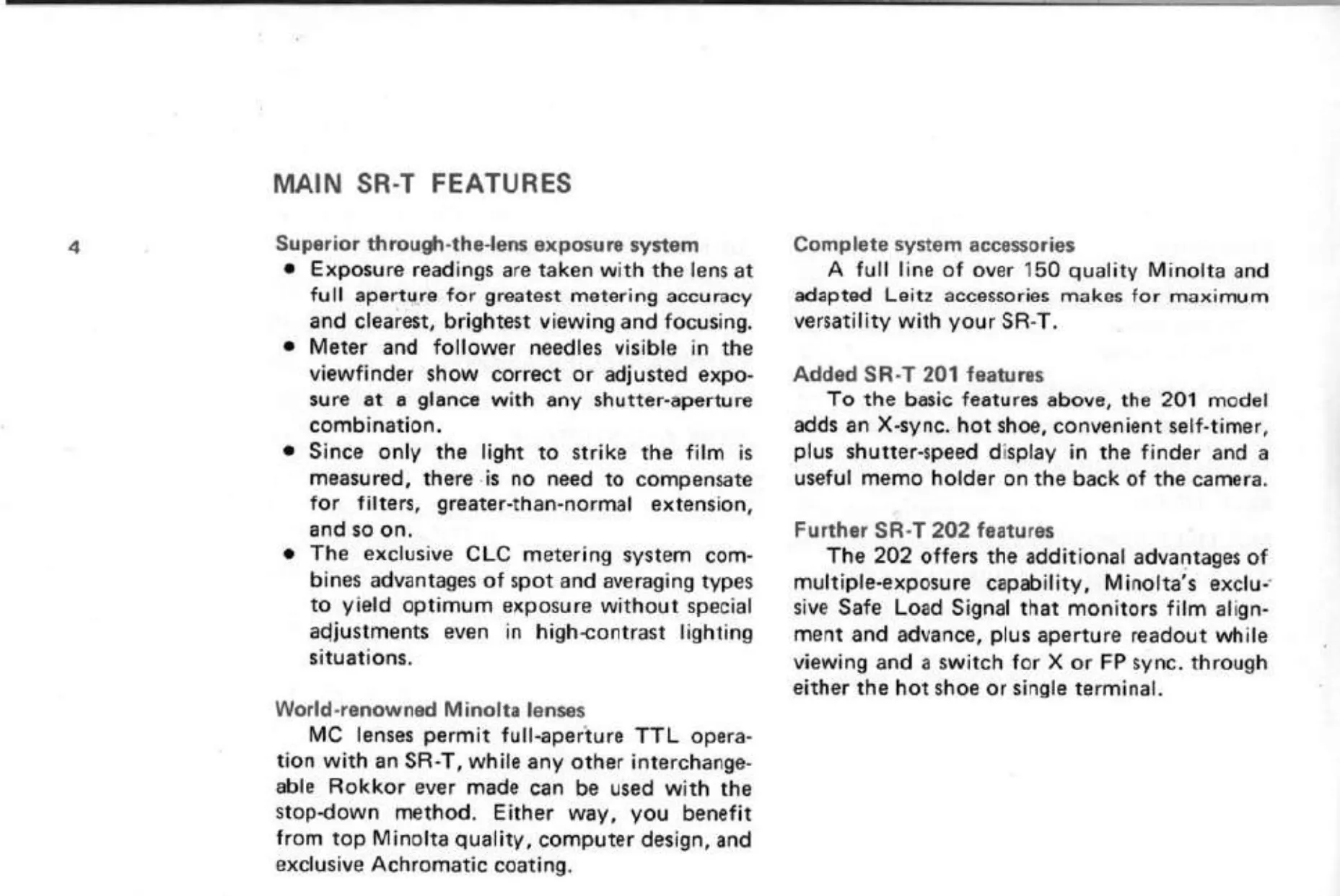


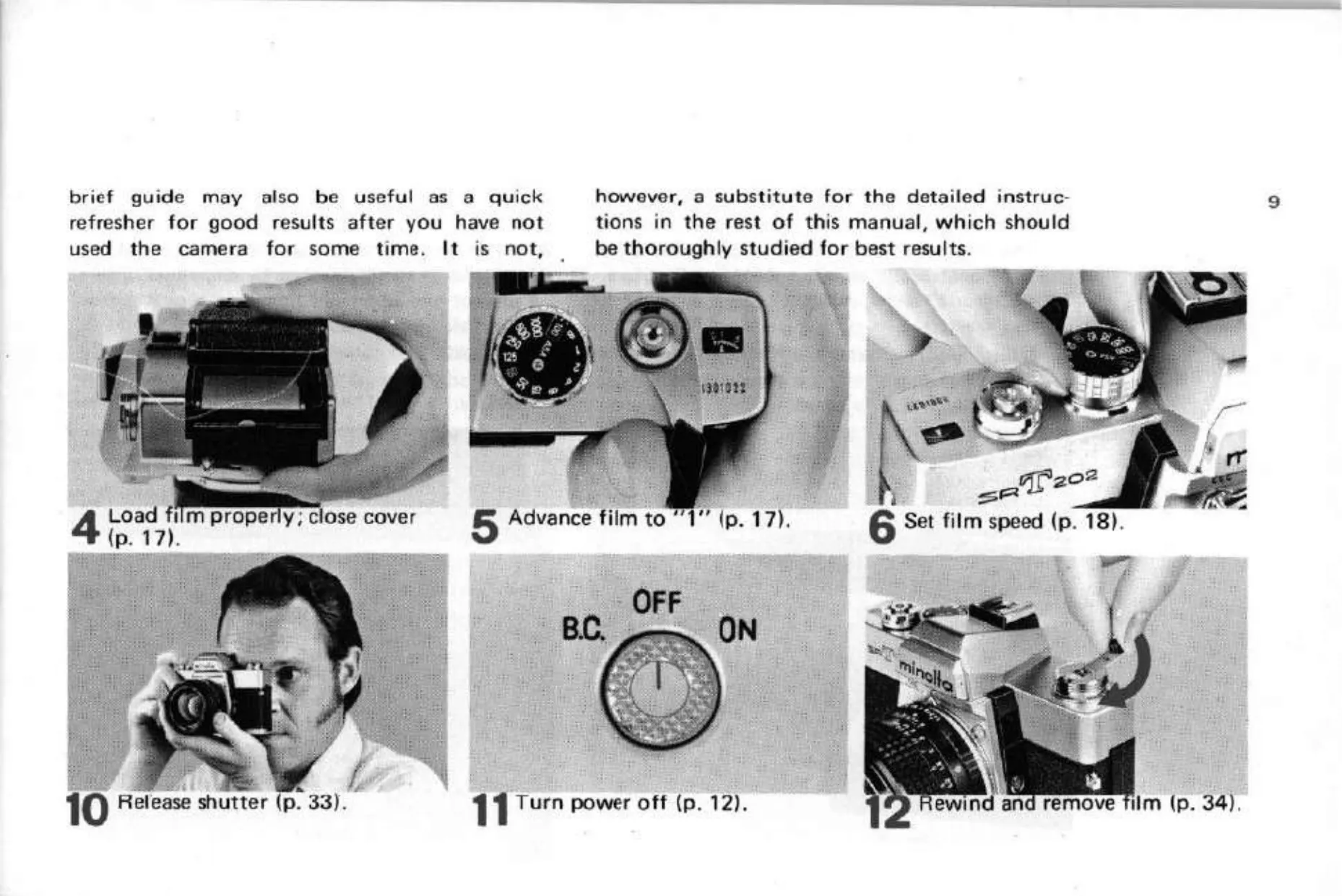














Minolta SRT 201 SLR Camera Instructions
Here we offer the Minolta SRT 201 Analog SLR Camera manual completely free and in English. We have cataloged this manual in the SLR Cameras section on Manualverse, and it has been rated by 1 users with an average rating of 5. If you have any specific questions about Minolta SRT 201 Analog SLR Camera, we suggest checking the Frequently Asked Questions (FAQs) section of this manual.
Product Images



Minolta SRT 201 Analog SLR Camera Specifications
| Feature | Specification (Minolta SRT 201) |
|---|---|
| Camera Type | 35mm single-lens reflex (SLR) |
| Lens Mount | Minolta SLR bayonet, 54° rotating angle; full-aperture metering & automatic diaphragm with MC lenses |
| Standard Lens Options | 50mm f/1.7 MC Rokkor-X, 50mm f/1.4 MC Rokkor-X, or 58mm f/1.2 MC Rokkor-X |
| Light Metering | Full-aperture TTL (Through-The-Lens) with Minolta's CLC (Contrast Light Compensator) system (2 CdS cells) |
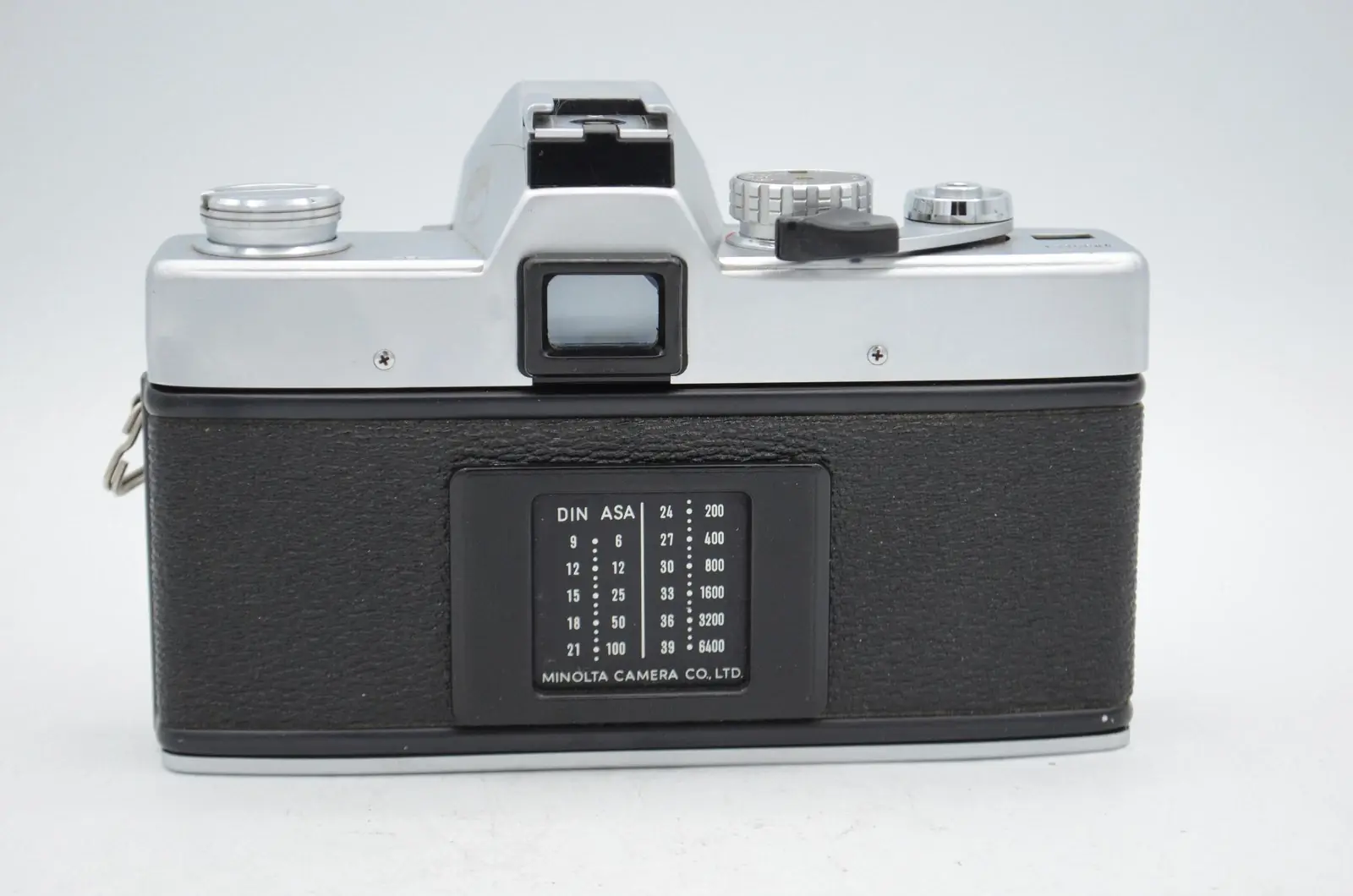
| Film Speed Range | ASA 6 to 6400 (set by selector on shutter-speed dial) |
| Power Source | One 1.35V mercury cell (Eveready EPX-625 or equivalent) |
| Exposure Control | Match-needle with manual adjustment capability |
| Metering Range (ASA 100, f/1.4) | EV 3 to EV 17 (e.g., 1/4 sec. at f/1.4 to 1/1000 at f/11) |
| Shutter Type | Horizontal-traverse mechanically controlled focal-plane shutter |
| Shutter Speeds | 1, 1/2, 1/4, 1/8, 1/15, 1/30, 1/60, 1/125, 1/250, 1/500, 1/1000 sec, plus "B" (bulb) setting |
| Mirror | Oversize quick-return type |
| Viewfinder | Eye-level pentaprism, 94% film-frame area coverage, 0.83X magnification (with 50mm lens focused at infinity) |
| Focusing Screen | Mat-Fresnel-field with centered 6.3mm microprism spot |
| Viewfinder Information | Meter needle, circle-tipped follower, metering-range limits, battery-check indication, shutter-speed scale and setting indicator (below frame) |
| Flash Synchronization | X or FP delay via separate PC terminals. X-sync. hot shoe (1/60 sec. and slower for electronic flash) |
| Film Advance | Lever type (single- or multiple-stroke, 150° winding angle after 20° unengaged movement) |
| Exposure Counter | Advancing-type, automatically resets when camera back is opened |
| Self-Timer | Lever-type, approx. 10 sec. maximum delay |
| Other Features | 4-slot take-up spool, ASA/DIN conversion scale (on back cover), memo holder (on back cover) |
| Dimensions (W x H x D) | 145 x 47.5 x 95mm (5-3/4 x 1-7/8 x 3-3/4 in.) without lens |
| Weight | 705g (24-13/16 oz.) without lens |
| Standard Lens (Minolta 50mm f/1.4 MC Rokkor-X) | |
| Type | Meter-coupled Gauss-type standard lens |
| Construction | 7 elements in 5 groups |
| Angle of View | 46° |
| Coating | Minolta Achromatic |
| Minimum Focusing Distance | 0.5m (1.75 ft.) |
| Diaphragm | Fully automatic, meter-coupled with full and half click-stops (f/1.4 to f/16) |
| Filter Thread Diameter | 55mm |
| Dimensions (L x Max Dia.) | 46mm x 65mm (1-13/16" x 2-9/16") |
| Weight | 305g (10-3/4 oz.) |
Minolta SRT 201 Analog SLR Camera Details
The Minolta SRT 201 elevates the photographic experience with a suite of features designed for both ease of use and creative control. Its core strength lies in the full-aperture TTL metering, ensuring the viewfinder remains bright for effortless composing and focusing. The unique CLC (Contrast Light Compensator) system, utilizing two CdS cells, intelligently balances light readings to deliver optimal exposure even in challenging high-contrast scenes, often without the need for manual adjustments.
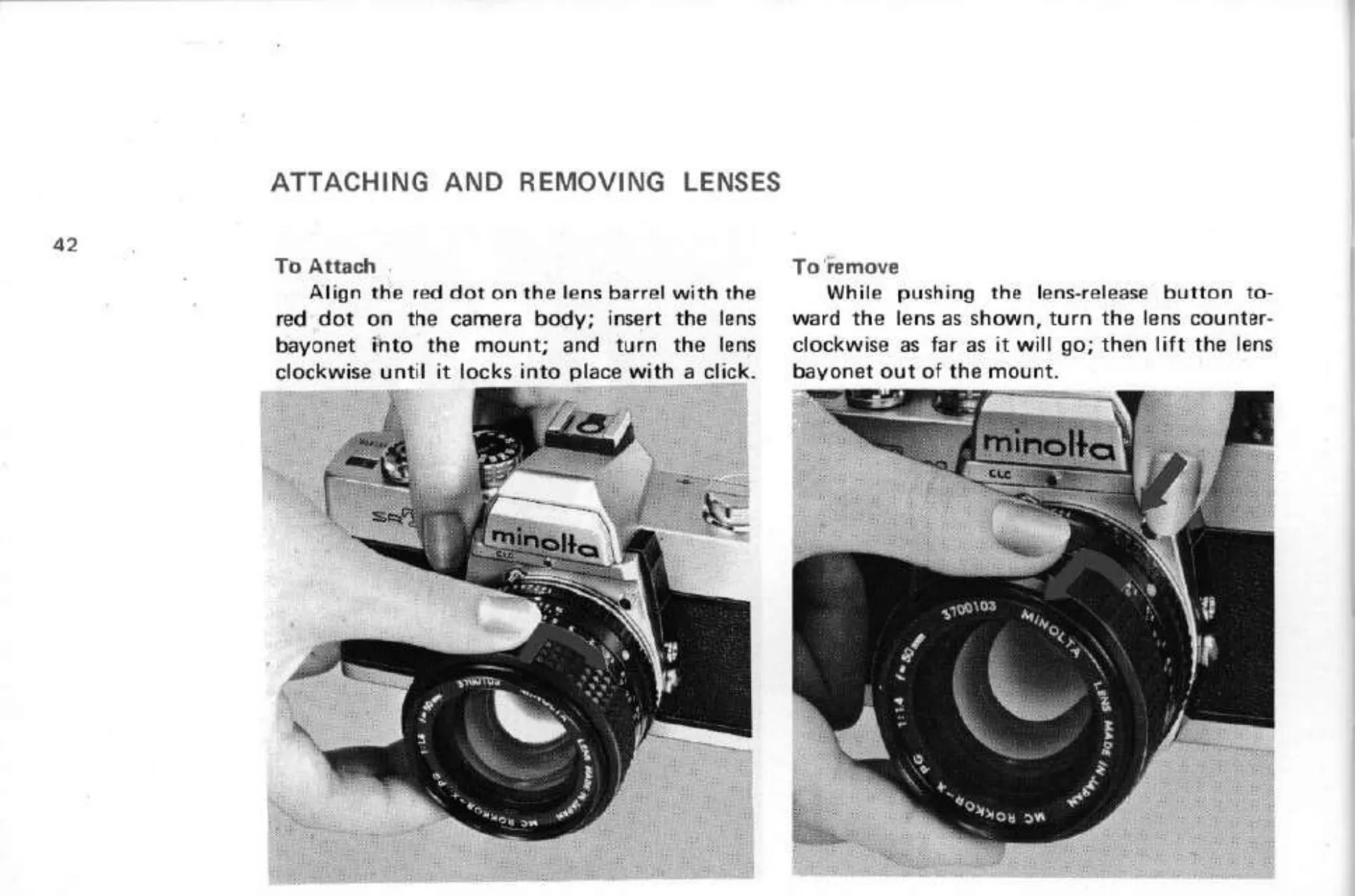
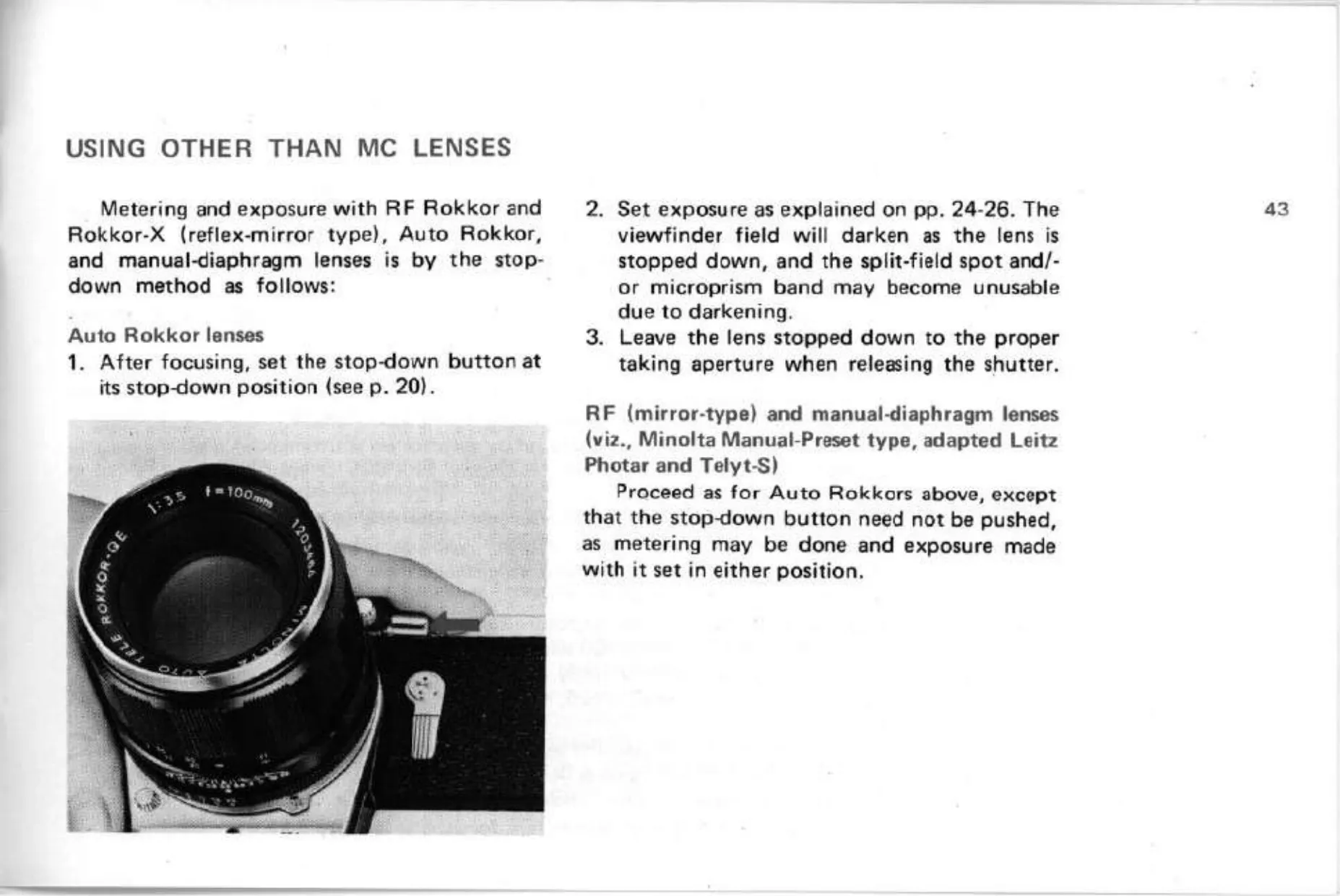
This camera is an integral part of the expansive Minolta SLR system, compatible with a vast array of world-renowned Minolta lenses and over 150 system accessories. While MC (meter-coupled) lenses enable the convenient full-aperture TTL operation, other interchangeable Rokkor lenses can still be utilized via the stop-down metering method. This versatility ensures photographers can tailor their gear to specific needs.
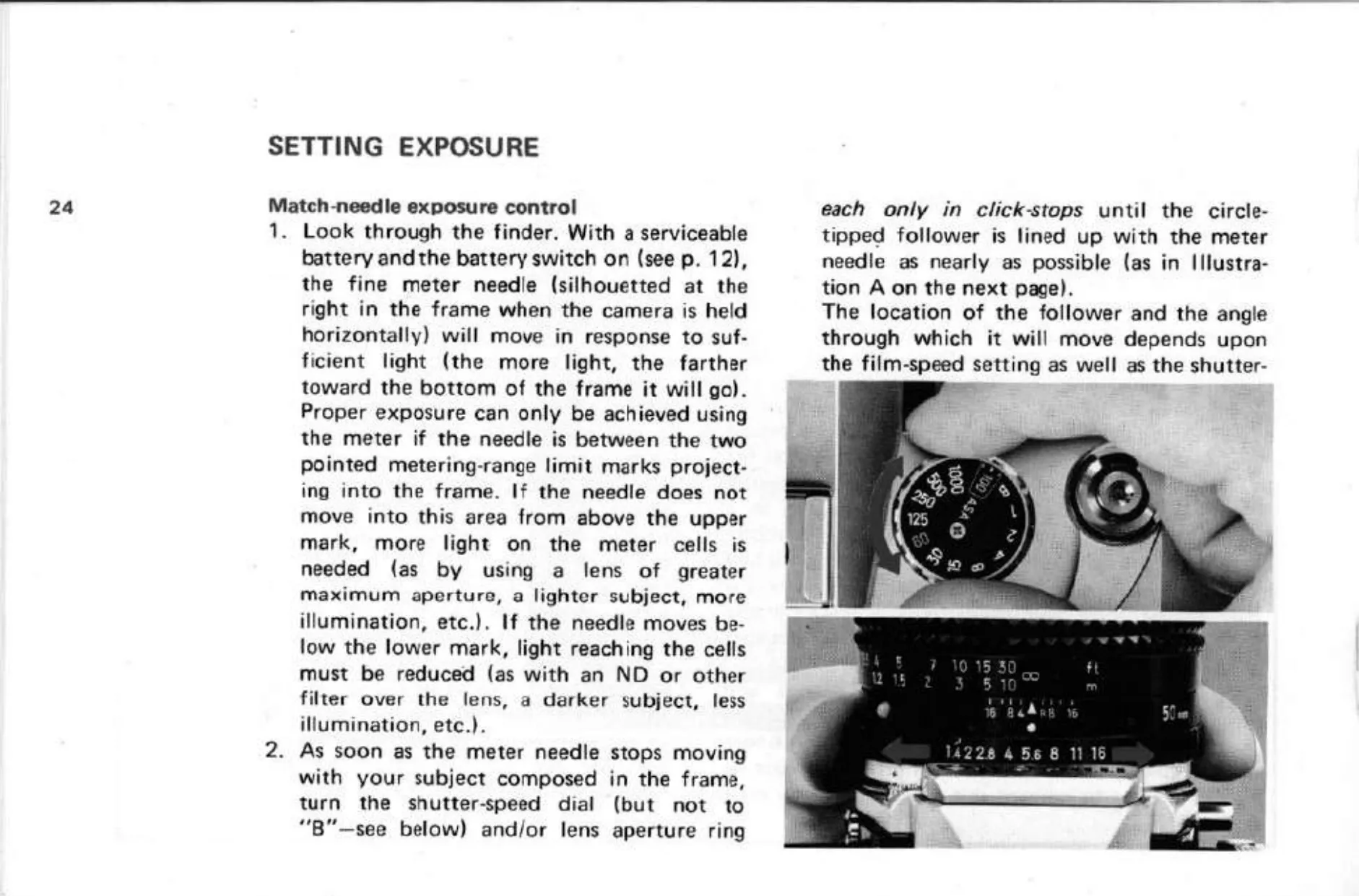
For exposure control, the SRT 201 employs a straightforward match-needle system. By aligning a follower needle with the meter needle in the viewfinder, correct exposure is indicated, allowing adjustments via the shutter-speed dial and lens aperture ring. Photographers can also intentionally deviate from the alignment for exposure compensation or full manual control, offering a high degree of artistic freedom.
The shutter-speed dial includes a "B" (bulb) setting, allowing for extended exposures limited only by the photographer's discretion, ideal for low-light or creative long-exposure photography. Understanding the fundamentals of aperture and shutter speed—how they influence light, depth of field, and motion blur—is key to mastering the camera's capabilities, as detailed in the manual.
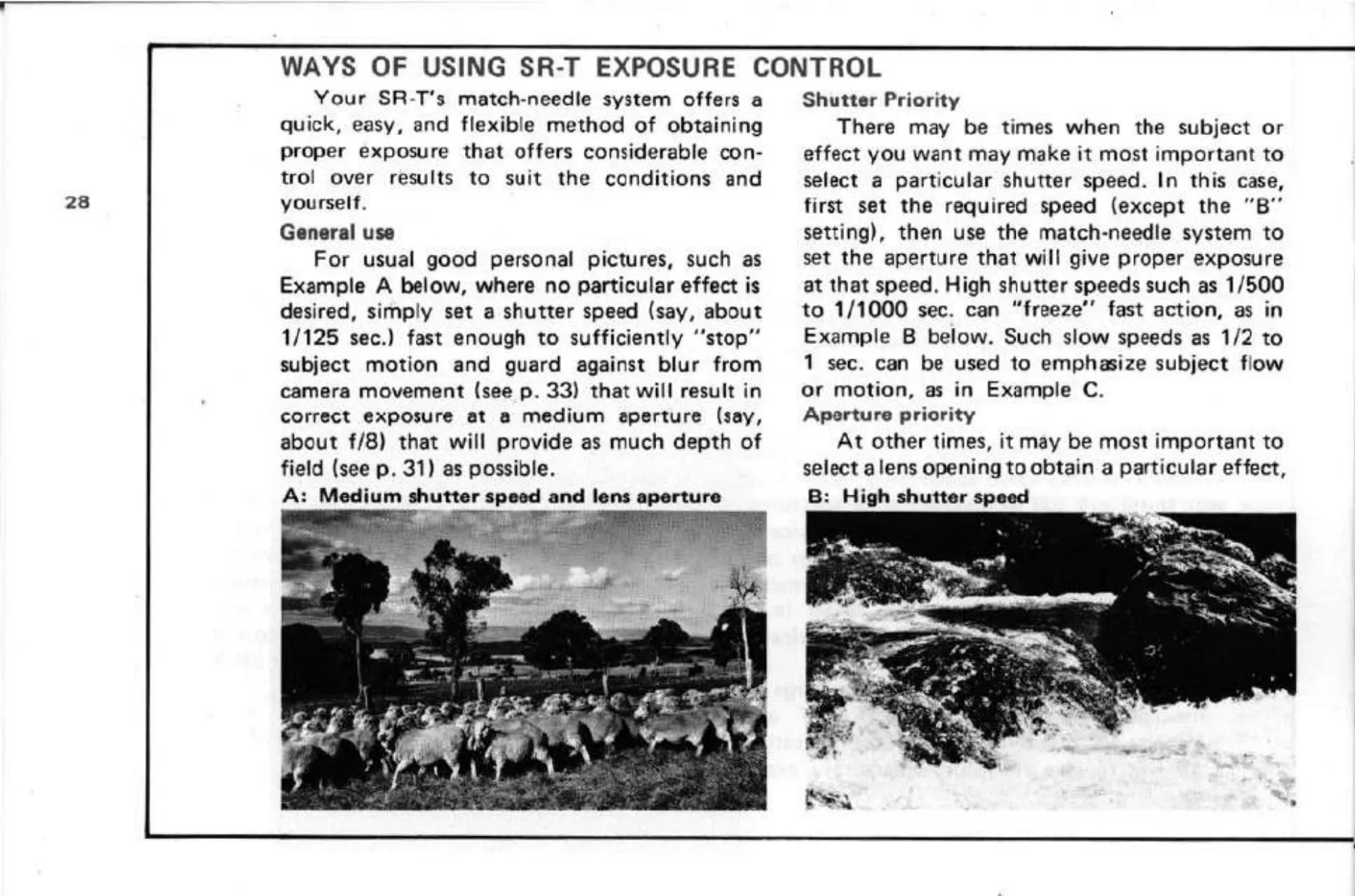
Focusing is made precise with a clear microprism spot centered in the viewfinder's mat field. For achieving specific photographic effects, users can leverage shutter priority to capture fast action or convey motion, or aperture priority to control depth of field, emphasizing a subject against a blurred background or ensuring wide areas are in sharp focus. The depth-of-field scale on the lens barrel and a dedicated stop-down button further aid in visualizing the sharp zone.
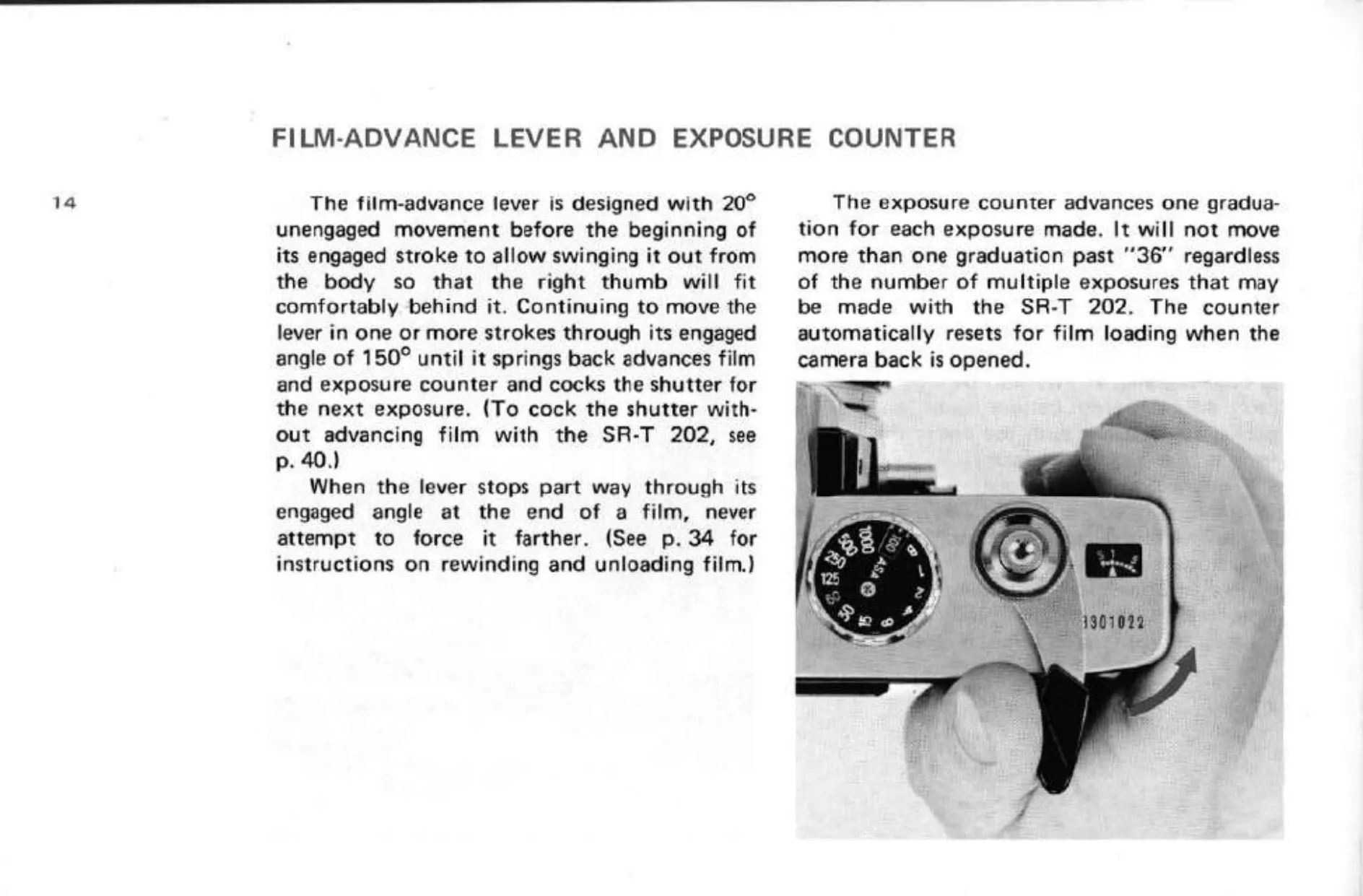
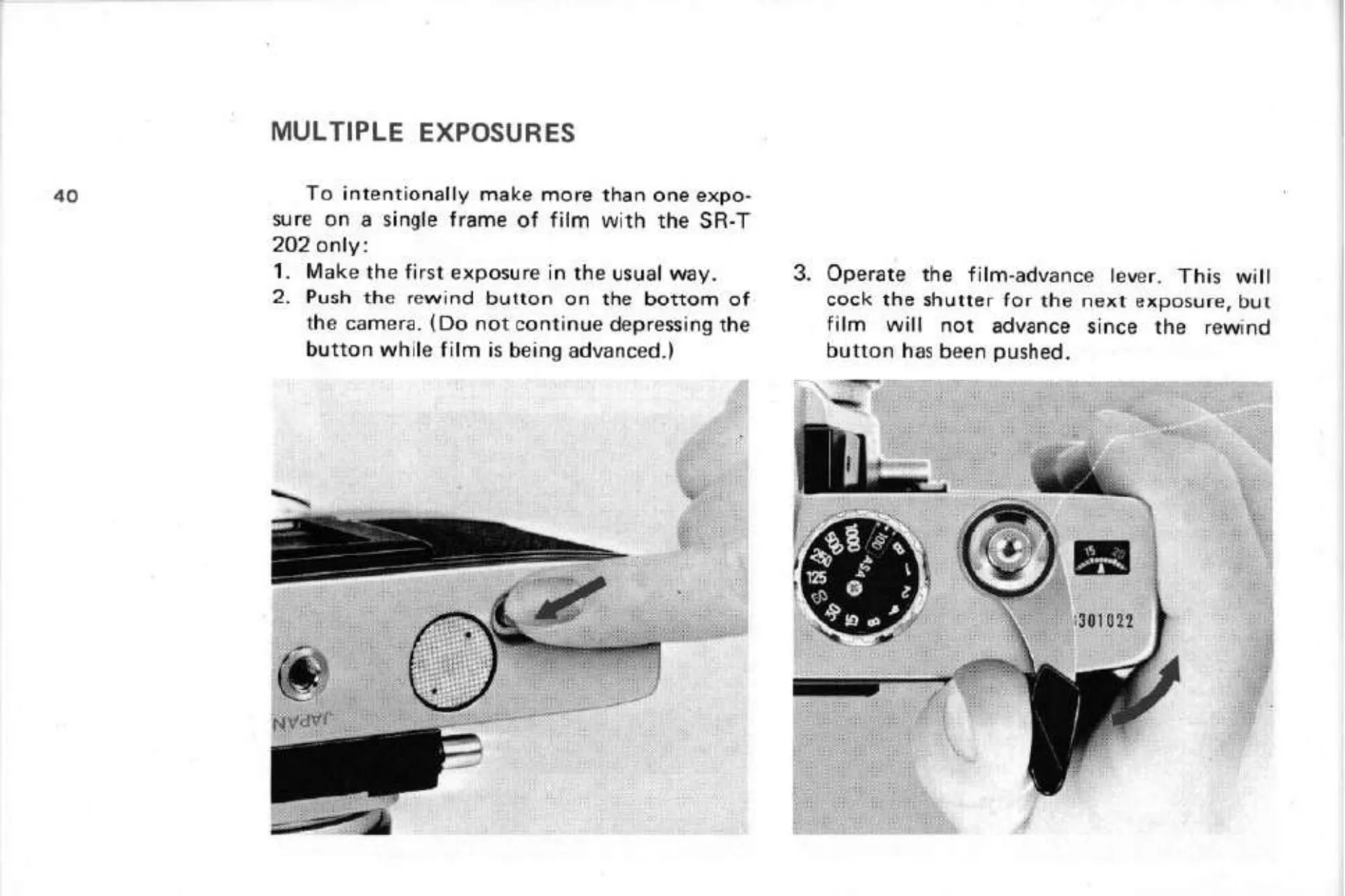
Thoughtful design elements enhance usability, such as the film-advance lever's initial 20° unengaged movement for comfortable thumb placement. A handy memo holder on the camera's back cover allows users to keep film-box ends as a quick reminder of the film currently loaded, a small but significant convenience. Proper camera handling and shutter release technique are also emphasized to prevent blurred images.
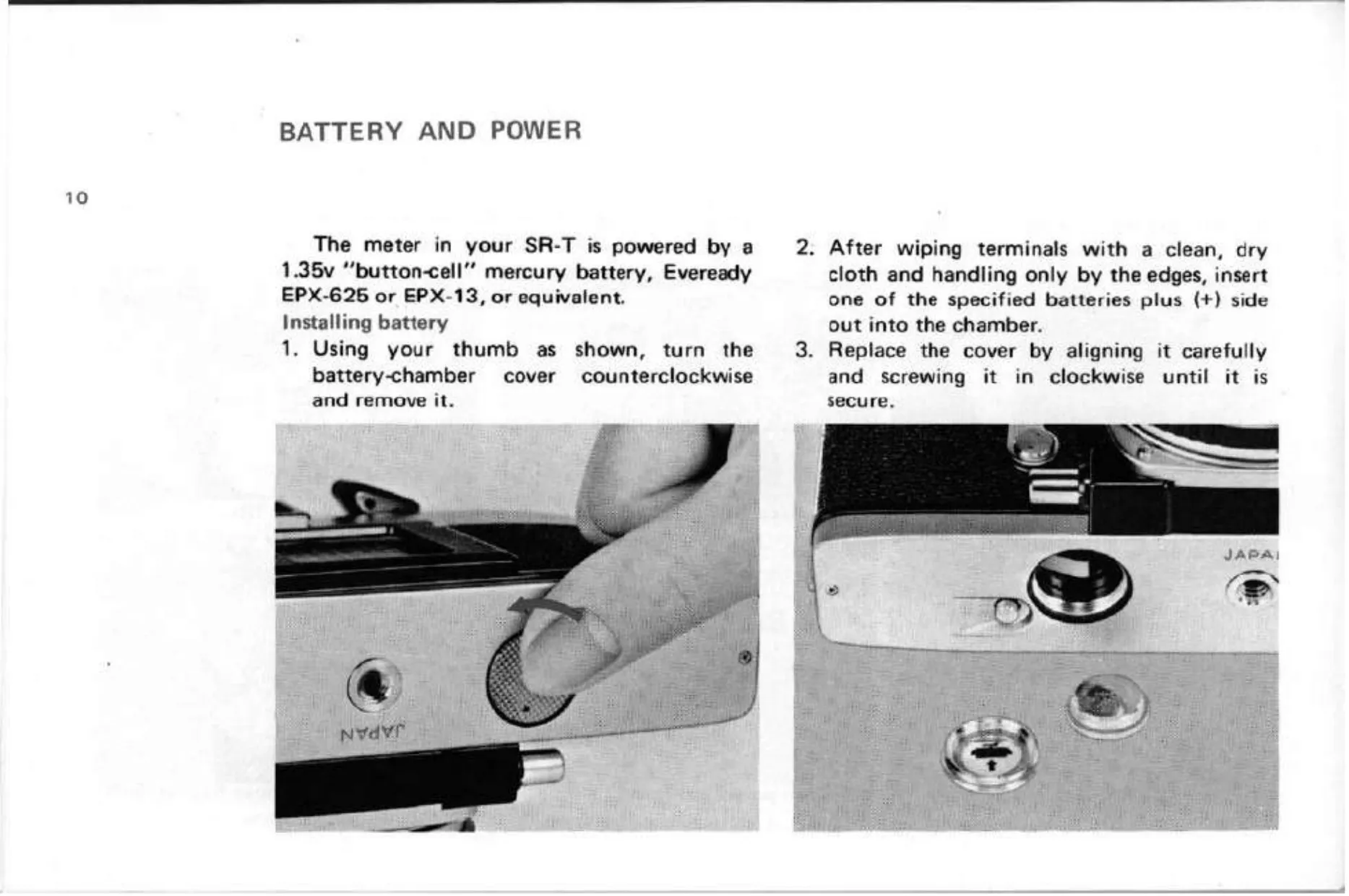
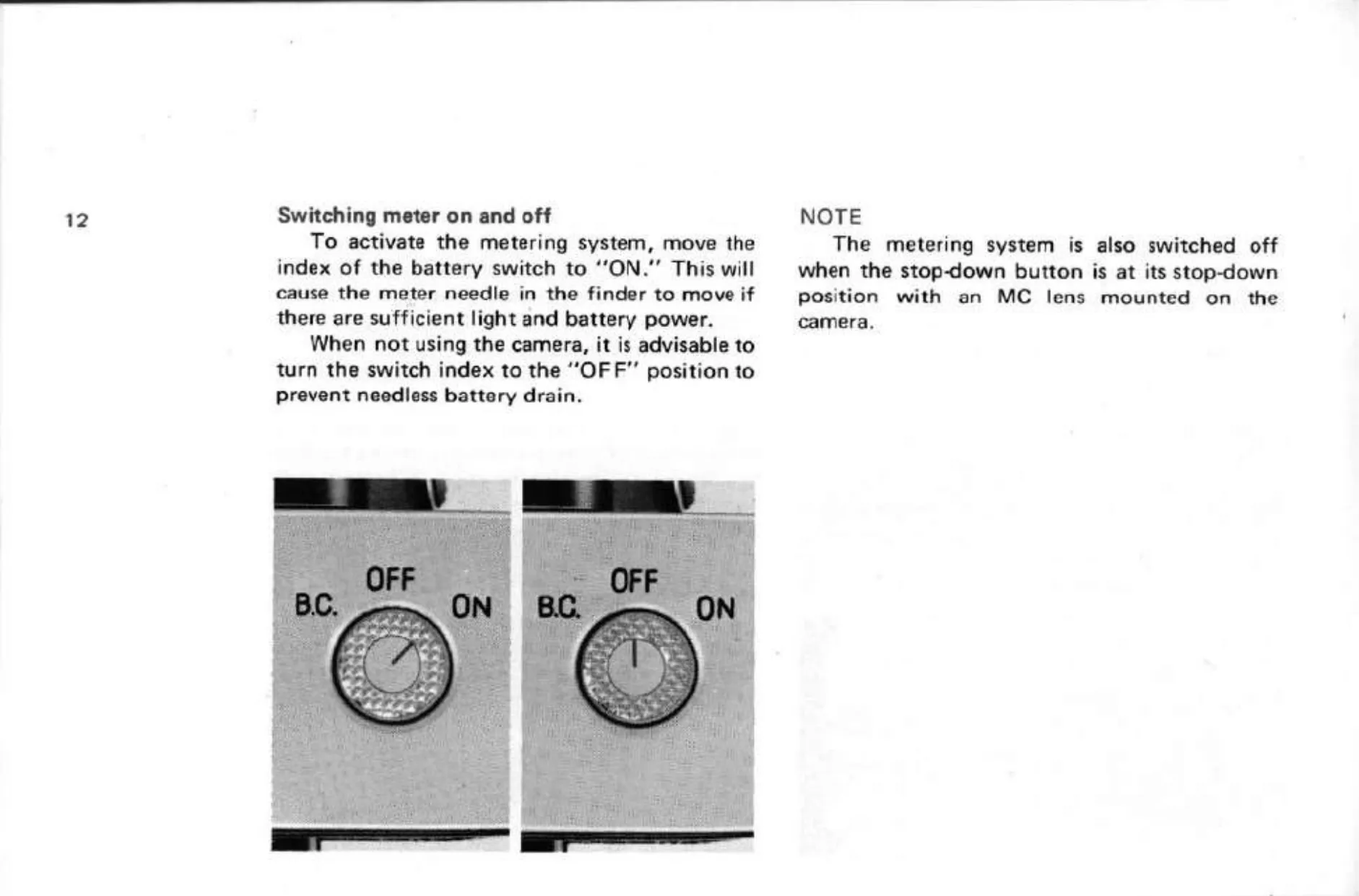
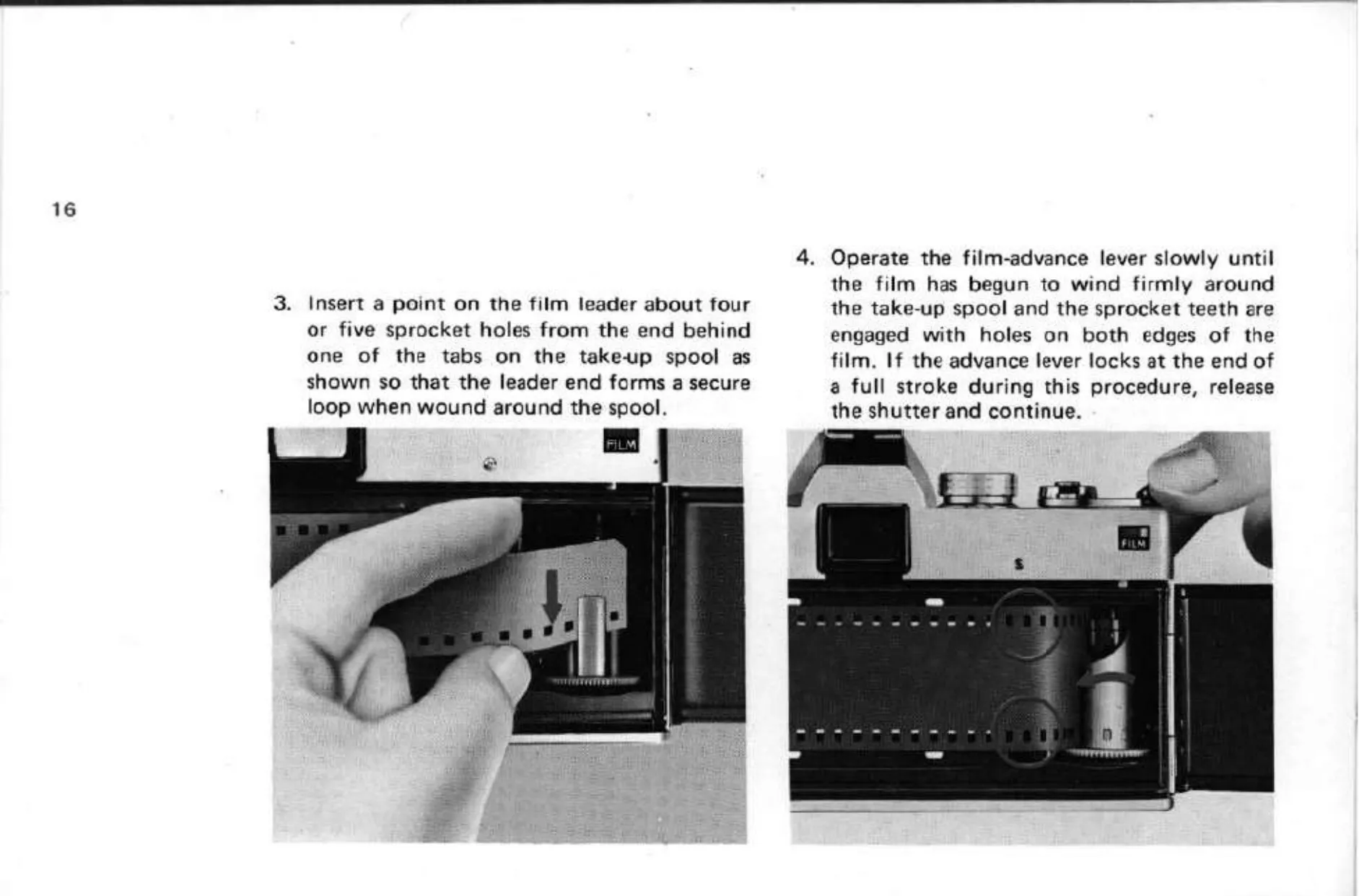
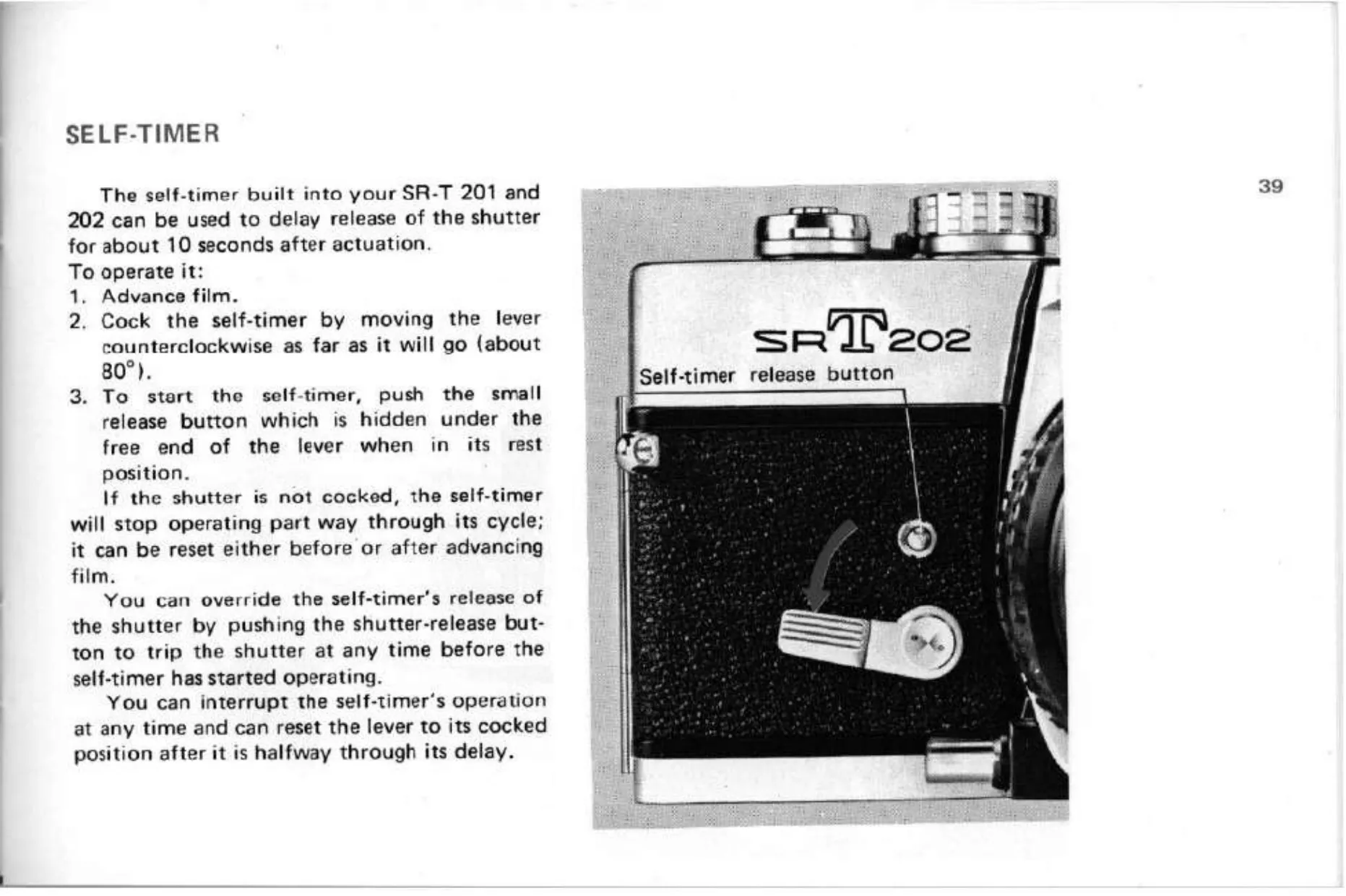
Beyond taking pictures, the manual provides clear instructions for essential tasks like installing the battery, testing its life, loading and advancing film, and carefully rewinding and unloading it. Flash photography is facilitated by an X-sync. hot shoe for cordless electronic flash units, alongside separate PC terminals for both X-sync and FP-sync cords, catering to various flash types. The self-timer is a welcome addition, providing a 10-second delay for self-portraits or group shots, adding to the camera's versatility.
Frequently Asked Questions (FAQs)
Can't find the answer you need? Here are some frequently asked questions about the Minolta SRT 201 Analog SLR Camera, and we answer them below.