Ideal Logic Combi ESP1 24 Boiler Instruction Manual

Ideal Logic Combi ESP1 24 Boiler





Ideal Logic Combi ESP1 24 Boiler



Ideal Logic Combi ESP1 24 Boiler






























Ideal Logic Combi ESP1 24 Boiler


Ideal Logic Combi ESP1 24 Instructions
Here we offer the Ideal Logic Combi ESP1 24 Boiler manual completely free and in English. We have cataloged this manual in the Boilers section on Manualverse, and it has been rated by 1 users with an average rating of 5. If you have any specific questions about Ideal Logic Combi ESP1 24 Boiler, we suggest checking the Frequently Asked Questions (FAQs) section of this manual.
Product Images


Ideal Logic Combi ESP1 24 Boiler Specifications
| Feature | Specification |
|---|---|
| Appliance Type | Wall-mounted, room-sealed, fan-assisted condensing combination boiler (C13, C33, C53) |
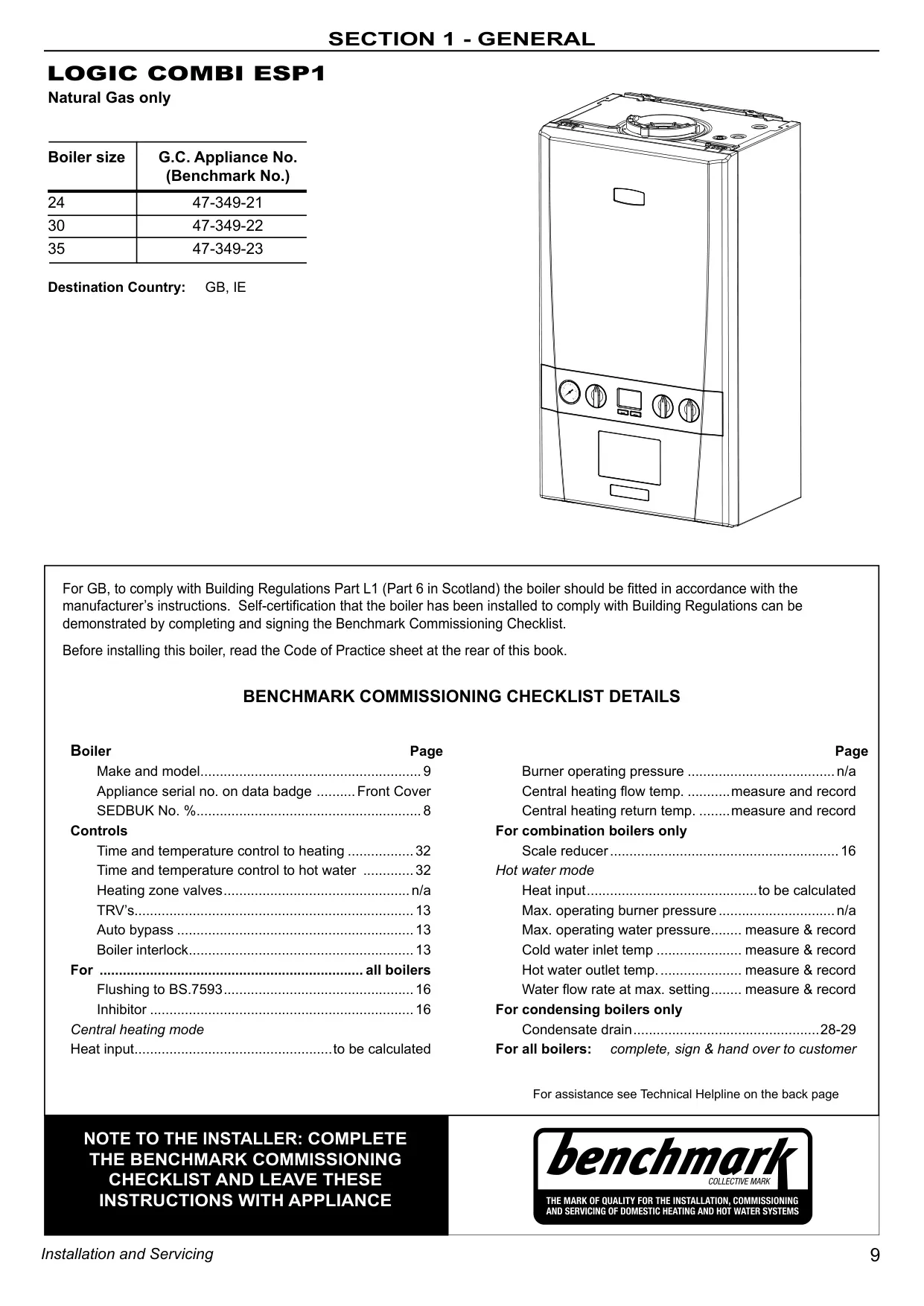
| G.C. Appliance No. (Benchmark No.) | 47-349-21 |
| Gas Type | Natural Gas only, 2H - G20 - 20 mbar (I2H) |
| Destination Countries | GB, IE |
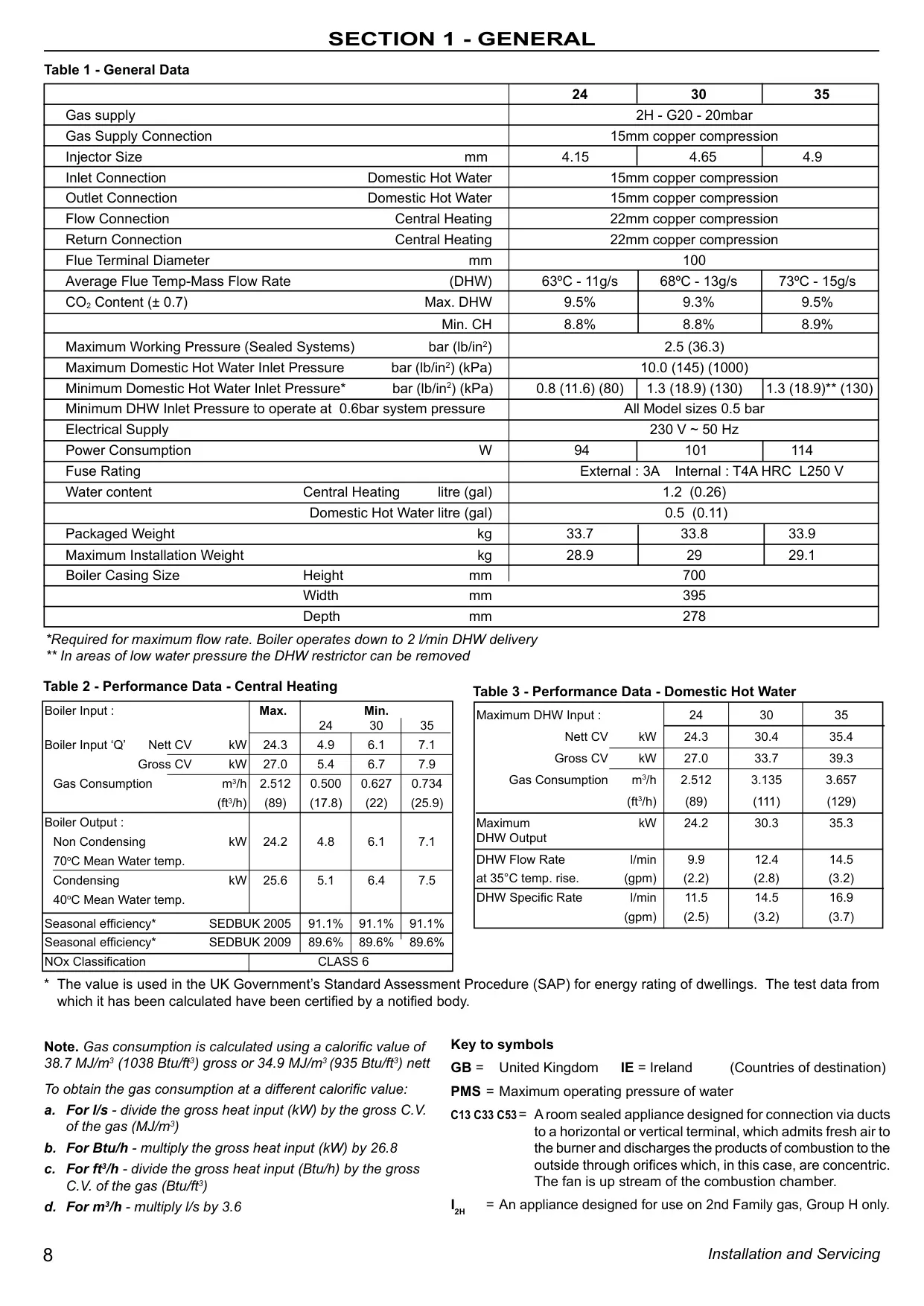
| Central Heating Output (70°C mean water temp.) | 4.8 - 24.2 kW (fully modulating) |
| Central Heating Output (40°C mean water temp., condensing) | 5.1 - 25.6 kW |
| Maximum DHW Output | 24.2 kW |
| Maximum Heat Input (Nett / Gross CV) | 24.3 kW / 27.0 kW |
| Minimum Heat Input (Nett / Gross CV) | 4.9 kW / 5.4 kW |
| Gas Consumption (Max / Min) | 2.512 m³/h (89 ft³/h) / 0.500 m³/h (17.8 ft³/h) |
| DHW Flow Rate at 35°C Rise | 9.9 l/min (2.2 gpm) |
| DHW Specific Rate | 11.5 l/min (2.5 gpm) |
| Minimum DHW Delivery | 2 l/min |
| DHW Temperature Range | 40°C - 65°C |
| Central Heating Flow Temperature Range | 30°C - 80°C |
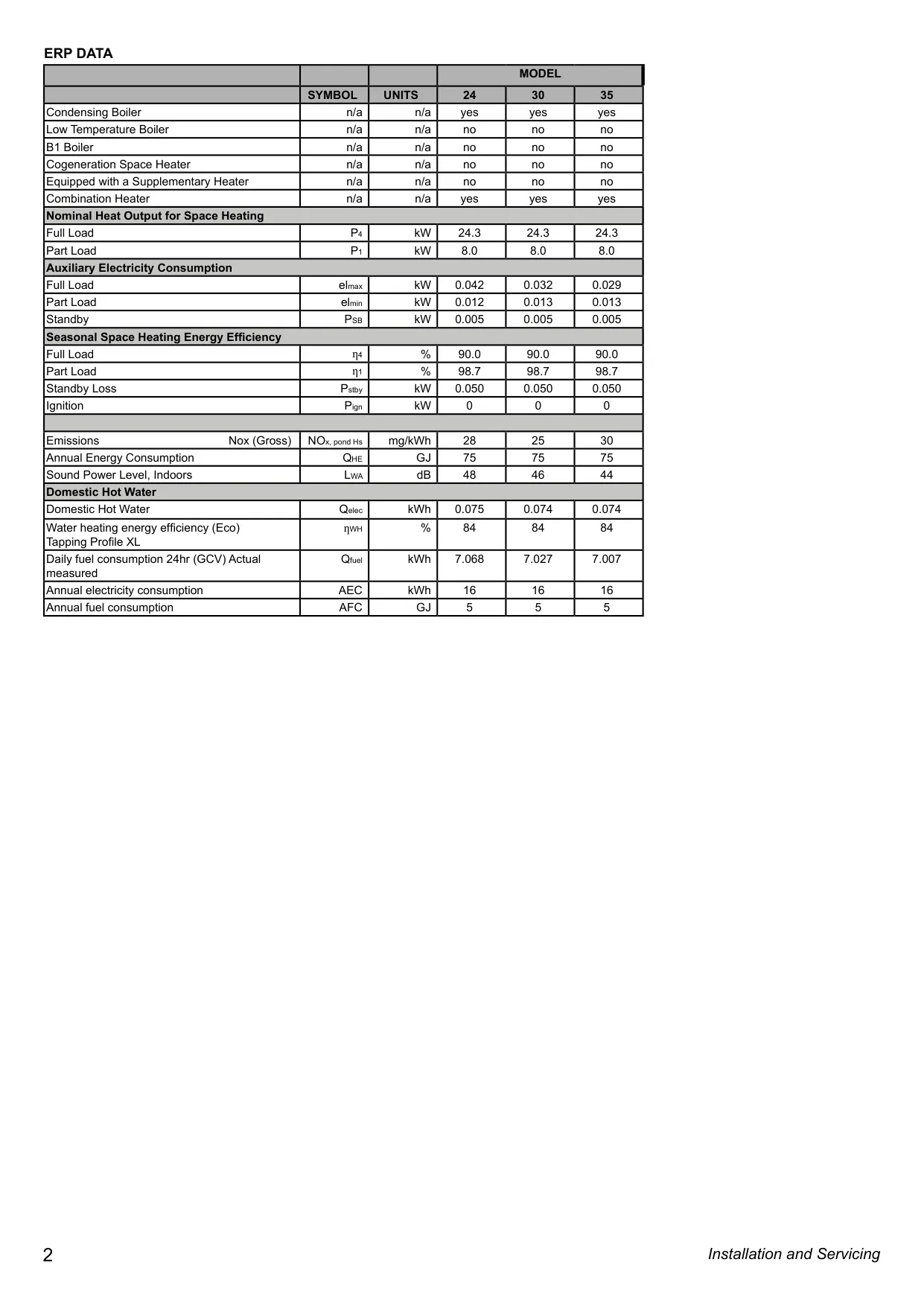
| Seasonal Space Heating Energy Efficiency (ηs) | 94%, Class A |
| Water Heating Energy Efficiency | 84%, Class A (Tapping Profile XL) |
| SEDBUK 2005 / SEDBUK 2009 | 91.1% / 89.6% |
| Useful Efficiency (Full Load / Part Load) | 90.0% / 98.7% |
| NOx Classification | Class 6 (28 mg/kWh gross) |
| Annual Energy Consumption (Space Heating) | 75 GJ |
| Sound Power Level, Indoors | 48 dB(A) |
| CO2 Content (±0.7) | 9.5% max. DHW / 8.8% min. CH |
| Average Flue Temperature - Mass Flow Rate (DHW) | 63°C - 11 g/s |
| Injector Size | 4.15 mm |
| Electrical Supply | 230 V ~ 50 Hz, earthed |
| Power Consumption | 94 W |
| Auxiliary Electricity (Full / Part / Standby) | 0.042 kW / 0.012 kW / 0.005 kW |
| Fuse Rating | External 3A; Internal T4A HRC L250 V |
| Pre-fitted Mains Cable | 1.8 m |
| Electrical Protection Rating | IP20 |
| Casing Dimensions (H x W x D) | 700 x 395 x 278 mm |
| Packaged Weight | 33.7 kg |
| Maximum Installation (Lift) Weight | 28.9 kg |
| Water Content (CH / DHW) | 1.2 l (0.26 gal) / 0.5 l (0.11 gal) |
| Maximum Working Pressure (Sealed System) | 2.5 bar (36.3 lb/in²) |
| Maximum DHW Inlet Pressure | 10.0 bar (145 lb/in²) |
| Minimum DHW Inlet Pressure (for max. flow) | 0.8 bar (11.6 lb/in²) |
| Gas Connection | 15 mm copper compression |
| DHW Inlet / Outlet Connections | 15 mm copper compression |
| CH Flow / Return Connections | 22 mm copper compression |
| CH Water Flow Rate / Head Available | 17.3 l/min at 20°C differential / 3.4 m.w.g. |
| Heat Exchanger Material | Cast aluminium |
| Built-in Expansion Vessel | 8 litres, 0.75 bar initial charge |
| Safety Valve Setting | 3 bar (non-adjustable) |
| Pressure Gauge Range | 0 - 4 bar |
| Flue Type / Terminal Diameter | Concentric 60/100 mm / 100 mm |
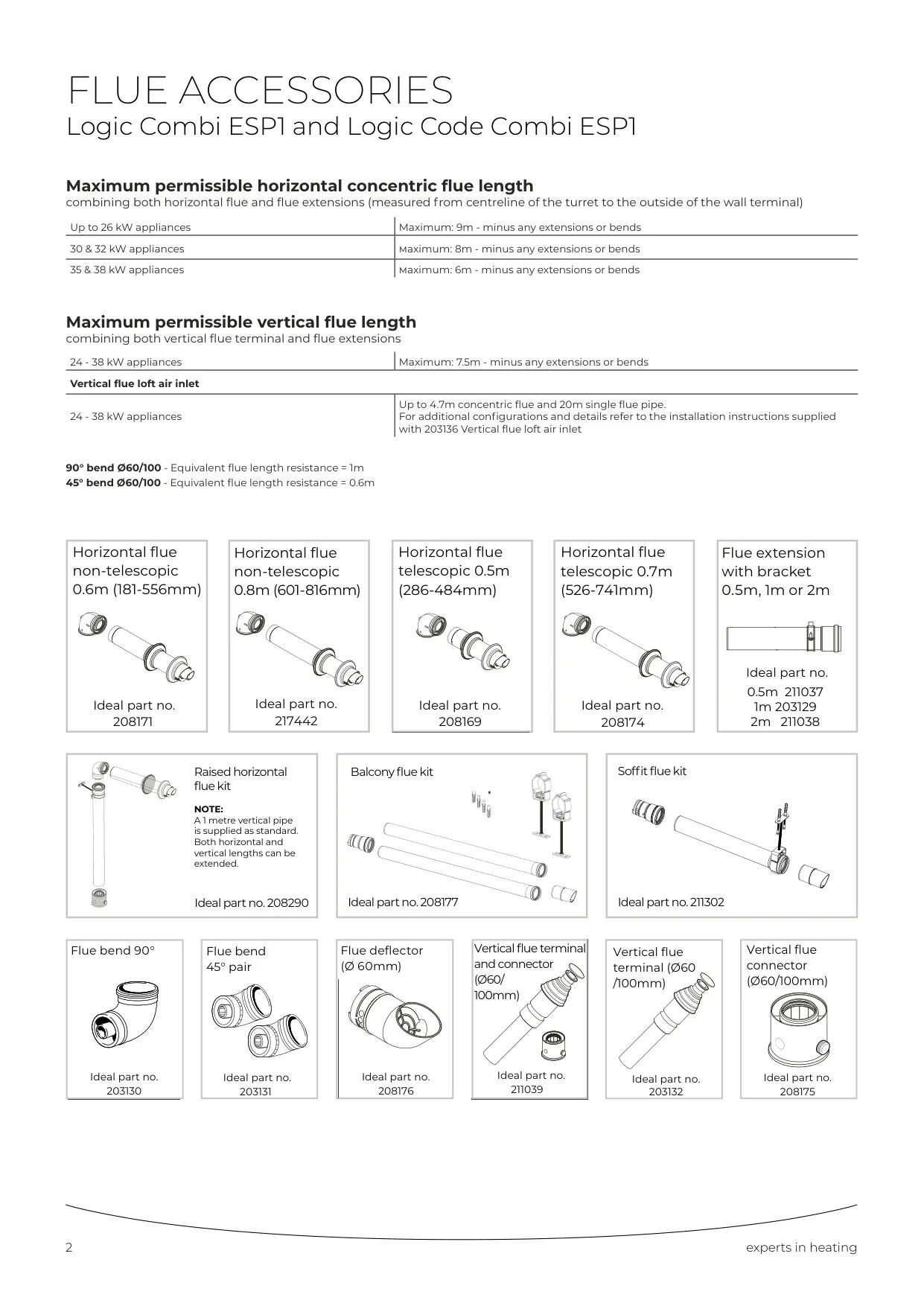
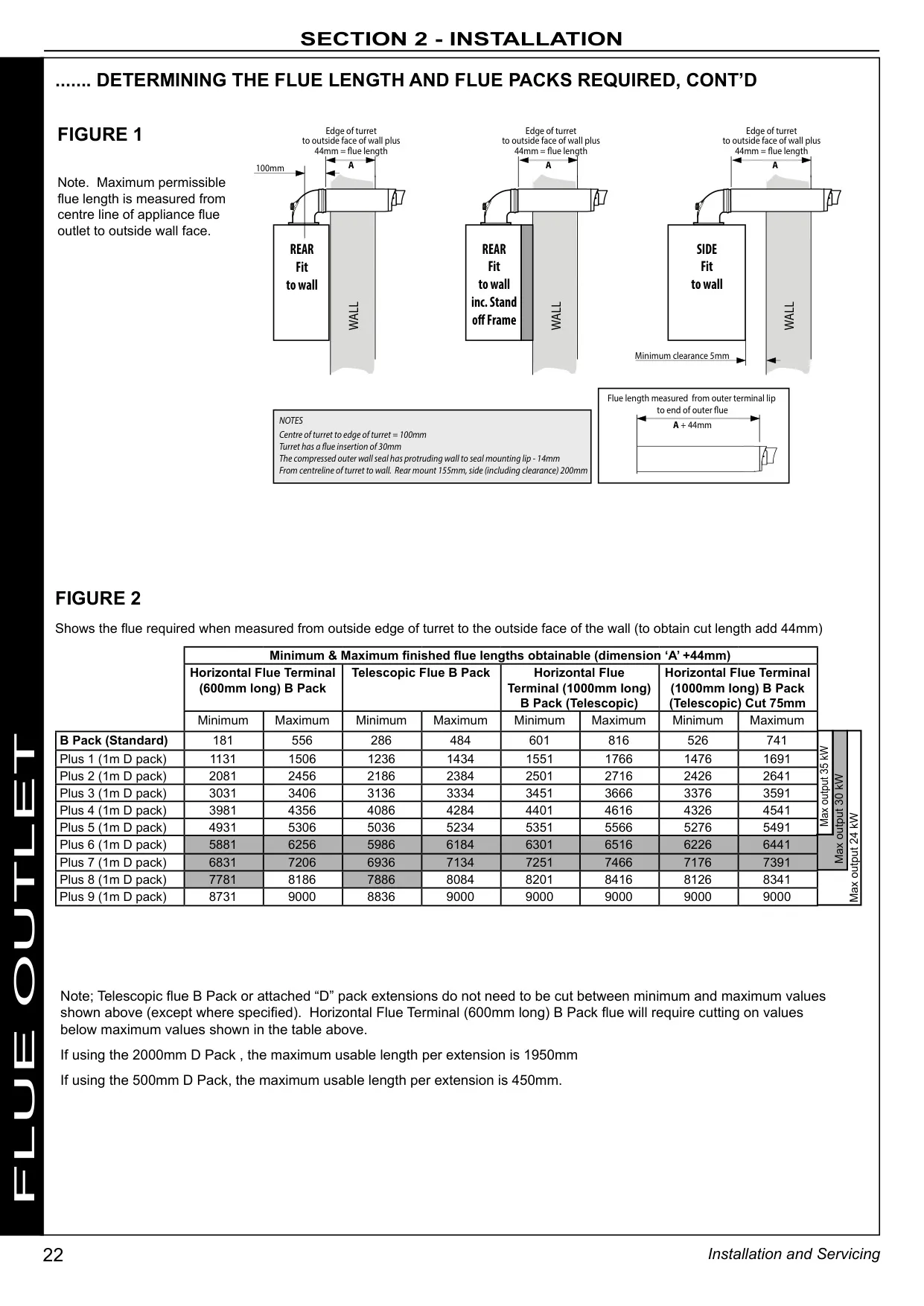
| Maximum Horizontal Flue Length | 9 m (minus bends and kit options) |
| Maximum Vertical Flue Length | 7.5 m (minus bends) |
| Powered Vertical Flue | 22 m |
| Bend Resistance (90° / 45°) | 1 m / 0.6 m equivalent flue length |
| Servicing Clearances | 165 mm above, 100 mm below, 2.5 mm sides, 450 mm front |
| Condensate Drain Outlet | 21.5 mm universal overflow pipe fitting |
| LPG Conversion | Not available |
Ideal Logic Combi ESP1 24 Boiler Details
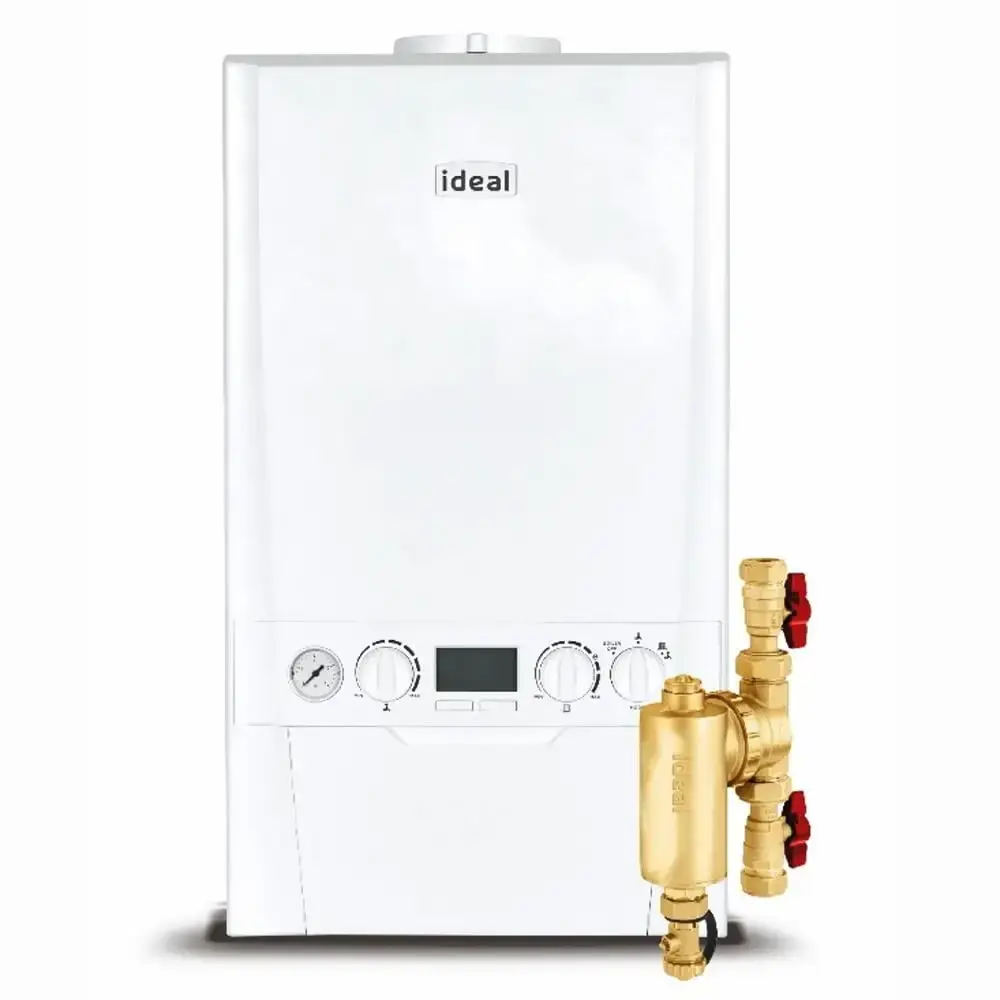
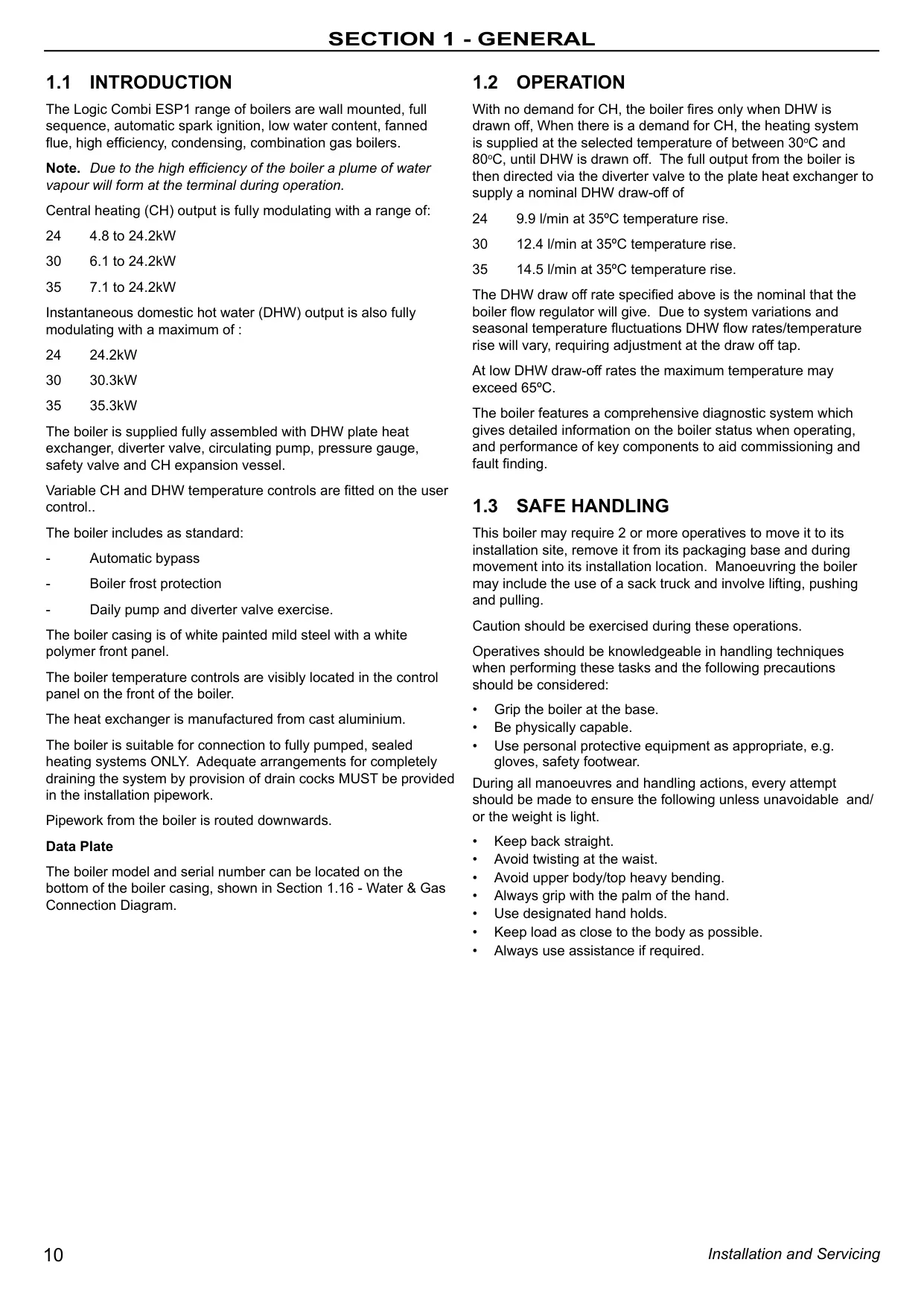
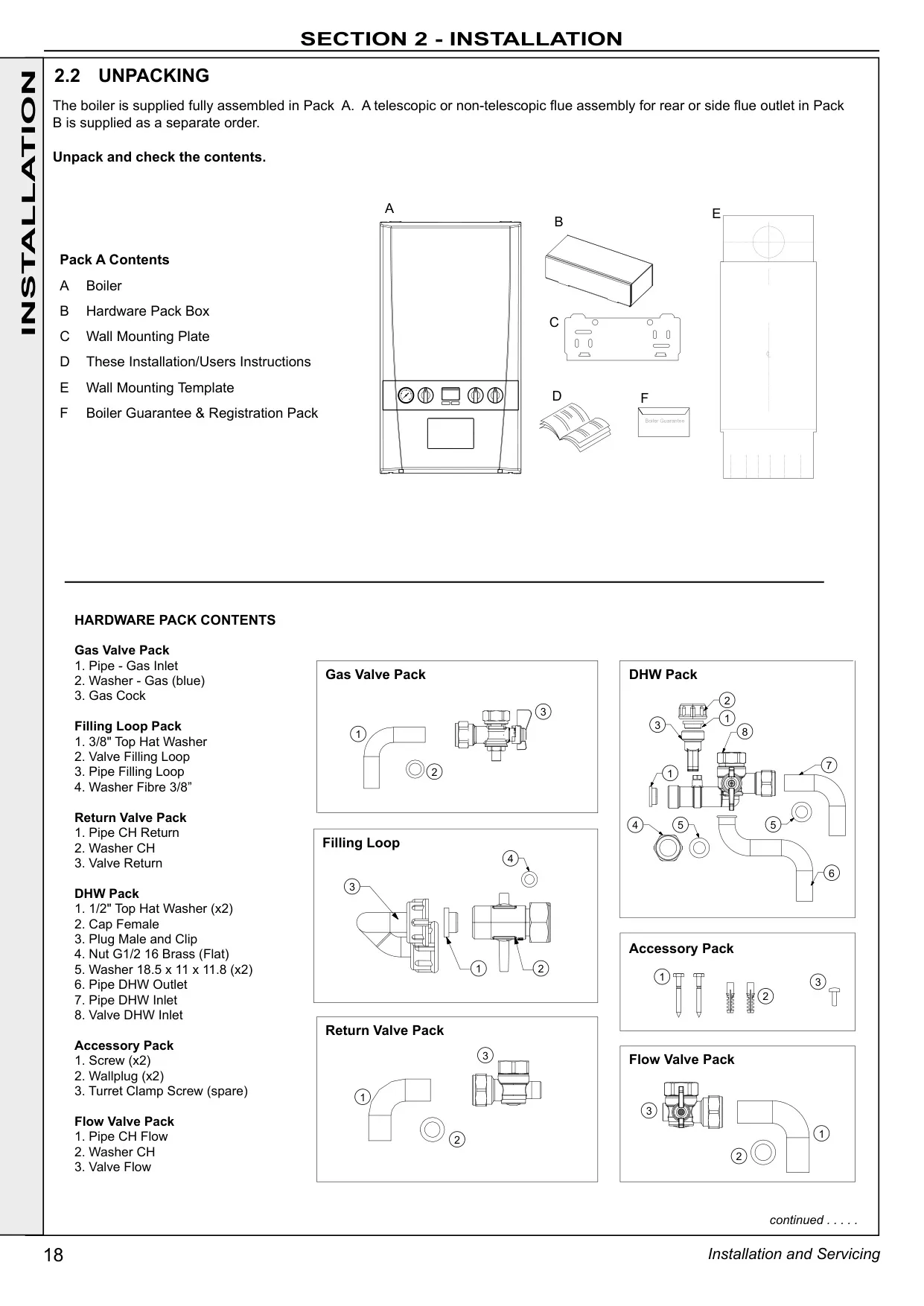
The Ideal Logic Combi ESP1 24 gives a home both central heating and instantaneous hot water from one compact unit. It has full sequence automatic spark ignition and fan-assisted combustion. The boiler arrives fully assembled with a plate heat exchanger, diverter valve, circulating pump, automatic bypass and a built-in filling loop, so fewer parts are needed on site. Its casing is white painted mild steel with a white polymer front panel, and the pipework runs downwards from preformed copper tails for a tidy finish.
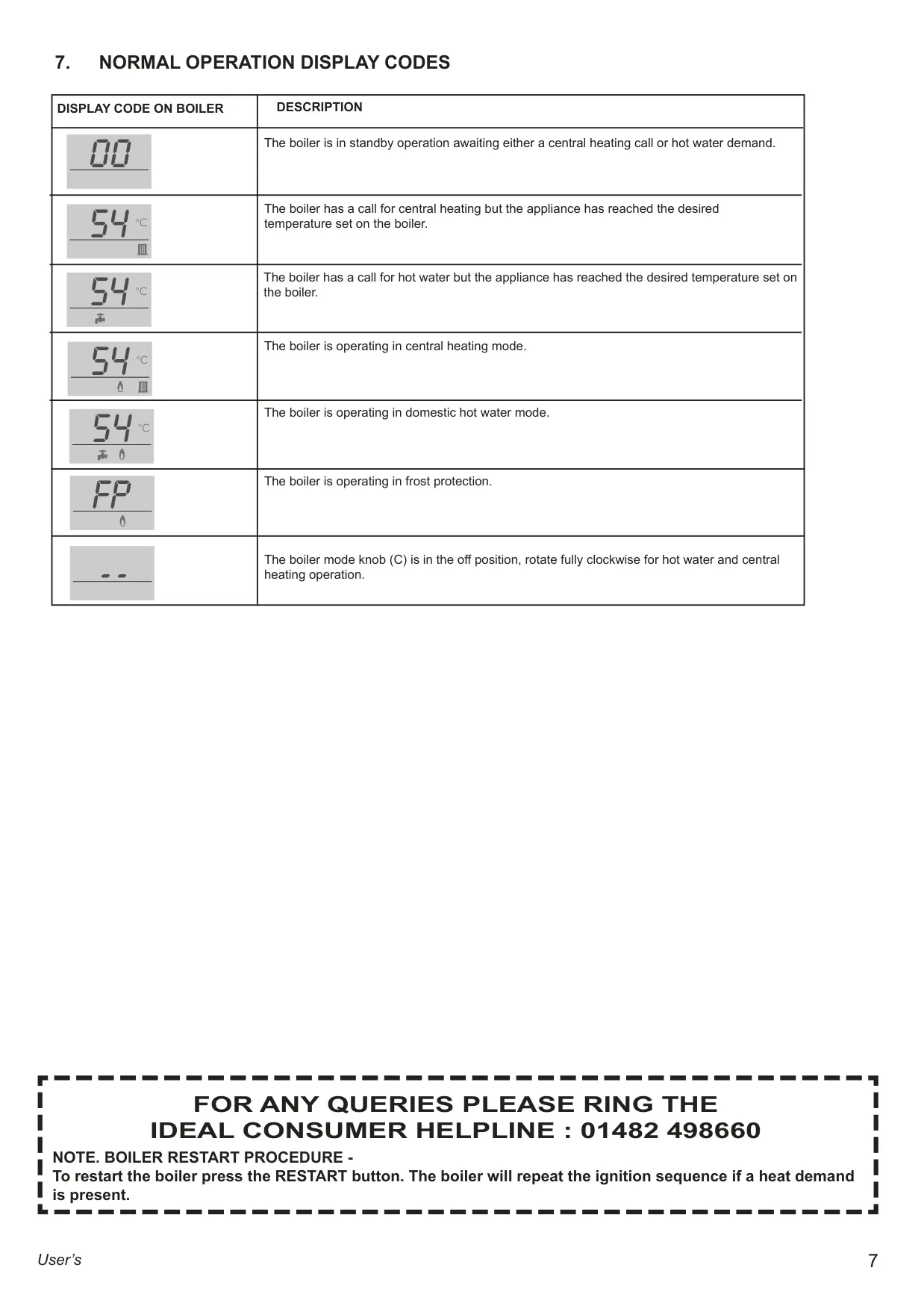
The front control panel has four controls: a hot water temperature knob, a central heating temperature knob, a mode knob with Boiler Off, summer and winter positions, and a restart button. A back-lit LCD shows the boiler status. For example, 00 means standby, FP means frost protection is running and - - means the boiler is switched off. In winter mode the boiler heats the radiators but gives priority to hot water whenever a tap is opened.
The heating knob has a marked economy setting. Keeping it at or below this setting lets the boiler condense more water from the flue gases, which saves gas. The manual says that turning the room thermostat down by 1°C can cut gas use by up to 10%. If a weather compensation sensor is fitted, the heating knob controls room temperature instead of radiator temperature. The boiler also works with OpenTherm controls through a separate low-voltage connection.
Frost protection works in every mode as long as the mains power stays on. The boiler fires when the water inside it drops below 5°C and runs until it reaches 19°C. Once every 24 hours the pump and diverter valve run briefly to stop them seizing. After the burner shuts off, a fan overrun cycle runs, and it should not be interrupted by switching off the mains power.
A 75 mm siphonic condensate trap lowers the risk of the condensate pipe freezing. If the pipe does freeze, the boiler makes a gurgling noise and then locks out with an L2 code. You can thaw the pipe with a hot water bottle, a heat pack or warm (not boiling) water. Inside the house, condensate pipework should be at least 19 mm ID. Outside, it should be at least 30 mm ID, with a fall of at least 45 mm per metre.
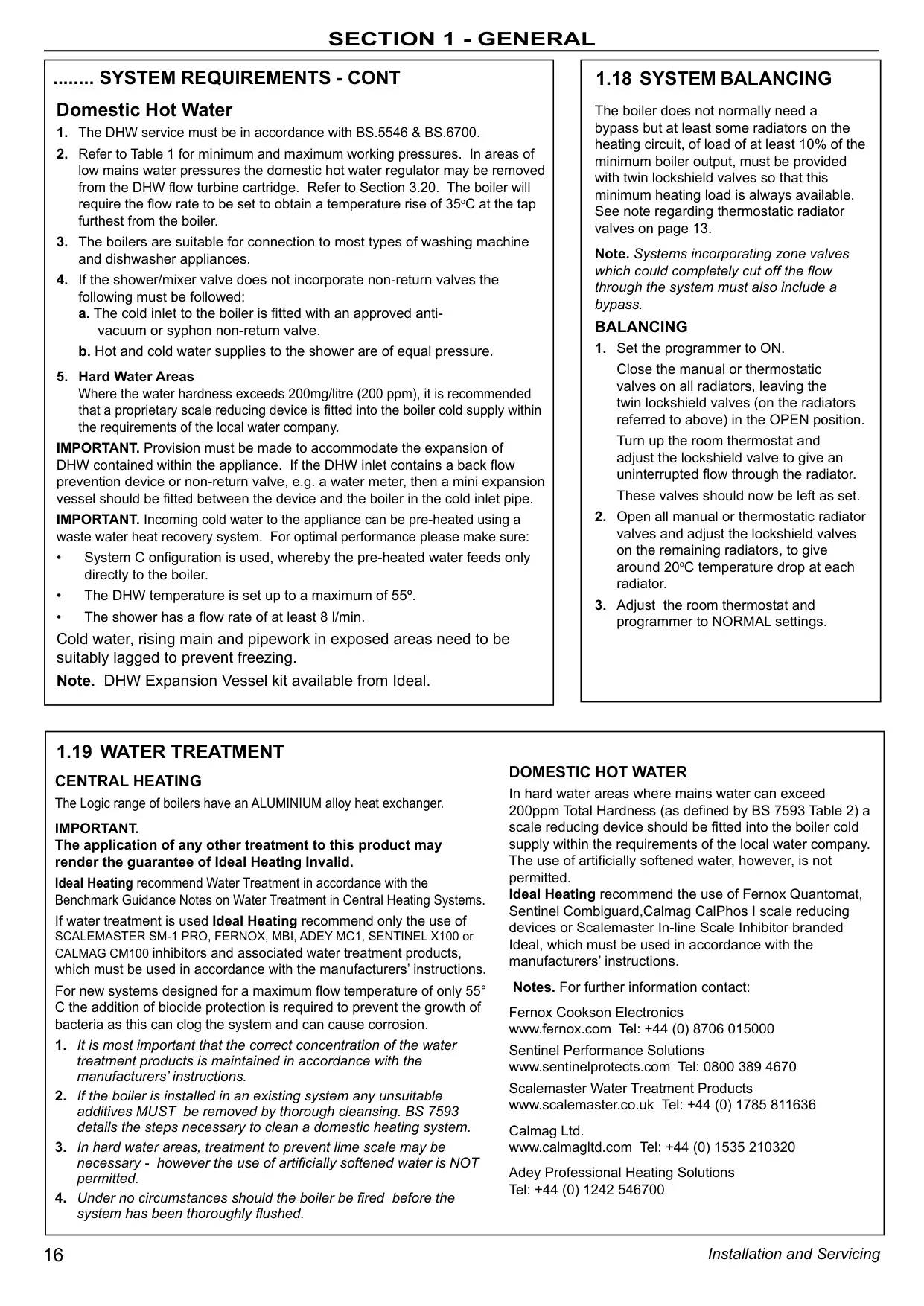
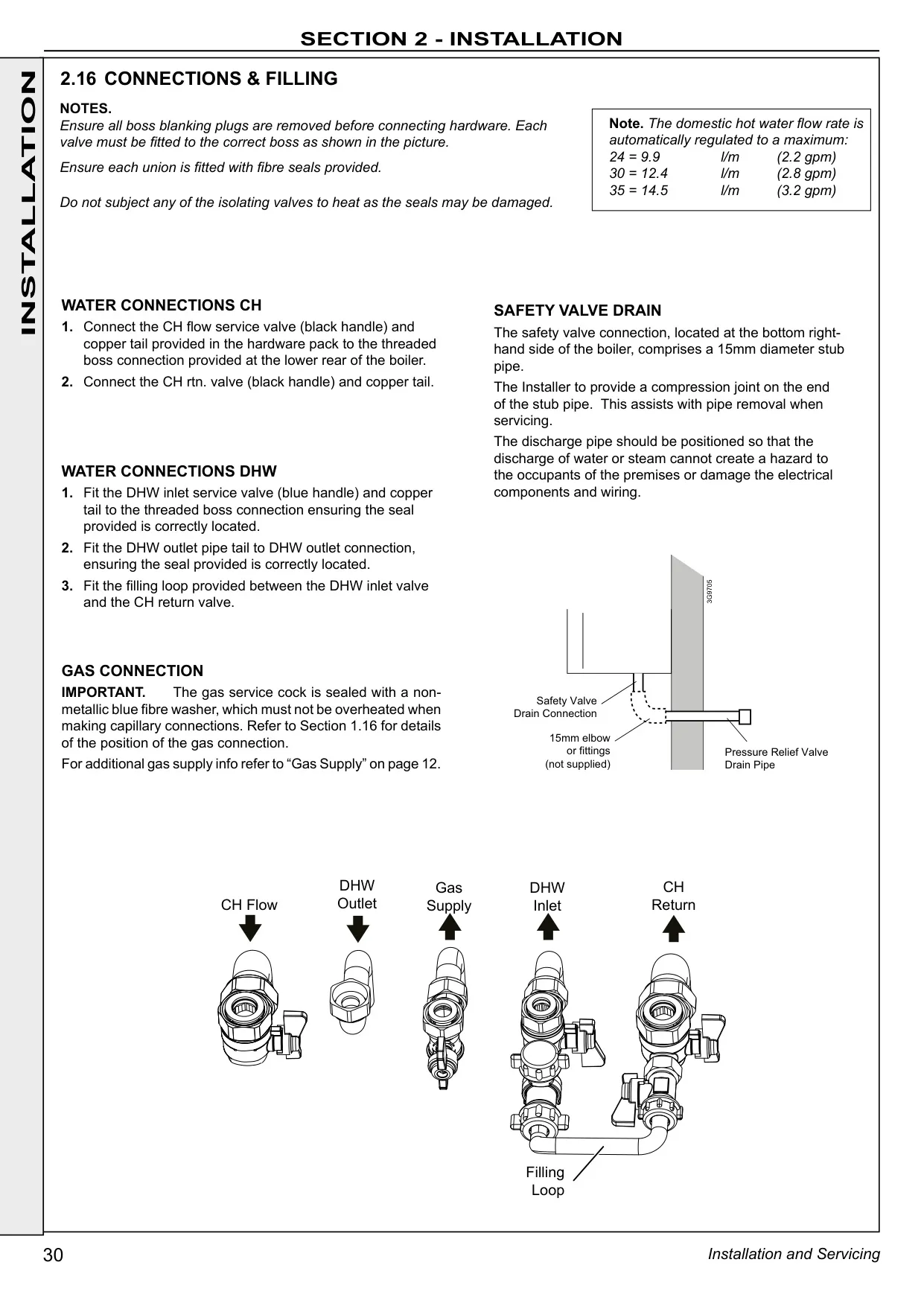
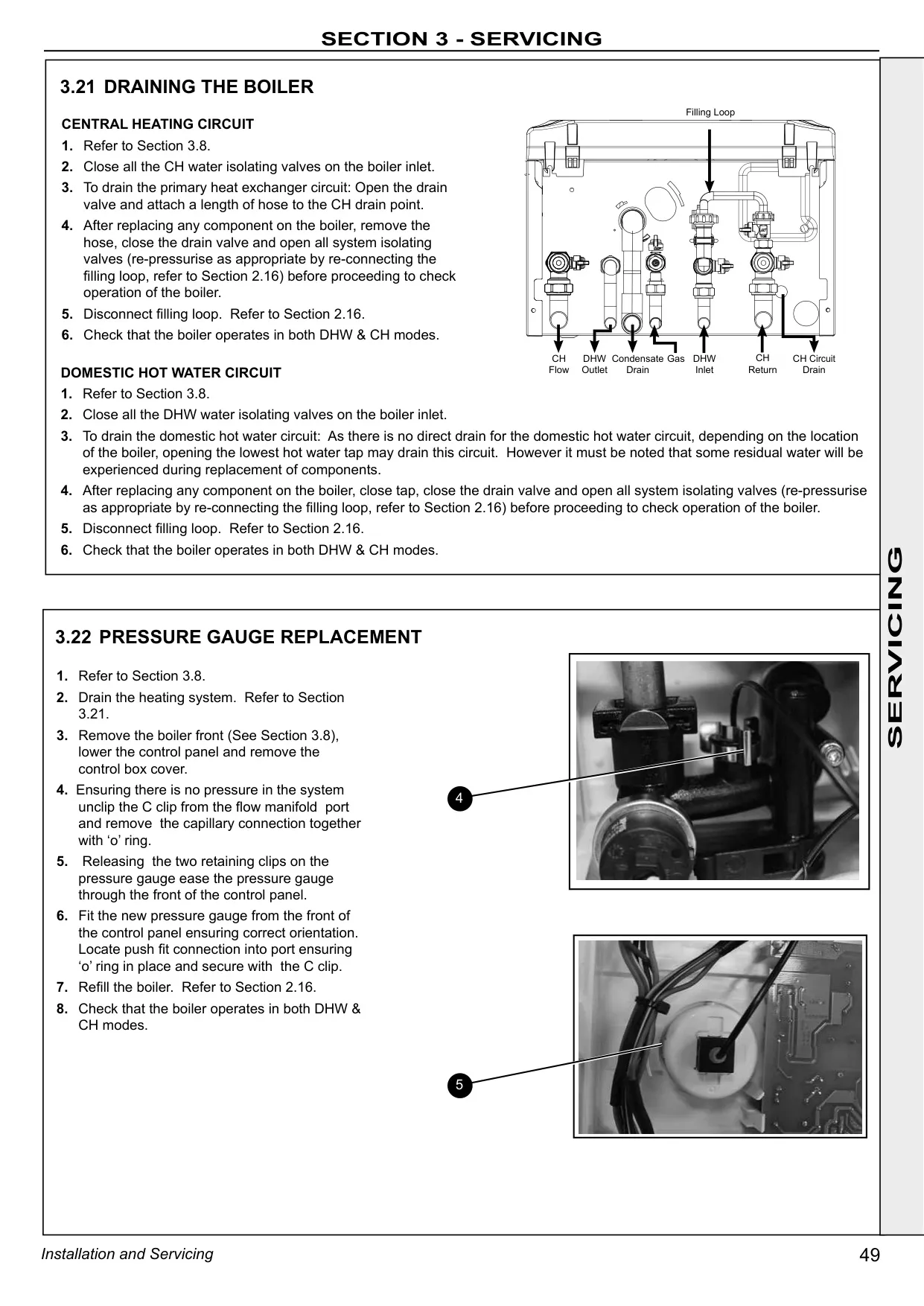
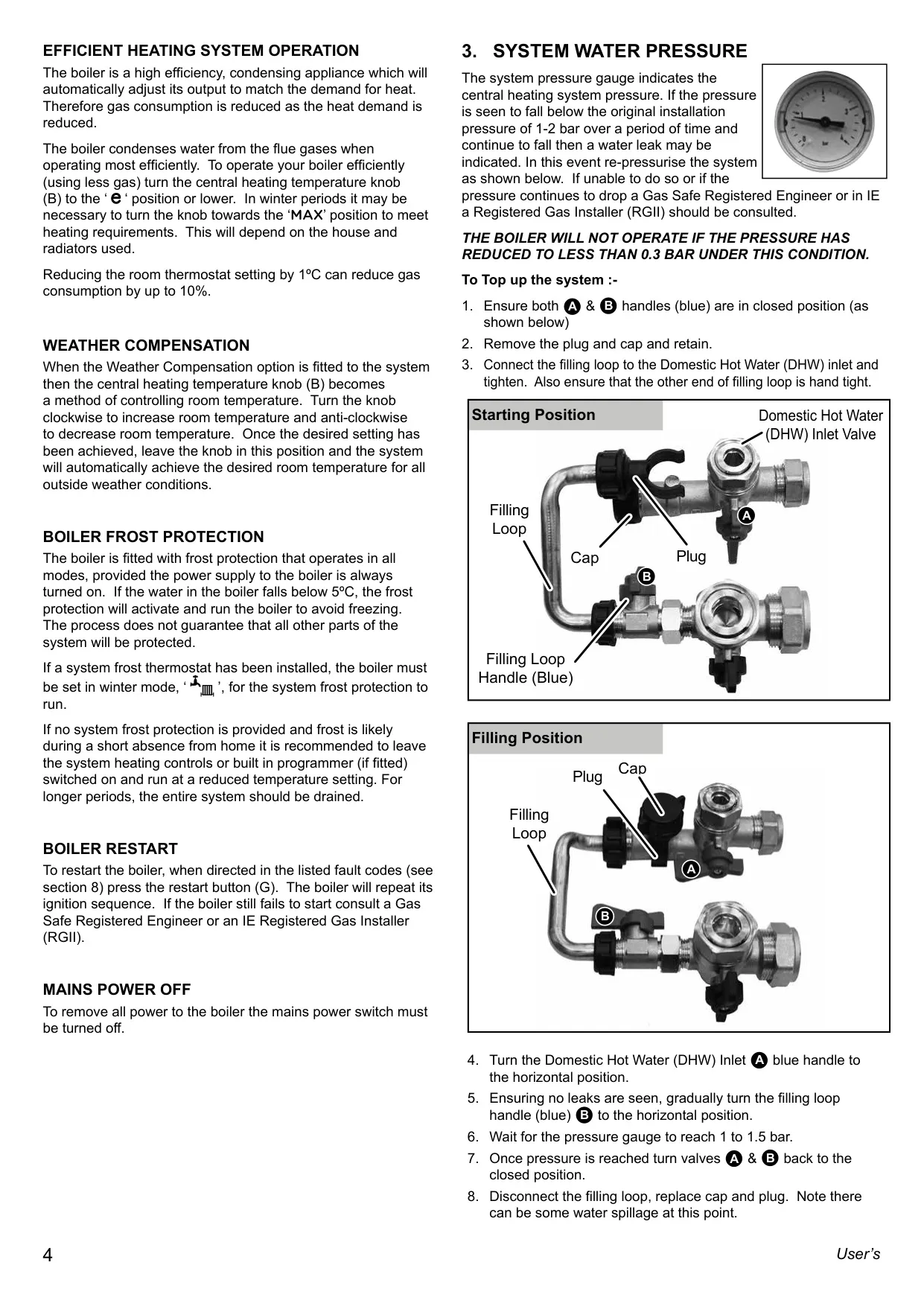
You can top up the system pressure yourself with the built-in filling loop between the hot water inlet valve and the heating return valve. Fill until the gauge shows 1 to 1.5 bar. The boiler stops working below 0.3 bar. Installers have a hidden installer mode for running the burner at minimum or maximum rate, venting air, parking the diverter valve for service and choosing a 70% or 100% minimum pump speed.
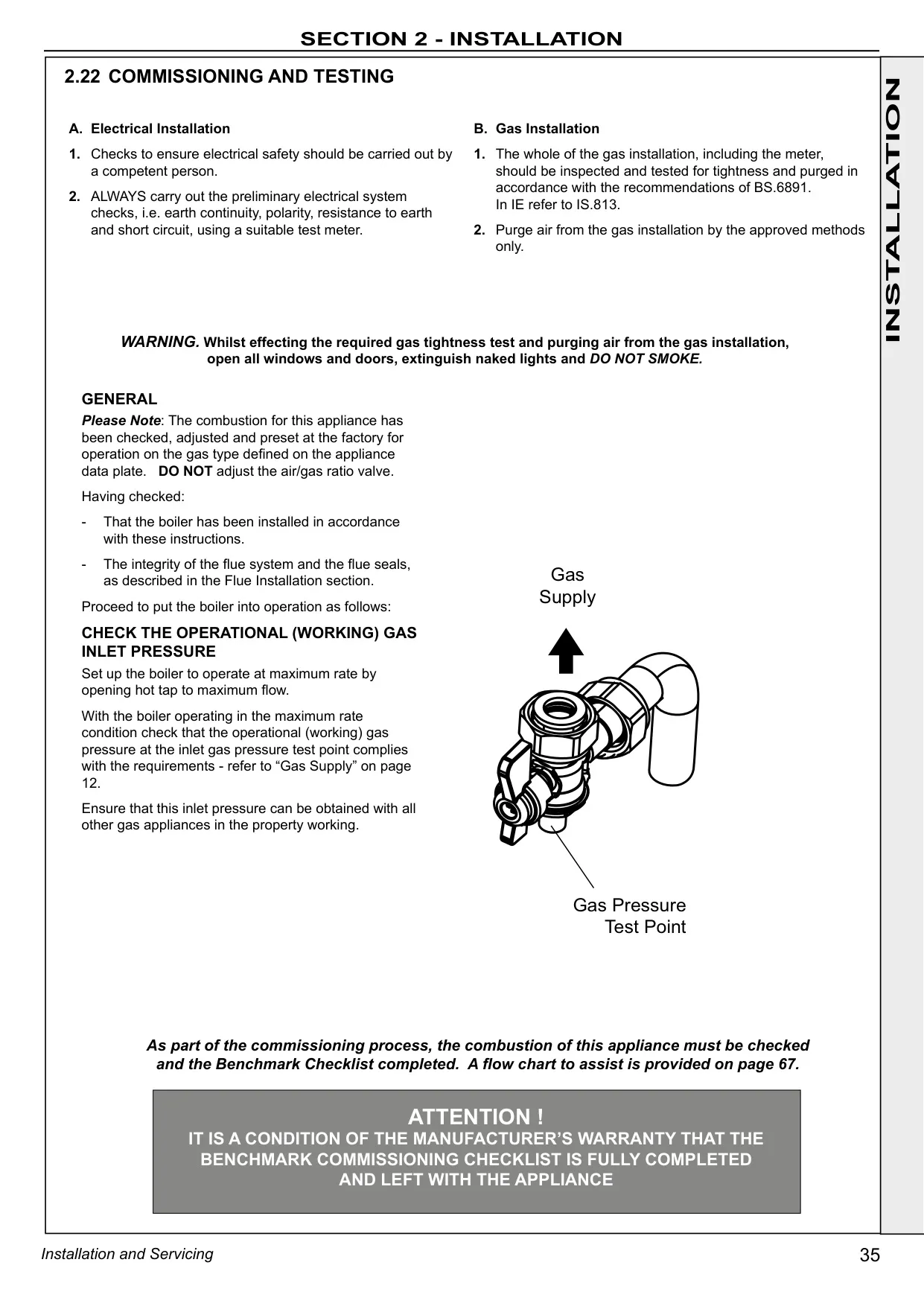
The 1:1 gas valve lets the boiler reach full output at inlet pressures as low as 14 mbar. For flues, Ideal offers telescopic, non-telescopic, vertical, high level, balcony, soffit and aluminium high-rise options. To keep the warranty valid, the Benchmark checklist must be completed, the boiler registered and serviced every year, and the heating water treated with an inhibitor that is approved for aluminium heat exchangers.
Frequently Asked Questions (FAQs)
Can't find the answer you need? Here are some frequently asked questions about the Ideal Logic Combi ESP1 24 Boiler, and we answer them below.