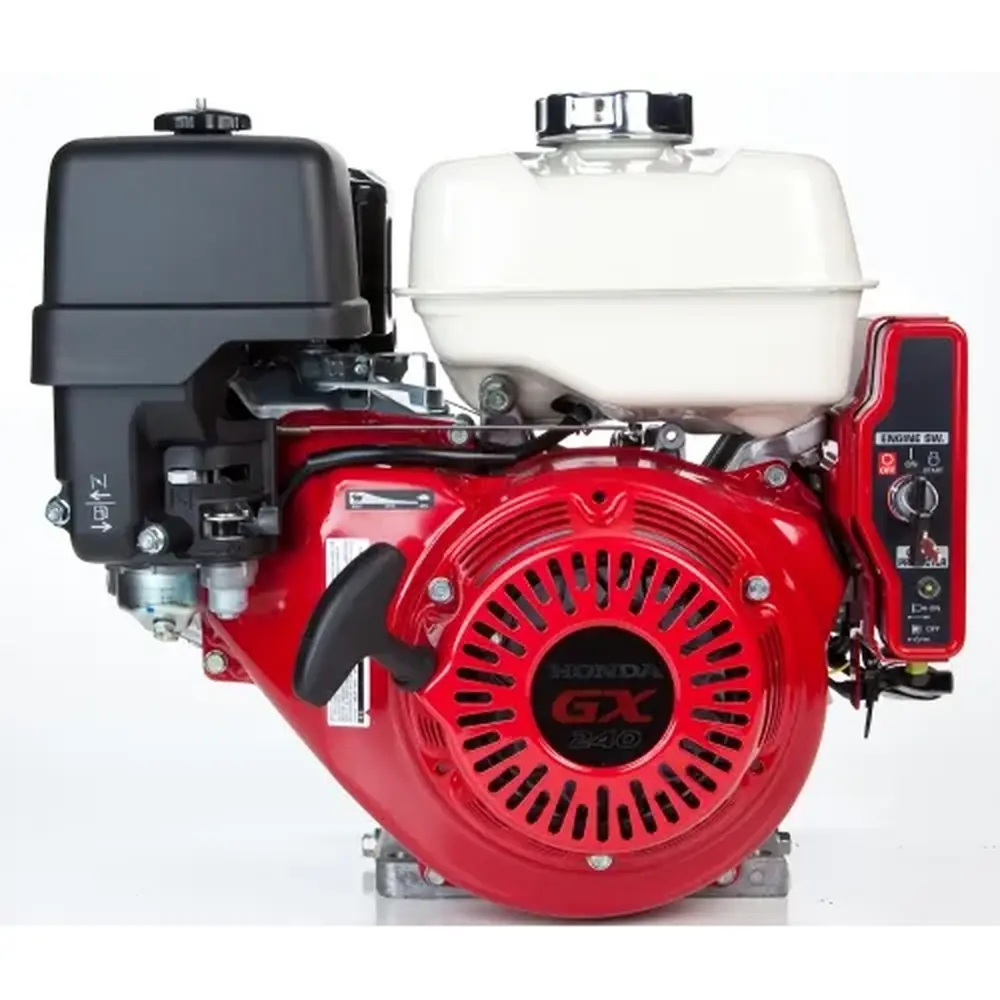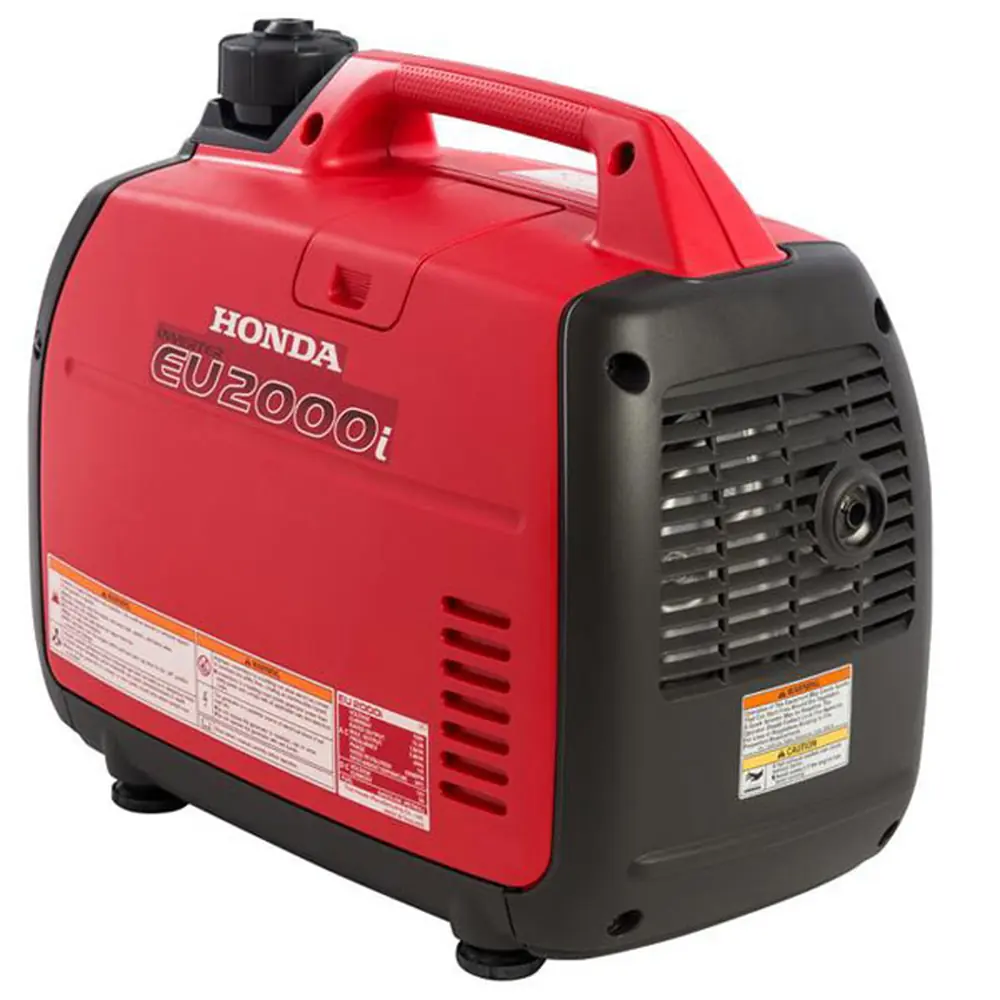
Honda GX660 Engine Instruction Manual

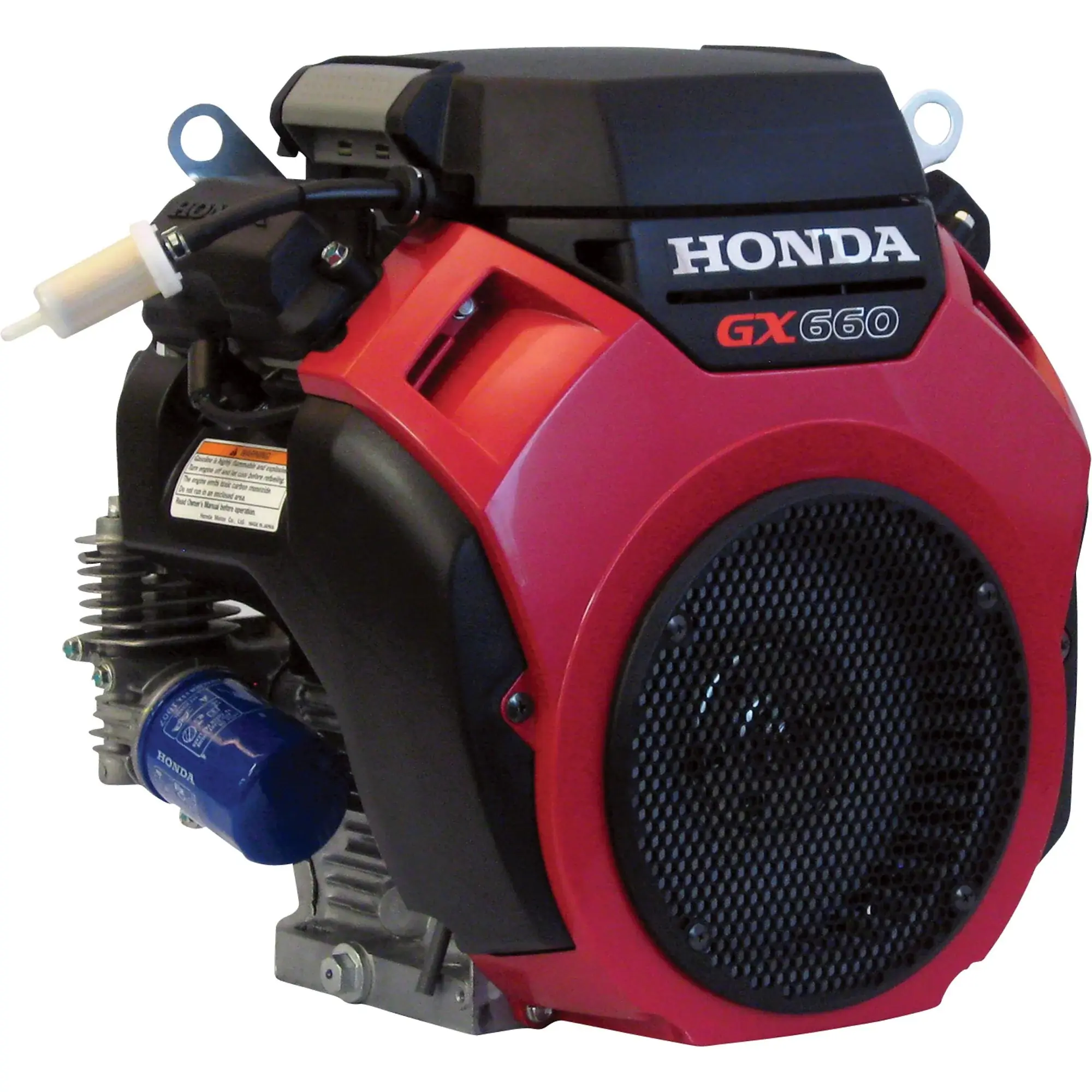
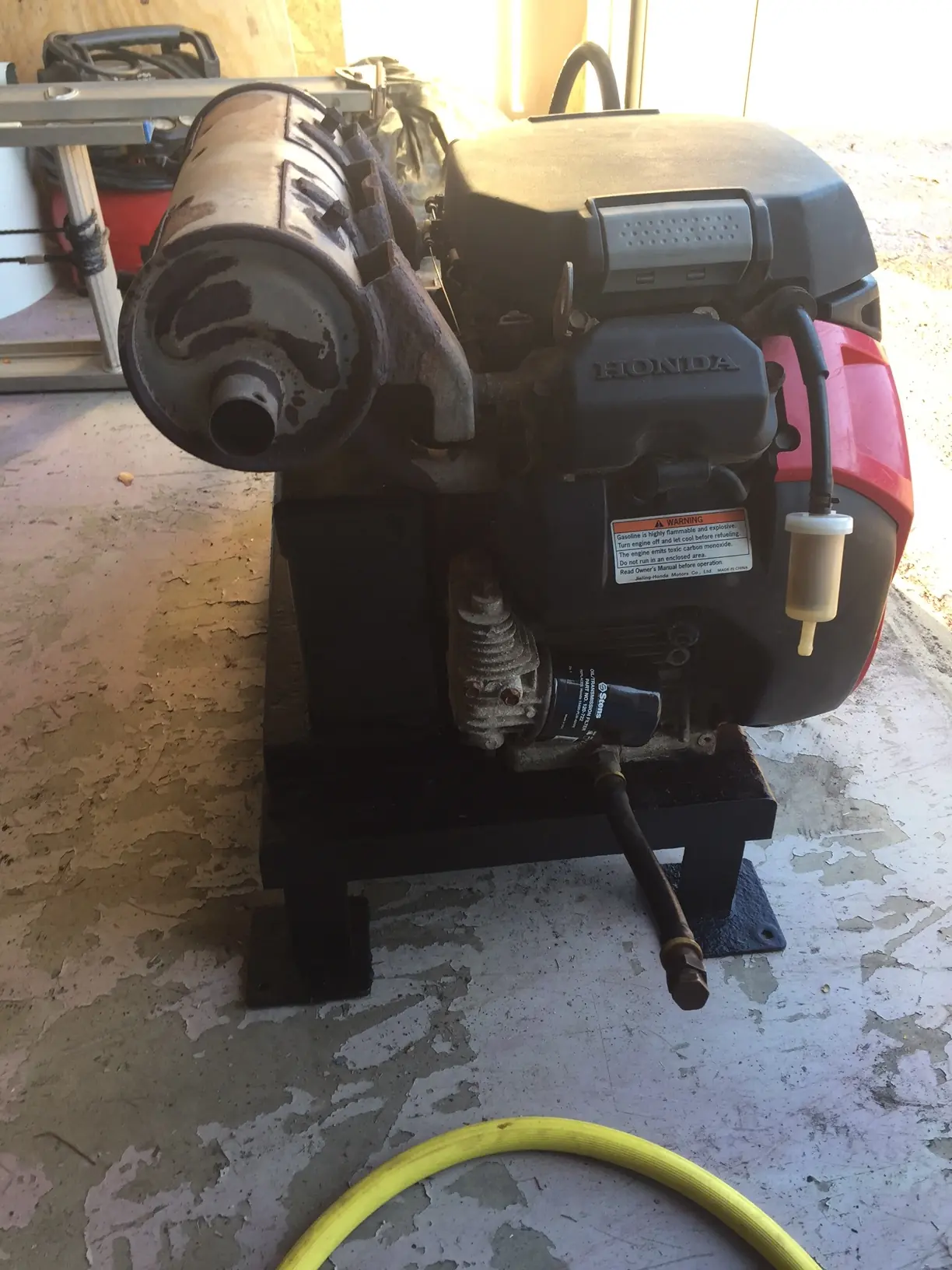
Honda GX660 Engine









Honda GX660 Engine Instructions
Here we offer the Honda GX660 Engine manual completely free and in English. We have cataloged this manual in the Engines section on Manualverse, and it has been rated by 1 users with an average rating of 5. If you have any specific questions about Honda GX660 Engine, we suggest checking the Frequently Asked Questions (FAQs) section of this manual.
Product Images


Honda GX660 Engine Specifications
| Feature | Specification |
|---|---|
| Model / Type | GX660 (TAF-Type) |
| Dimensions (L × W × H) | 429 × 450 × 438 mm (16.9 × 17.7 × 17.2 in) |
| Dry Mass (Weight) | 45.3 kg (99.9 lbs) |
| Engine Type | 4-stroke, overhead valve, 2 cylinders (90° V-Twin) |
| Displacement | 688.0 cm³ (41.97 cu-in) |
| Bore × Stroke | 78.0 × 72.0 mm (3.07 × 2.83 in) |
| Net Power (SAE J1349) | 16.0 kW (21.8 PS, 21.5 bhp) at 3,600 rpm |
| Max. Net Torque (SAE J1349) | 48.3 N·m (4.93 kgf·m, 35.6 lbf·ft) at 2,500 rpm |
| Engine Oil Capacity (without oil filter replacement) | 1.5 L (1.6 US qt, 1.3 Imp qt) |
| Engine Oil Capacity (with oil filter replacement) | 1.7 L (1.8 US qt, 1.5 Imp qt) |
| Recommended Engine Oil | SAE 10W-30 or 5W-30, API SJ or later (full synthetic 5W-30 from -15°C to -25°C) |
| Cooling System | Forced air |
| Ignition System | CDI type magneto ignition |
| PTO Shaft Rotation | Counterclockwise |
| Recommended Fuel | Unleaded gasoline, pump octane 86 or higher (research octane 91 or higher) |
| Maximum Ethanol / Methanol Content | 10% ethanol (E10) / 5% methanol by volume |
| Spark Plug | NGK ZFR5F |
| Spark Plug Gap | 0.7–0.8 mm (0.028–0.031 in) |
| Idle Speed | 1,400 ± 150 rpm |
| Valve Clearance (cold) | IN: 0.08 ± 0.02 mm; EX: 0.10 ± 0.02 mm |
| Recommended Battery | 12 V – 36 Ah |
| Main Fuse | 30 A |
| Charge Coil Versions | 2.7 A or 17 A (with or without control box) |
| Oil Filter Tightening Torque | 12 N·m (1.2 kgf·m, 9 lbf·ft) |
| Maximum Operating Slope | 20° |
Honda GX660 Engine Details
The Honda GX660 is a commercial-grade V-twin engine for demanding equipment. Some applicable types come with an Oil Alert system, which protects the engine when oil runs low. Before the crankcase oil level drops below a safe limit, a red indicator lights up and the engine shuts down automatically. The engine switch stays in the ON position when this happens. If the engine stops and will not restart, the manual says to check the oil level before looking for other faults.
The engine also has a fuel-cut solenoid. This solenoid lets fuel reach the carburetor main jet when the switch is set to ON or START, and it stops the flow when the switch is set to OFF. The solenoid needs battery power, so the engine has to stay connected to the battery to run. Disconnecting the battery while the engine is running cuts the fuel flow and stops the engine. An hour meter counts operating time only while the engine is running, not when the switch is simply turned ON.
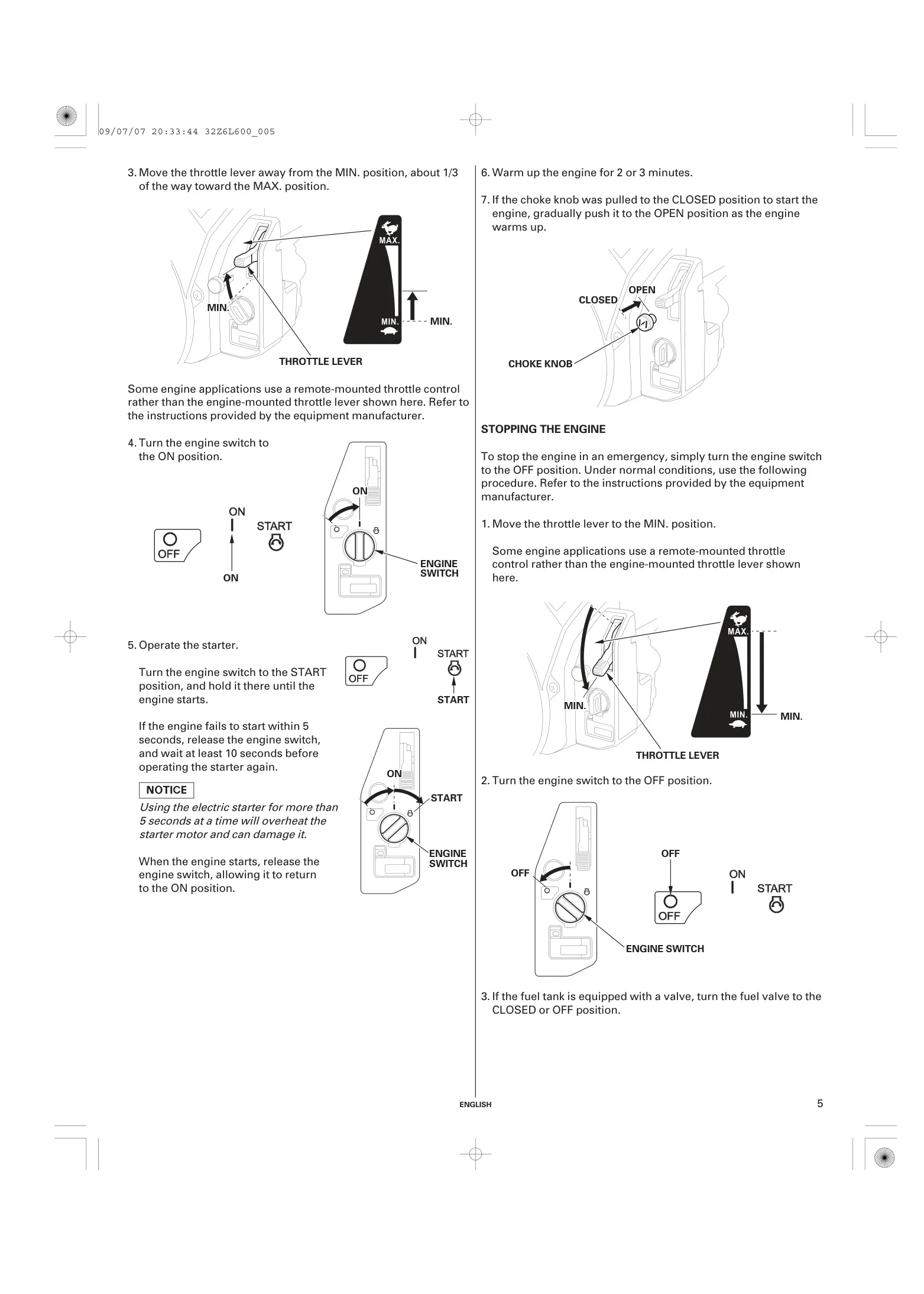
Starting uses an electric starter controlled by the engine switch. For a cold start, pull the choke knob to CLOSED and move the throttle about one third of the way toward MAX. Then hold the switch at START. Don't run the starter for more than 5 seconds at a time, and wait at least 10 seconds before trying again so the starter motor doesn't overheat. The manual recommends a warm-up of 2 to 3 minutes. The throttle and choke levers have holes for remote cable linkage, and both left-side and right-side installations are possible.
The manual gives a full maintenance schedule. Check the oil level before each use, and change the oil after the first month or 20 hours, then every 6 months or 100 hours. Replace the oil filter every 200 hours using a filter socket, which avoids damaging the oil pressure switch. Service the spark plugs every 6 months or 100 hours and replace them every year or 300 hours. Your dealer should handle valve clearance and idle speed every year or 300 hours, combustion chamber cleaning every 1,000 hours, and fuel filter replacement every 2 years or 500 hours.
The dual-element air cleaner pairs a paper filter with a foam pre-filter. You can clean the paper element by tapping it or by blowing compressed air through it at no more than 207 kPa (30 psi). Never brush it. Wash the foam element in soapy water or a non-flammable solvent, then oil it lightly and squeeze out the excess. The manual advises cleaning the air cleaner more often in dusty conditions, because running without a working filter causes rapid engine wear.
The engine is not factory-equipped with a spark arrester. Honda dealers sell one as an optional part, and some areas require one by law. If fitted, it needs cleaning every 100 hours. For use at high altitude above 1,500 meters (5,000 feet), a dealer should modify the carburetor. Power still drops about 3.5% for every 300 meters of altitude, even after the modification. A modified carburetor must be returned to factory settings before the engine is used at lower altitudes, or the engine can overheat.
For storage, add a fuel stabilizer or drain the fuel tank and carburetor through the drain screw. Change the oil, and pour 5 to 10 cc of oil into each cylinder. Remove the battery and recharge it once a month. The engine meets EPA, California and Canadian emission standards. On California models, an Air Index label shows the engine's emission durability period. If the fuse keeps blowing, this usually points to a short circuit or overload that a Honda dealer should repair.
Frequently Asked Questions (FAQs)
Can't find the answer you need? Here are some frequently asked questions about the Honda GX660 Engine, and we answer them below.