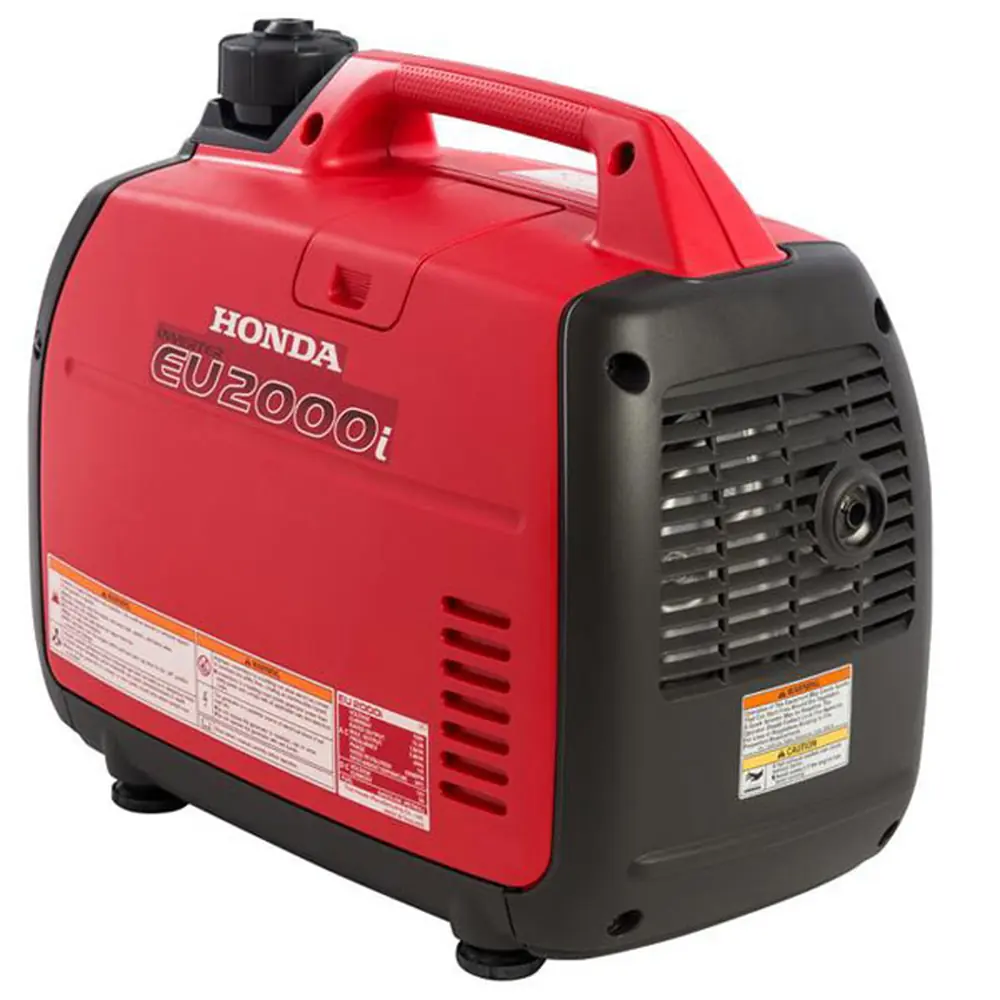
Honda GX240 Engine Instruction Manual
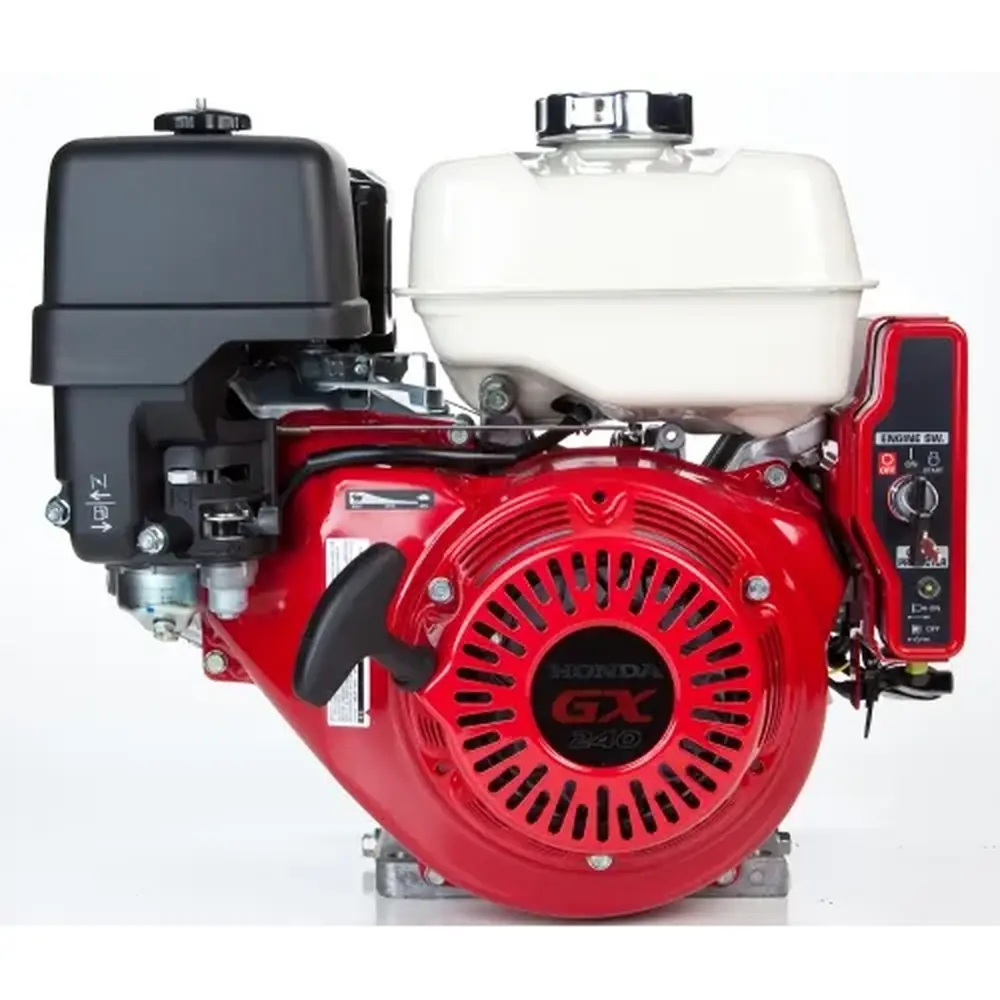
Honda GX240 Engine

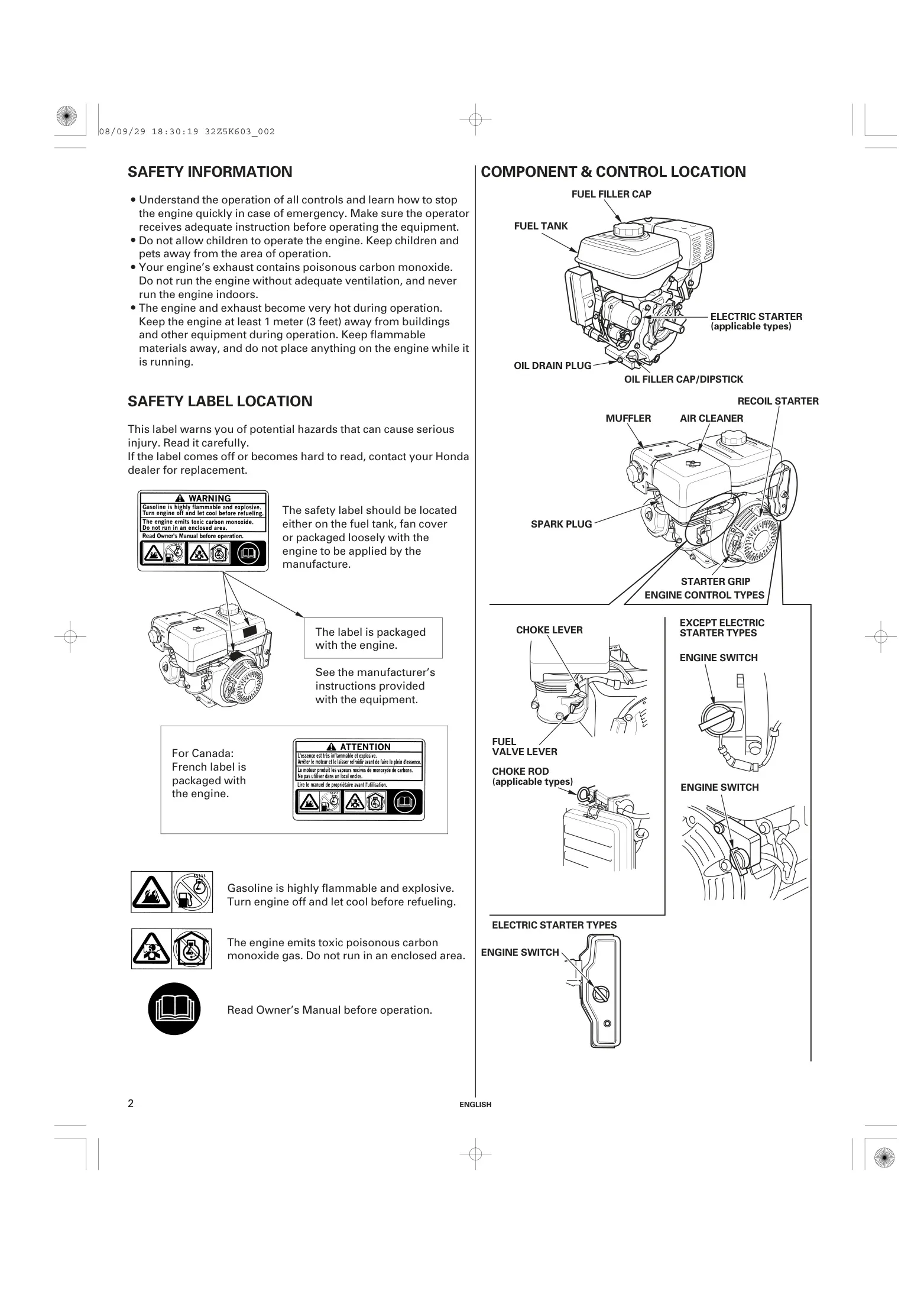
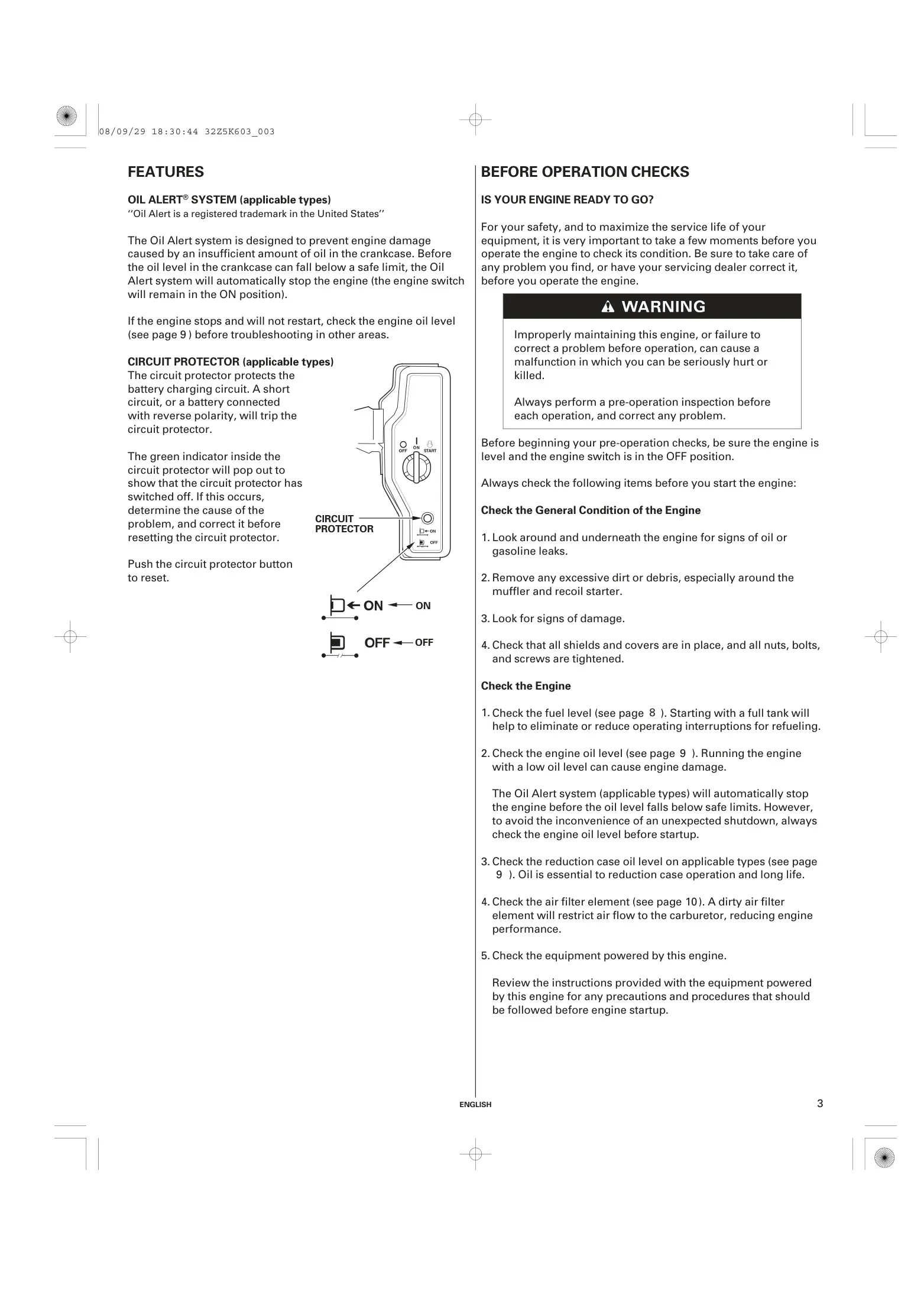








Honda GX240 Engine Instructions
Here we offer the Honda GX240 Engine manual completely free and in English. We have cataloged this manual in the Engines section on Manualverse, and it has been rated by 1 users with an average rating of 5. If you have any specific questions about Honda GX240 Engine, we suggest checking the Frequently Asked Questions (FAQs) section of this manual.
Product Images

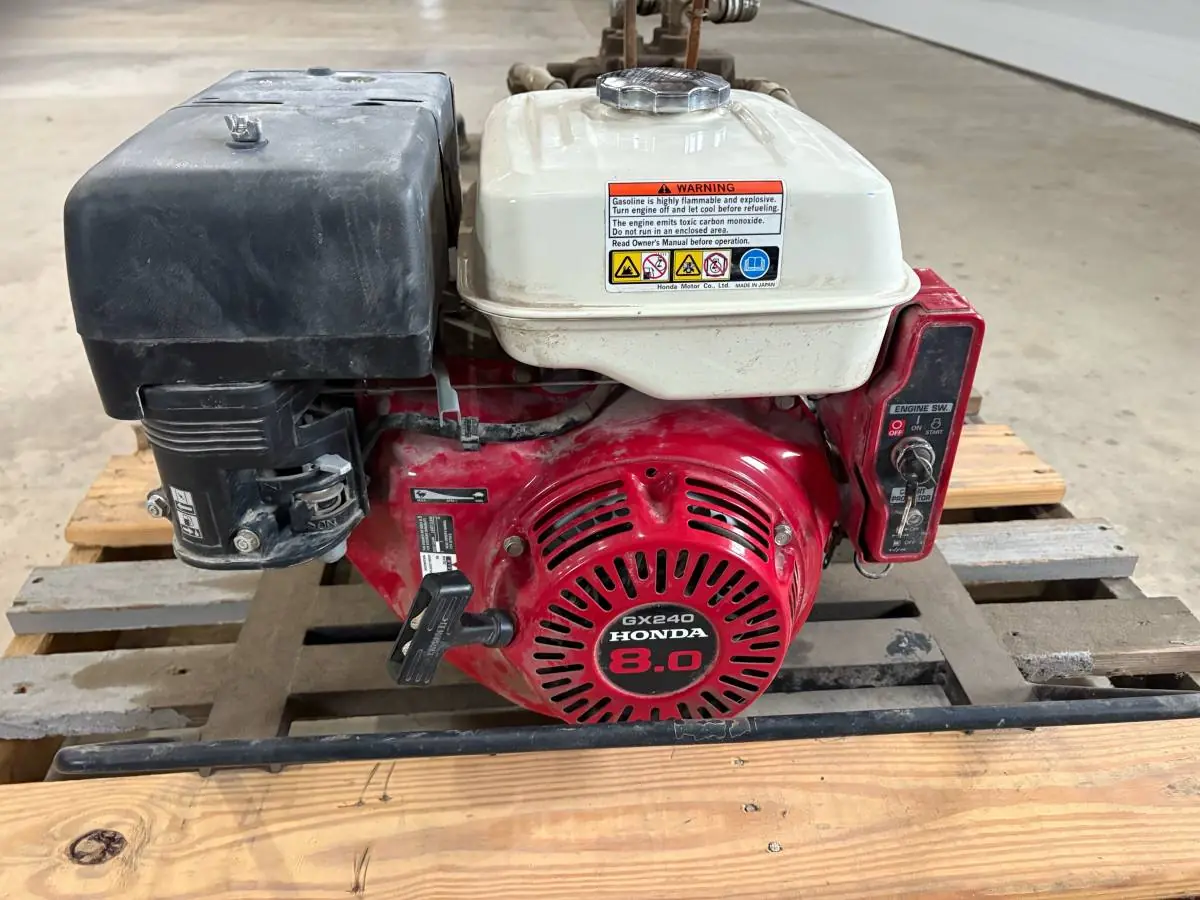
Honda GX240 Engine Specifications
| Feature | Specification |
|---|---|
| Engine Model Variants | GX240UT1, GX240RT1 |
| Engine Type | 4-stroke, overhead valve, single cylinder |
| Displacement | 242 cm³ (14.8 cu-in) |
| Bore x Stroke | 73.0 x 58.0 mm (2.9 x 2.3 in) |
| Net Power (SAE J1349) | 5.3 kW (7.2 PS, 7.1 bhp) at 3,600 rpm |
| Max. Net Torque (SAE J1349) | 15.3 N·m (1.56 kgf·m, 11.3 lbf·ft) at 2,500 rpm |
| Dimensions (L x W x H) | 355 x 430 x 422 mm (14.0 x 16.9 x 16.6 in) |
| Dry Mass | 25.0 kg (55.1 lbs) |
| Engine Oil Capacity | 1.1 L (1.2 US qt, 1.0 Imp qt) |
| Fuel Tank Capacity | 5.3 L (1.40 US gal, 1.17 Imp gal) |
| Cooling System | Forced air |
| Ignition System | Transistor magneto |
| PTO Shaft Rotation | Counterclockwise |
| Recommended Fuel | Unleaded gasoline, pump octane 86 or higher (research octane 91 or higher) |
| Recommended Engine Oil | SAE 10W-30, API SJ or later (general use) |
| Reduction Case Oil Capacity | 0.30 L (0.32 US qt, 0.26 Imp qt), applicable types |
| Oil-Bath Air Cleaner Oil Capacity | 60 cm³ (2.0 US oz, 2.1 Imp oz) |
| Spark Plug | BPR6ES (NGK), W20EPR-U (DENSO) |
| Spark Plug Gap | 0.7–0.8 mm (0.028–0.031 in) |
| Idle Speed | 1,400 ± 150 rpm |
| Valve Clearance (Cold) | IN: 0.15 ± 0.02 mm, EX: 0.20 ± 0.02 mm |
| Recommended Battery (Electric Start) | 12 V 14 Ah to 12 V 30 Ah |
| Spark Plug Wrench Size | 13/16-inch |
Honda GX240 Engine Details
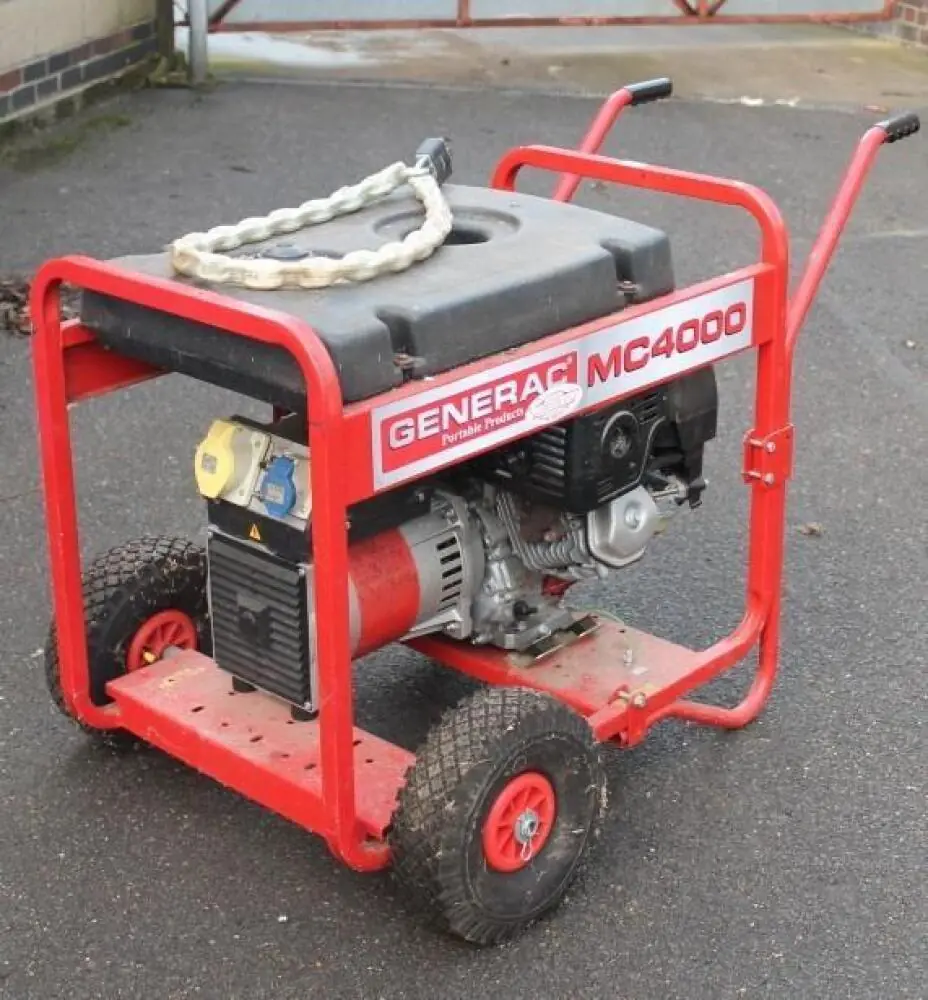
The Honda GX240 is the engine that powers a range of generators and other equipment, and its owner's manual covers both protection features and maintenance. On applicable types, the Oil Alert system shuts the engine down automatically before the crankcase oil falls below a safe level. The engine switch stays in the ON position when this happens. If the engine stops and will not restart, check the oil level before looking for other causes.
Electric-start versions have a circuit protector that guards the battery charging circuit. It trips on a short circuit or if the battery is connected with reverse polarity. A green indicator pops out when it trips, and you reset it by pressing the button. A fuse in the engine switch box also protects the starter relay and charging circuits. If the fuse burns out, you can still start the engine with the recoil starter, but the battery will not charge.
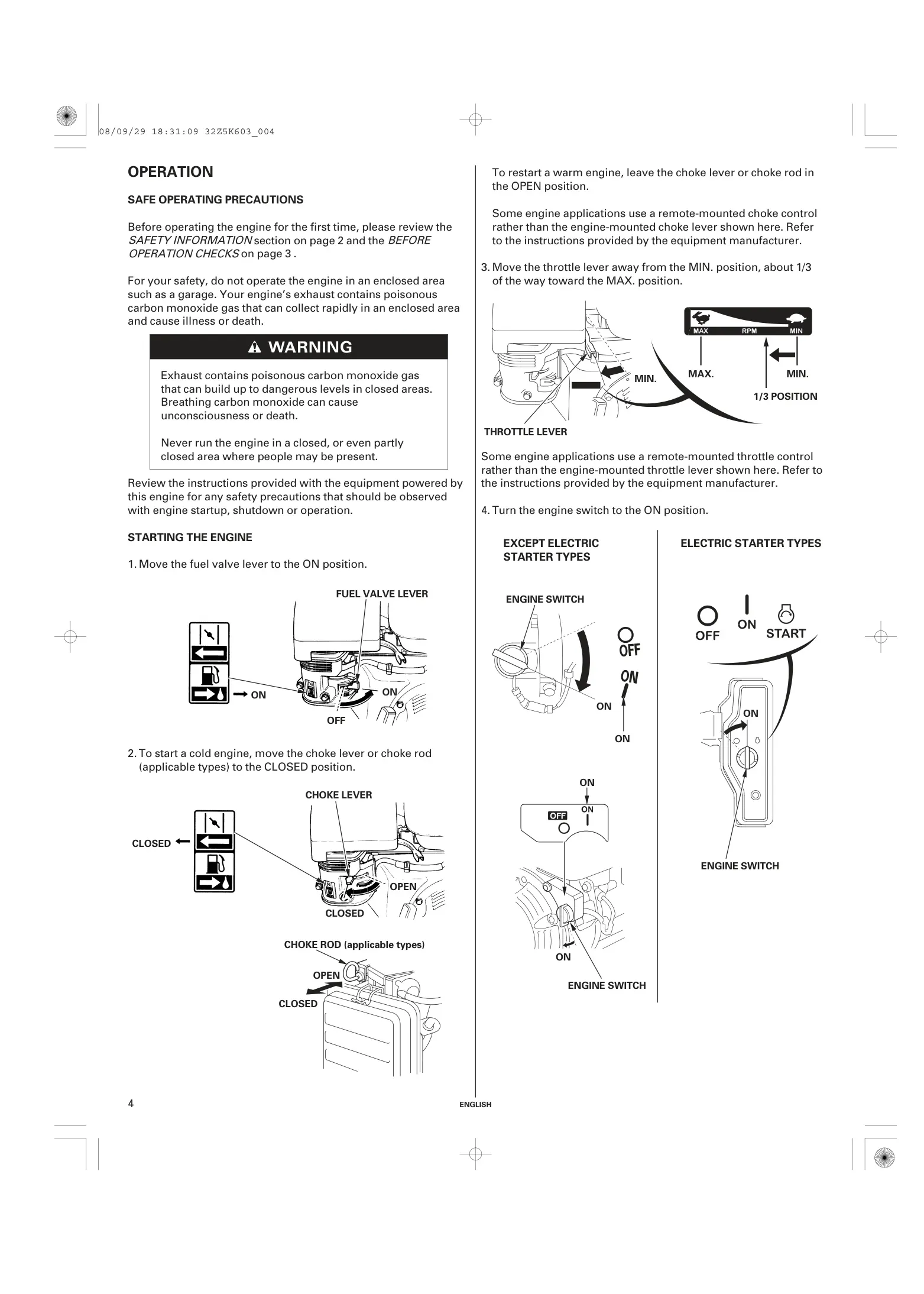
When starting, close the choke for a cold engine and set the throttle about 1/3 of the way from MIN toward MAX. Do not run the electric starter for more than 5 seconds at a time. If the engine doesn't start, wait at least 10 seconds before trying again so the starter motor doesn't overheat. To stop the engine in an emergency, turn the engine switch to OFF.
The manual covers several air cleaner designs: standard dual-element, cyclone dual-element, oil-bath, single-element and low-profile. You can tap paper elements clean or blow them out from the inside with compressed air at no more than 207 kPa (30 psi). Wash foam elements, soak them in clean engine oil and squeeze out the excess. Too much oil left in the foam makes the engine smoke at startup.
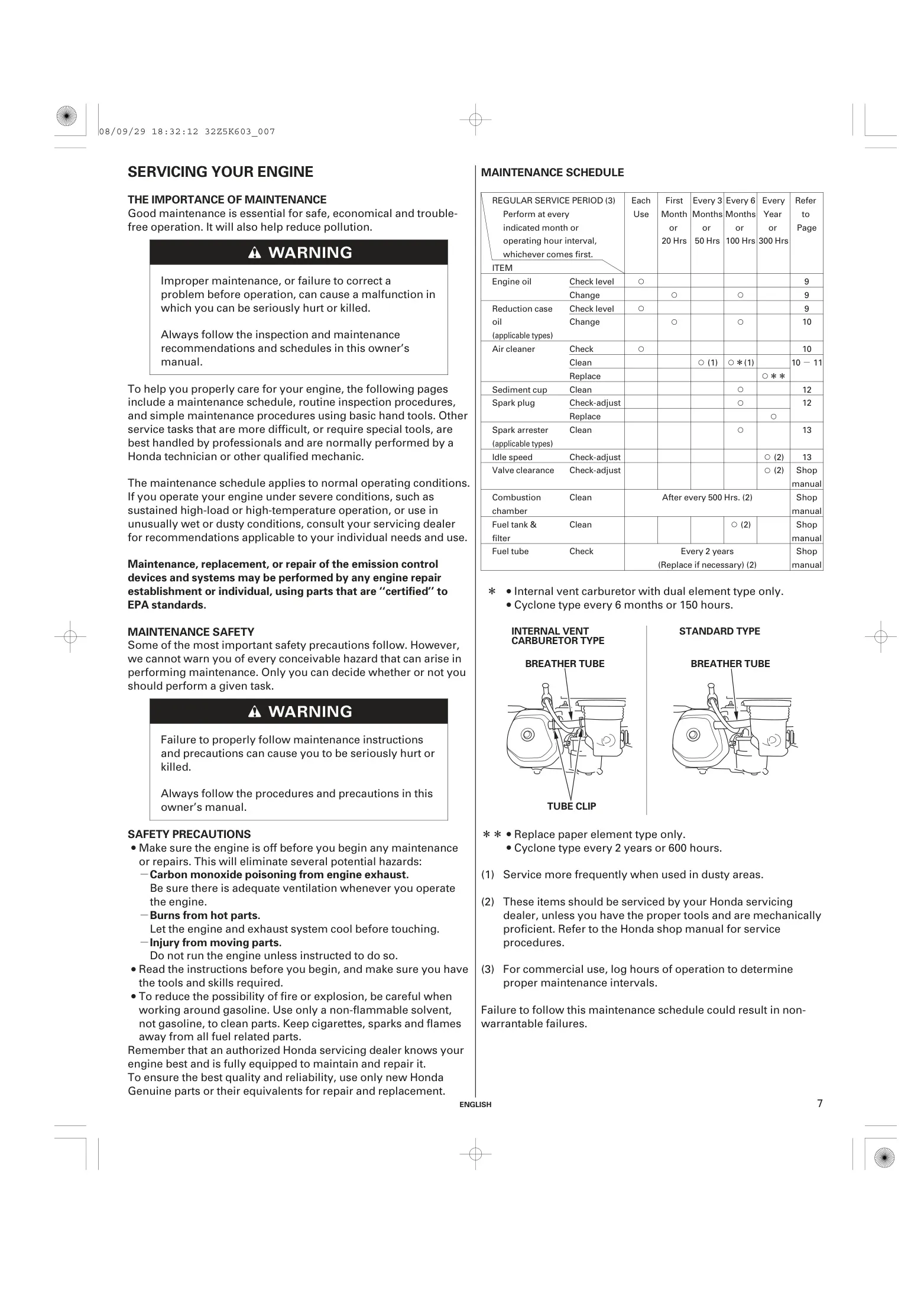
The maintenance schedule calls for an oil change after the first 20 hours, then every 6 months or 100 hours. Clean the air filter every 3 months or 50 hours, more often in dusty conditions. Service the spark arrester every 100 hours. The combustion chamber needs cleaning every 500 hours, and the fuel tube should be checked every two years. For commercial use, log the operating hours to time maintenance correctly.
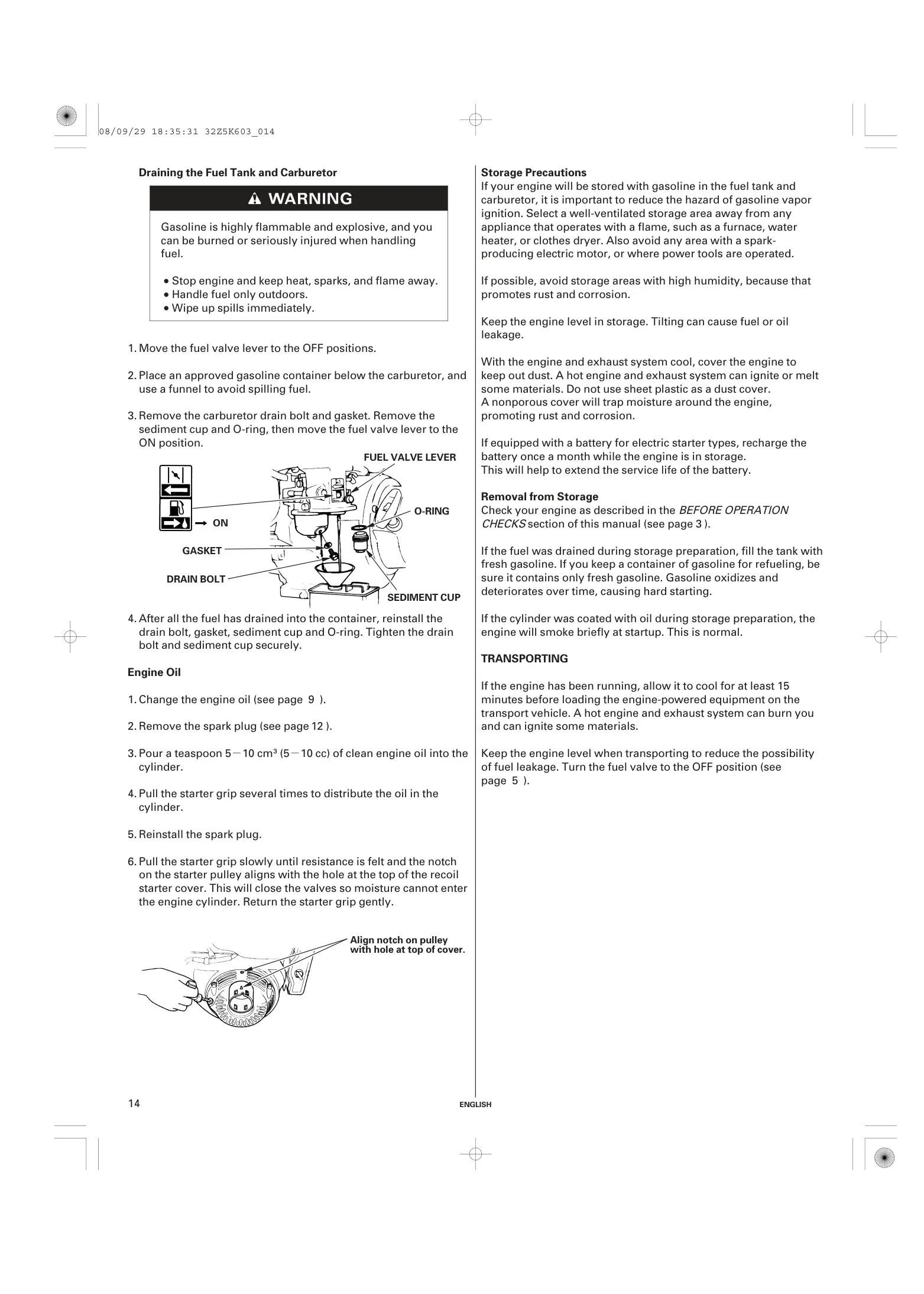
The engine can run on gasoline with up to 10% ethanol (E10) or 5% methanol. Above 1,500 meters (5,000 feet), the carburetor should be modified for altitude. Even with the modification, power drops about 3.5% for every 300 meters of altitude. Running a modified carburetor below 1,500 meters can overheat the engine. For long-term storage, add a fuel stabilizer or drain the tank and carburetor. Also pour 5–10 cc of oil into the cylinder.
The throttle and choke levers have holes for remote control cables. Loosen the throttle friction nut when you use a remote-mounted control. To hook up the battery, connect the positive cable before the negative one to avoid a short circuit. The emission control system is certified to EPA, California and Canadian standards. Honda recommends Honda Genuine replacement parts to keep emissions within the legal limits.
Frequently Asked Questions (FAQs)
Can't find the answer you need? Here are some frequently asked questions about the Honda GX240 Engine, and we answer them below.