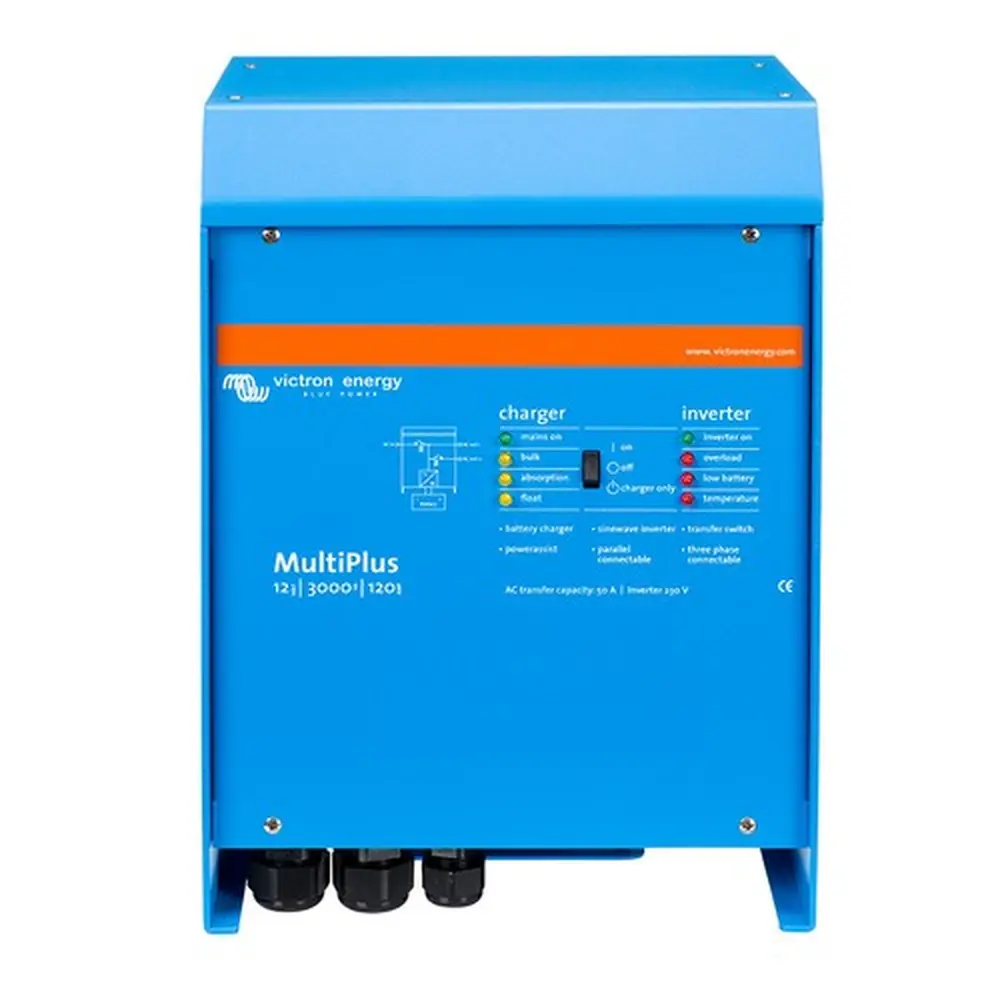
Victron Multiplus-II 12 3000 Inverter Charger Instruction Manual
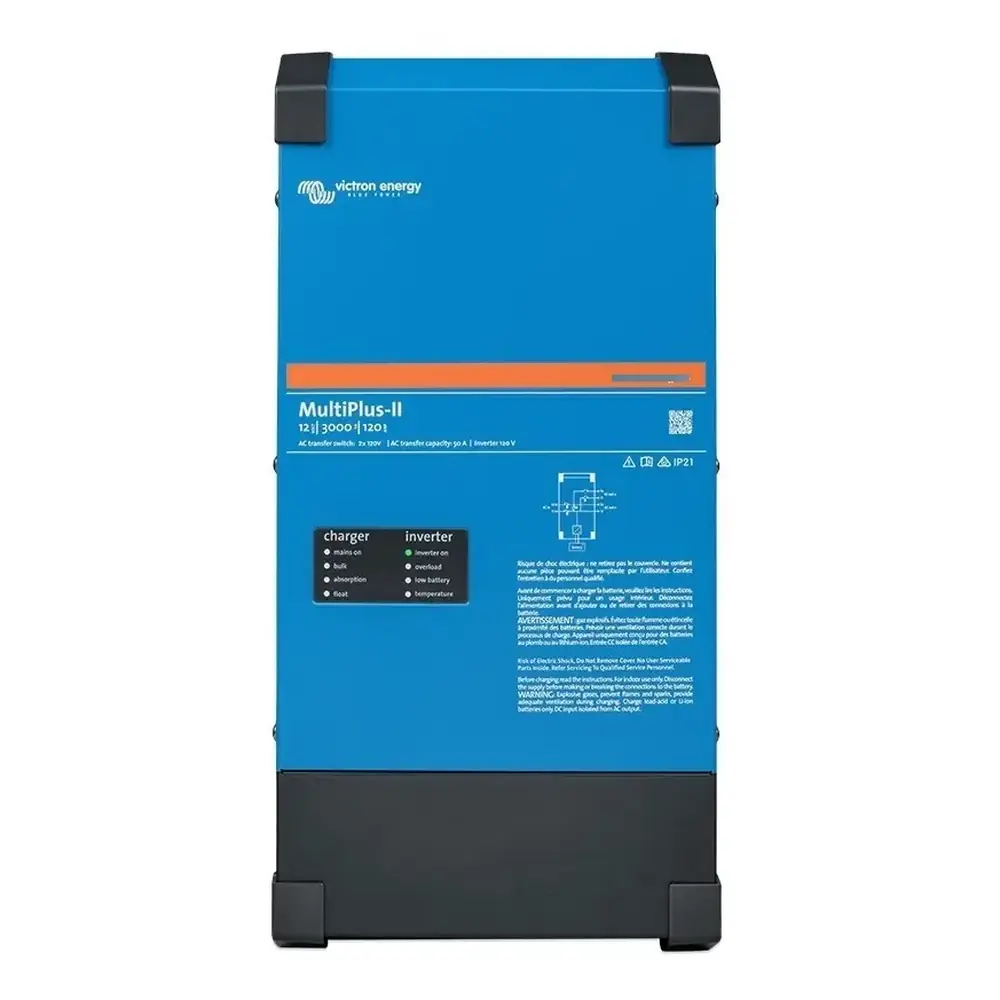
Victron Multiplus-II 12 3000 Inverter Charger

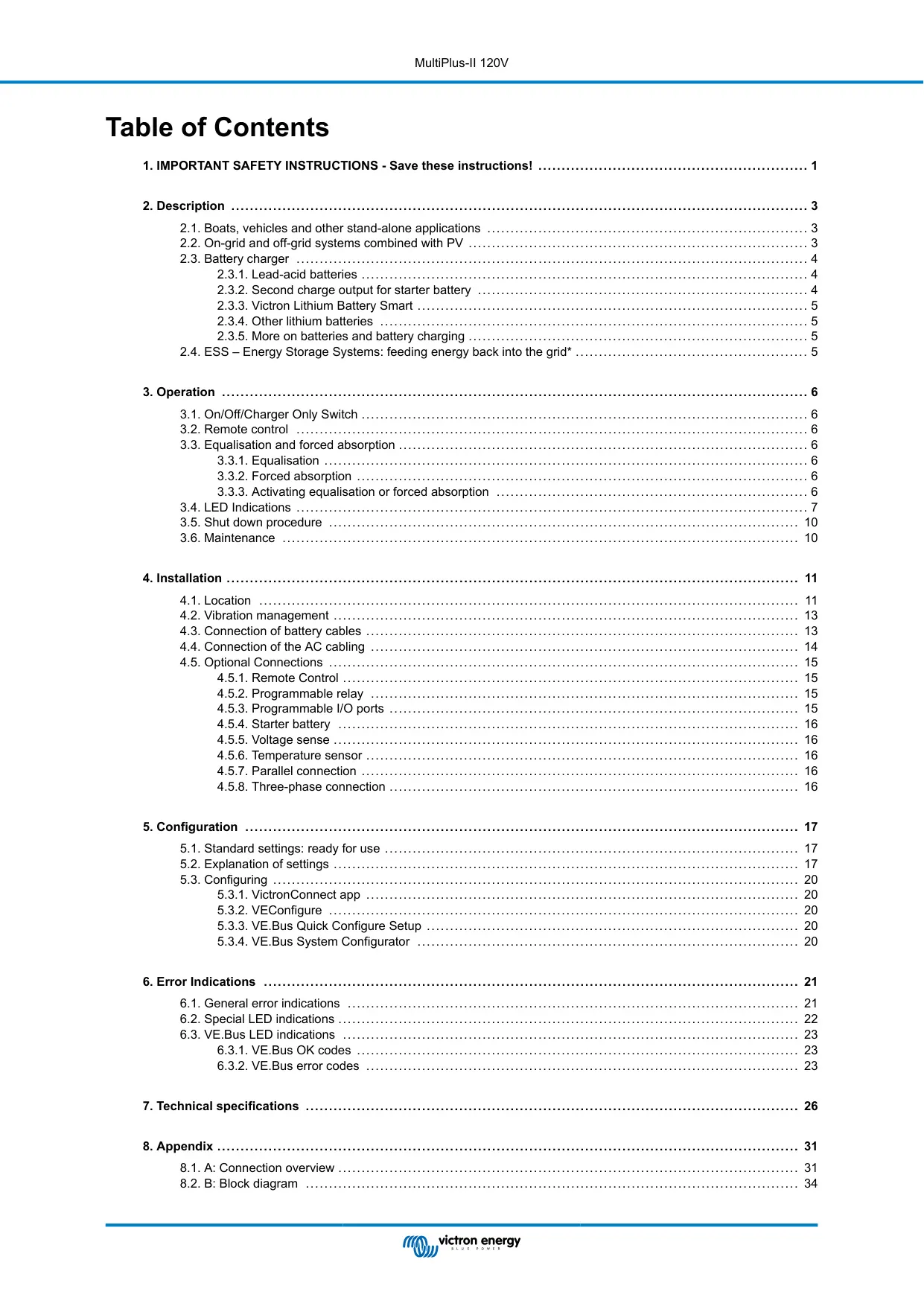






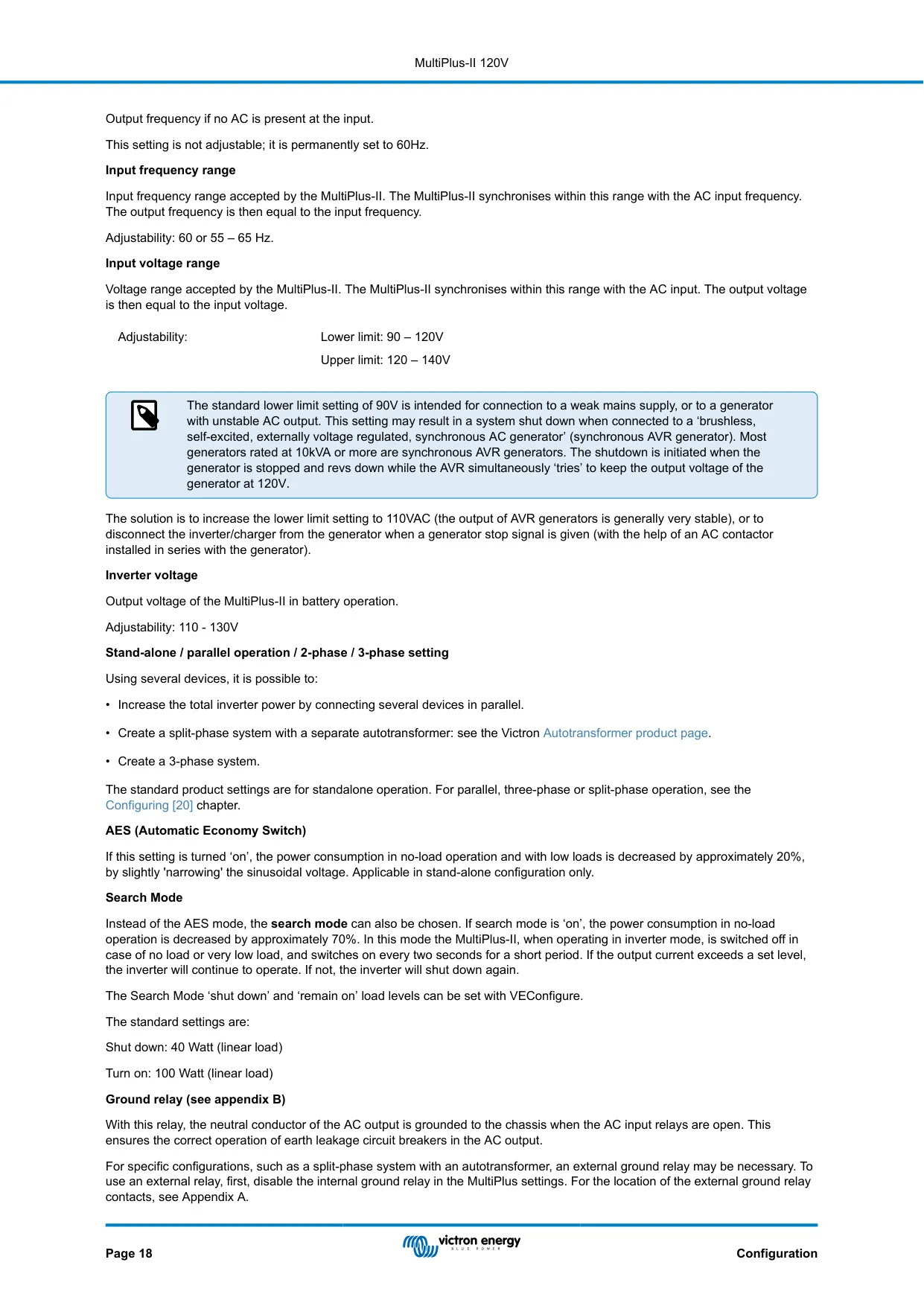
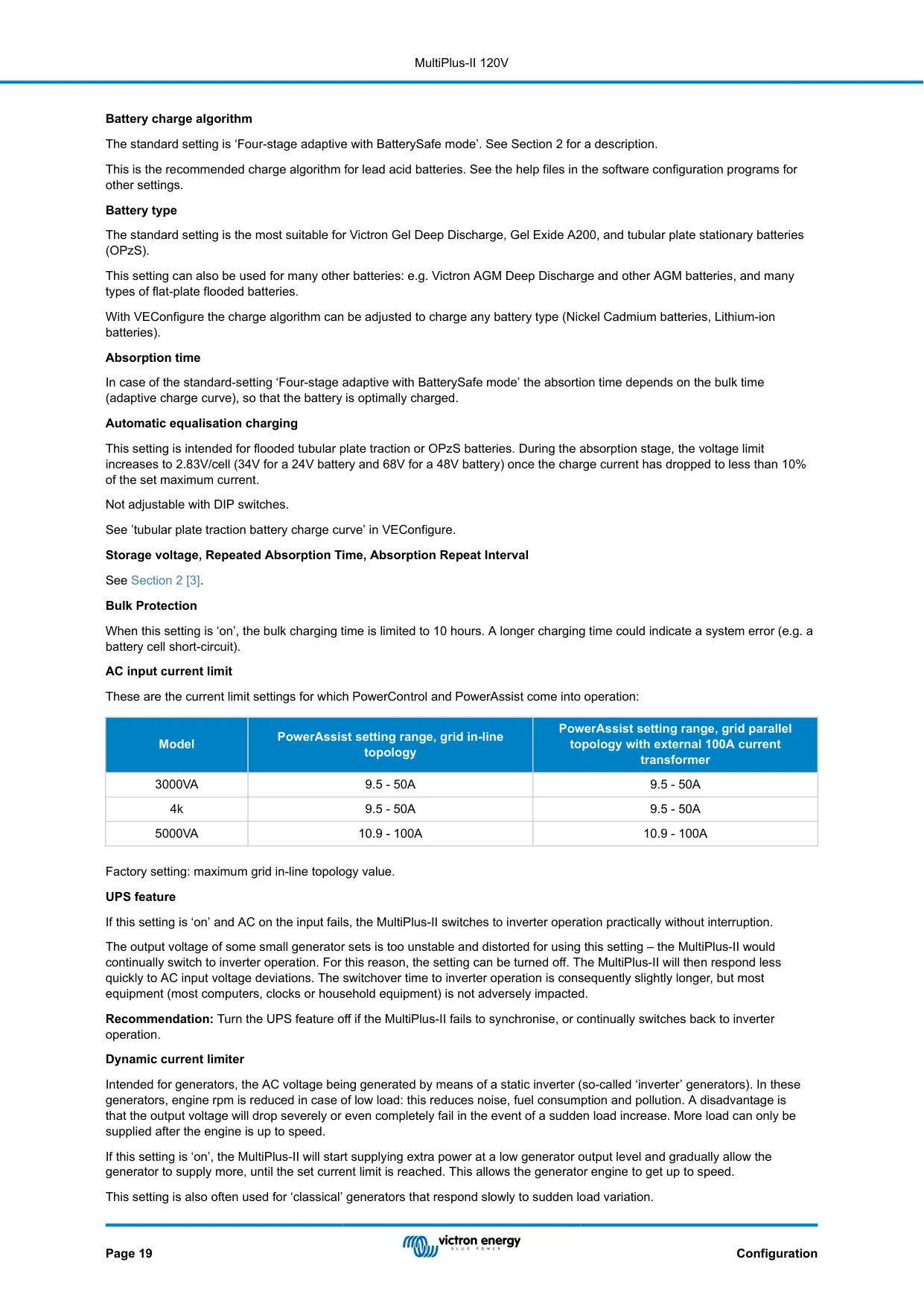

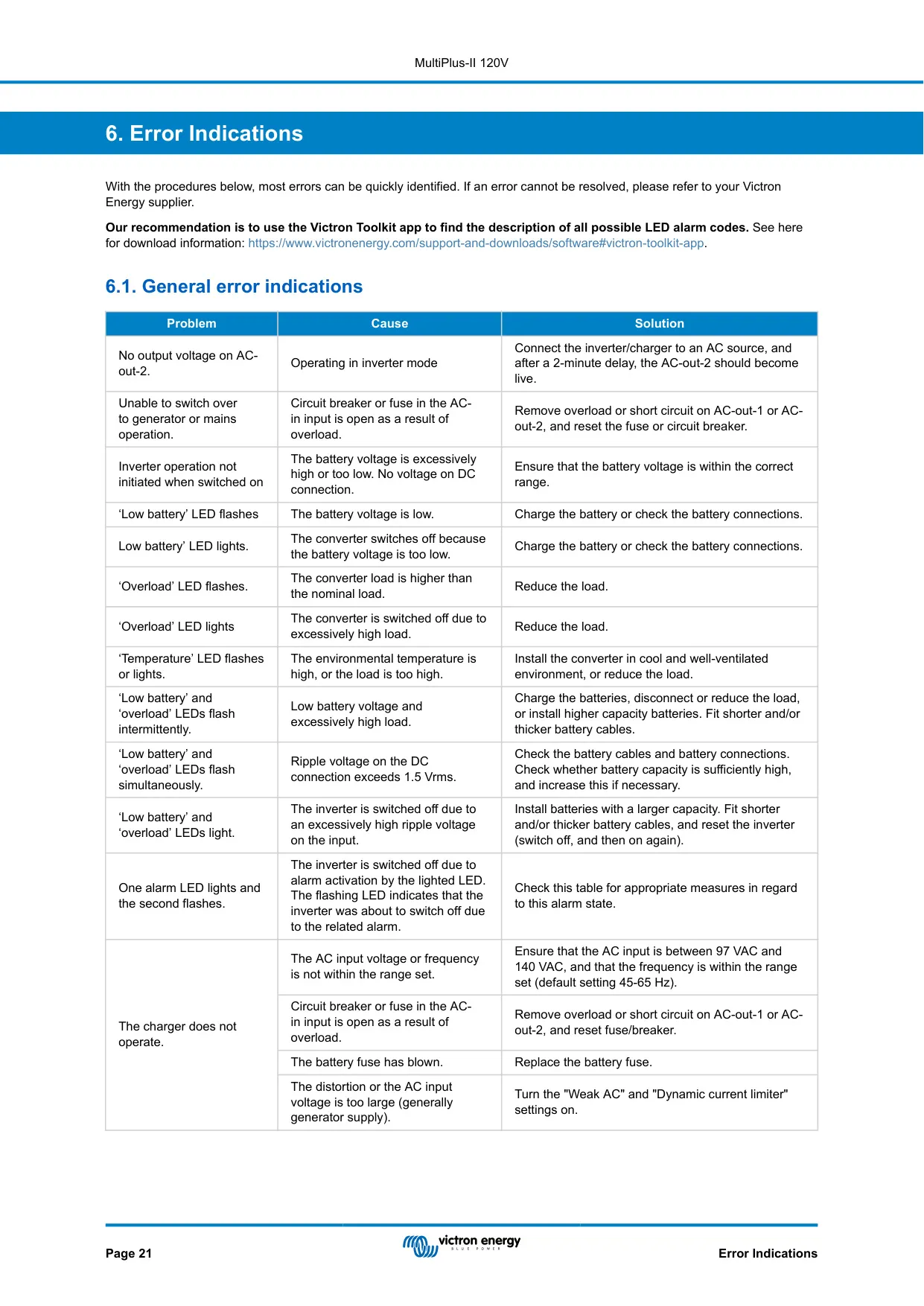

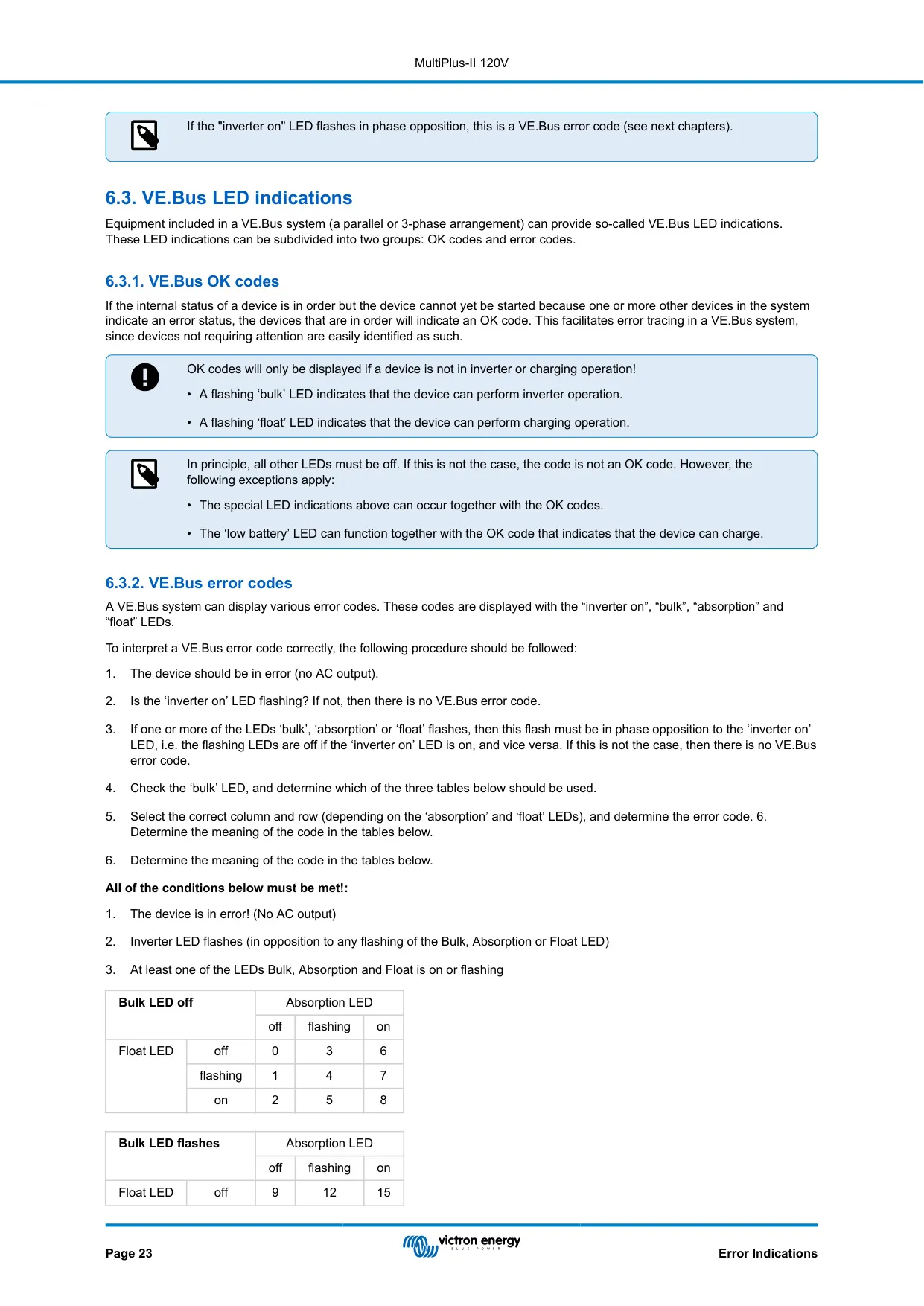






Victron Multiplus-II 12 3000 Inverter Charger


Victron Multiplus-II 12 3000 Instructions
Here we offer the Victron Multiplus-II 12 3000 Inverter Charger manual completely free and in English. We have cataloged this manual in the Inverter Chargers section on Manualverse, and it has been rated by 1 users with an average rating of 5. If you have any specific questions about Victron Multiplus-II 12 3000 Inverter Charger, we suggest checking the Frequently Asked Questions (FAQs) section of this manual.
Product Images


Victron Multiplus-II 12 3000 Inverter Charger Specifications
| Feature | Specification |
|---|---|
| Model | MultiPlus-II 12/3000/120-50 120V |
| Part numbers | PMP122305110 (standard), PMP122305122 (UL) |
| PowerControl and PowerAssist | Yes |
| Transfer switch | 50 A |
| Maximum AC input current | 50 A |
| Transfer time (UPS function) | Less than 20 milliseconds |
| DC input voltage range | 9.5 - 17 V |
| Inverter output voltage | 120 VAC ± 2% |
| Inverter output frequency | 60 Hz ± 0.1% |
| Continuous output power at 25°C / 77°F (non-linear load, crest factor 3:1) | 3000 VA |
| Continuous output power at 25°C / 77°F | 2400 W |
| Continuous output power at 40°C / 104°F | 2200 W |
| Continuous output power at 65°C / 150°F | 1700 W |
| Peak power | 5500 W |
| Maximum efficiency | 93% |
| Zero load power | 13 W |
| Zero load power in AES mode | 9 W |
| Zero load power in Search mode | 3 W |
| Charger AC input | Single phase, 90 - 140 VAC, 55 - 65 Hz |
| Charge voltage absorption | 14.4 V |
| Charge voltage float | 13.8 V |
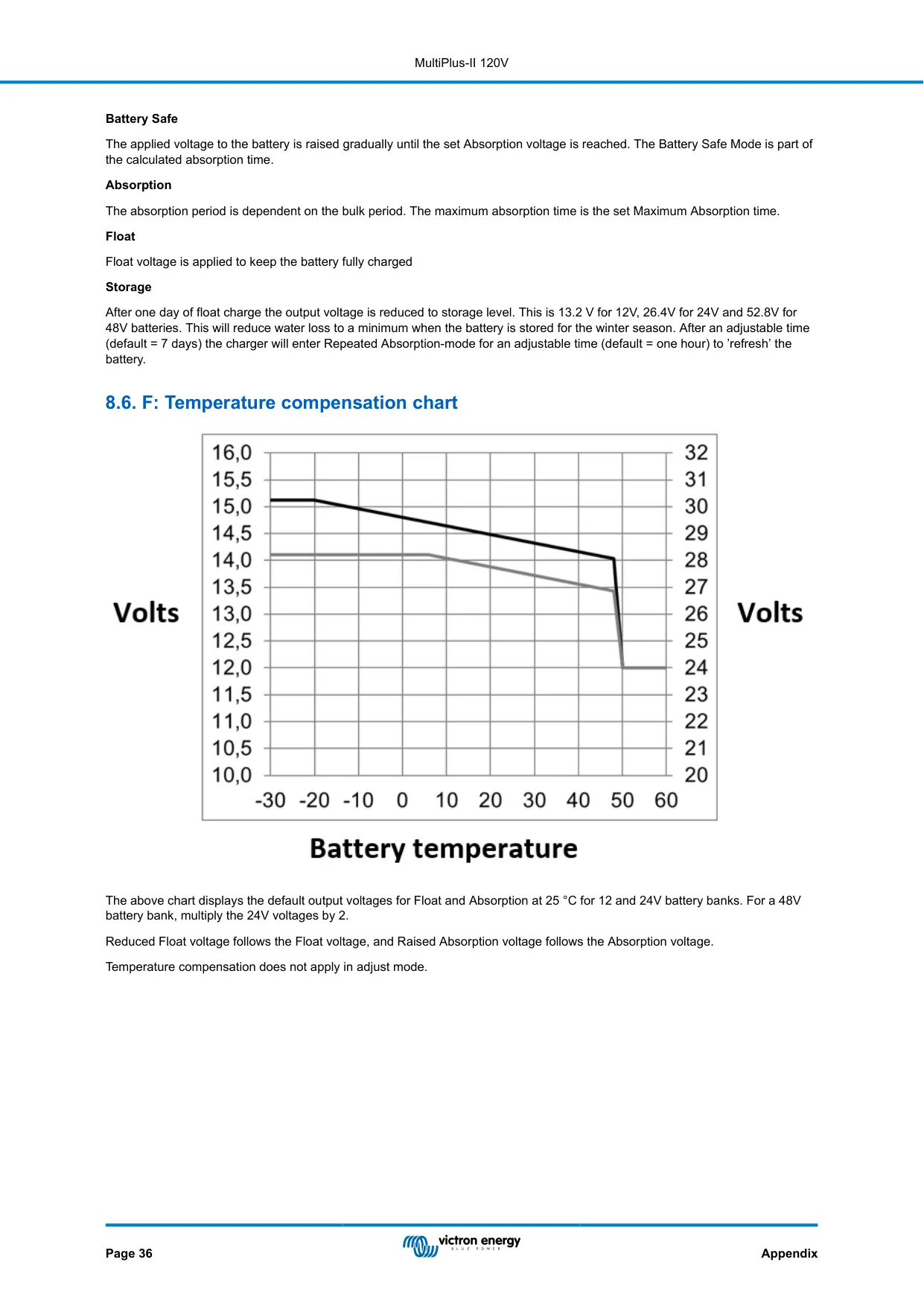
| Storage mode voltage | 13.2 V |
| Maximum battery charge current (up to 25°C / 75°F ambient) | 120 A |
| Starter battery charge output | 4 A (trickle charge) |
| Battery temperature sensor | Yes (included) |
| Auxiliary output (AC-out-2) | 32 A (switches off when no external AC source is available) |
| External AC current sensor (optional) | 100 A |
| Programmable relay | Yes; AC rating 120 V / 4 A, DC rating 4 A up to 35 VDC and 1 A up to 60 VDC |
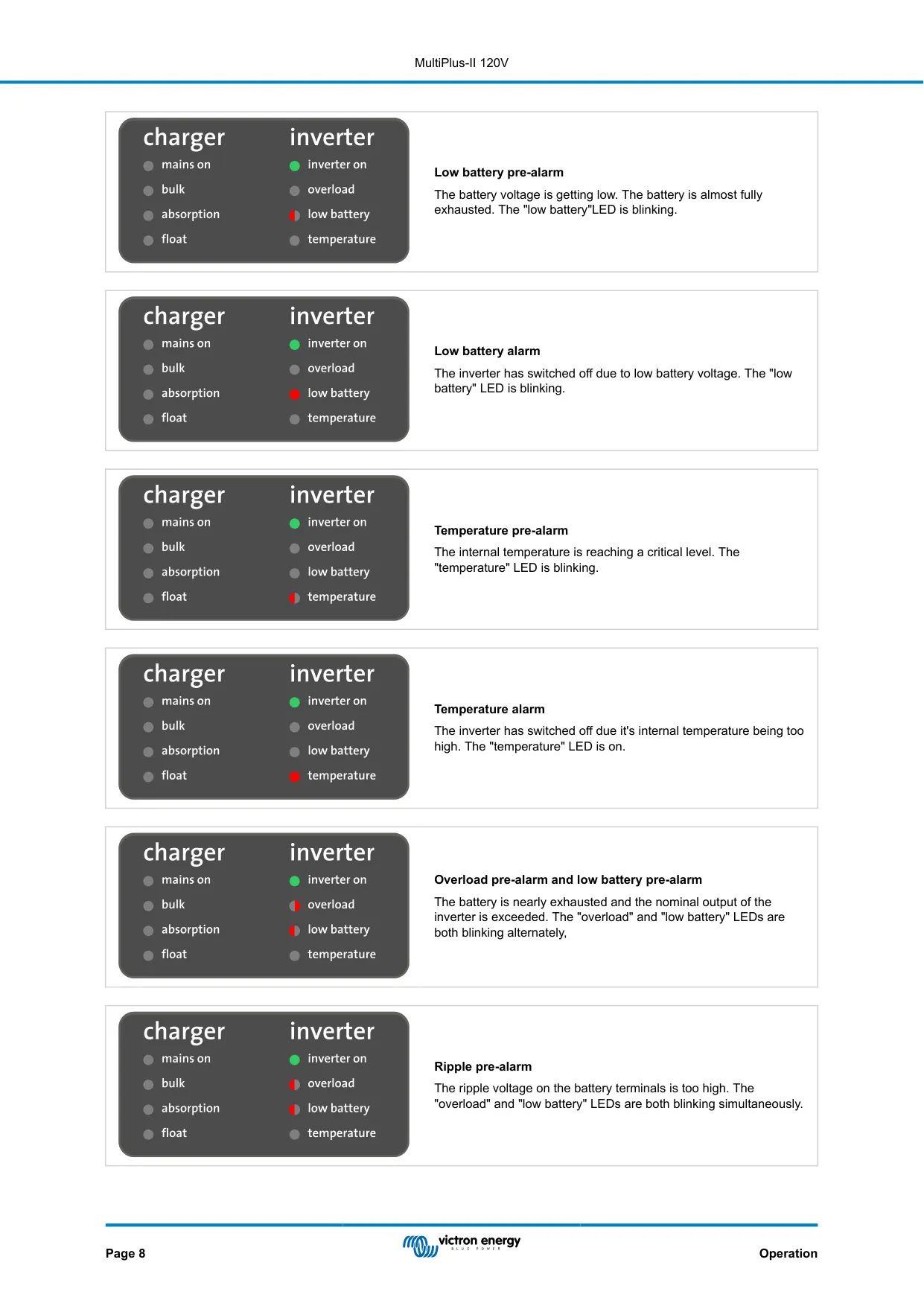
| Protection | Output short circuit, overload, battery voltage too high, battery voltage too low, temperature too high, 120 VAC on inverter output, input voltage ripple too high |
| VE.Bus communication port | For parallel, split-phase and three-phase operation, remote monitoring and system integration |
| General purpose communication ports | Yes, 2x |
| Remote on-off | Yes |
| Operating temperature range | -40 to +60°C (-40 to 140°F), fan-assisted cooling |
| Humidity (non-condensing) | Max. 95% |
| Enclosure material and colour | Steel, blue RAL 5012 |
| Protection category | IP22 |
| Battery connection | 2x2 M8 bolts |
| Battery terminal torque | 12 Nm (M8 nut) |
| 120 VAC connection | Screw terminals, 13 mm² (6 AWG) |
| AC terminal maximum torque | 2 Nm |
| Recommended battery capacity | 400 - 1200 Ah |
| Recommended DC fuse | 400 A |
| Battery cable cross-section (0 - 5 m) | 2x AWG 1/0 per positive and negative terminal |
| Battery cable cross-section (5 - 10 m) | 2x AWG 2/0 per positive and negative terminal |
| AC-in / AC-out-1 rated current and breaker | 50 A / 50 A, minimum wire AWG 6 |
| AC-out-2 rated current and breaker | 32 A, minimum wire AWG 10 |
| Cable glands | M40 (AC-in and AC-out-1), M32 (AC-out-2) |
| Weight | 19 kg (42 lb) |
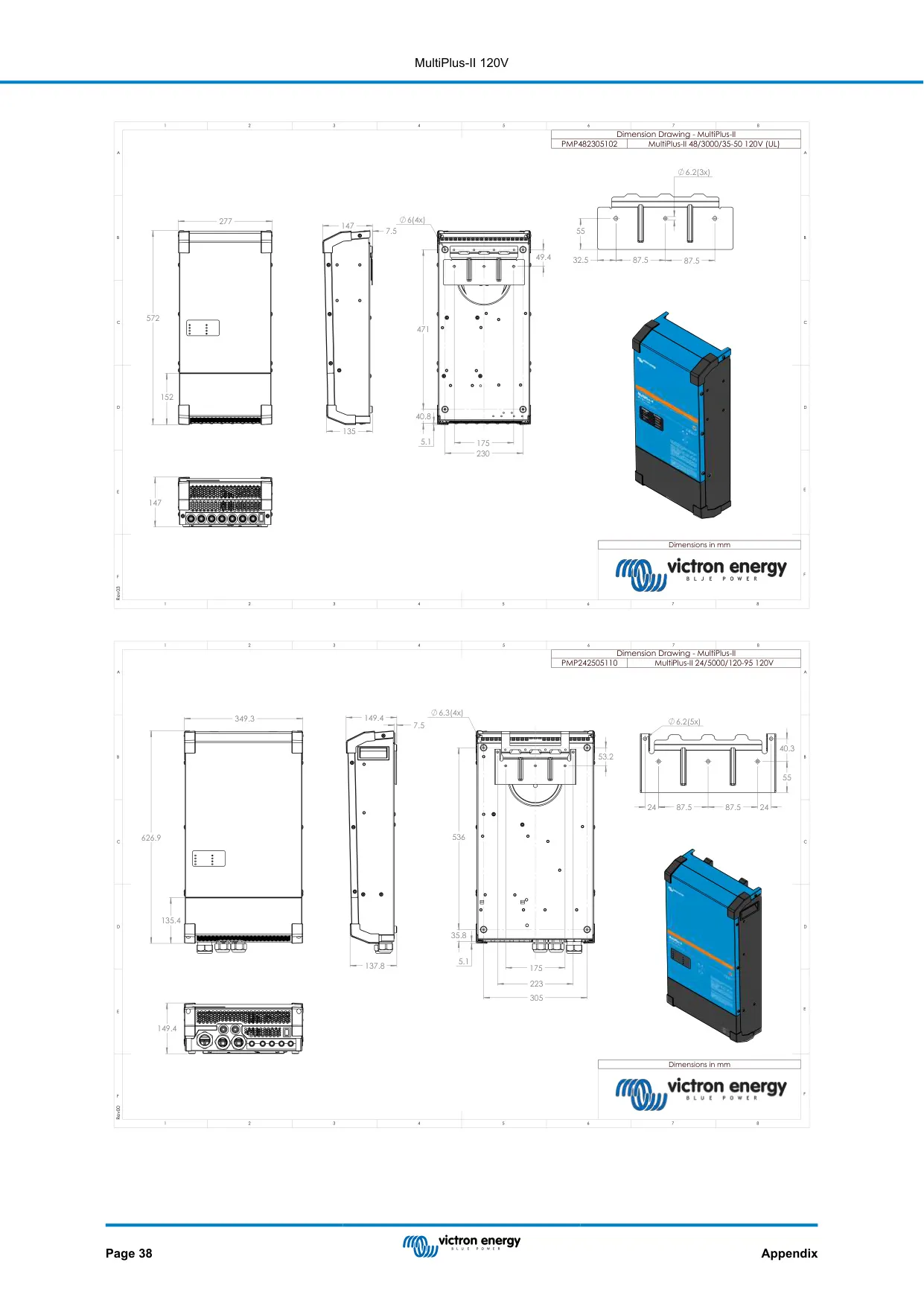
| Dimensions (h x w x d) | 578 x 277 x 148 mm (22.8 x 10.9 x 5.8 inch) |
| Listing | UL 458 |
| Safety standards | EN-IEC 60335-1, EN-IEC 60335-2-29, CSA 22.2 107.1-16 |
| Emission and immunity standards | EN 55014-1, EN 55014-2, EN-IEC 61000-3-2, EN-IEC 61000-3-3, IEC 61000-6-1, IEC 61000-6-2, IEC 61000-6-3 |
| Storage temperature | -20°C to 60°C |
Victron Multiplus-II 12 3000 Details
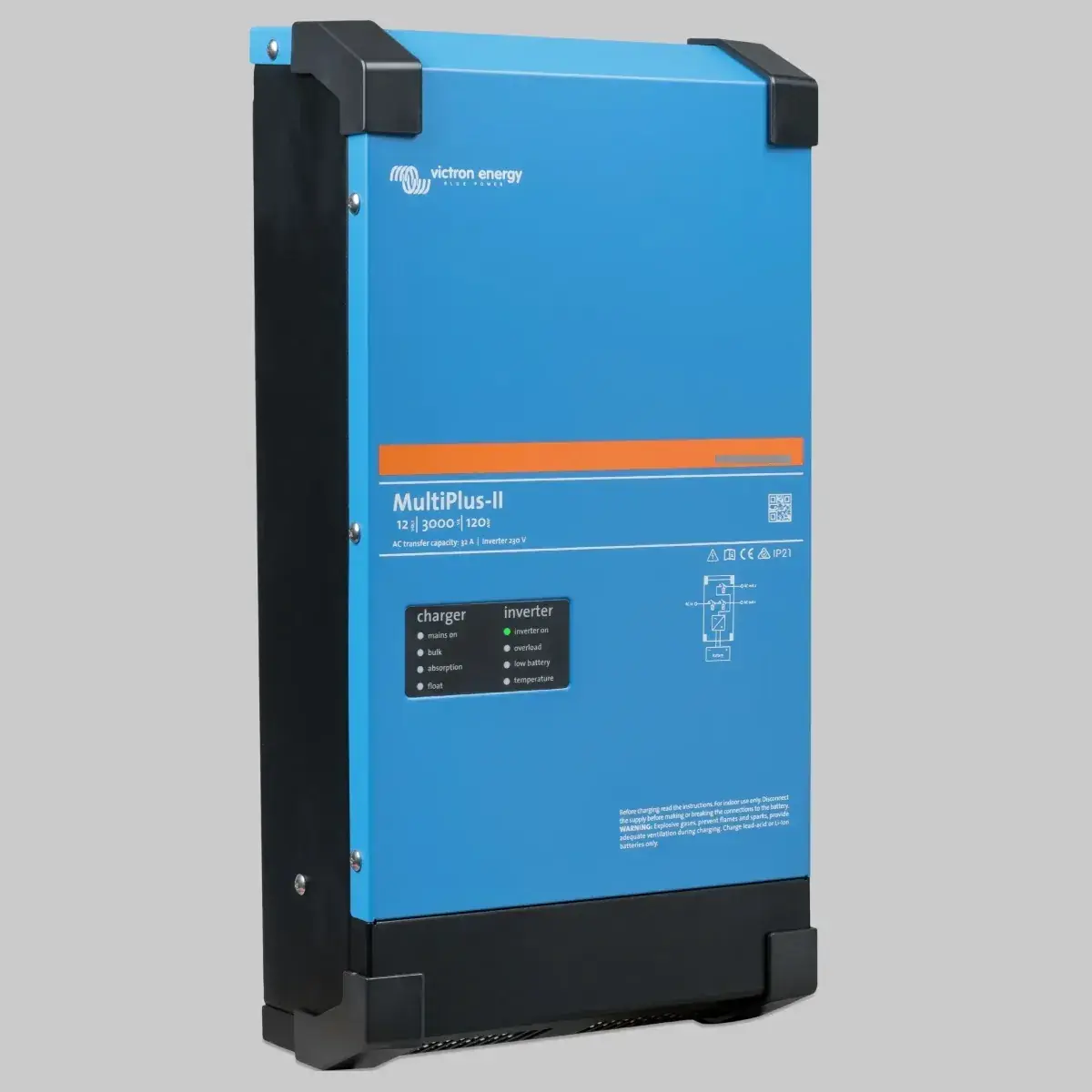
The Victron MultiPlus-II 12/3000/120-50 puts a pure sine wave inverter, a battery charger and an automatic transfer switch in one compact steel casing. It suits boats, vehicles, off-grid homes and grid-connected solar systems. The unit has an internal mains-frequency isolation transformer with reinforced insulation. Because of this transformer, no DC current can appear on any AC port, so standard type A RCDs can be used on the output circuits.
PowerControl lets you set a maximum input current so a generator or shore connection is never overloaded. The charger then only uses current that other loads don't need. PowerAssist goes a step further: when demand exceeds the input limit, the battery supplies the shortfall. That means the unit can add up to 25 A to the 50 A input, for a total of 75 A at the output. The Digital Multi Control panel has a rotary knob for adjusting this limit.
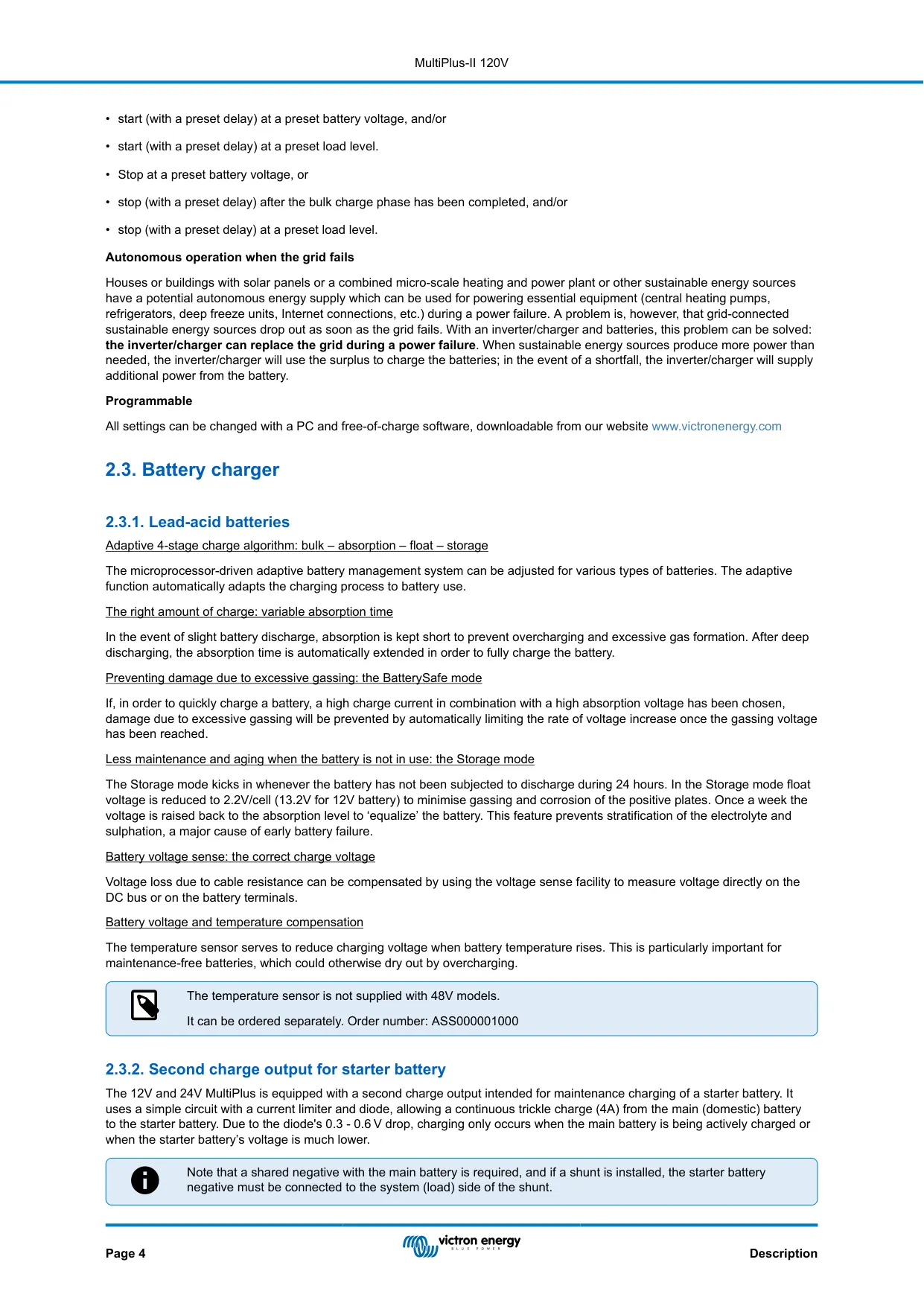
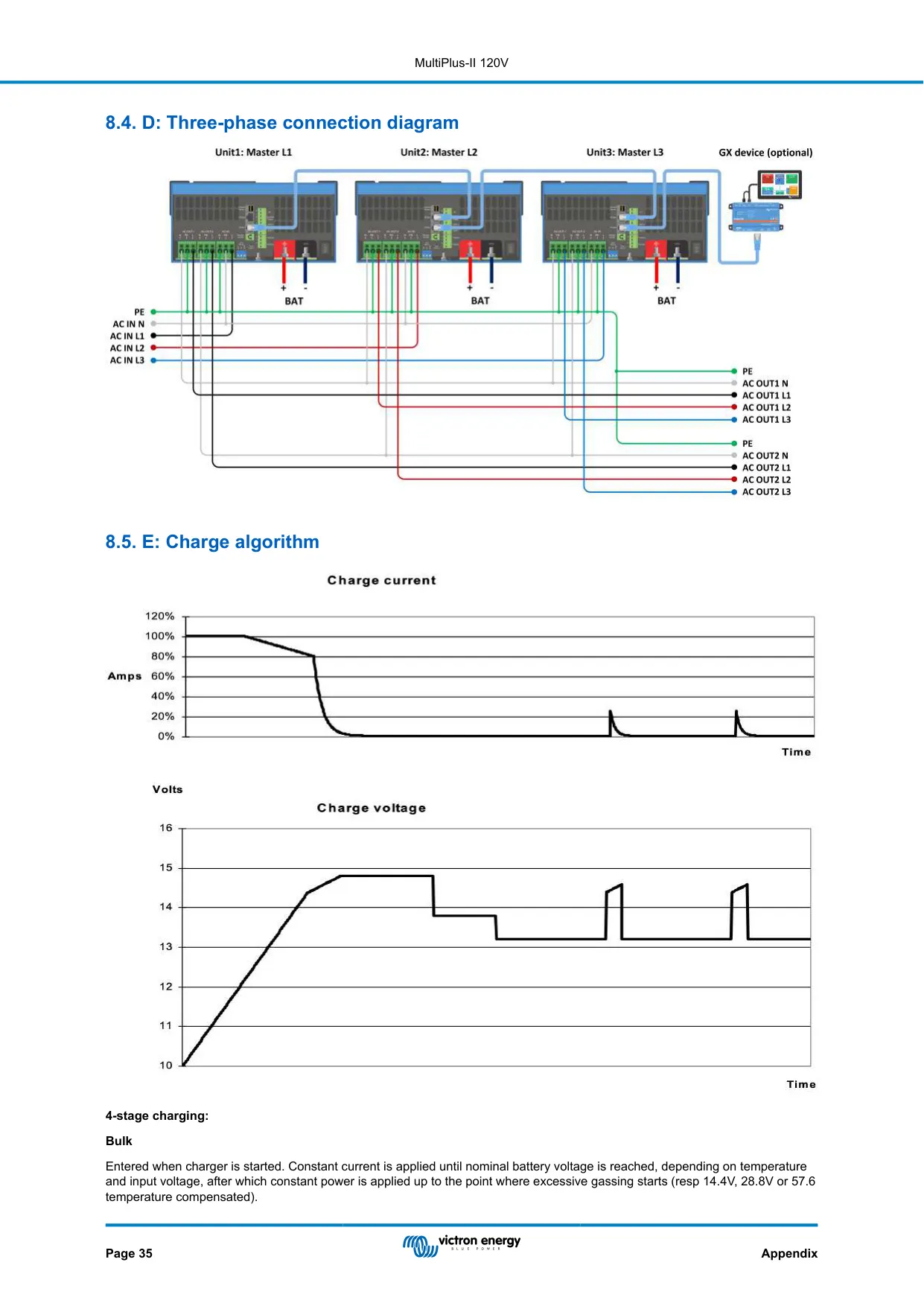
The charger uses an adaptive four-stage algorithm: bulk, absorption, float and storage. Absorption time adjusts automatically based on how deeply the battery was discharged. BatterySafe mode limits the rate of voltage increase to prevent excessive gassing. When the battery hasn't been discharged for 24 hours, Storage mode drops the voltage to 13.2 V. It then raises the voltage back to absorption level for one hour every seven days to prevent stratification and sulphation.
Two remote sense wires (0.75 mm², AWG 18) let the charger compensate for up to 1 V of voltage drop on each DC cable. If the drop would exceed that, the unit limits the charge current. You can also start equalisation (1 V above absorption for one hour, at a quarter of the set current) or forced absorption by toggling the front switch in a set sequence. Bulk protection stops bulk charging after 10 hours, since a longer bulk phase can point to a shorted battery cell.
The AC-out-2 output disconnects immediately when the unit switches to battery power. It reconnects about 2 minutes after AC returns, which gives a generator time to stabilise. This makes it suitable for water heaters or air conditioners. An internal ground relay connects the output neutral to the chassis whenever no external AC is present. This keeps earth leakage breakers working properly. Two programmable analogue/digital I/O ports can communicate with a lithium battery BMS.
The built-in battery monitor can start and stop a generator based on state of charge, battery voltage or load level, with adjustable delays. AES mode cuts no-load power use by about 20%. Search mode cuts it by about 70%: by default it shuts down below 40 W and turns back on above 100 W. The WeakAC and Dynamic current limiter settings help the unit work with distorted or inverter-type generator power.
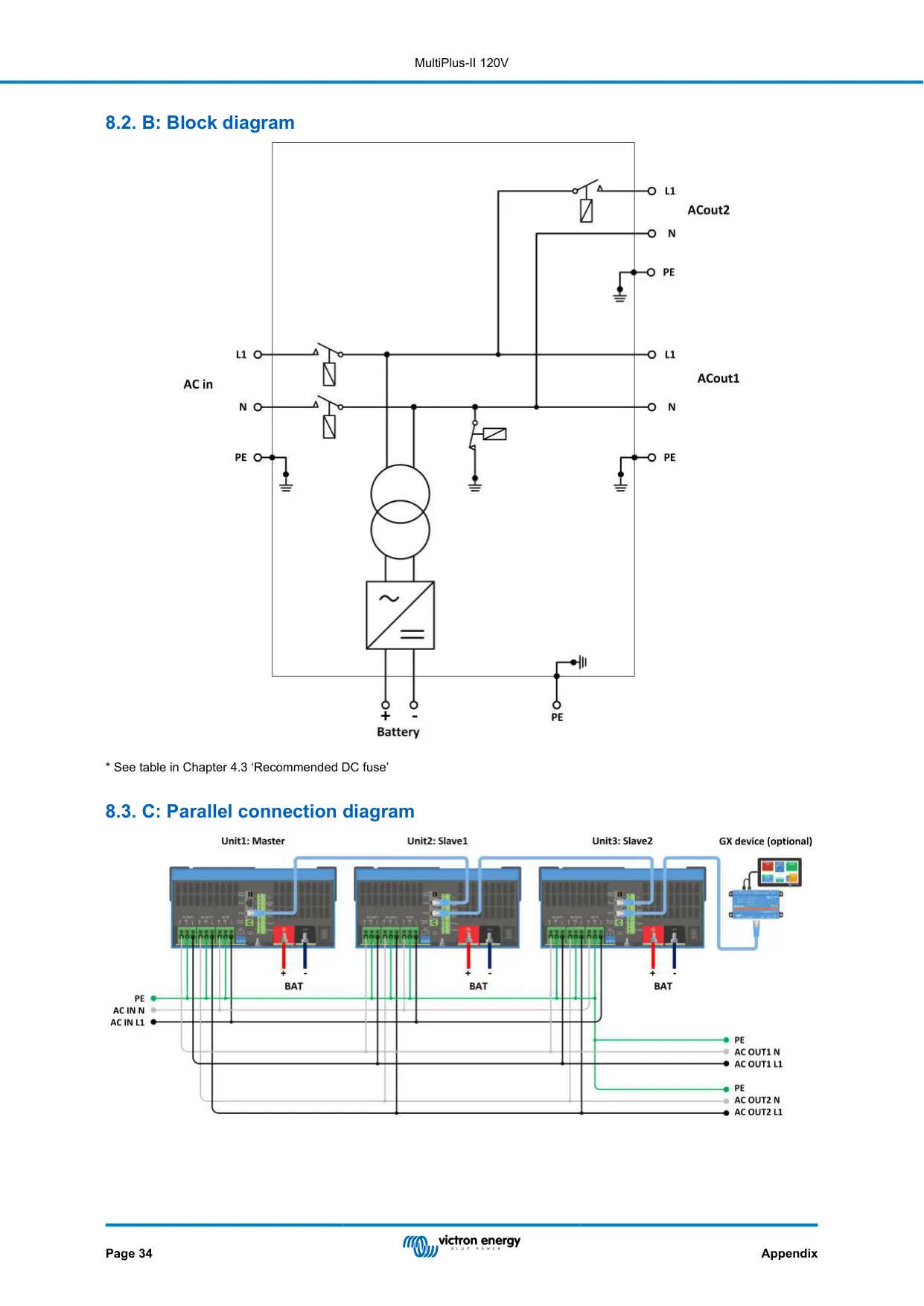
The unit can be set up with VictronConnect, VEConfigure (using an MK3-USB interface), VE.Bus Quick Configure or VE.Bus System Configurator. With a Cerbo GX or Ekrano GX, you can monitor and adjust it remotely through the free VRM portal. Up to six identical units can run in parallel. Units can also be configured for 240 V split-phase (with an autotransformer) or three-phase wye operation.
Frequently Asked Questions (FAQs)
Can't find the answer you need? Here are some frequently asked questions about the Victron Multiplus-II 12 3000 Inverter Charger, and we answer them below.