Predator 670 Engine Instruction Manual
Predator 670 Engine







Predator 670 Engine Instructions
Here we offer the Predator 670 Engine manual completely free and in English. We have cataloged this manual in the Engines section on Manualverse, and it has been rated by 1 users with an average rating of 5. If you have any specific questions about Predator 670 Engine, we suggest checking the Frequently Asked Questions (FAQs) section of this manual.
Product Images
Predator 670 Engine Specifications
| Feature | Specification |
|---|---|
| Item Number | 61614 |
| Displacement | 670cc |
| Engine Type | Horizontal/Vertical Double Cylinder, 4-stroke |
| Cooling System | Forced air cooled |
| Fuel Type | 87+ octane stabilizer-treated unleaded gasoline (max. 10% ethanol, E10) |
| Engine Oil Type | SAE 10W-30 above 32°F; SAE 5W-30 at 32°F or below |
| Engine Oil Capacity | 2 Quart |
| Sound Level at 3 feet | 88 dB |
| Bore x Stroke | 78 mm x 70 mm |
| Compression Ratio | 8.2:1 |
| Rotation (viewed from PTO) | Counterclockwise |
| Oil Filter Compatibility | STP S4967 / Fram PH4967 |
| Spark Plug Type | NGK BPR5ES / Torch F5RTC |
| Spark Plug Gap | 0.027″ - 0.031″ |
| Valve Clearance (Intake) | 0.005″ - 0.007″ |
| Valve Clearance (Exhaust) | 0.007″ - 0.009″ |
| Idle Speed | 1800 RPM |
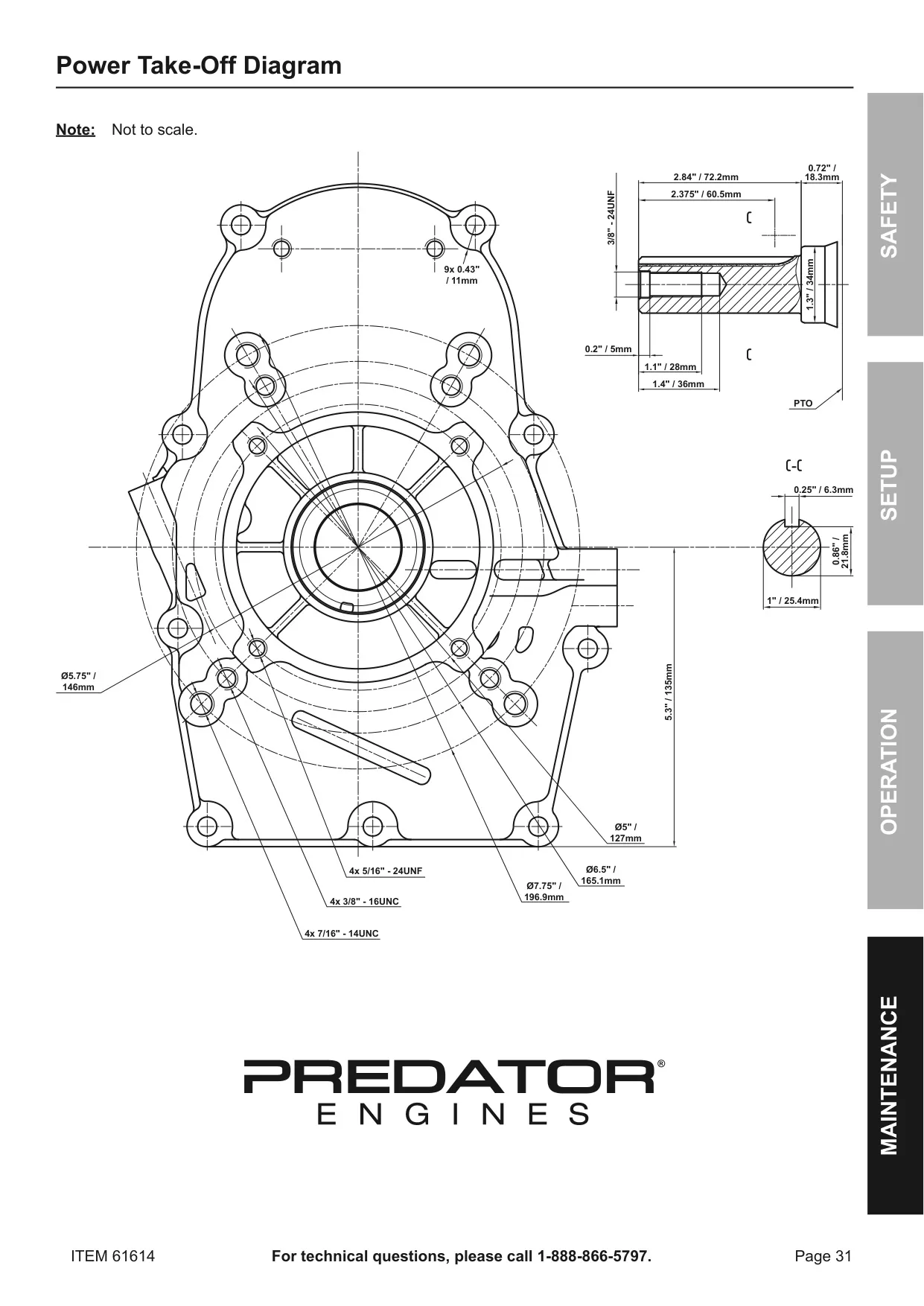
| Shaft Dimensions | Ø1″ x 3.56″ |
| Shaft Keyway | 1/4″ |
| Shaft End Tapped | 3/8″ - 24 UNF |
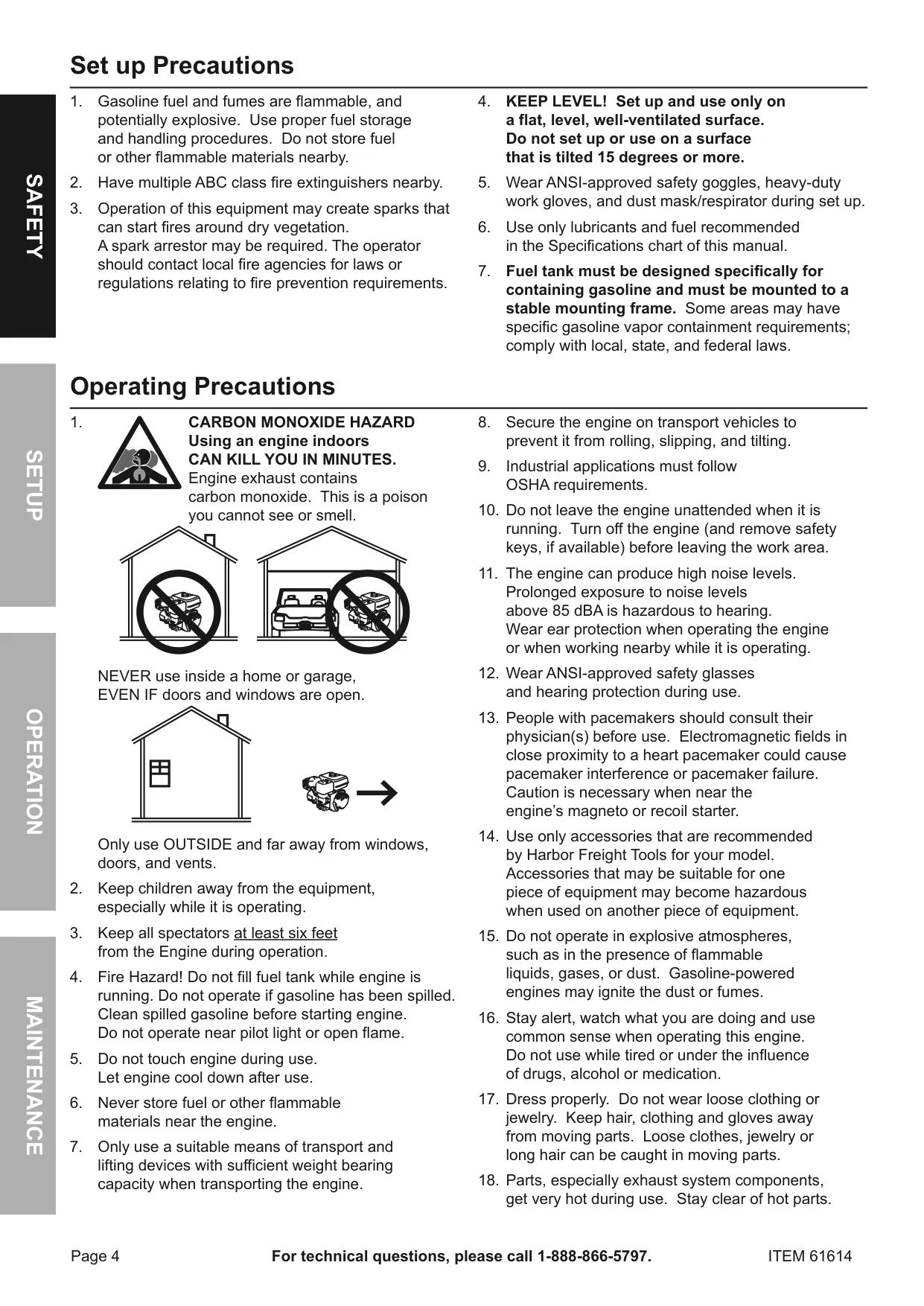
| Maximum Operating Tilt | Less than 15° |
| Required Battery | 12 V, 36 Ah lead-acid (not included) |
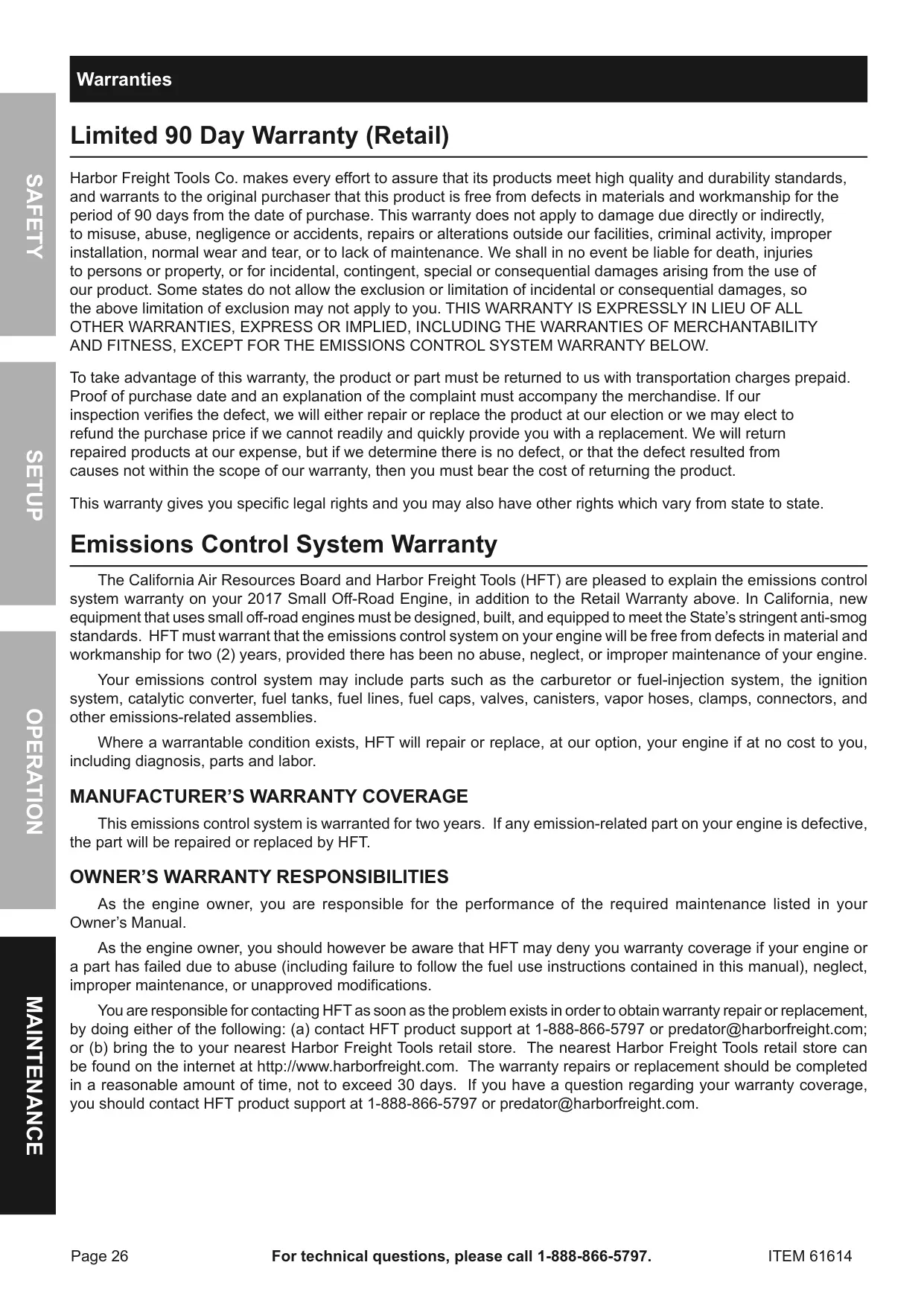
| Retail Warranty | 90 days |
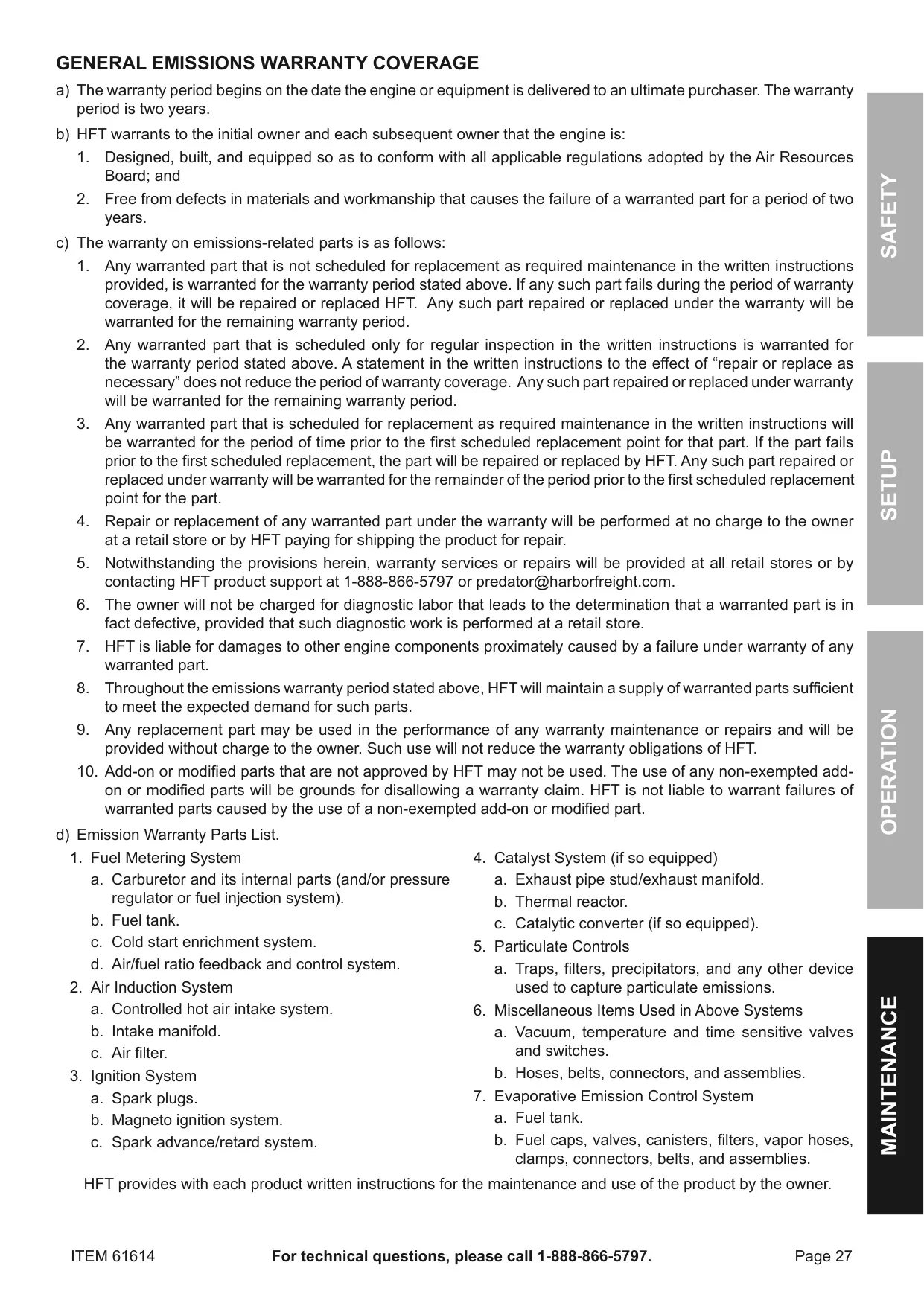
| Emissions Control System Warranty | 2 years (EPA and CARB) |
Predator 670 Engine Details
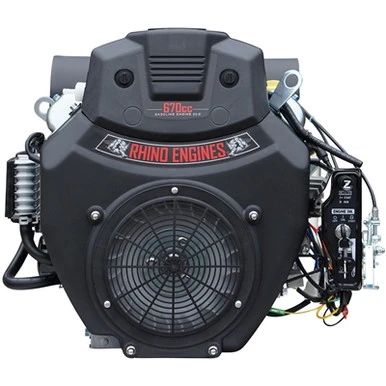
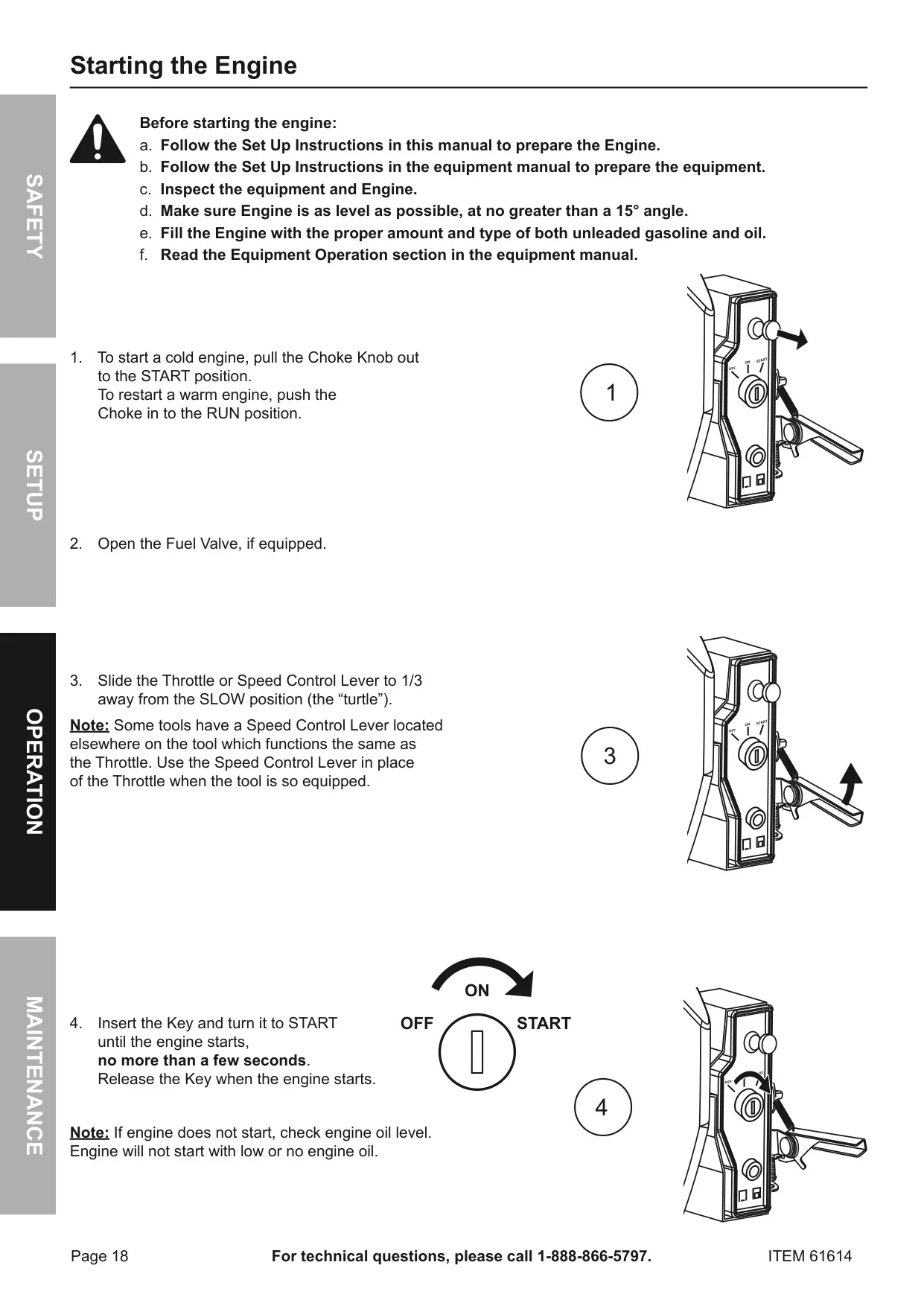
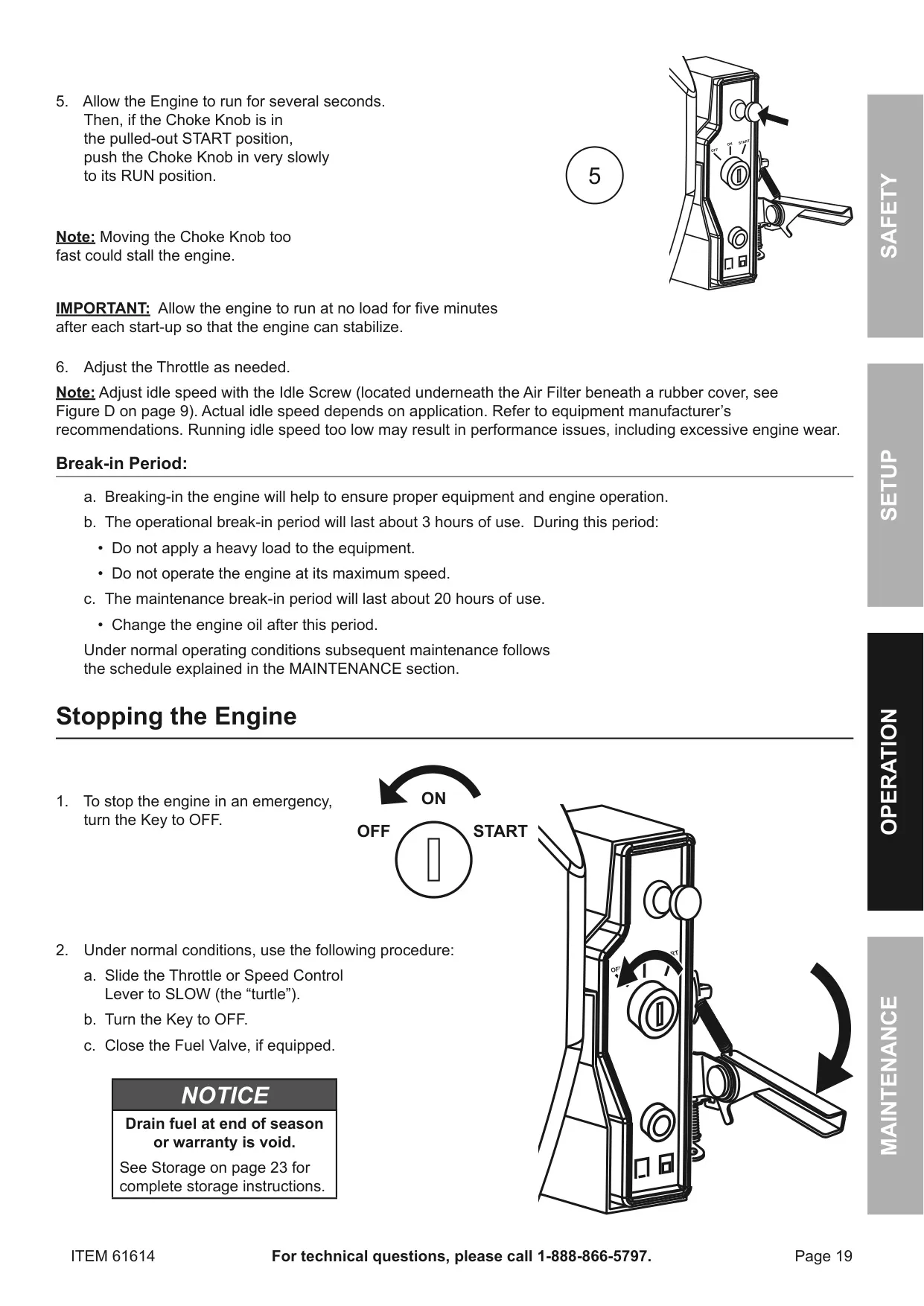
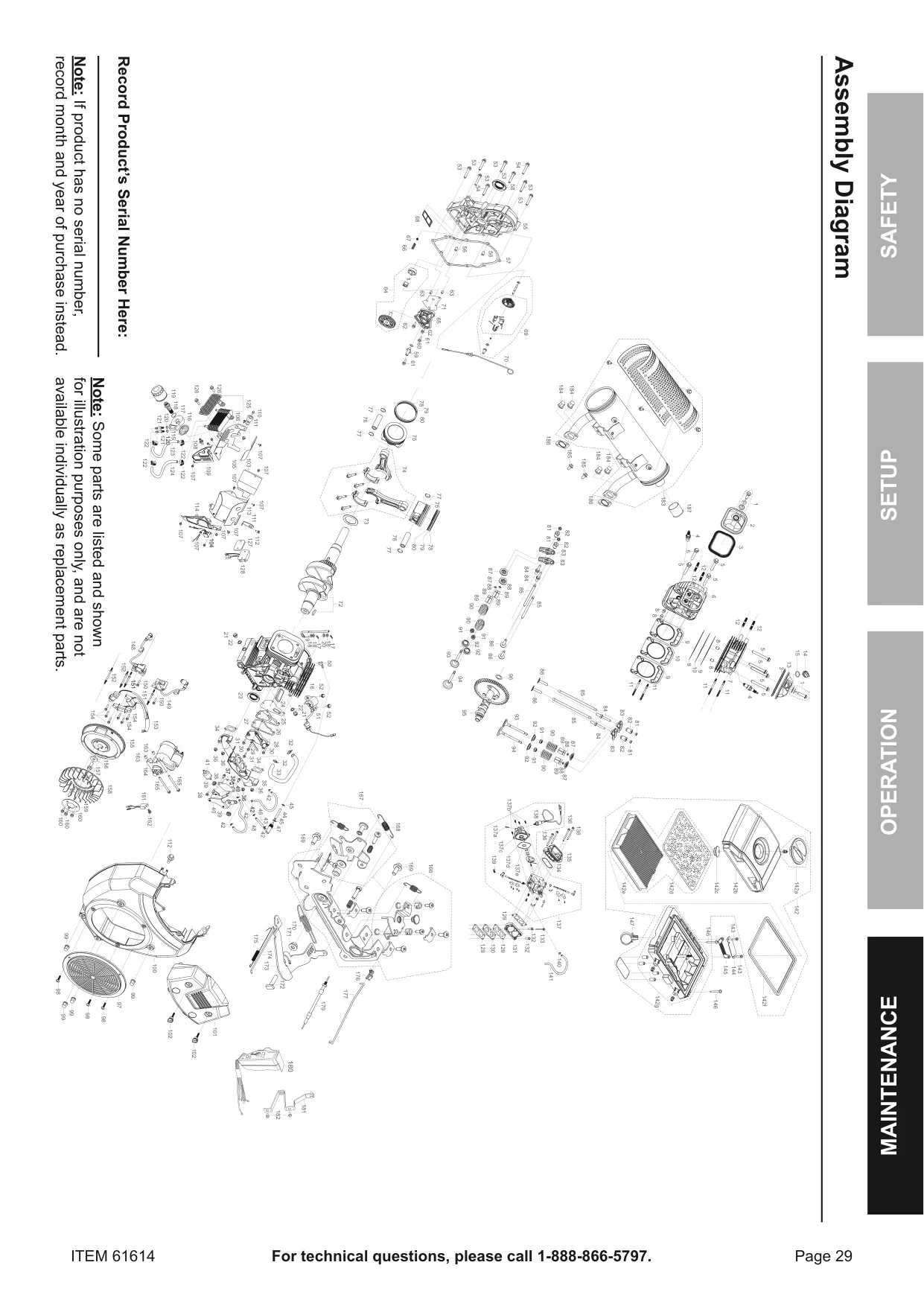
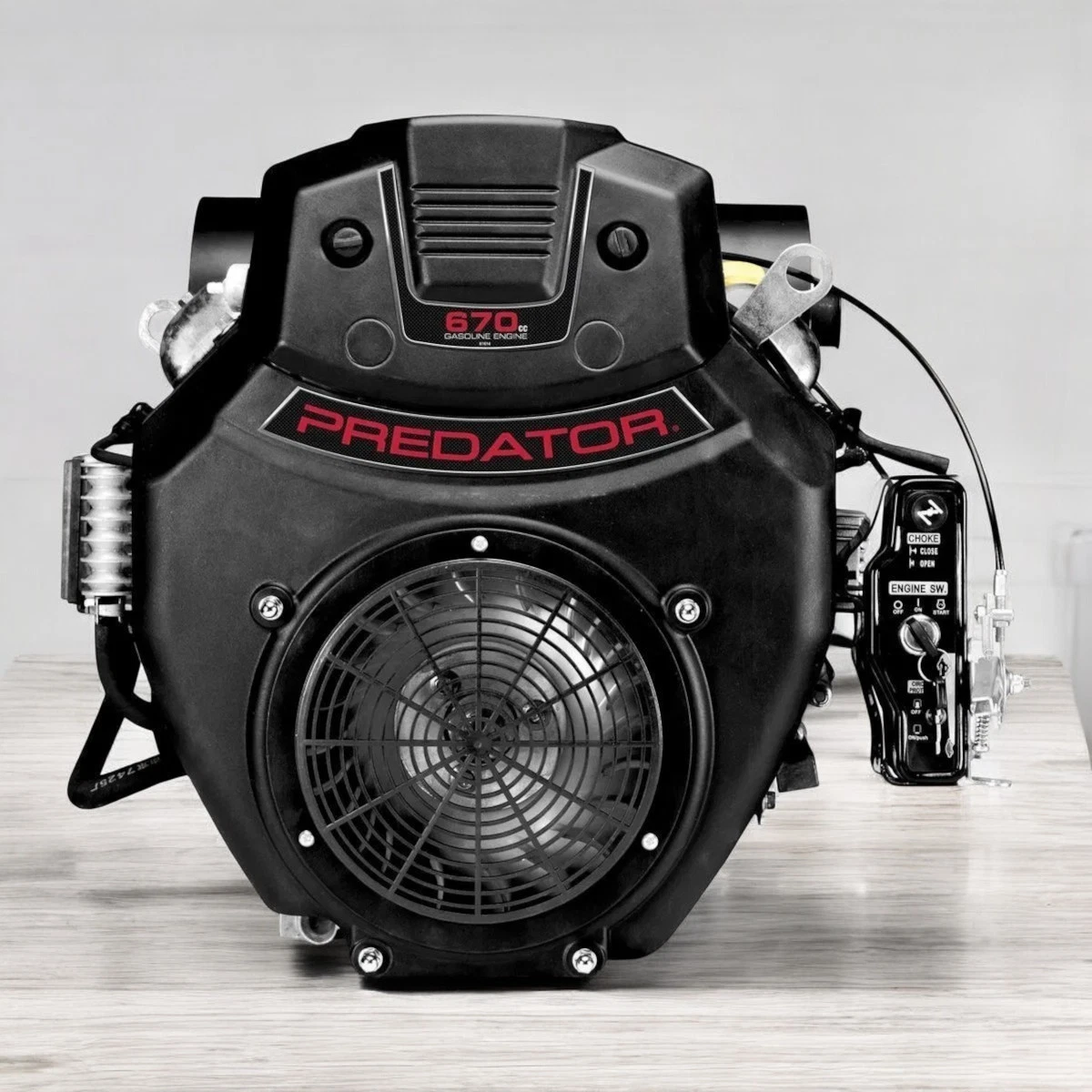
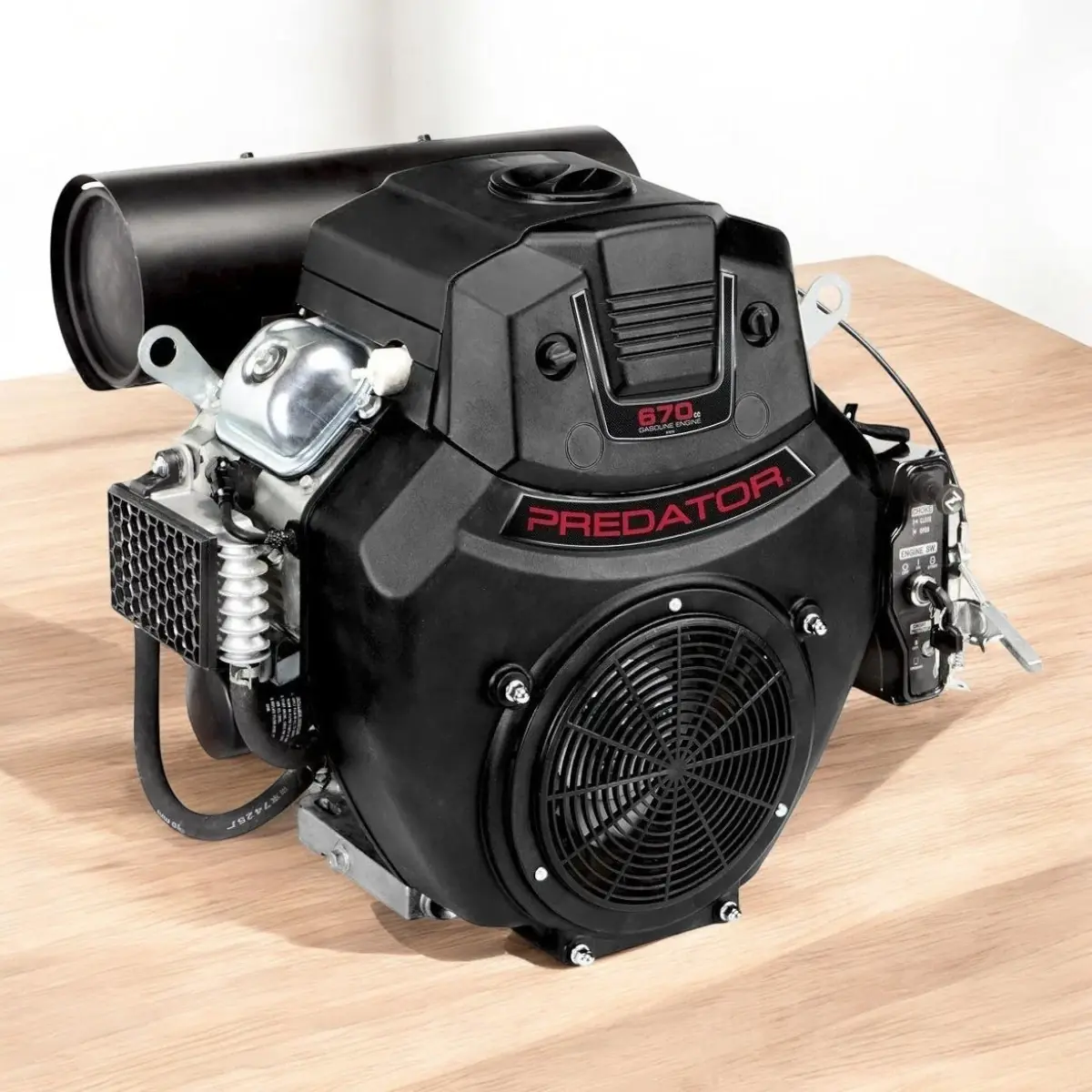
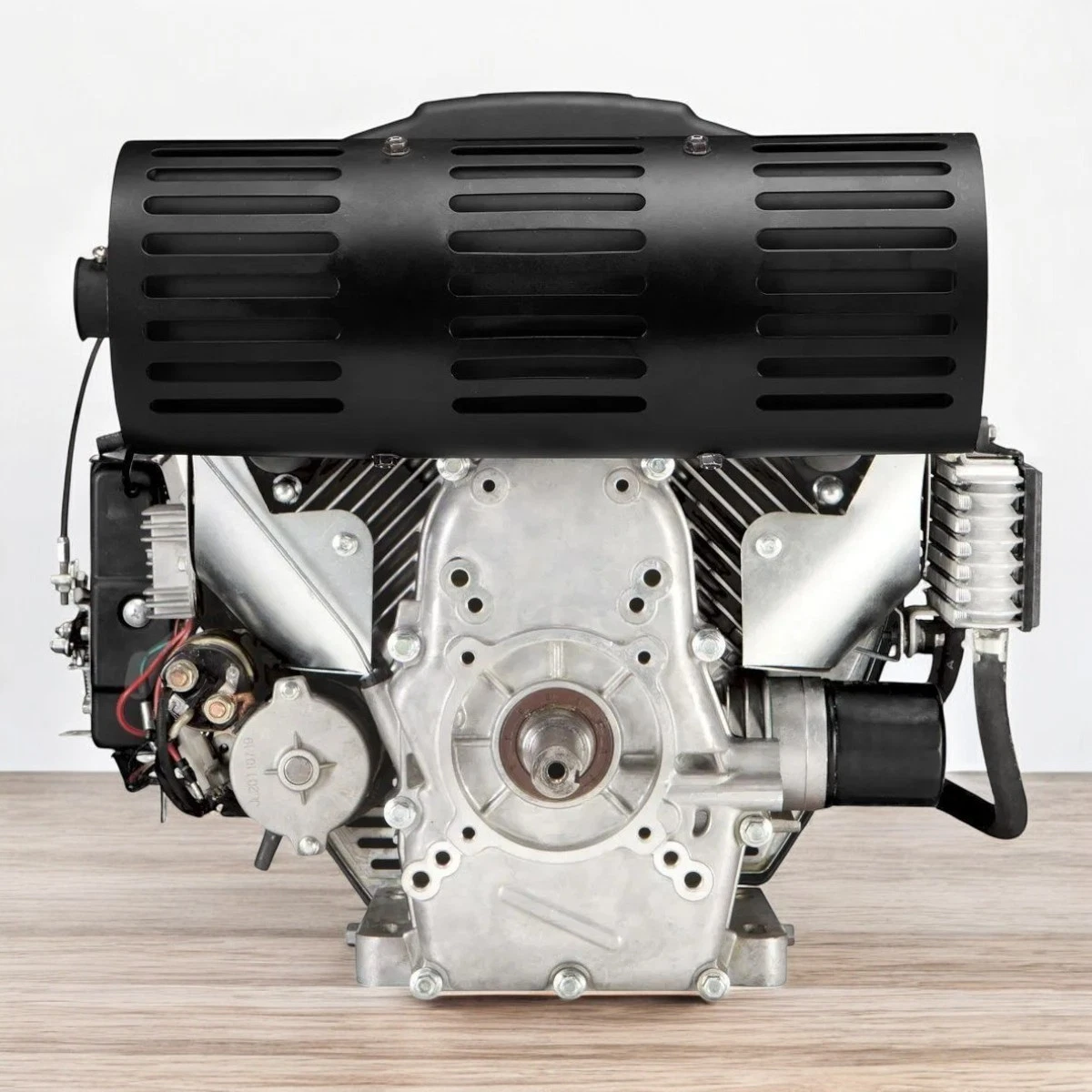
The Predator 670 Engine is a twin-cylinder replacement powerplant sold by Harbor Freight Tools. It is meant to be installed on other equipment and comes without its own fuel tank or battery. The manual says plainly that it must not be installed on a vehicle. The controls are a key switch with OFF, ON and START positions, a push-pull choke knob, a throttle lever and a circuit breaker. A radiator, two lifting brackets, a muffler with a spark collector and a dipstick round out the main external parts.
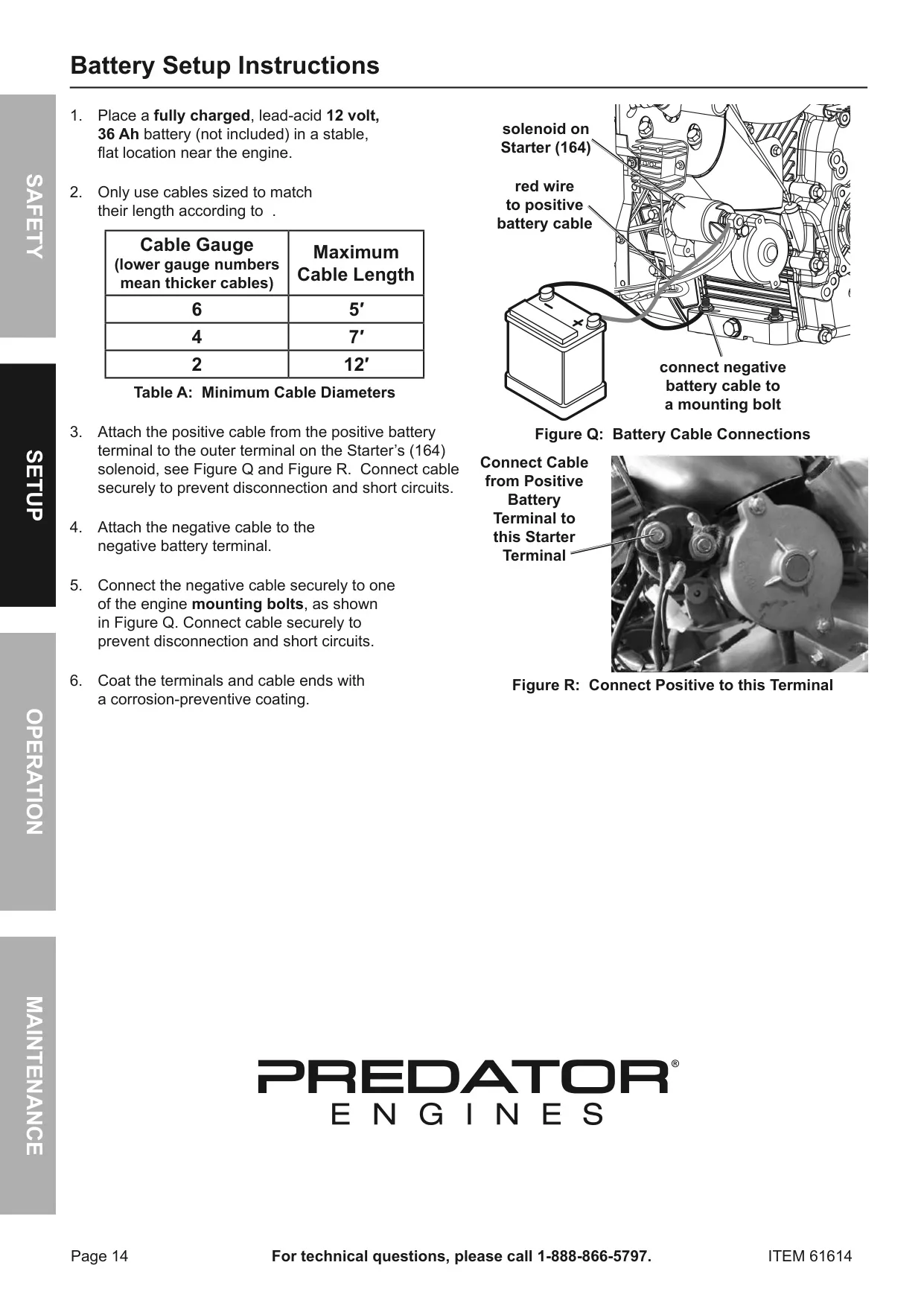
Starting is fully electric. A 12-volt, 36 Ah lead-acid battery connects to the outer terminal of the starter solenoid. The negative cable goes to one of the engine mounting bolts. Cable gauge depends on length: 6 gauge up to 5 feet, 4 gauge up to 7 feet and 2 gauge up to 12 feet. If no battery is connected, the positive cable terminal must be wrapped securely with electrical tape. The terminals should also get a corrosion-preventive coating.
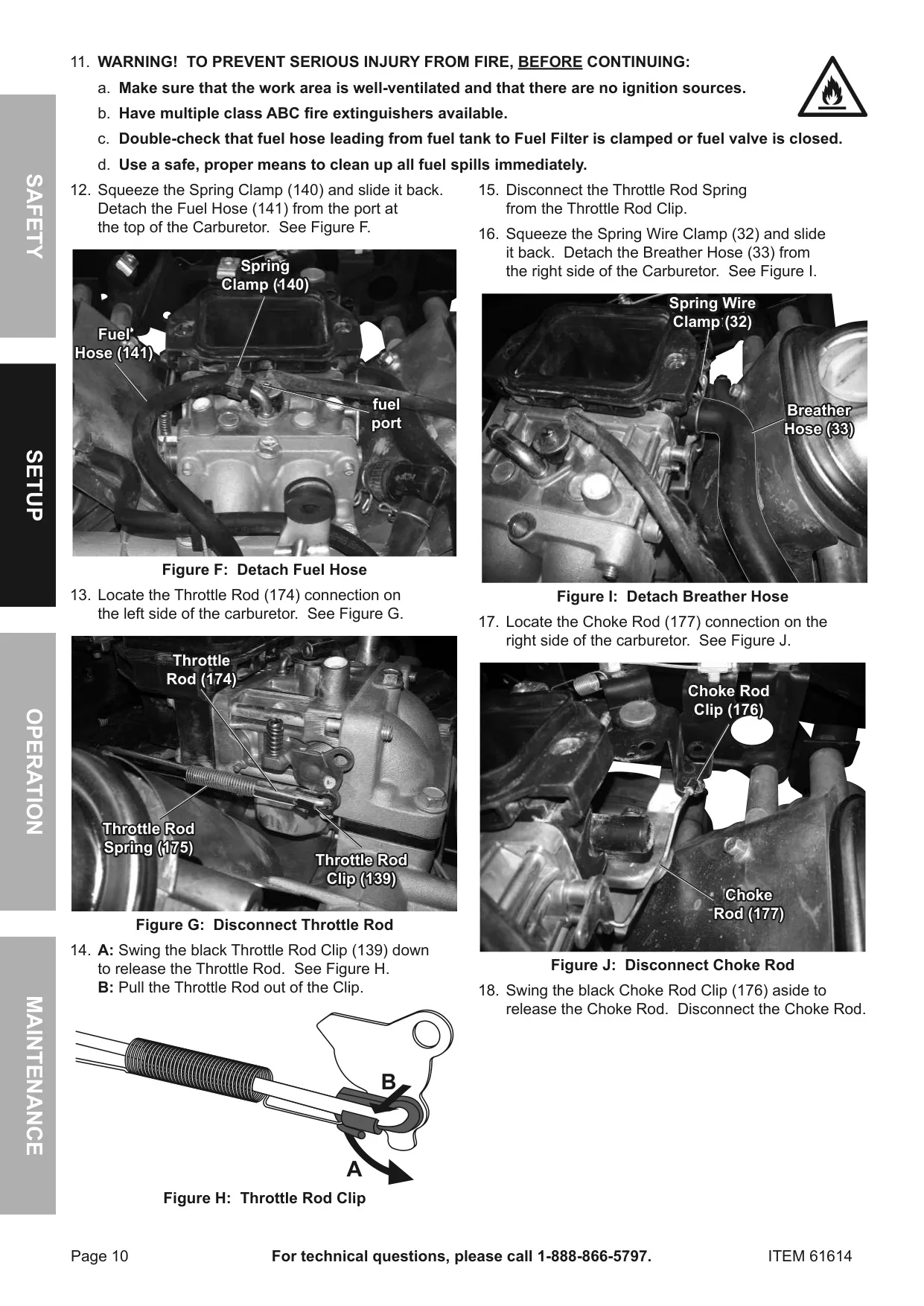
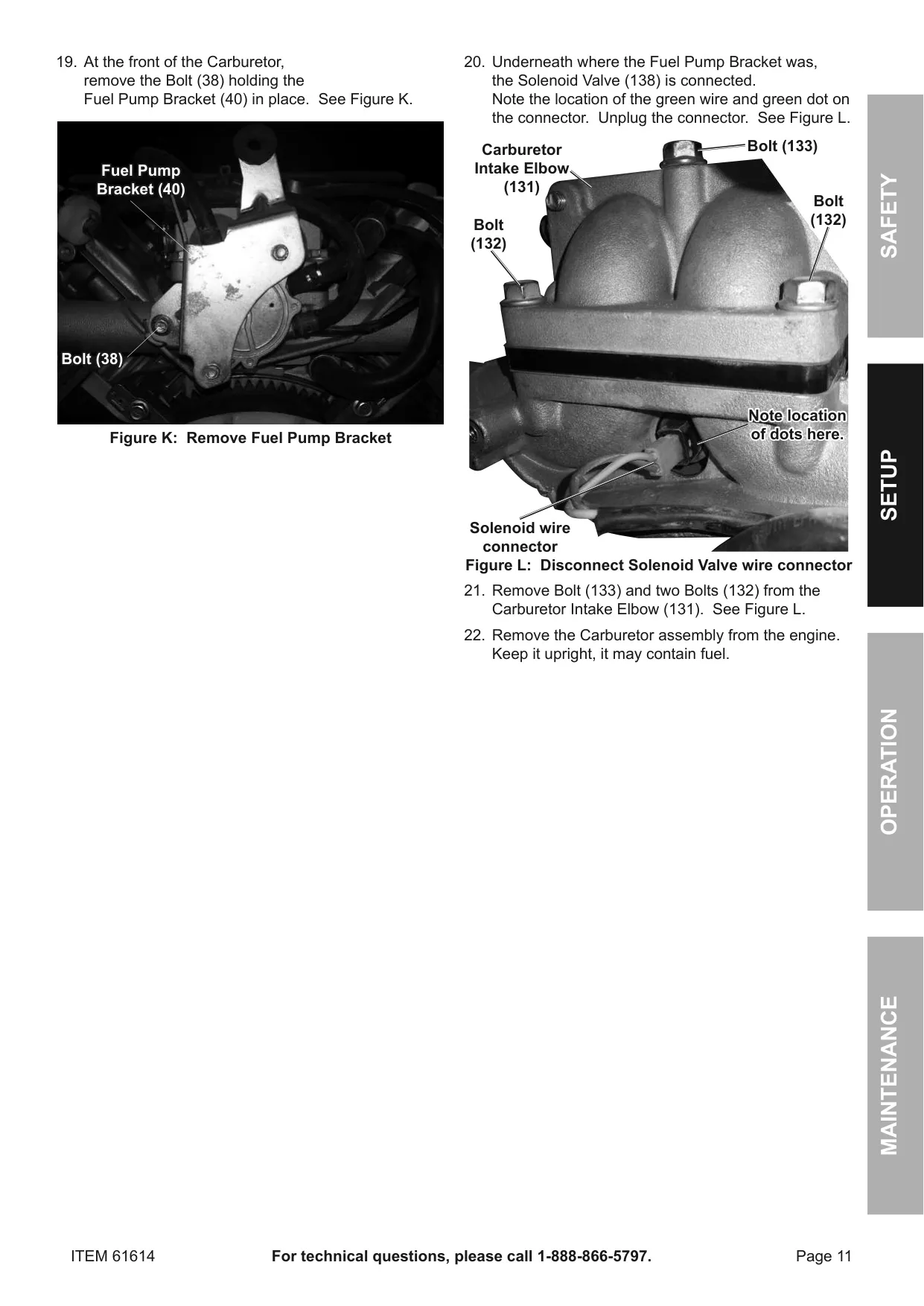
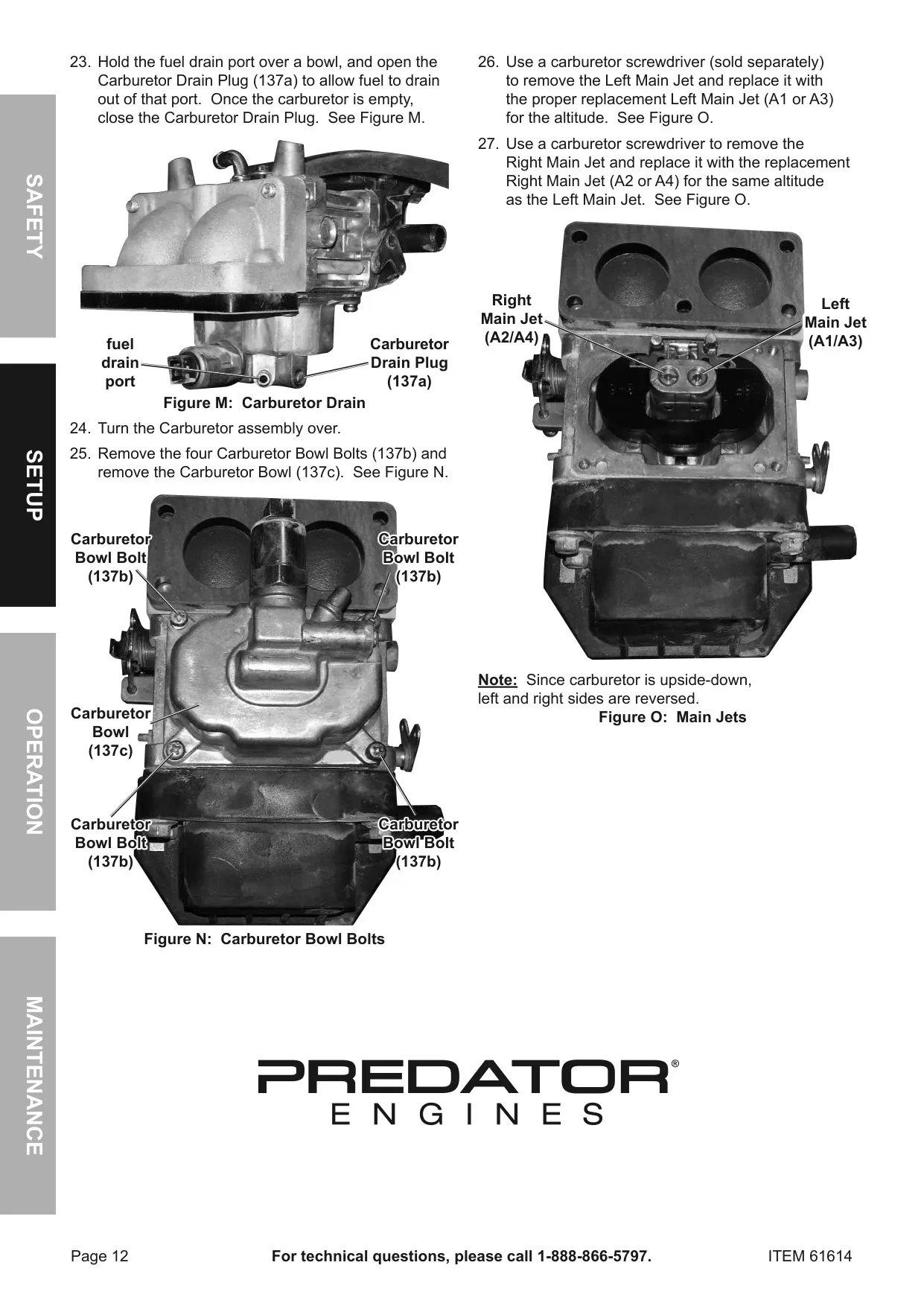
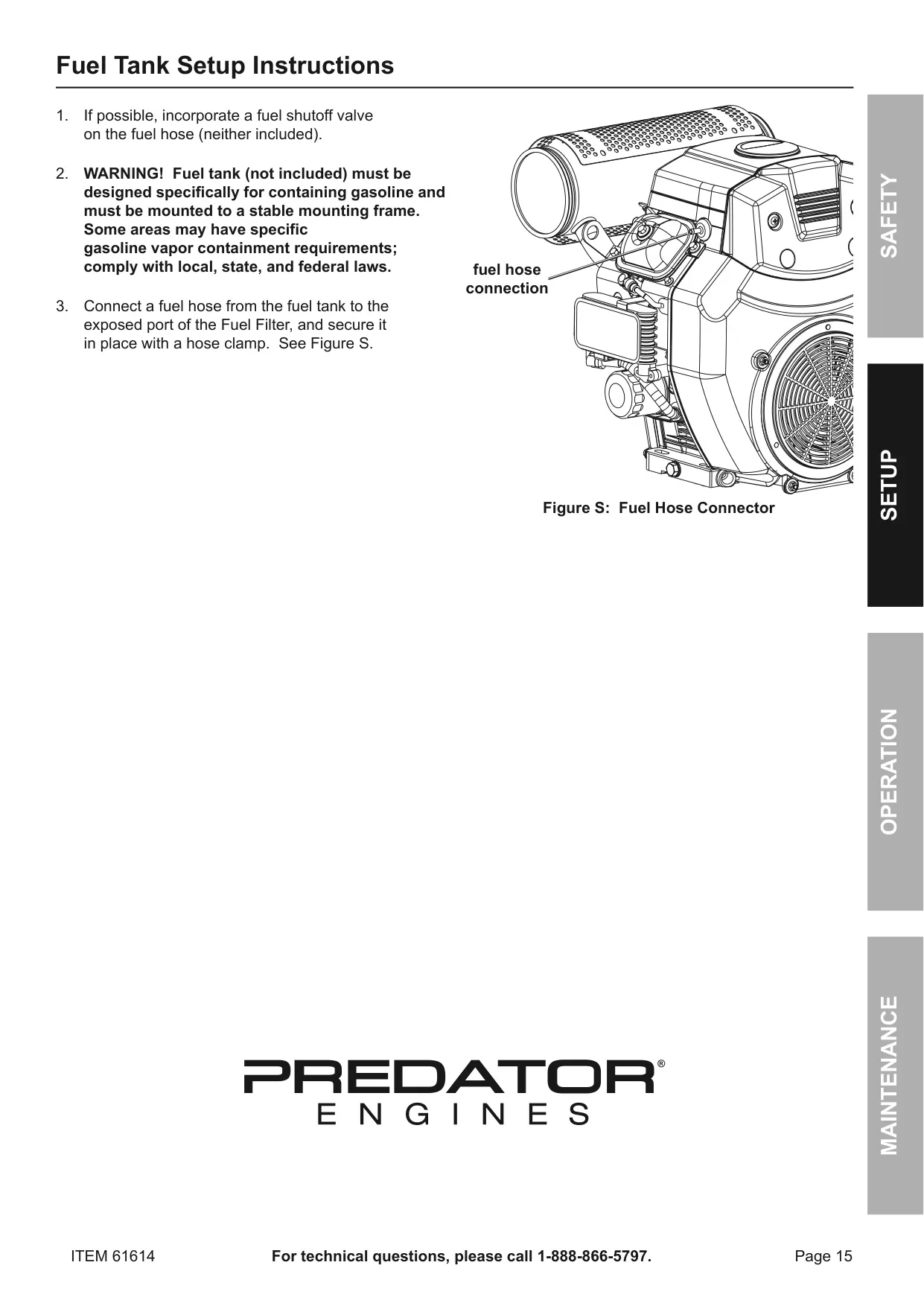
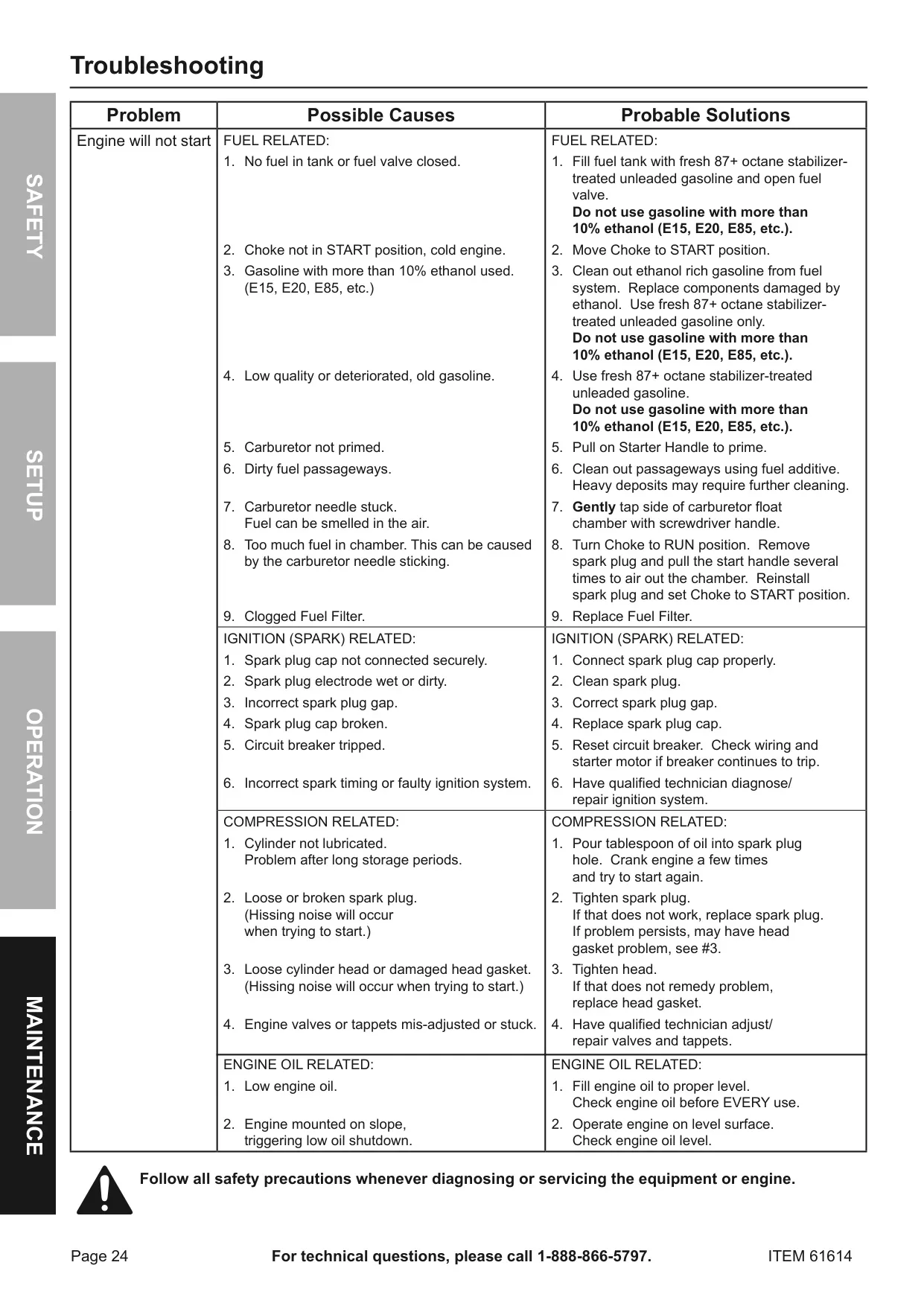
For fuel, you connect an external gasoline-rated tank to the engine's fuel filter, and adding a shutoff valve is recommended. Inside the engine, a fuel pump, a solenoid valve and a two-barrel carburetor with separate left and right main jets handle delivery. A low-oil sensor stops the engine from starting, or shuts it down, when the oil level is too low. Because the sensor reacts to the oil level, mounting the engine on a slope can trigger the shutdown.
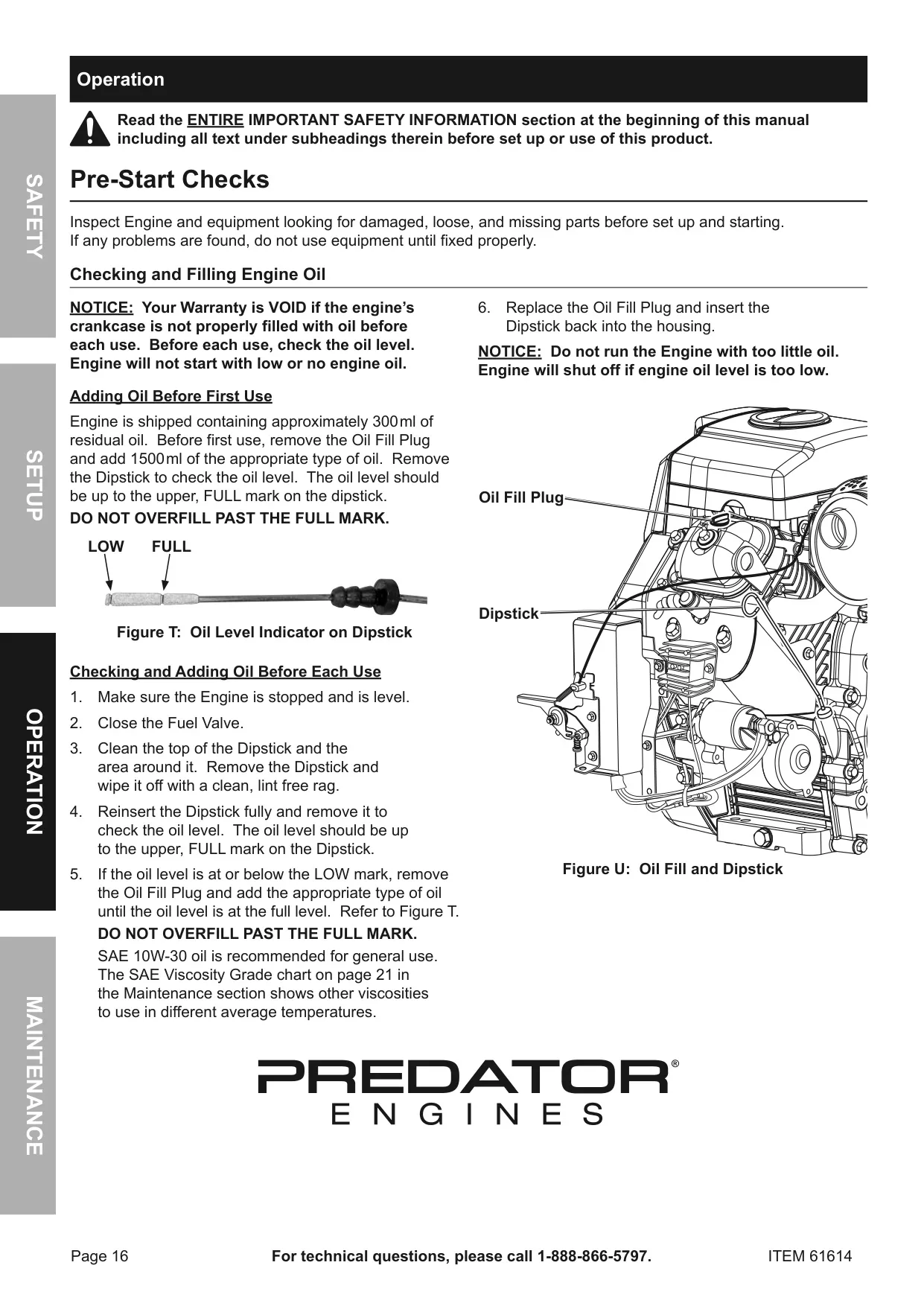
The engine ships with about 300 ml of residual oil, so you need to add 1500 ml before first use. Fill to the FULL mark on the dipstick and do not overfill. The break-in has two parts. For the first 3 hours, avoid heavy loads and maximum speed. After about 20 hours, change the oil. After every start, let the engine run without load for five minutes so it can stabilize.
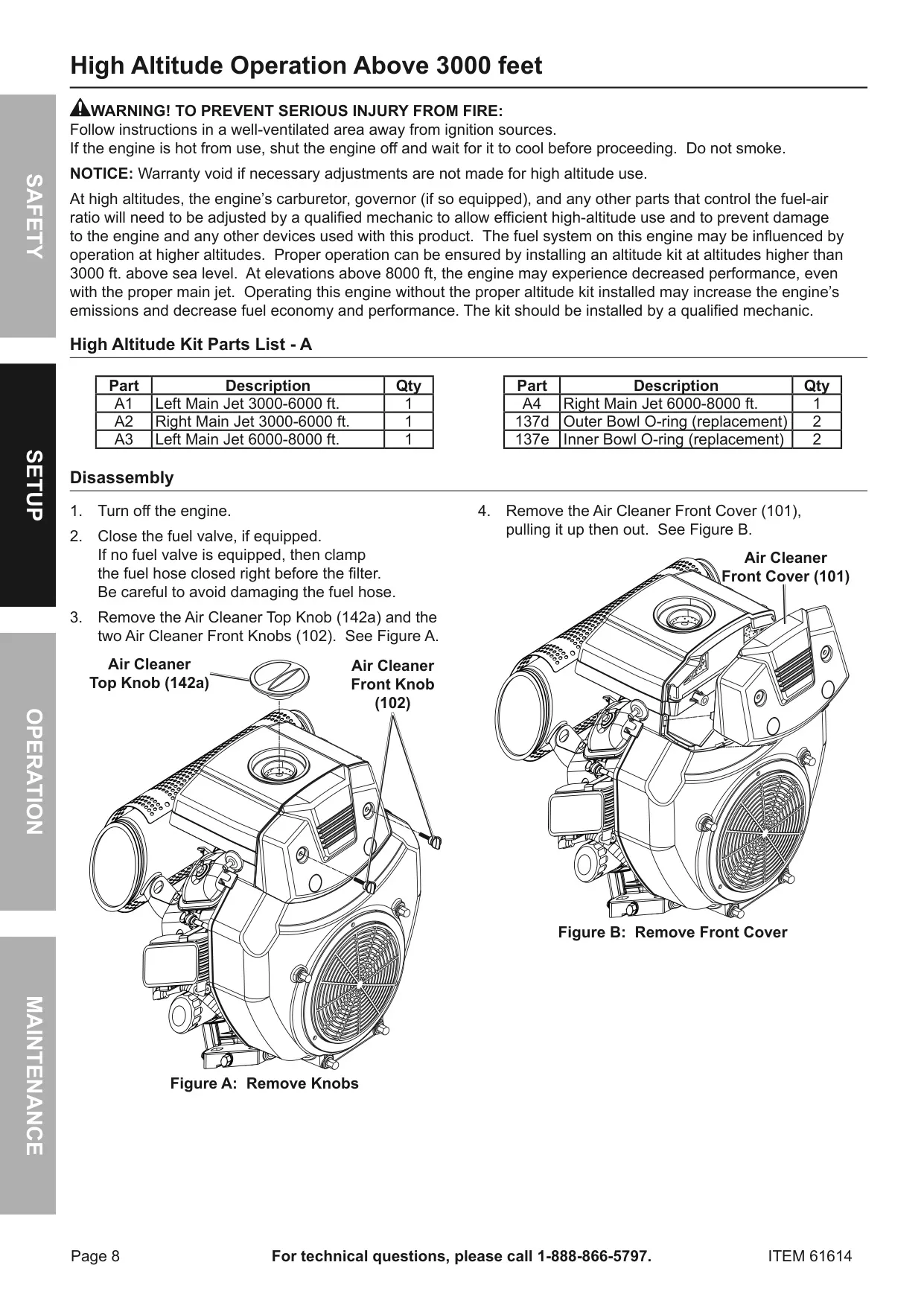
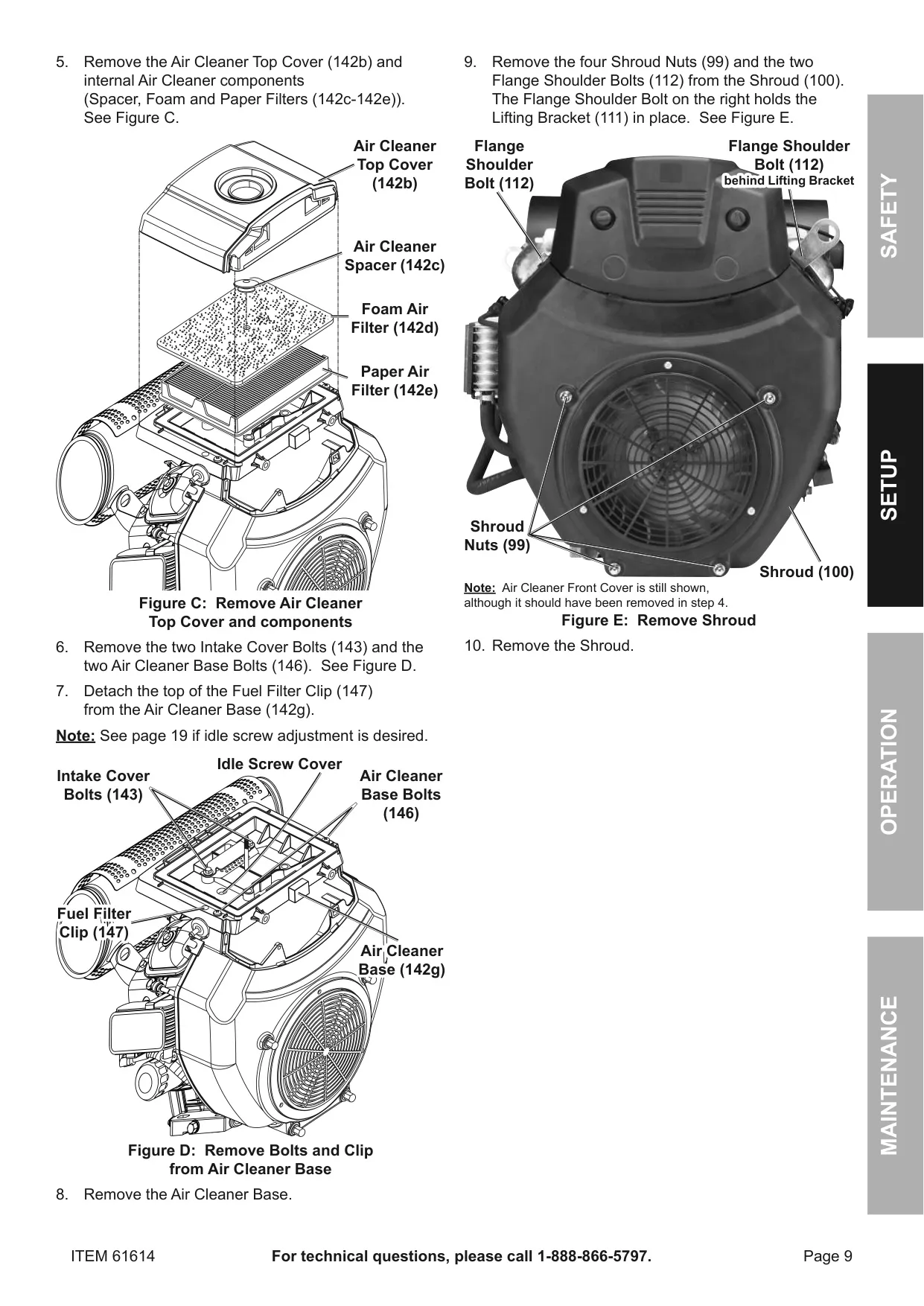
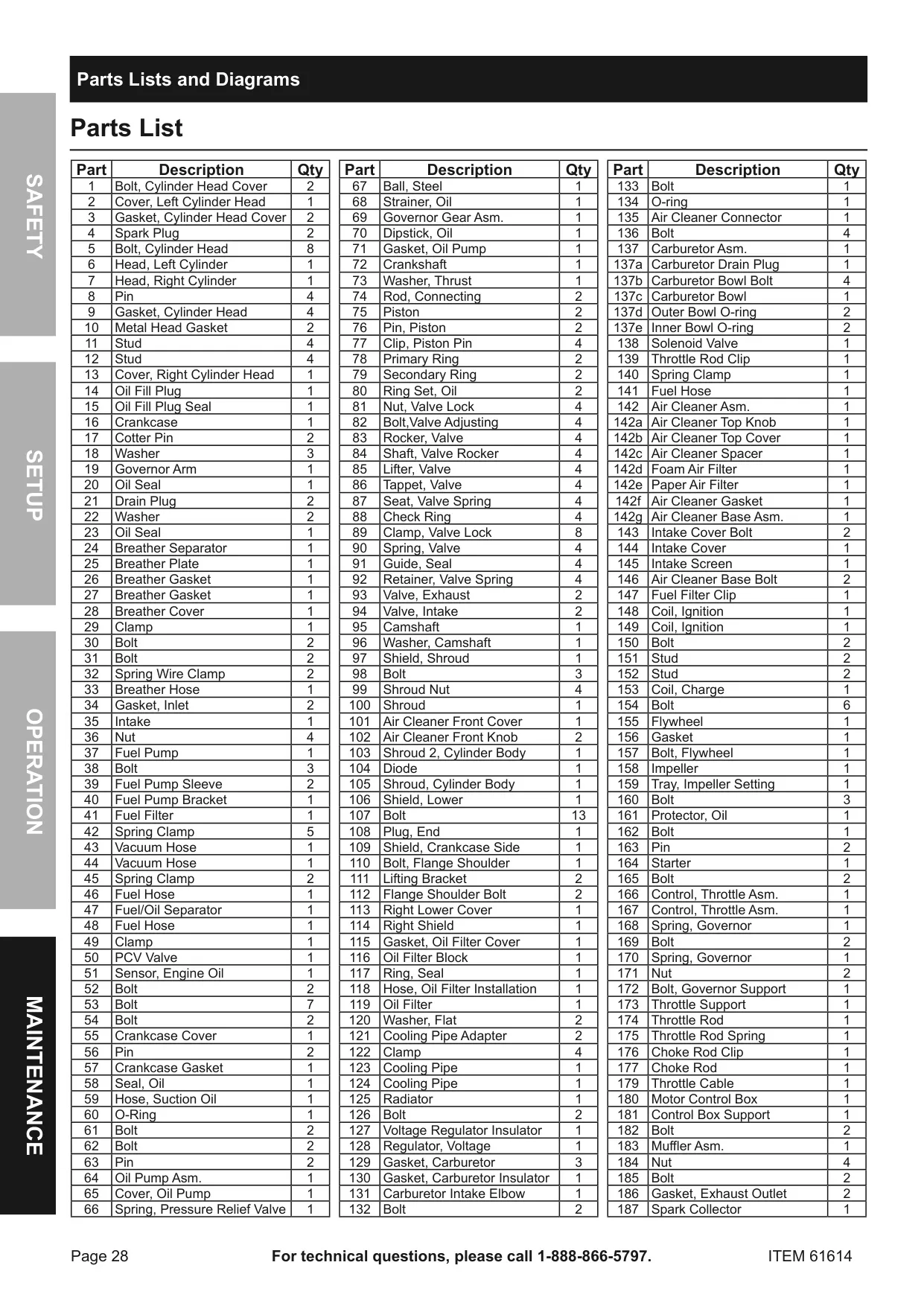
For use above 3000 feet, the manual covers a high-altitude kit with main jets for 3000-6000 ft and 6000-8000 ft, plus replacement bowl O-rings. A qualified mechanic should install it. The step-by-step procedure involves removing the air cleaner, the shroud and the carburetor. If the required altitude adjustments are not made, the warranty is void.
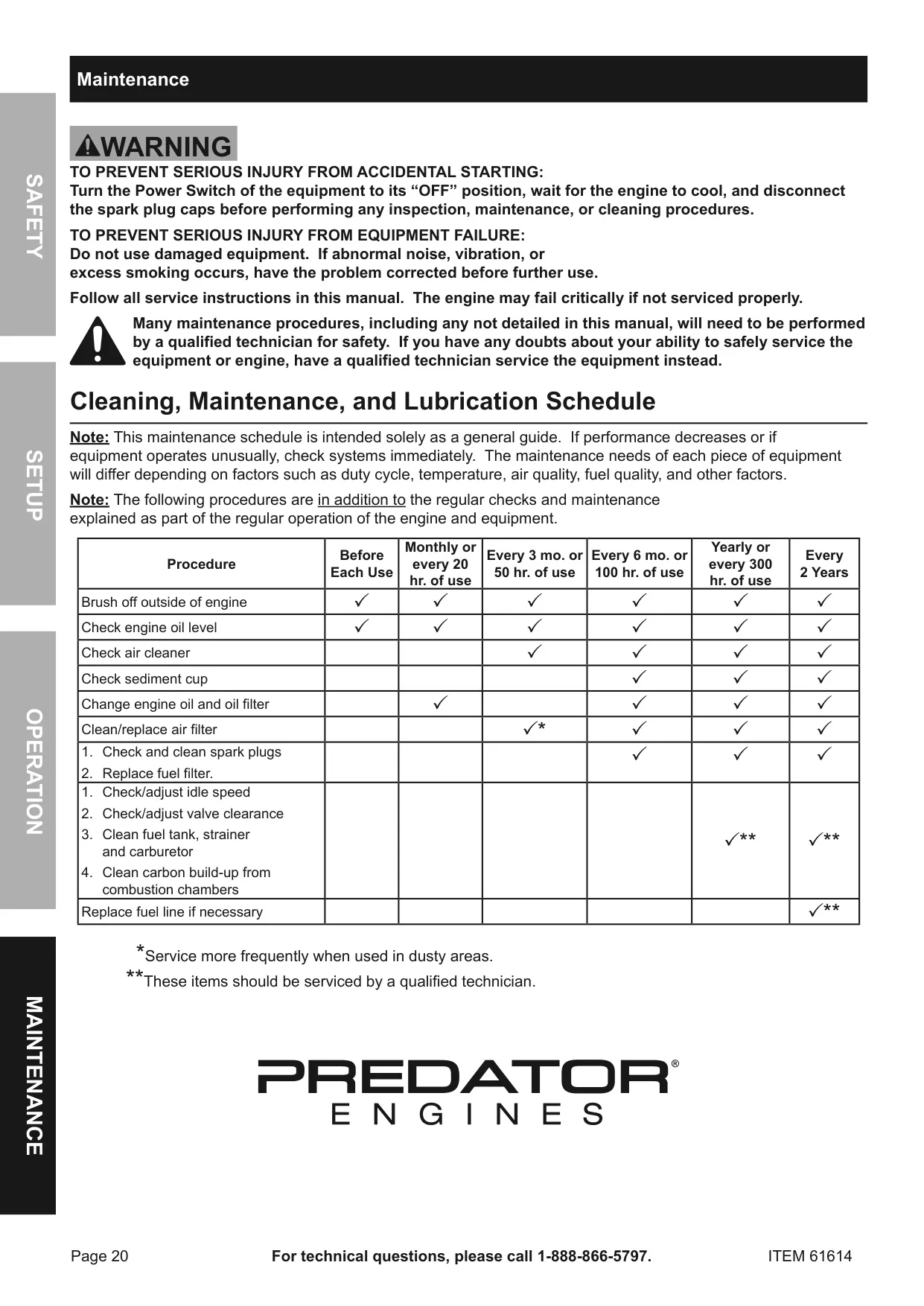
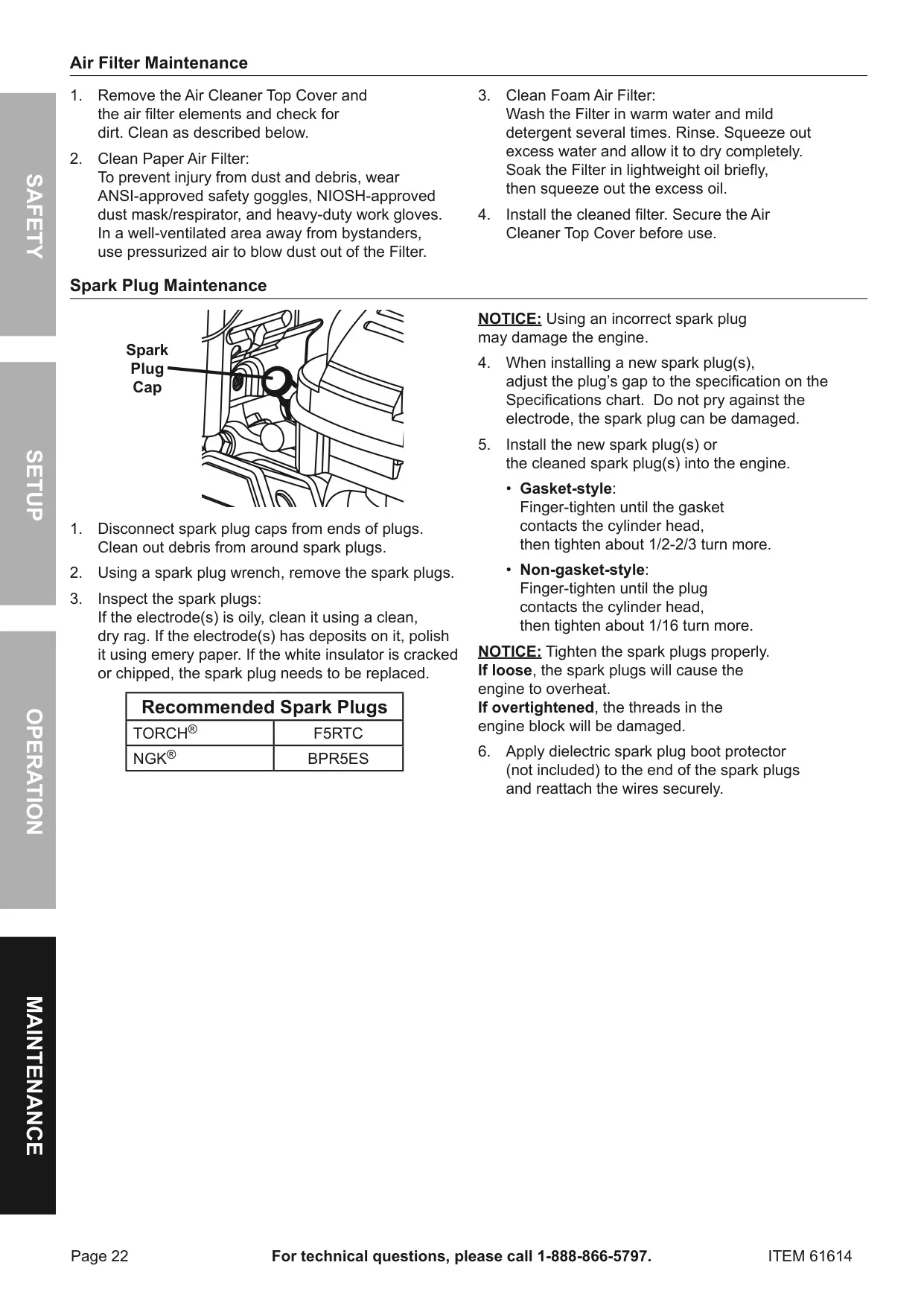
The maintenance schedule covers checks before each use, then intervals of 20, 50, 100 and 300 hours, plus a two-year item. Oil and filter changes, cleaning or replacing the air filter, spark plug service and fuel filter replacement are set at fixed intervals. Valve clearance, idle speed, cleaning the carburetor and fuel tank, and removing carbon from the combustion chambers should be left to a technician. The air cleaner has two stages, a paper filter and an oiled foam filter, which need more frequent service in dusty conditions.
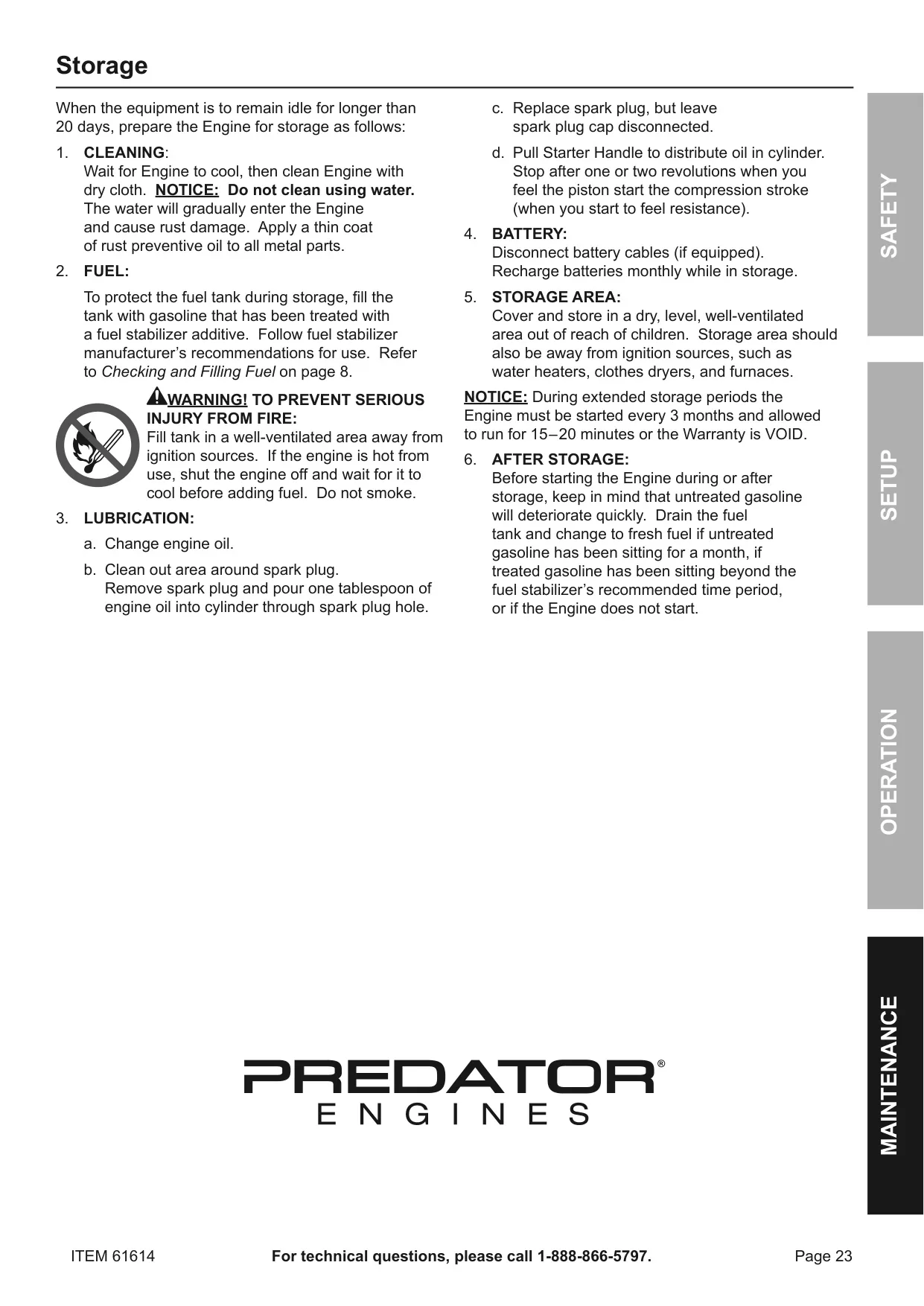
If the engine will sit for more than 20 days, follow the storage steps. Clean it with a dry cloth, never with water. Fill the tank with stabilized fuel and change the oil. Pour one tablespoon of oil into each cylinder and recharge the battery every month. During long storage, the engine must be run for 15-20 minutes every 3 months to keep the warranty valid.
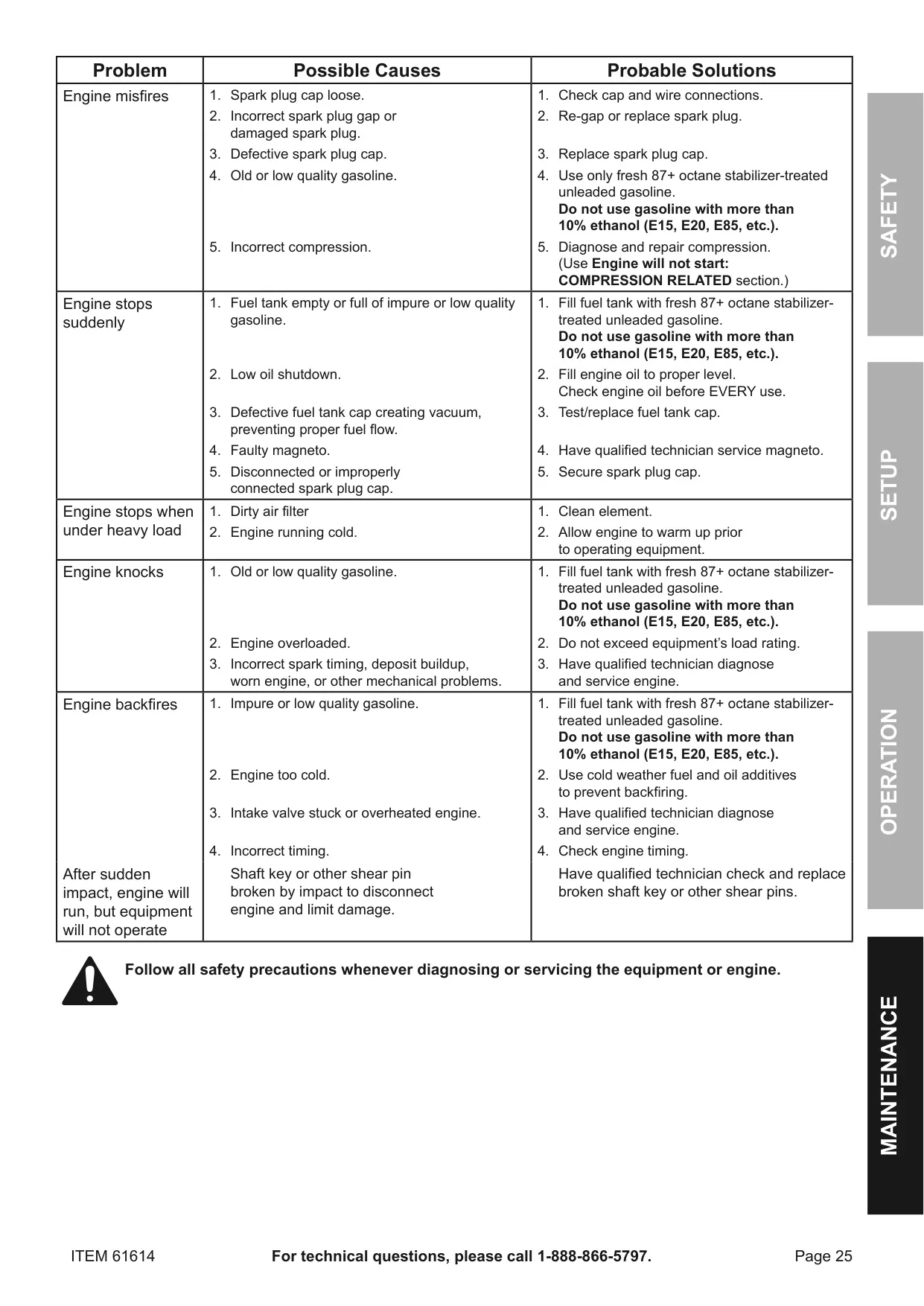
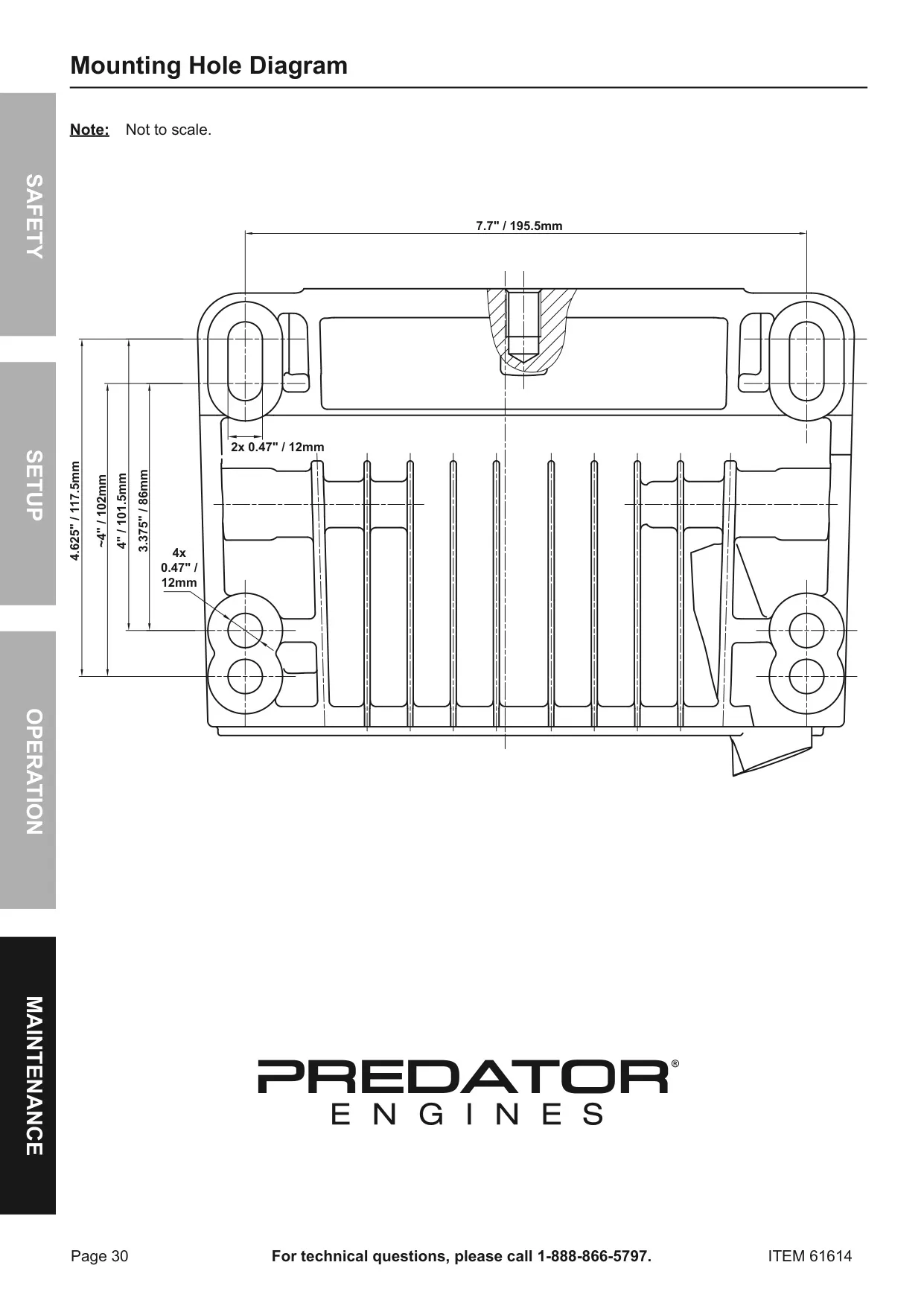
The PTO face has threaded mounting holes in 5/16″-24 UNF, 3/8″-16 UNC and 7/16″-14 UNC. The base hole pattern measures about 7.7″ (195.5 mm) across. A shaft key acts as a shear point: after a sudden impact, it breaks to disconnect the engine from the equipment and limit damage.
Frequently Asked Questions (FAQs)
Can't find the answer you need? Here are some frequently asked questions about the Predator 670 Engine, and we answer them below.