Here we offer the Fisher & Paykel Dishwasher DD24 manual completely free and in English. We have cataloged this manual in the Dishwashers section on Manualverse, and it has been rated by 1 users with an average rating of 5. If you have any specific questions about Fisher & Paykel Dishwasher DD24, we suggest checking the Frequently Asked Questions (FAQs) section of this manual.
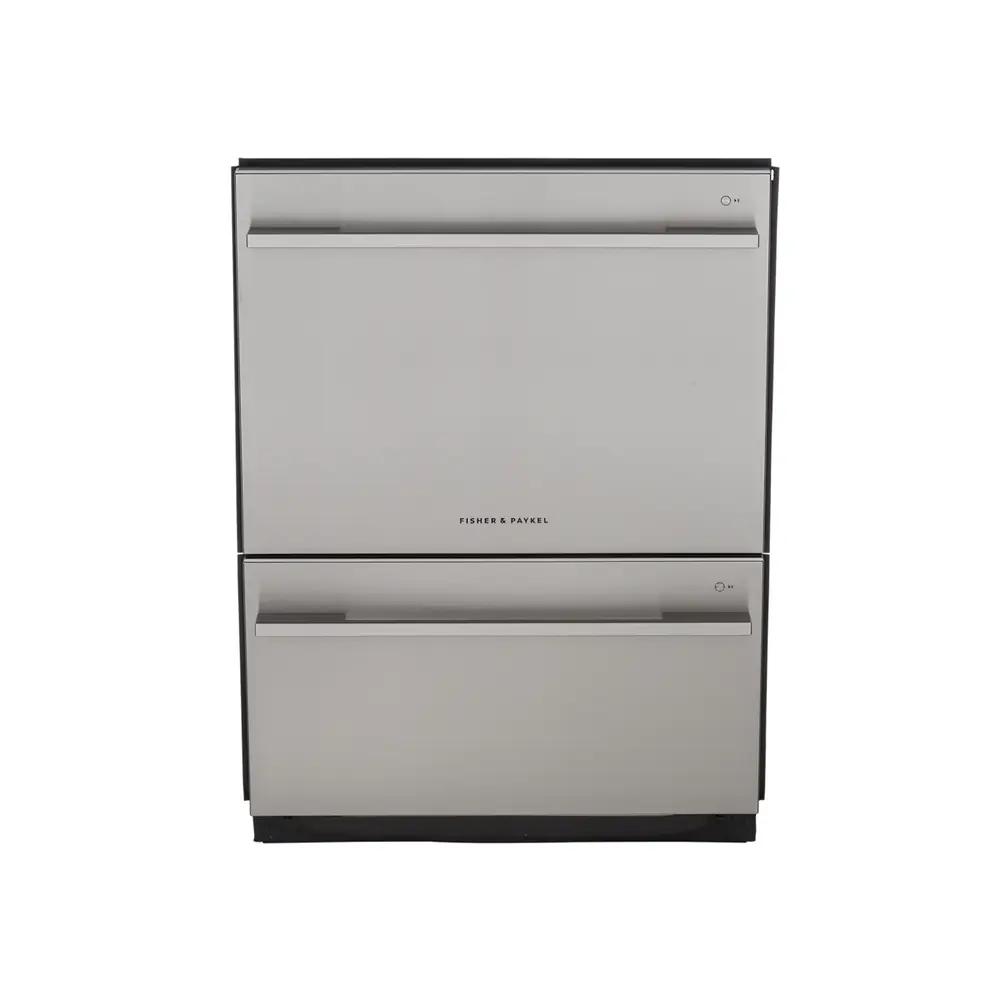
Product Images
Fisher & Paykel Dishwasher DD24 Specifications
Feature
Specification
Notes
Model Compatibility
DD24 Series
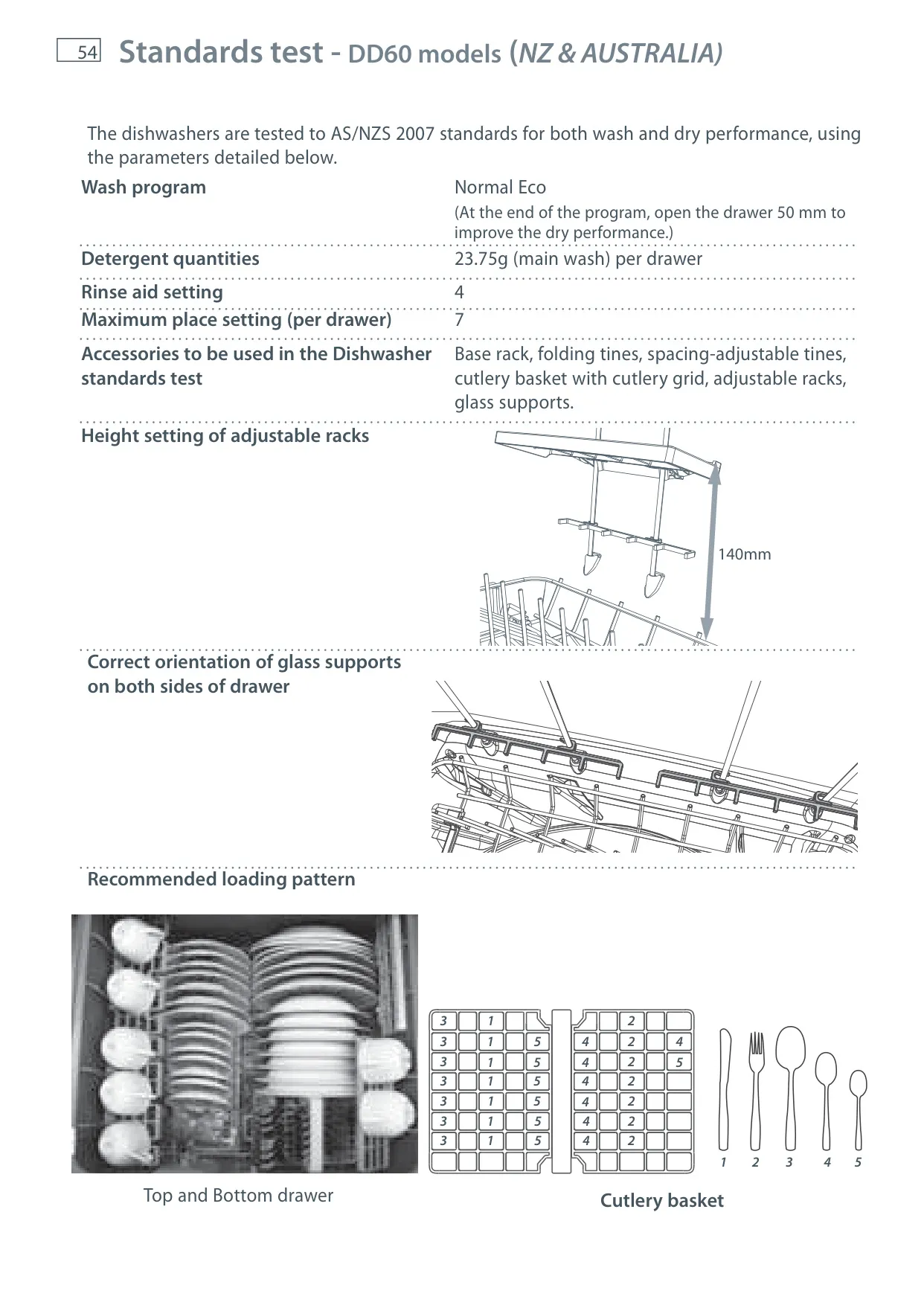
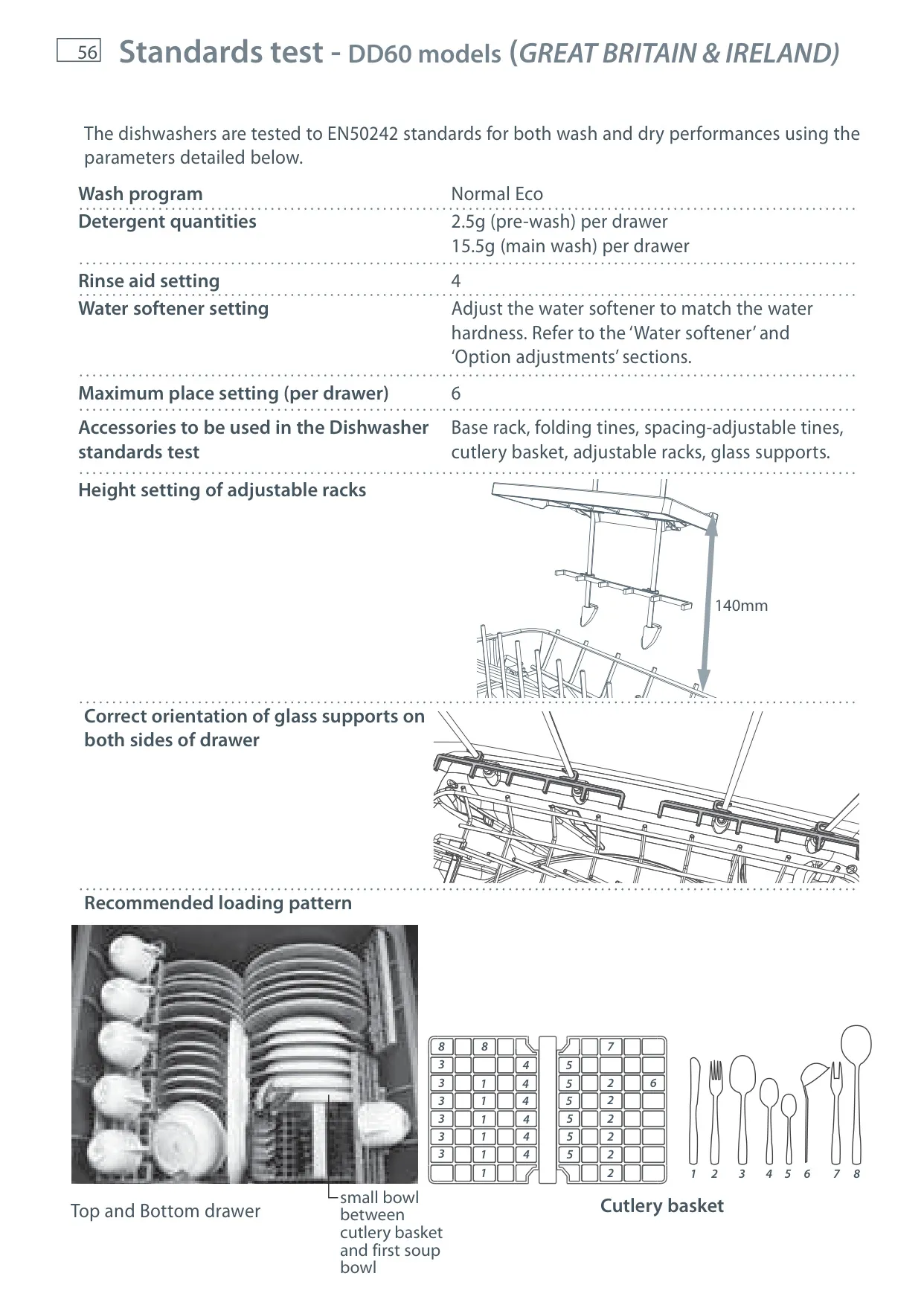
Also includes DD60 models for shared wash program data
Dishwasher Type
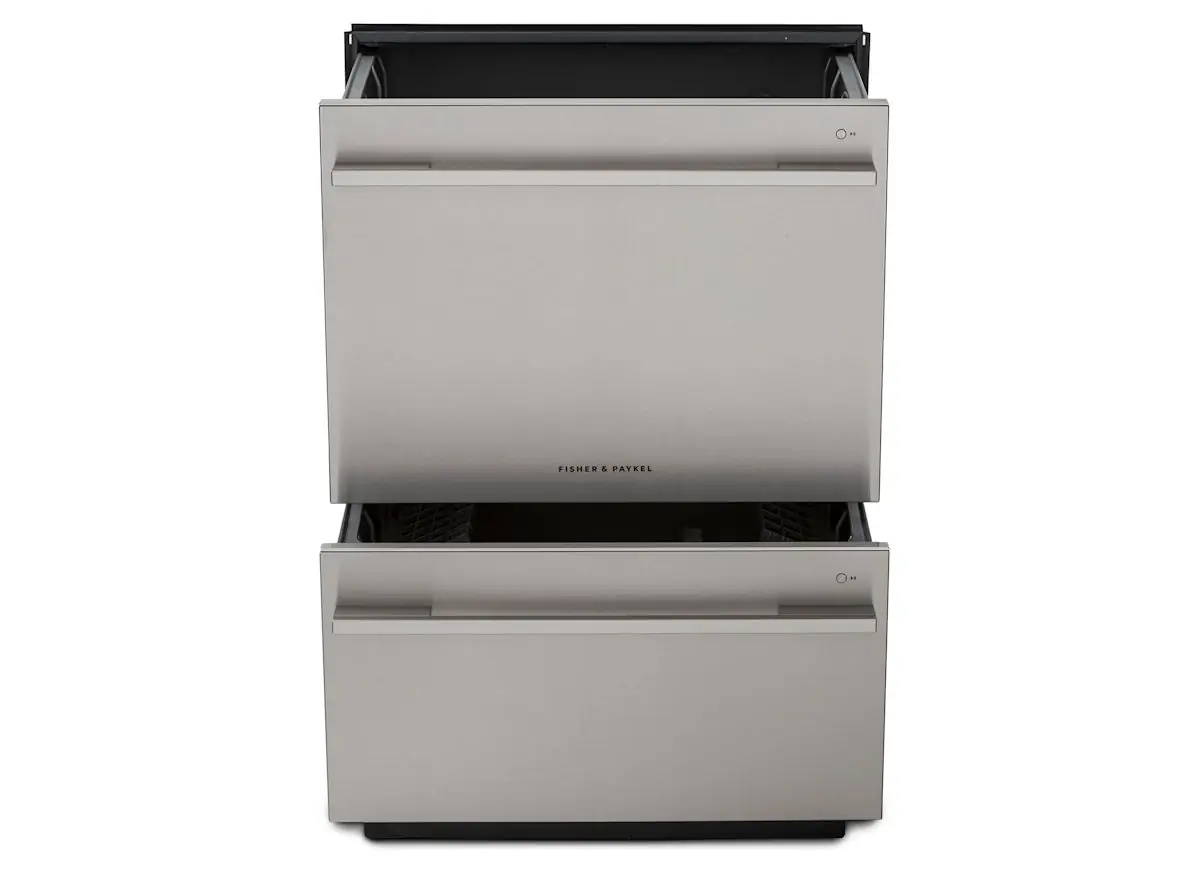
DishDrawer™ Dishwasher
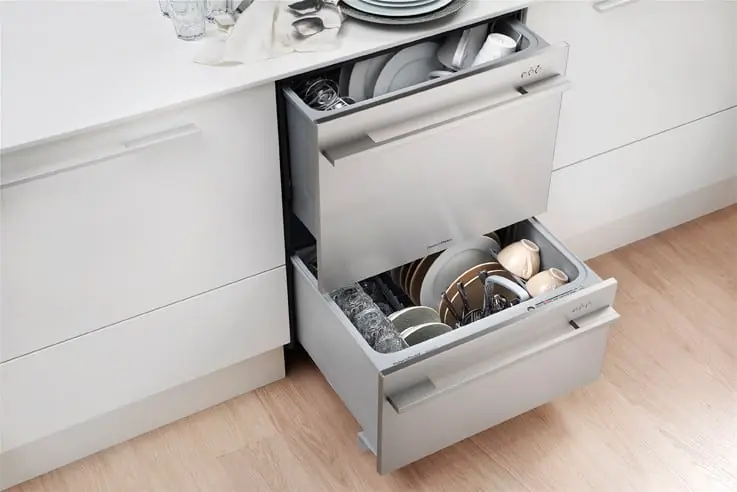
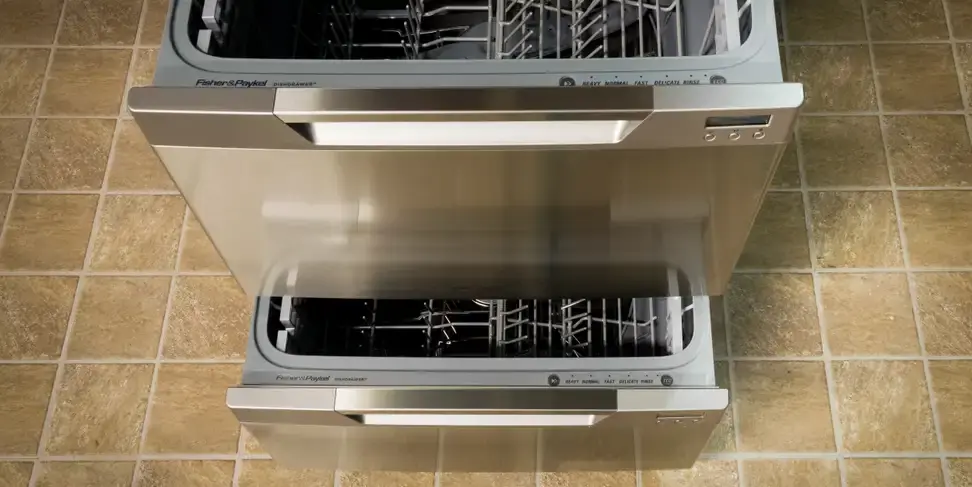
Can be configured as a single or double drawer system
Maximum Place Settings
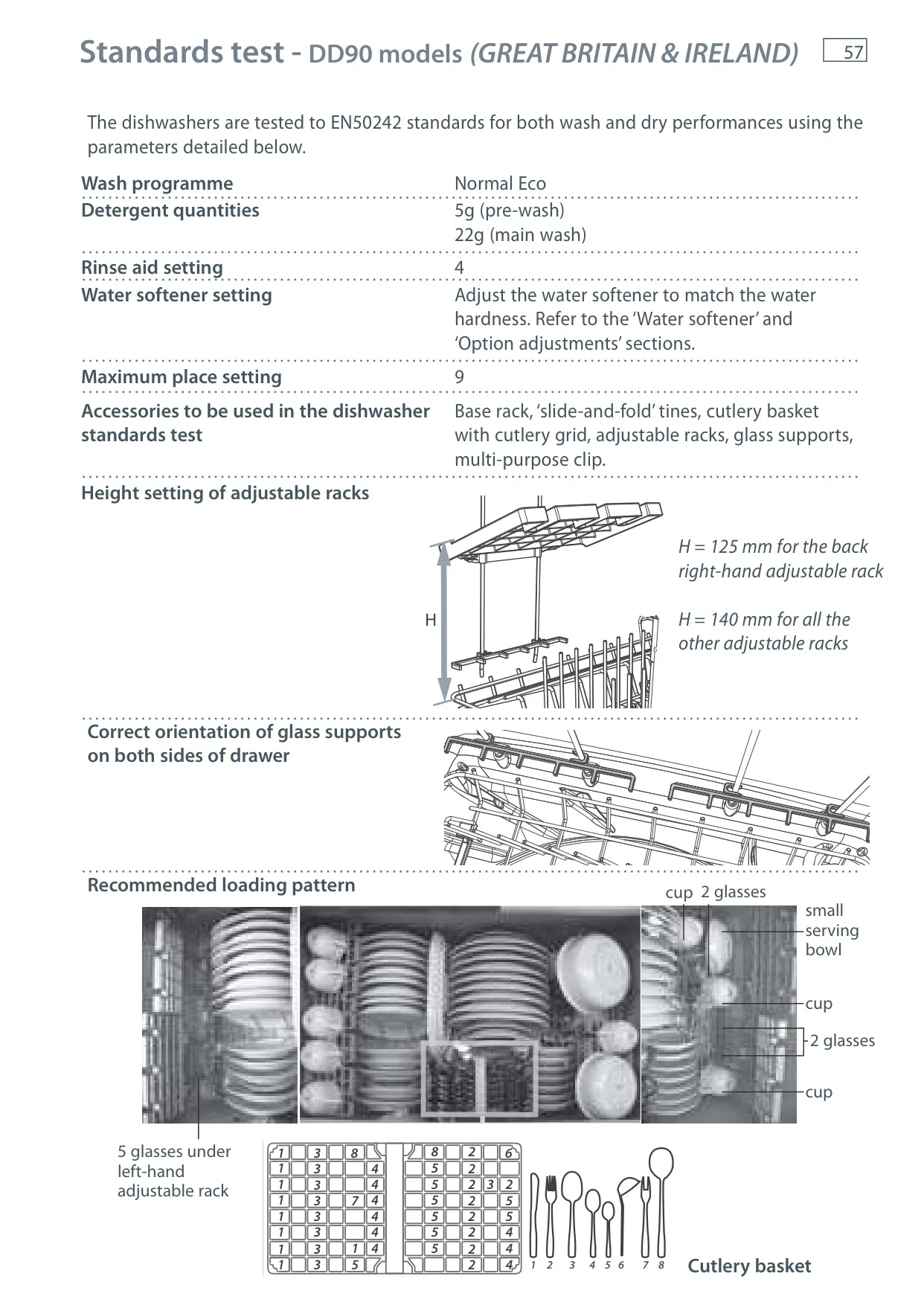
10 per drawer
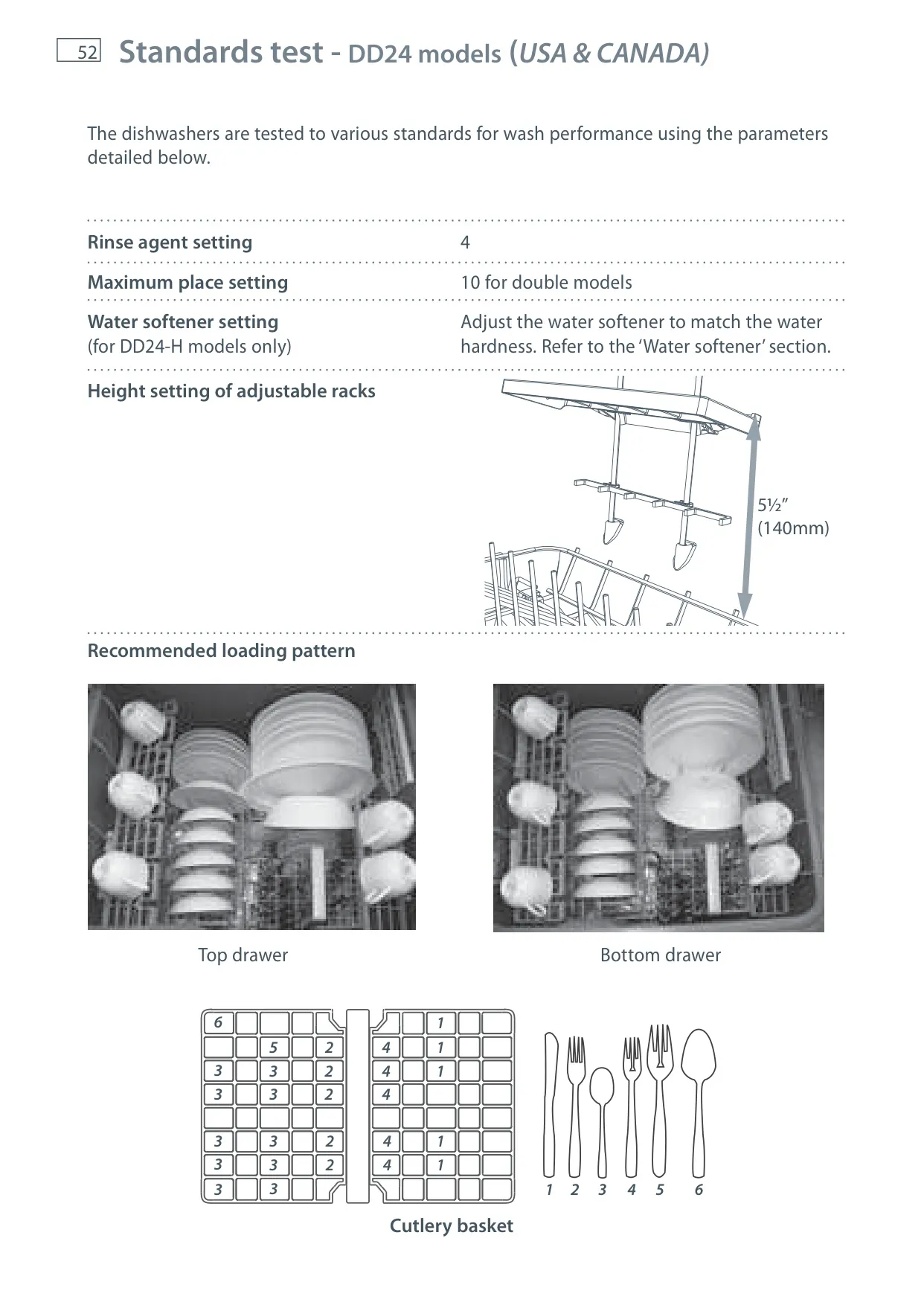
Based on USA & Canada standards testing for double models
Racking Features
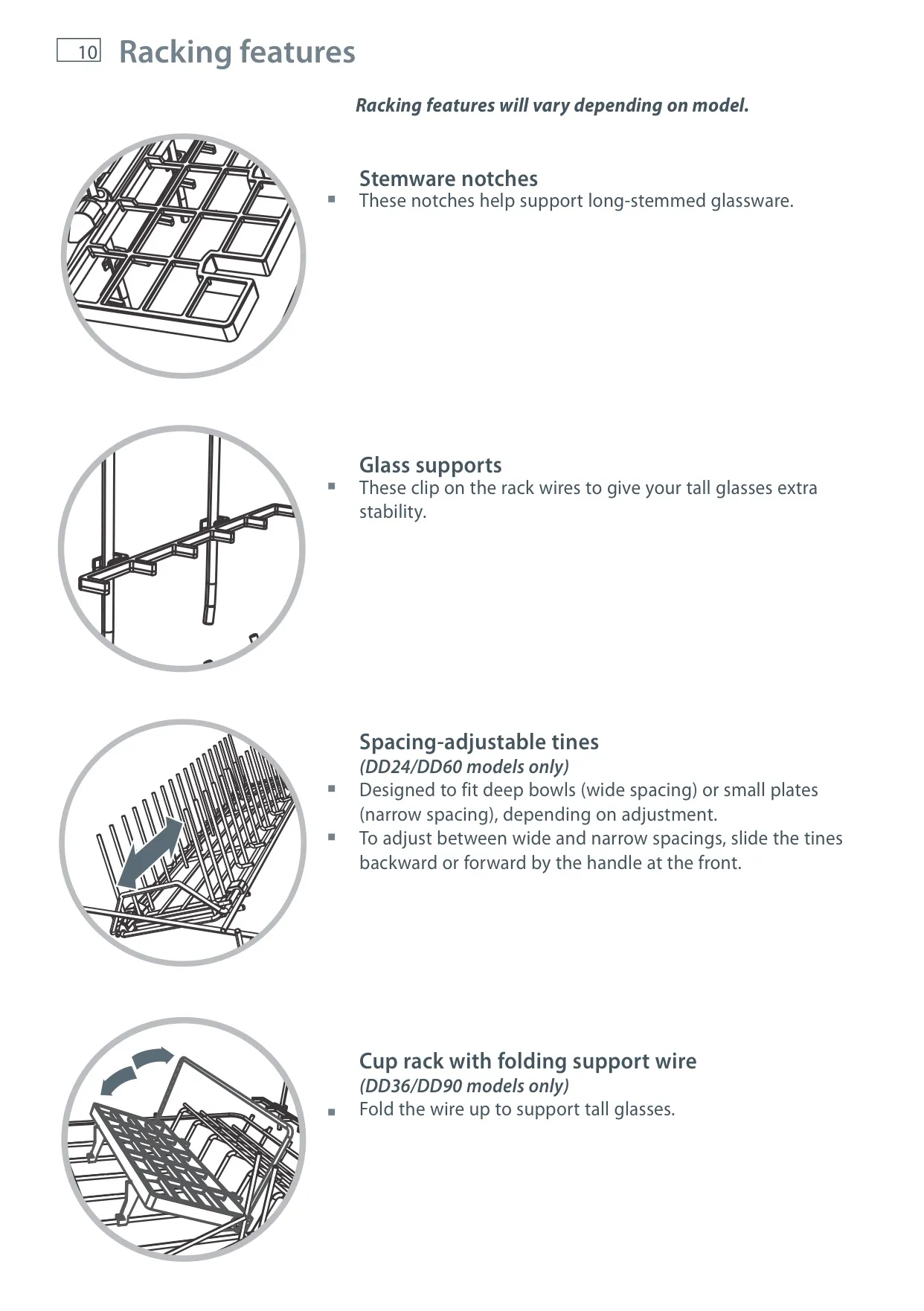
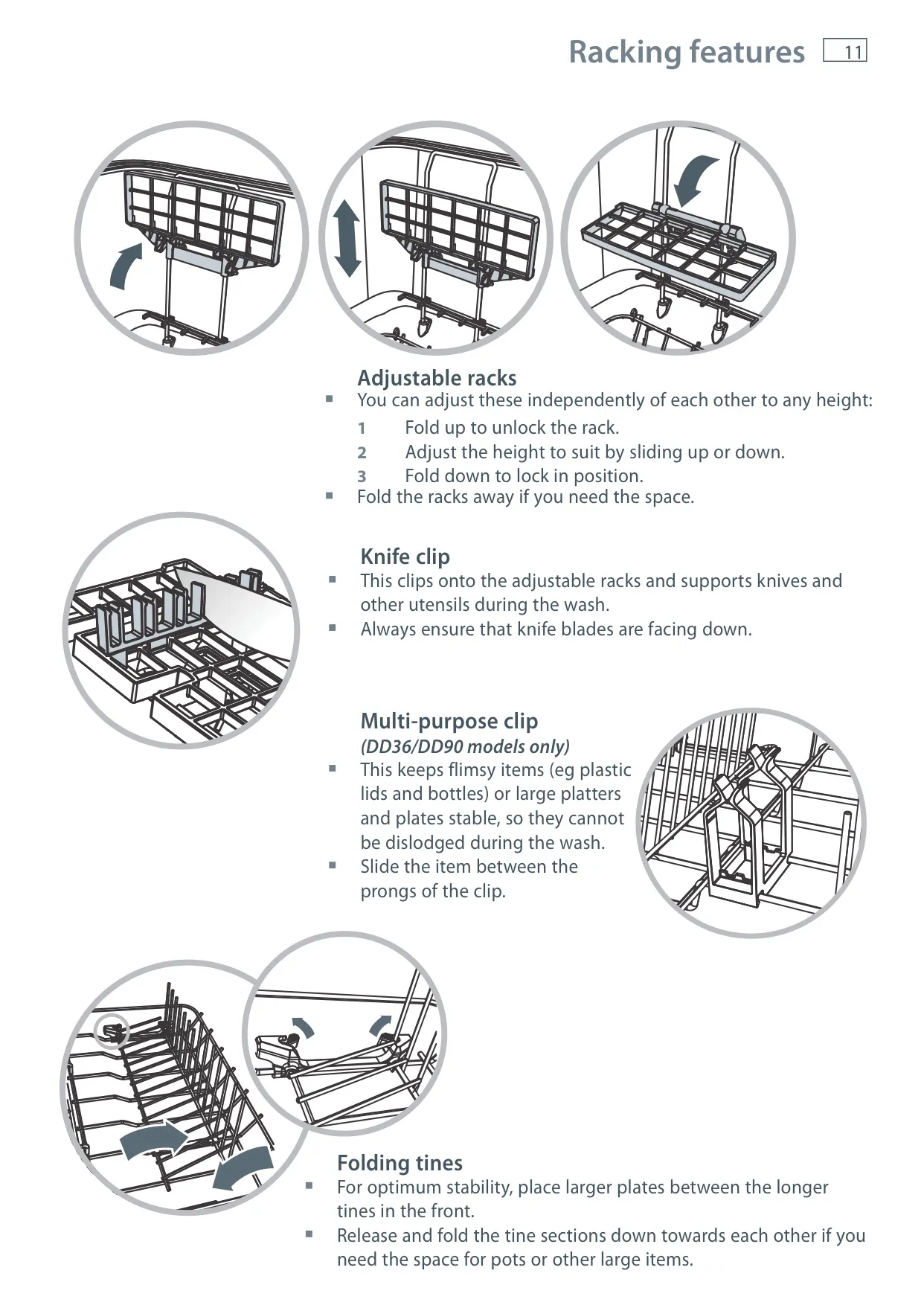
Spacing-adjustable tines, adjustable racks, cutlery basket with small items container & tablet tray, stemware notches, glass supports, knife clip
Adjustable rack height for testing: 5½” (140mm)
Water Softener
Built-in on 'H' models only
Requires granular salt for operation
Electrical Connection
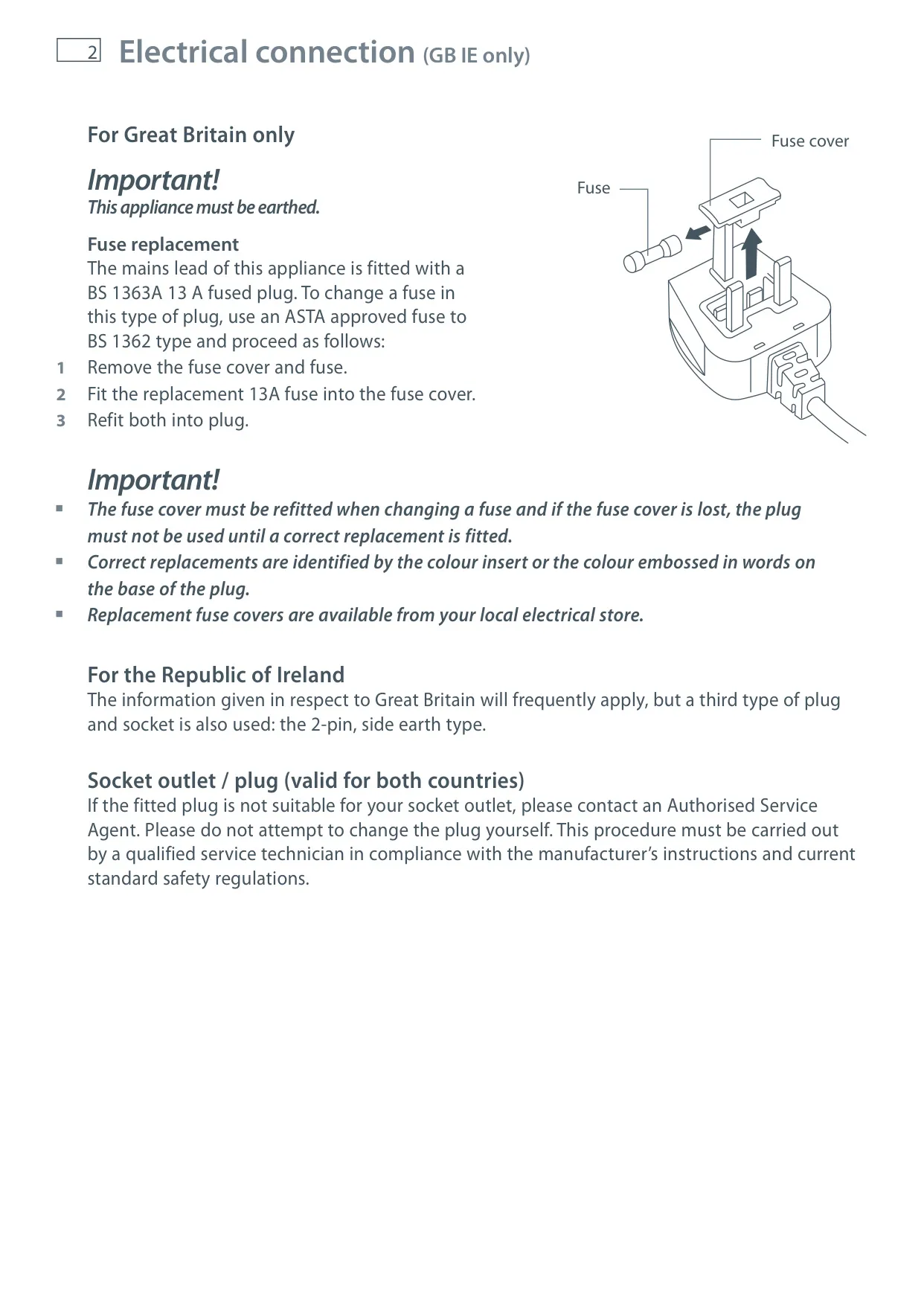
BS 1363A 13A fused plug (GB/IE only)
Appliance must be earthed in GB/IE regions
Rinse Aid Setting
Default 4
Adjustable from 1 (lowest) to 5 (highest)
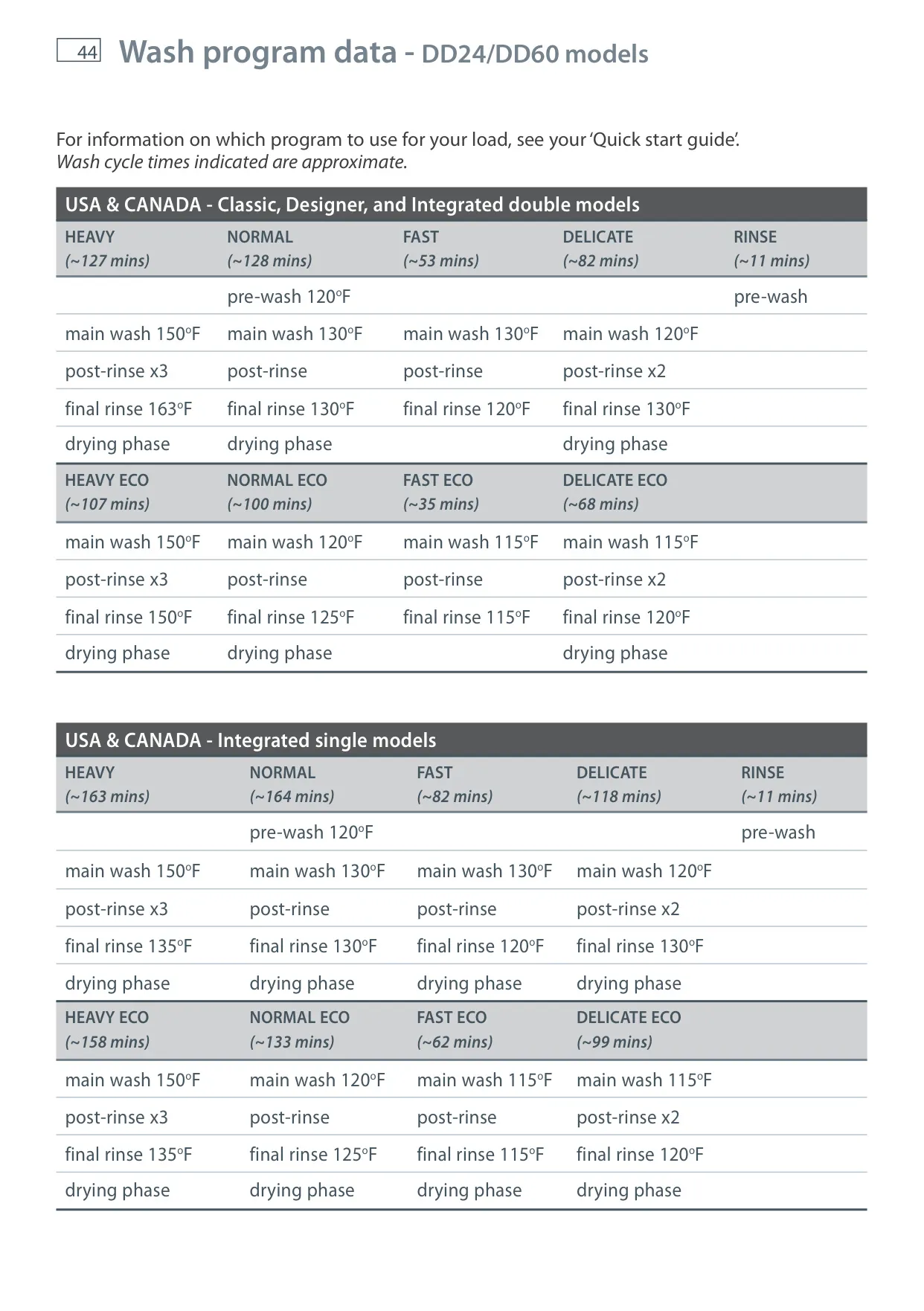
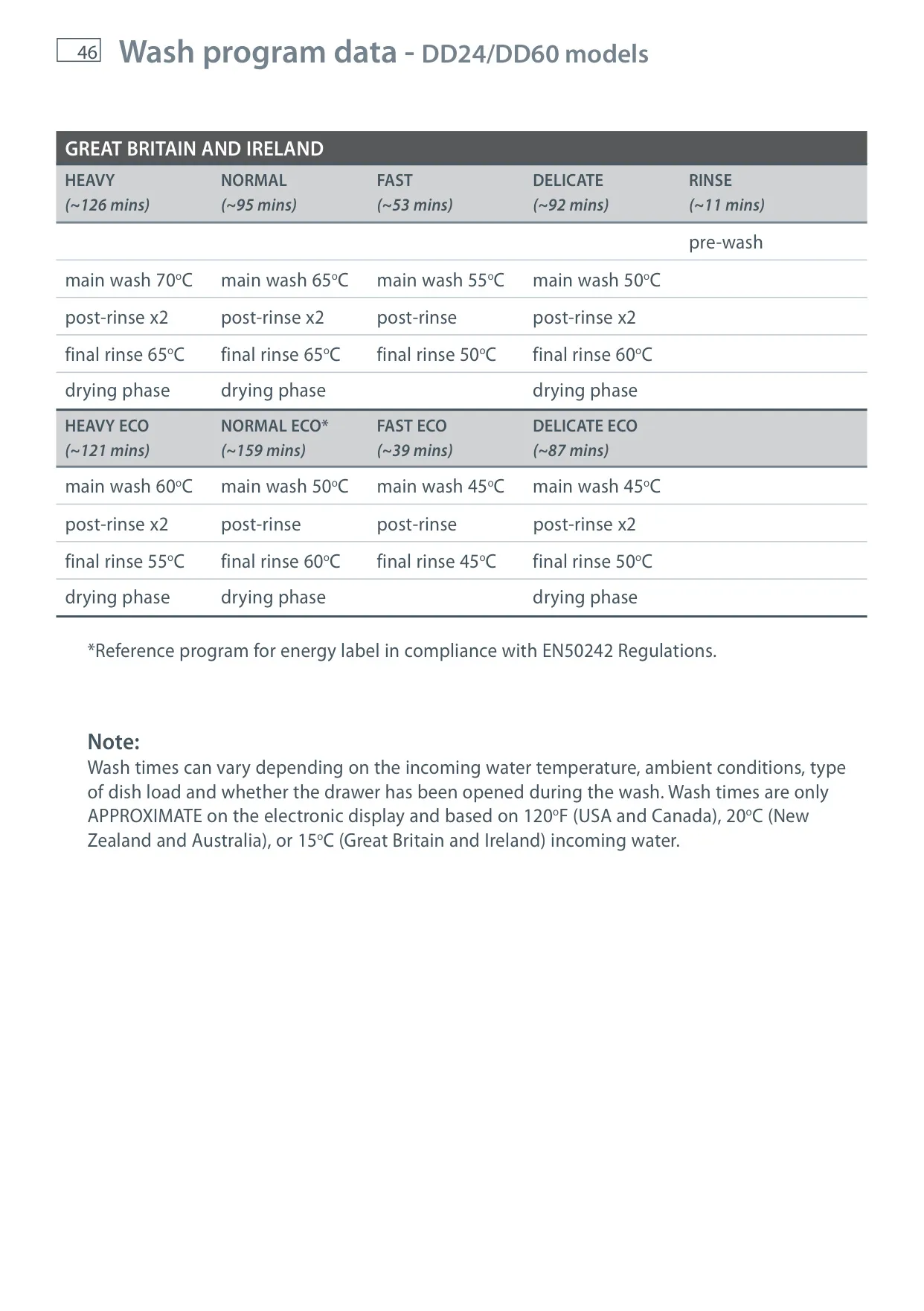
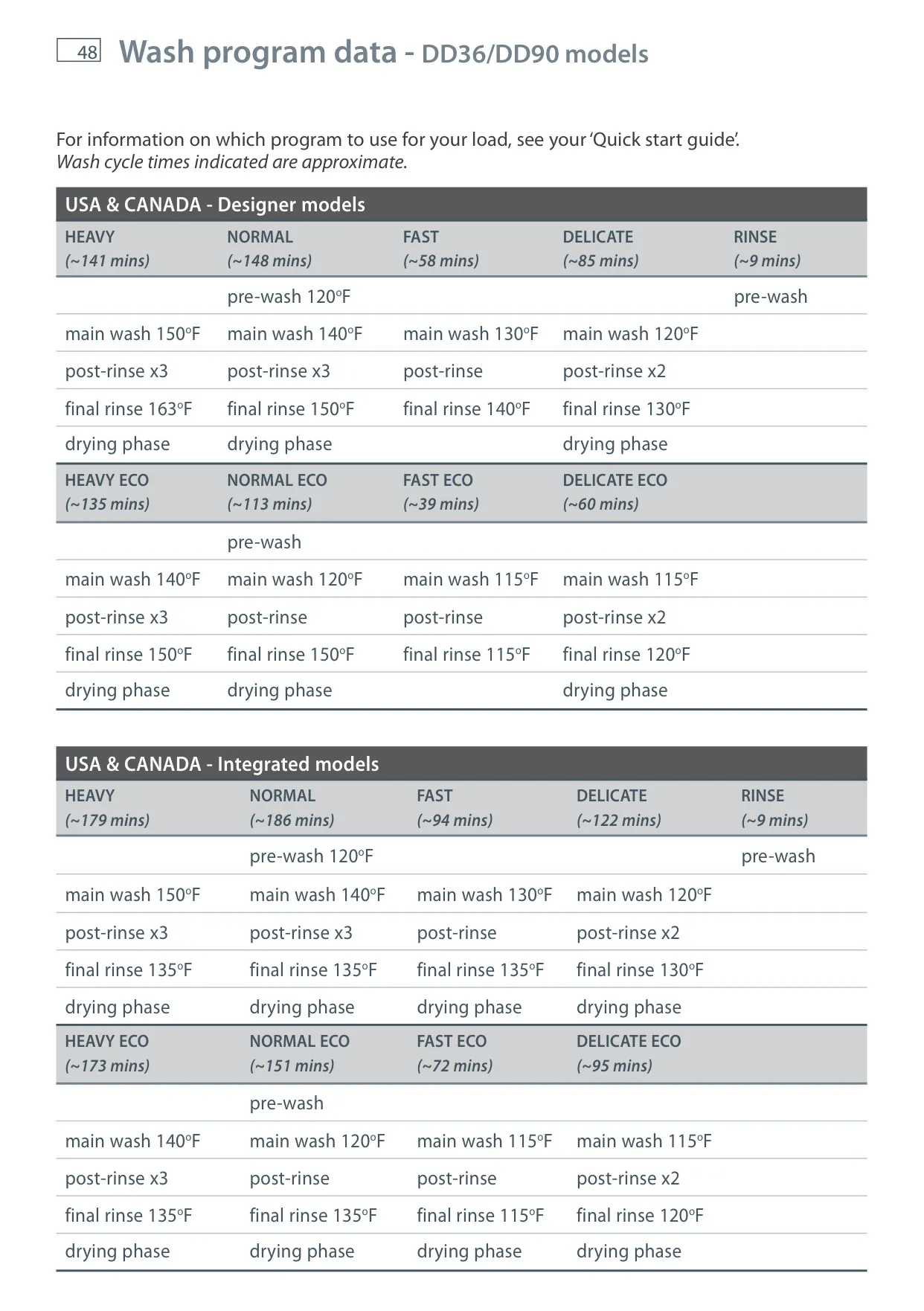
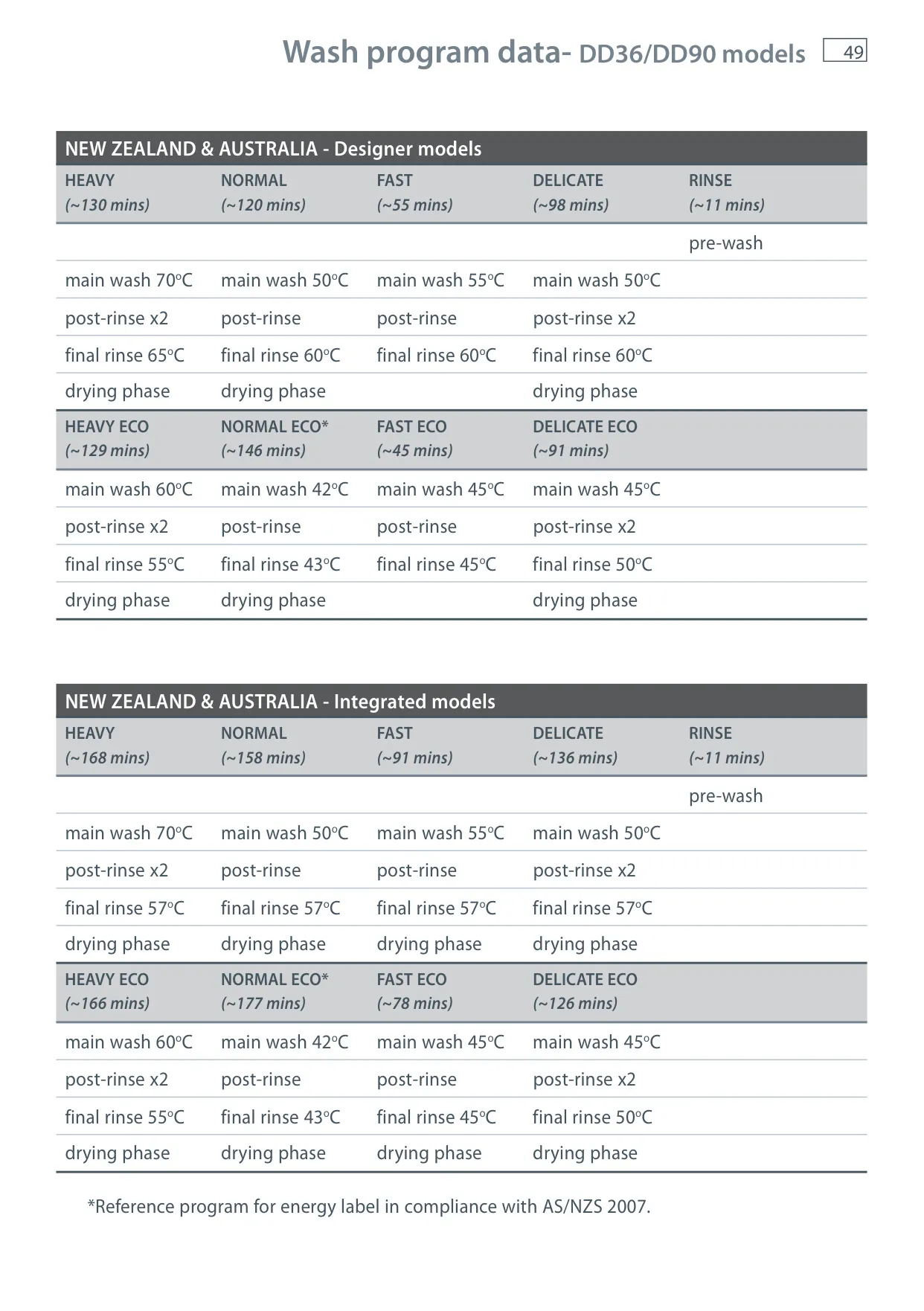
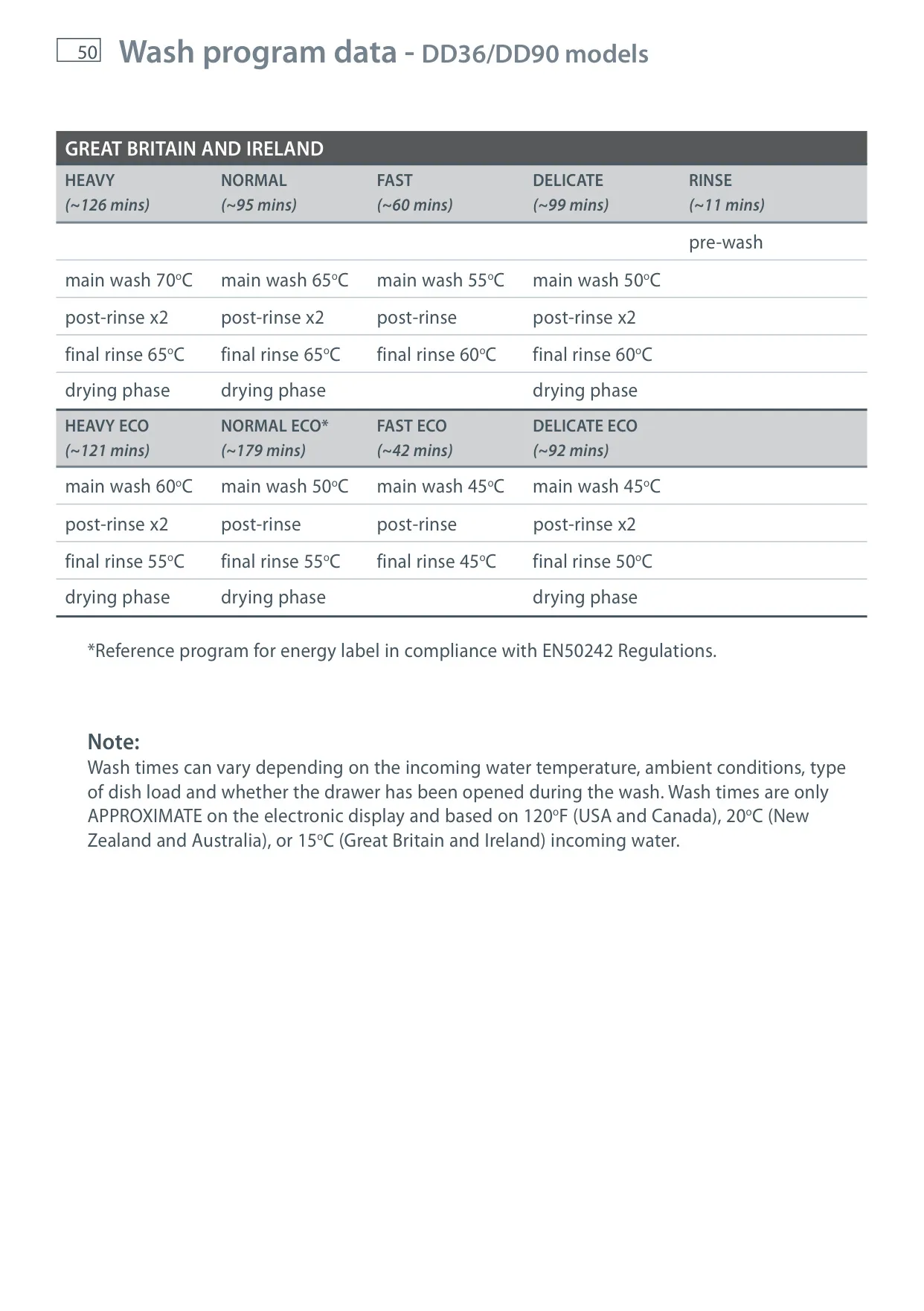
Typical Wash Program Duration (USA & Canada, DD24/DD60 double models)
Heavy: ~127 mins
Normal: ~128 mins
Fast: ~53 mins
Delicate: ~82 mins
Rinse: ~11 mins
Approximate times, varies by incoming water temperature, ambient conditions, and load type
Main Wash Temperatures (USA & Canada, DD24/DD60 double models)
Heavy: 150°F
Normal: 130°F (pre-wash 120°F)
Fast: 130°F
Delicate: 120°F (pre-wash)
Final rinse temperatures vary per program
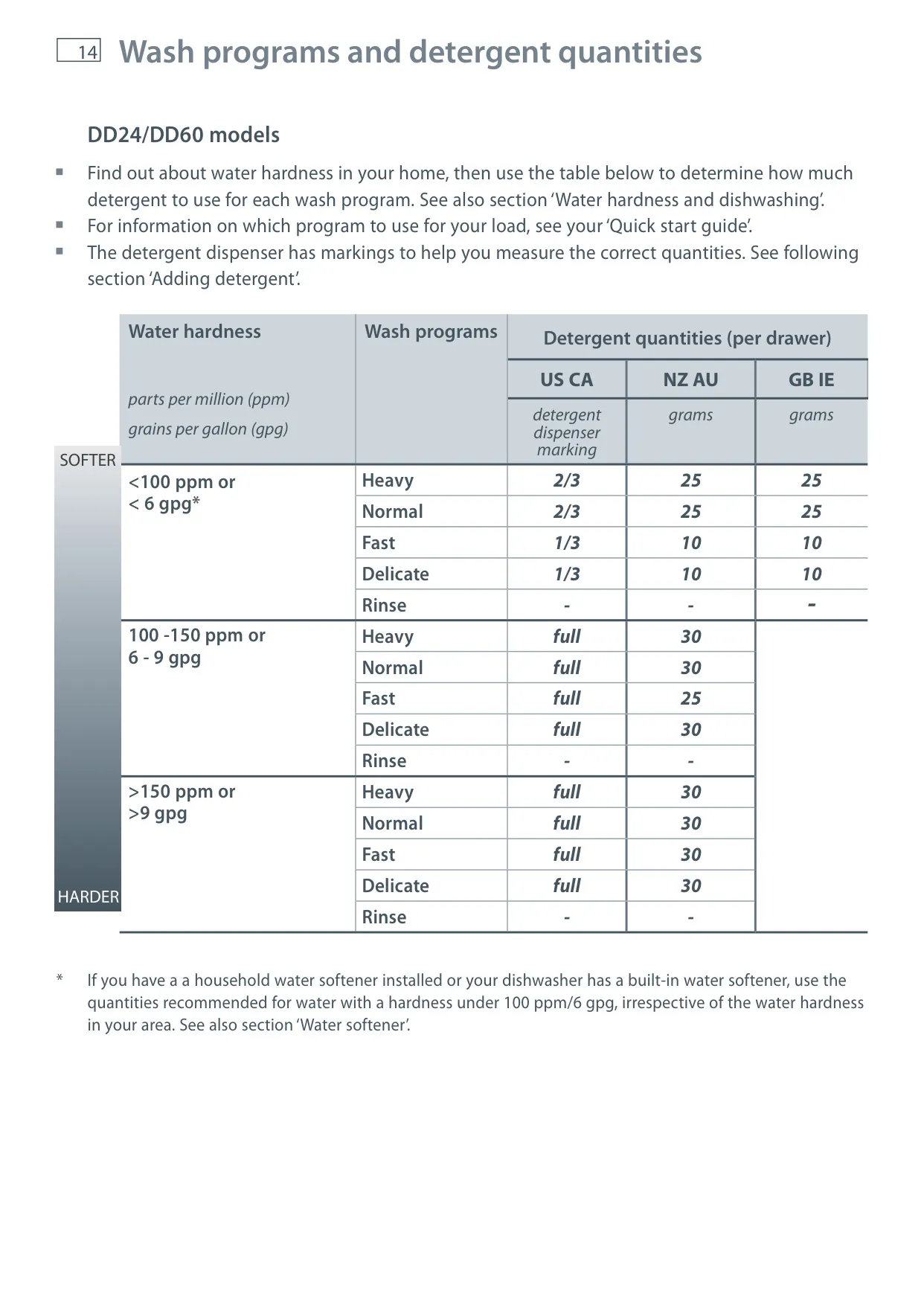
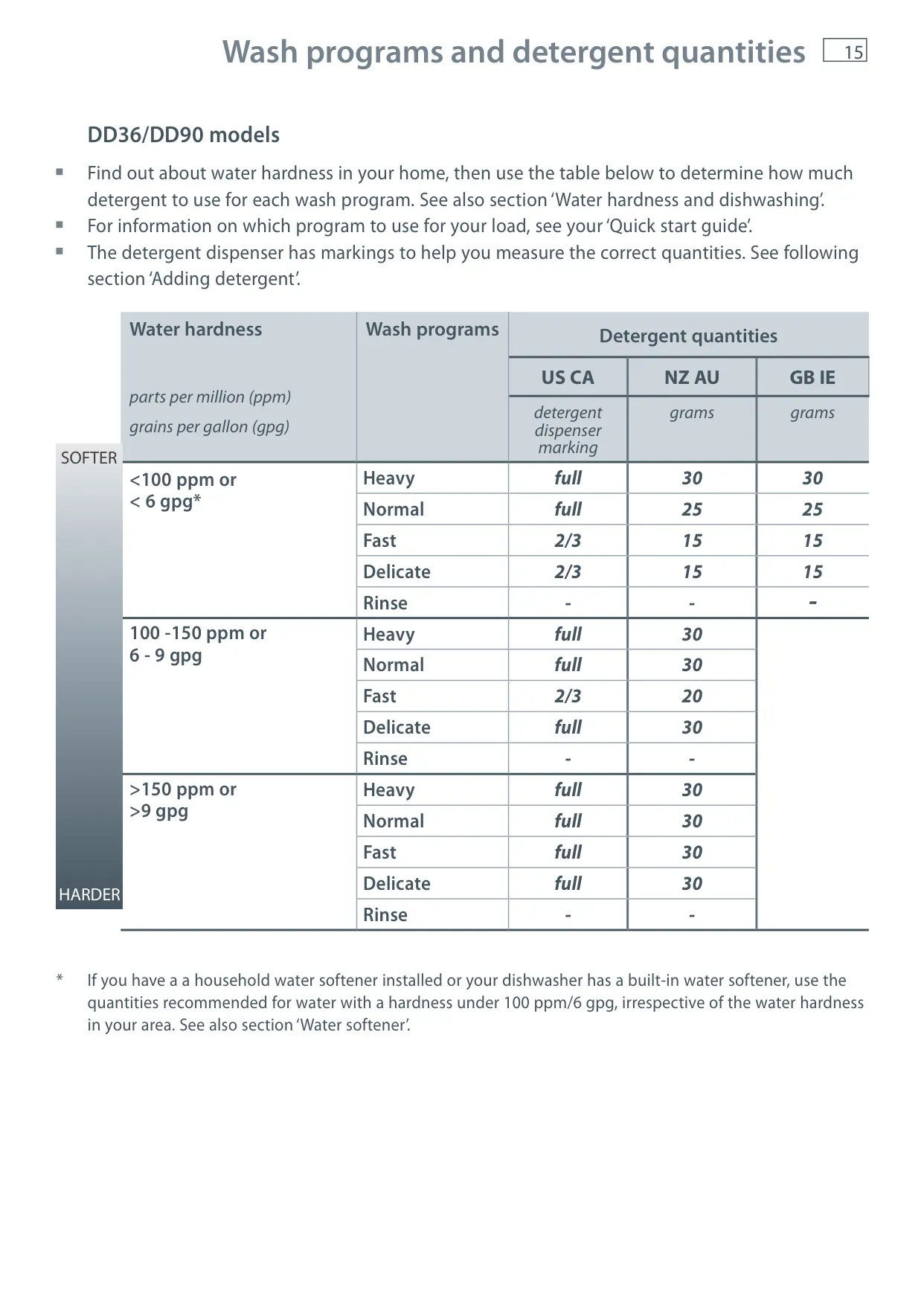
Detergent Quantity Recommendation
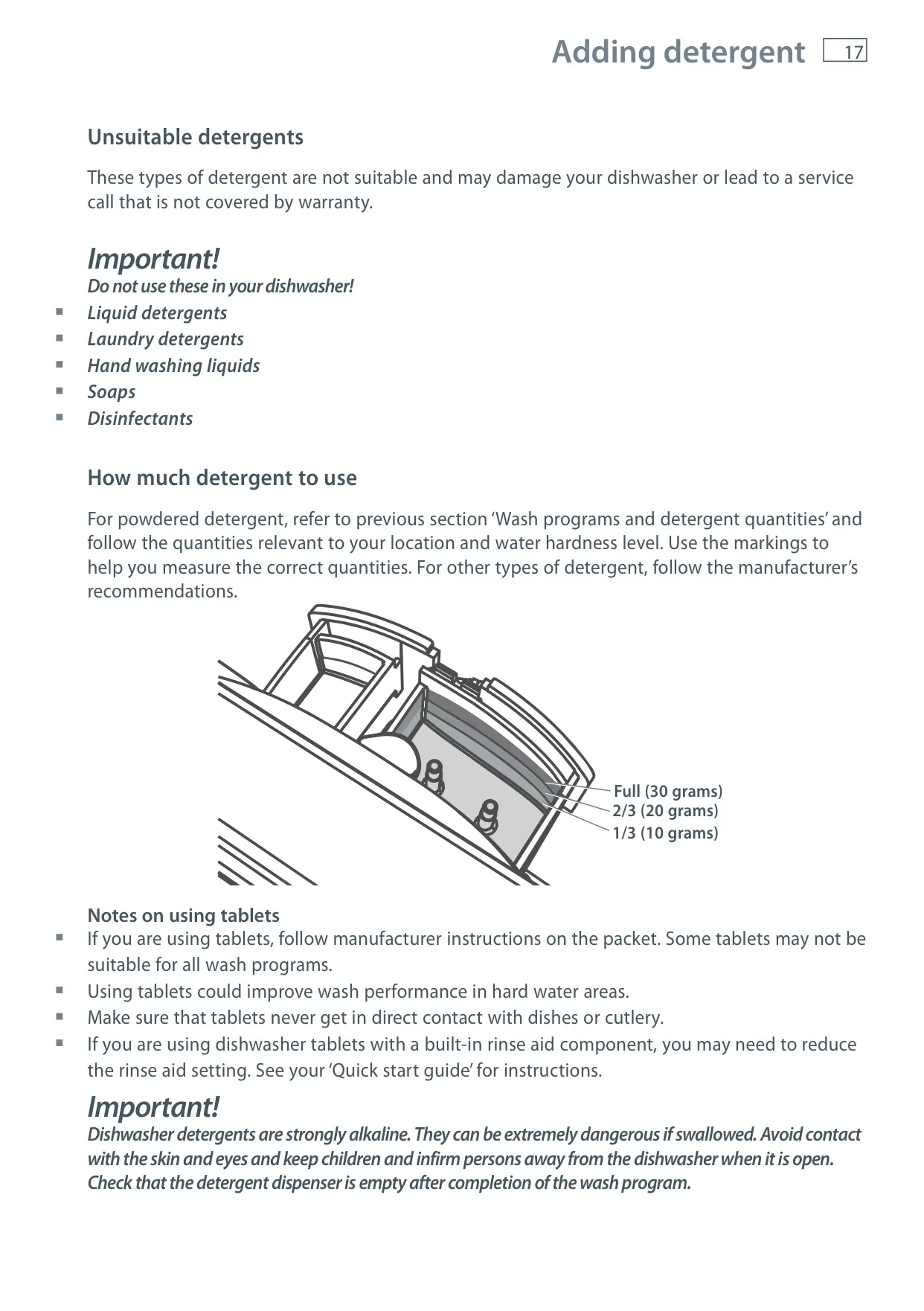
Varies by water hardness (e.g., 1/3 to full dispenser, 10g to 30g)
Refer to manual for specific quantities based on local water hardness
Fisher & Paykel Dishwasher DD24 Details
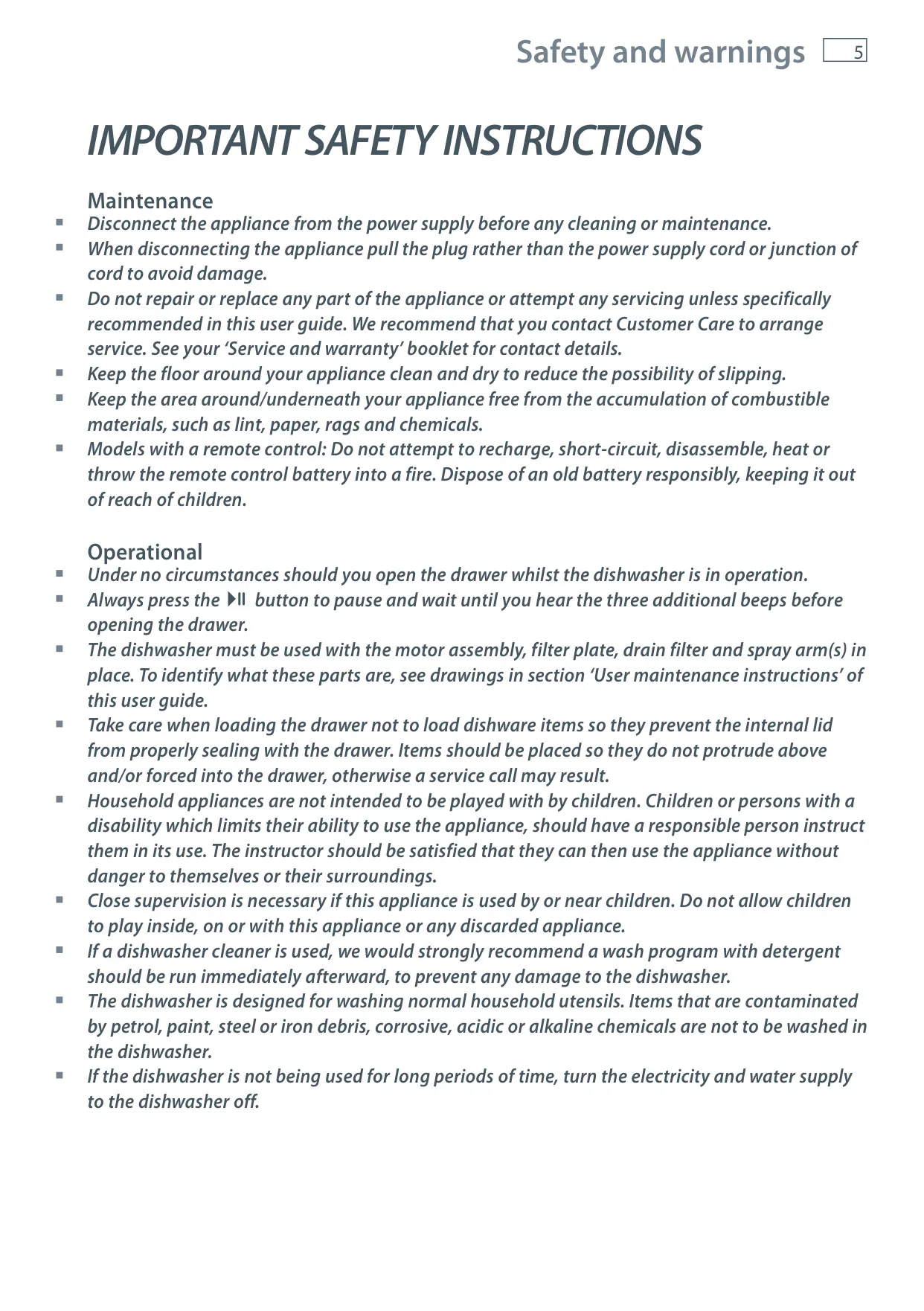
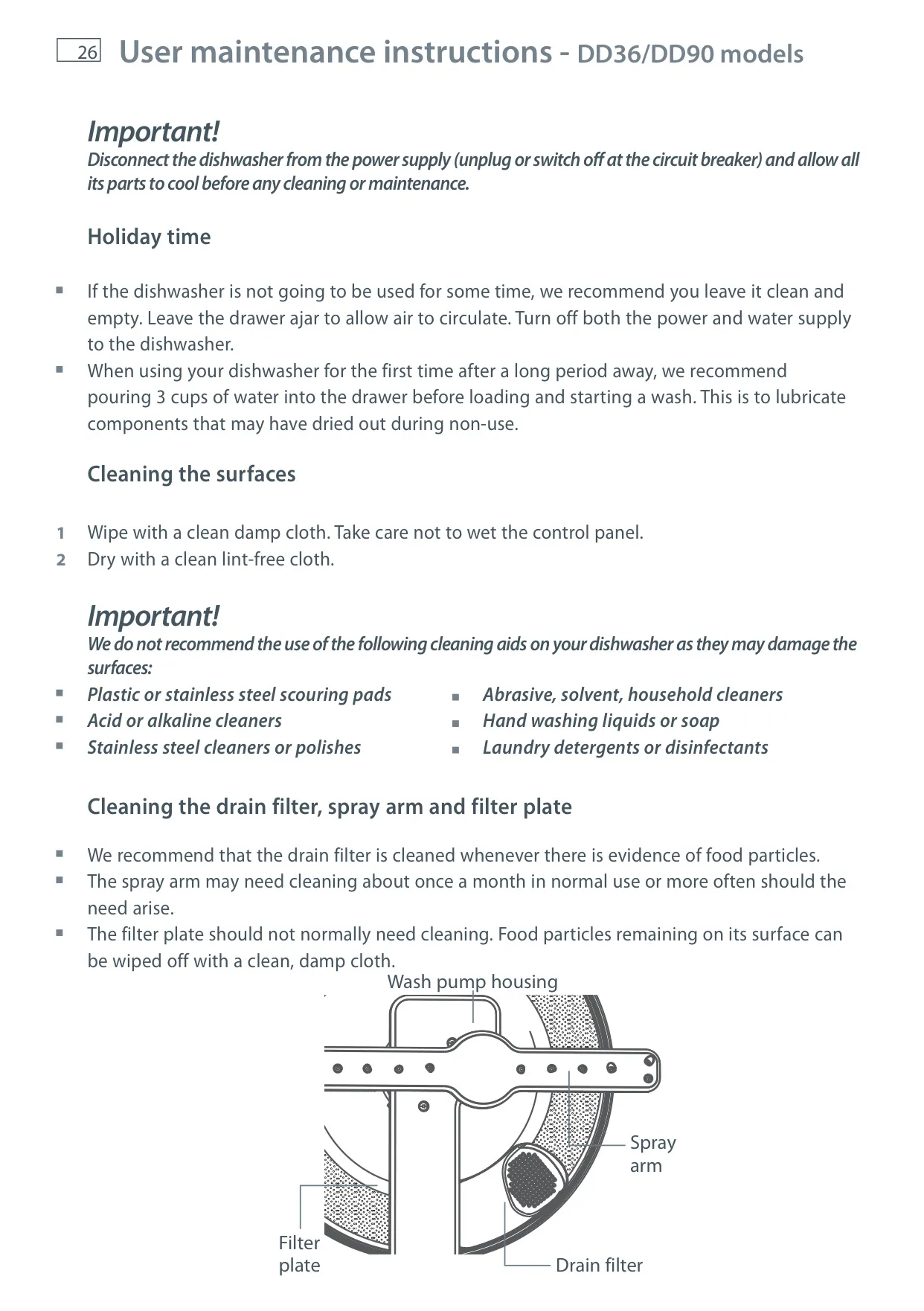
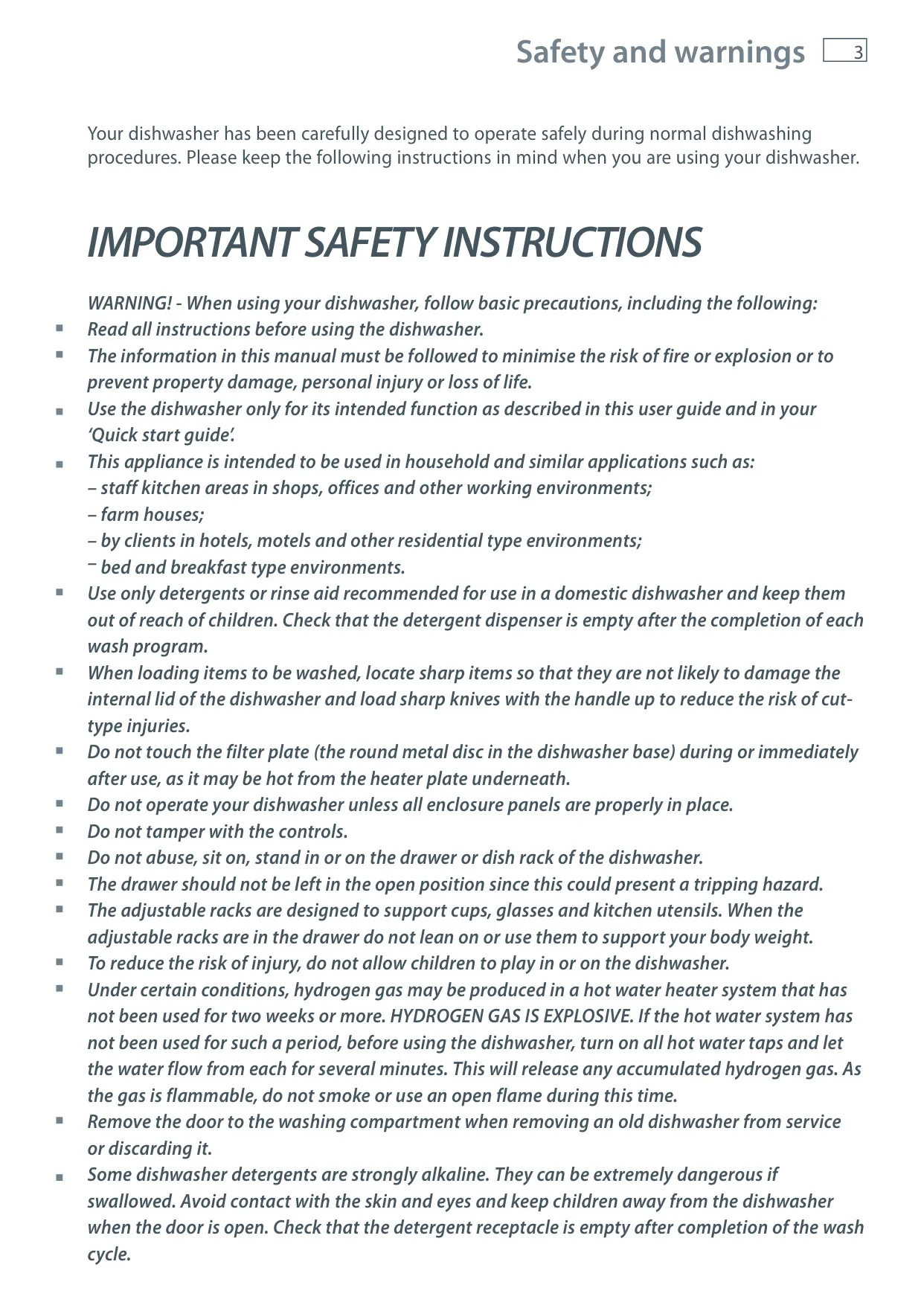
The Fisher & Paykel Dishwasher DD24 is designed for safe and efficient dishwashing within domestic settings. Its user guide emphasizes the importance of following basic safety precautions, including reading all instructions, using recommended detergents, and carefully loading sharp items to prevent injury or damage. The appliance is explicitly intended for household and similar applications, highlighting its suitability for various residential and small commercial environments.
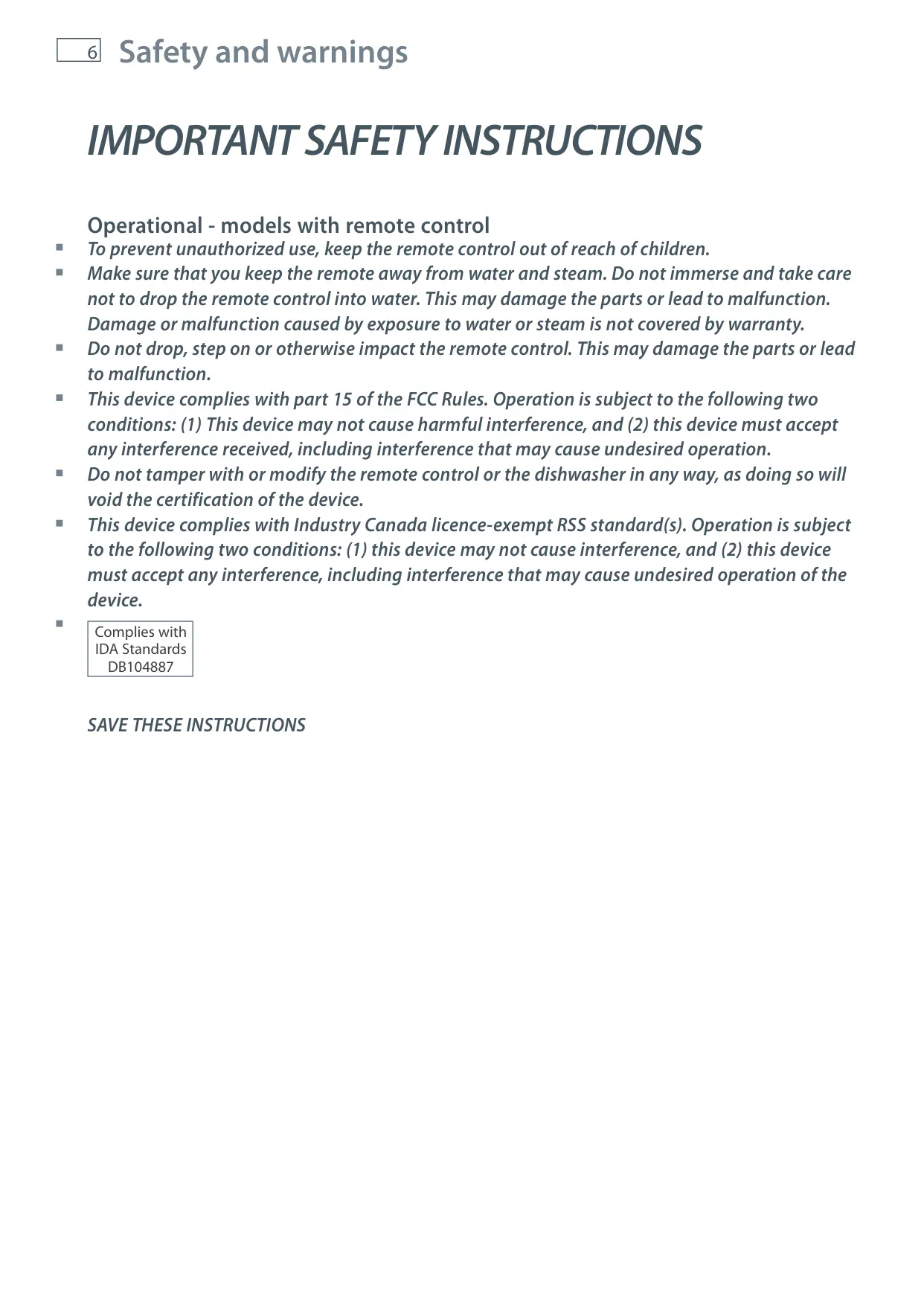
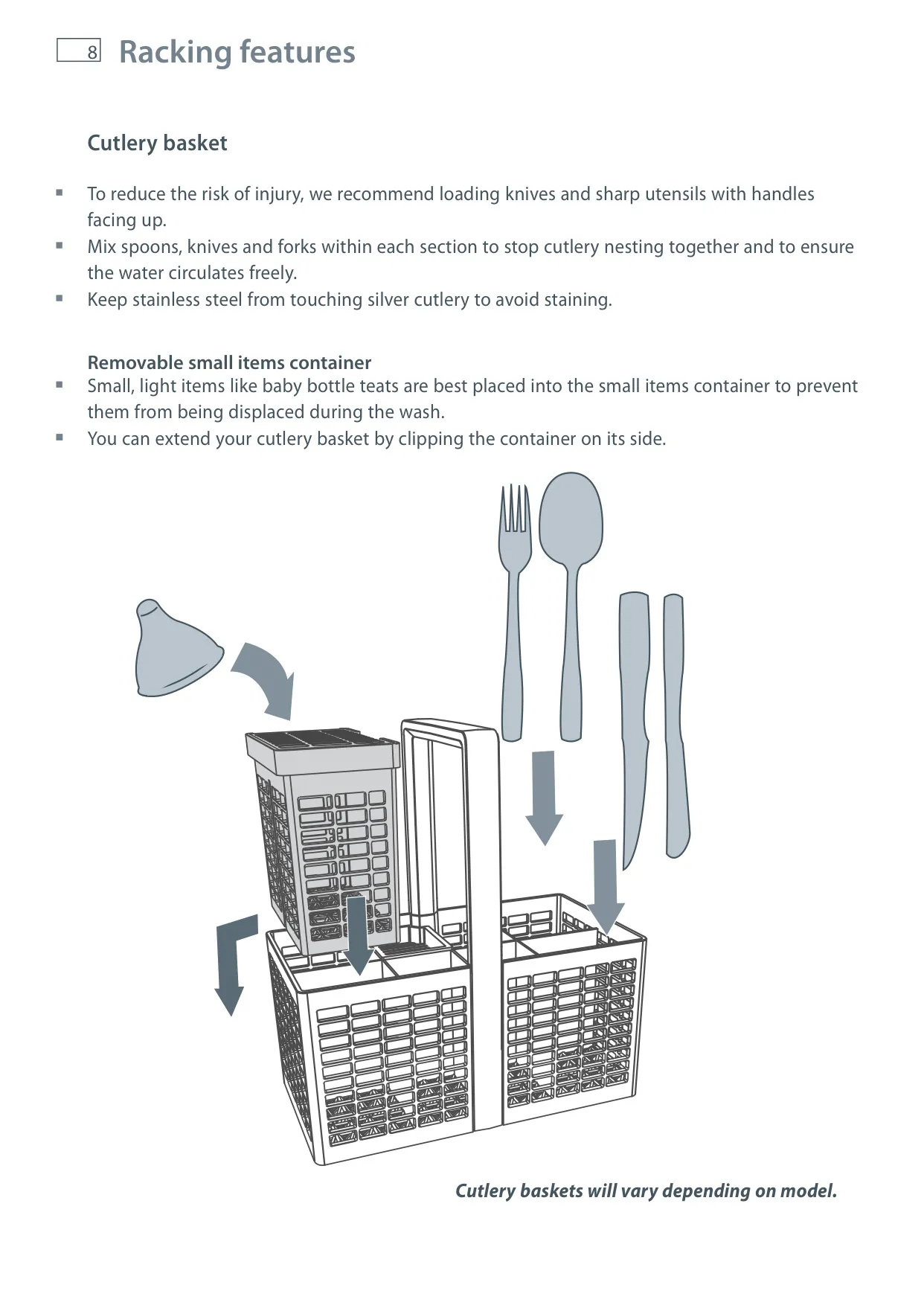
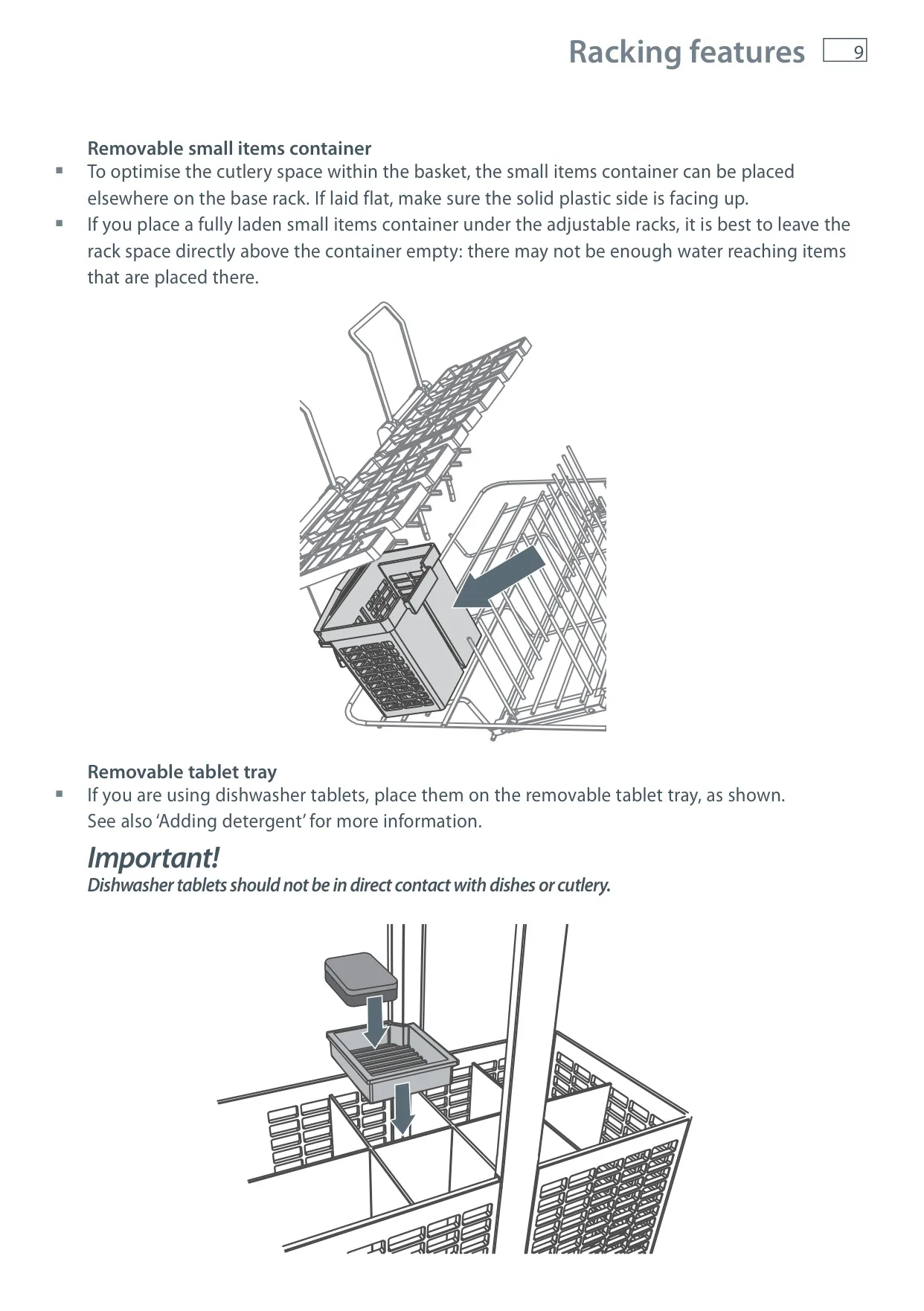
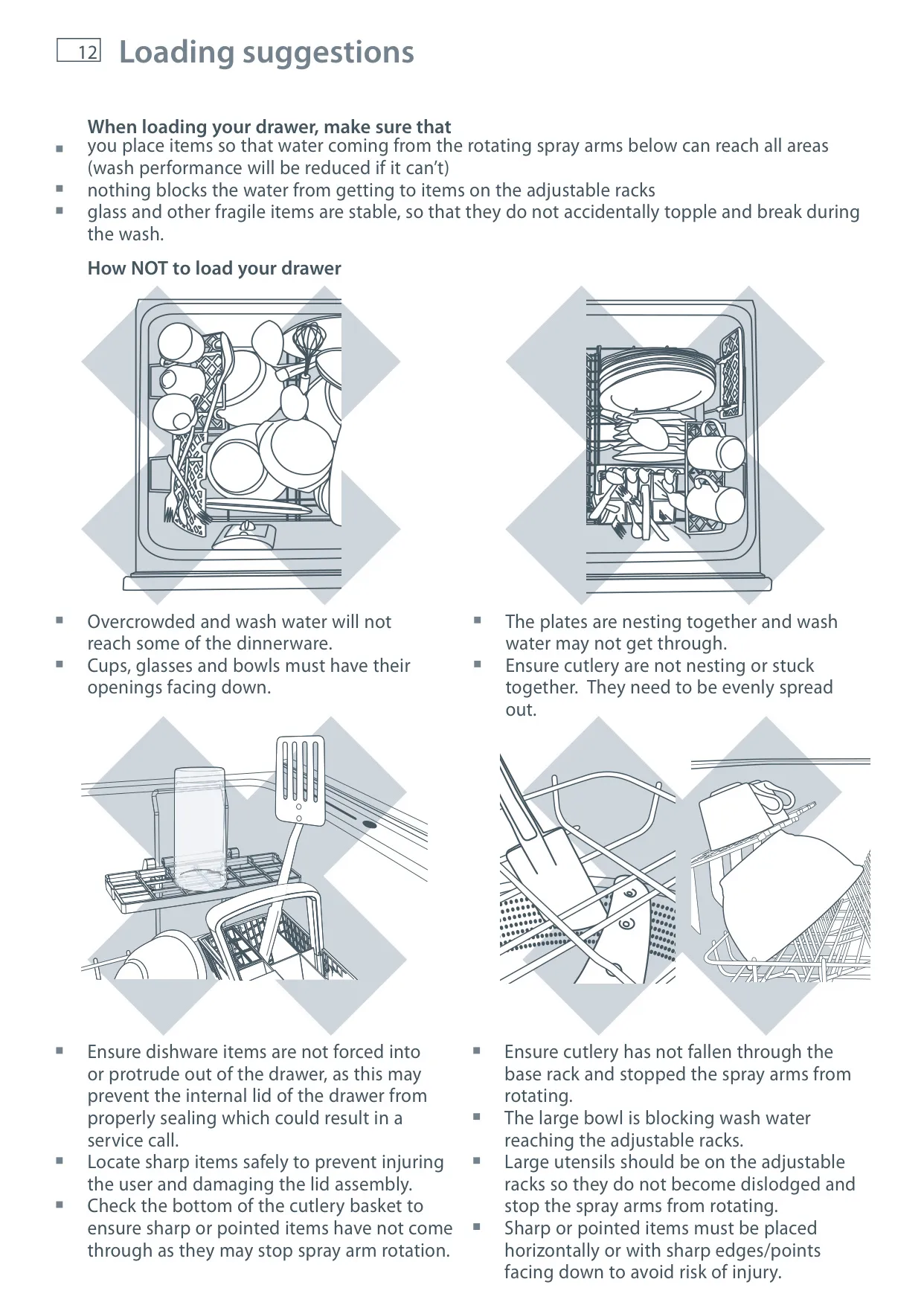
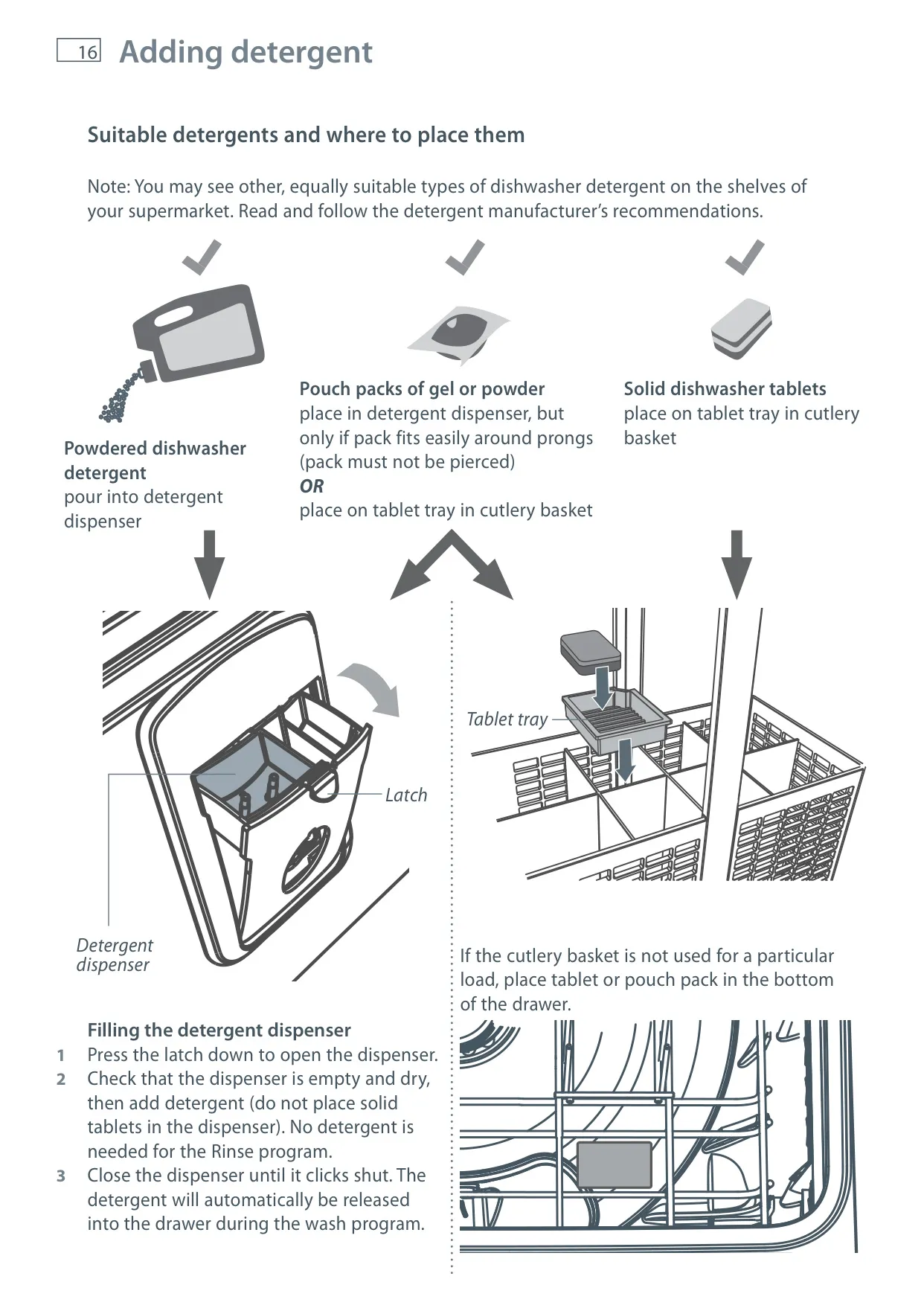
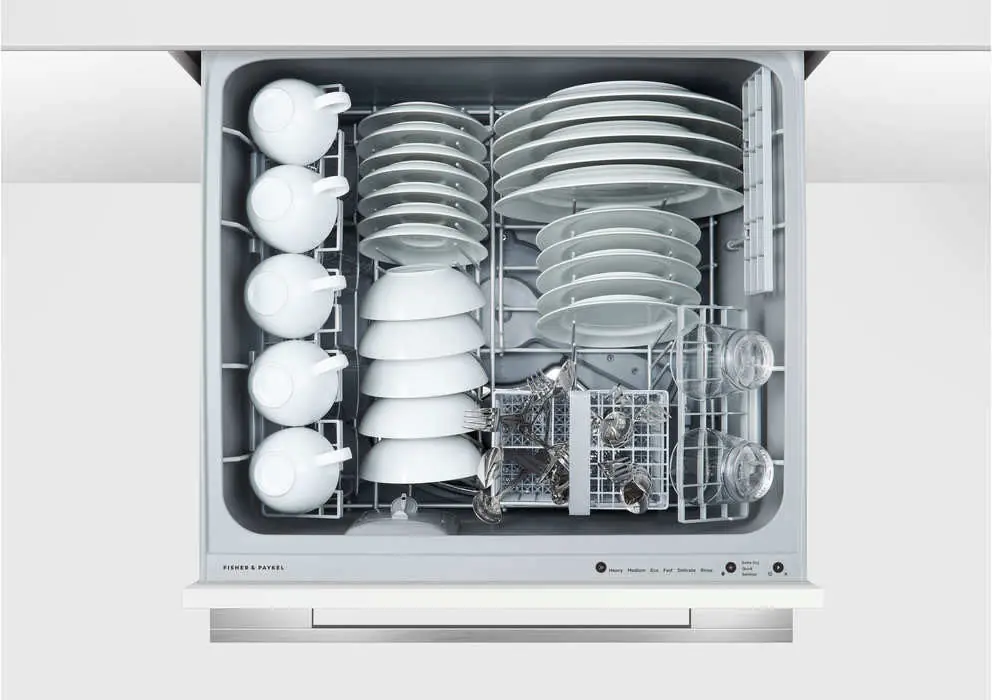
Loading is made flexible with a variety of racking features. These include a versatile cutlery basket that can house a removable small items container for tiny accessories like baby bottle teats, and a tablet tray for solid dishwasher tablets. The DD24 also boasts spacing-adjustable tines, allowing for different dish sizes, and adjustable racks that can be independently positioned to accommodate tall glasses or large pots. A knife clip further assists in securing utensils.
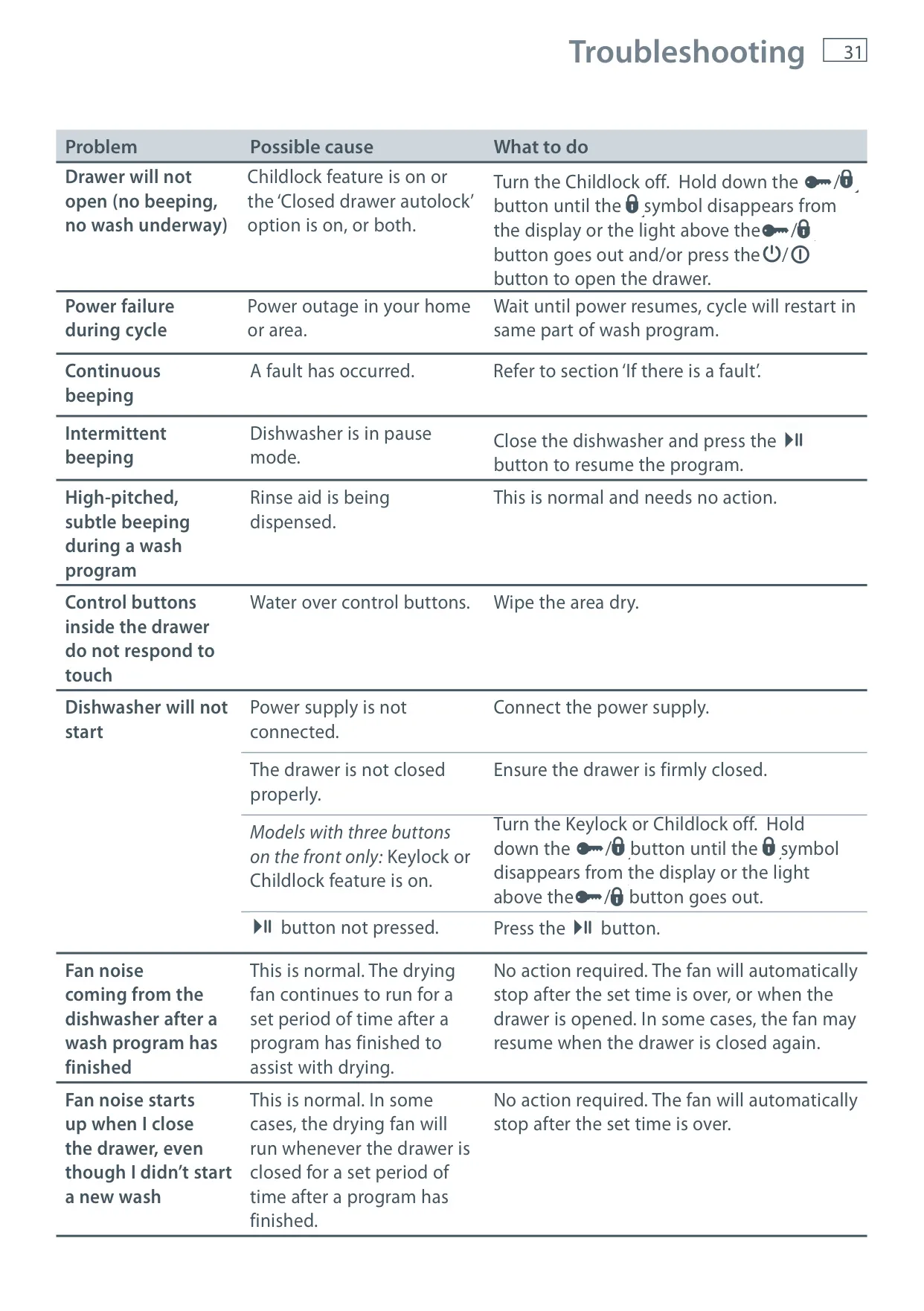
Beyond loading, the manual provides comprehensive guidance on caring for your dinnerware. It details which materials, such as certain types of cutlery, aluminum, woodware, and delicate glassware, may require special attention or hand washing. For optimal results, it recommends immediate rinsing of cutlery and separation of silver from stainless steel to prevent tarnishing, ensuring your items remain in pristine condition.
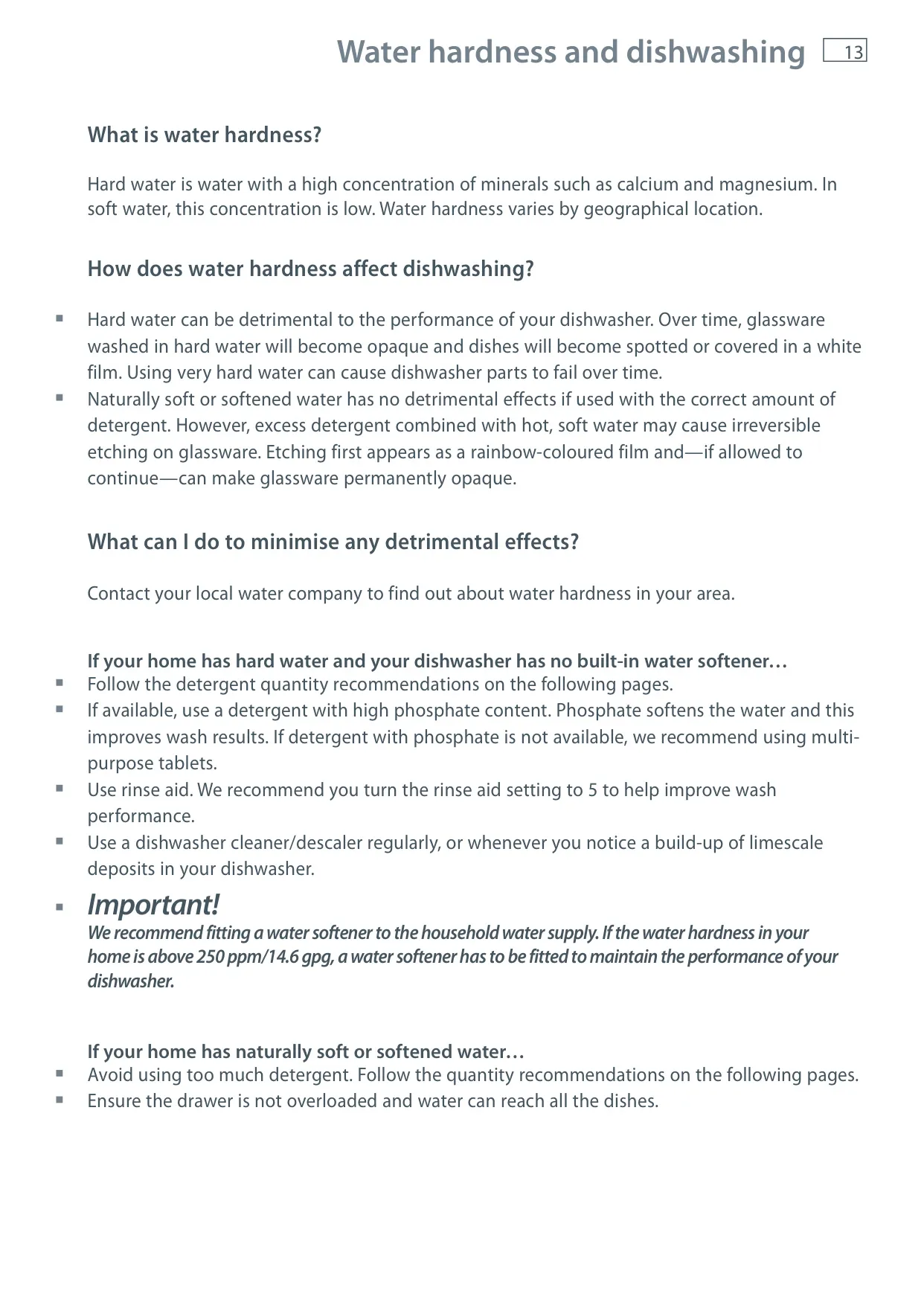
Water hardness significantly impacts dishwashing performance, and the DD24 addresses this. The guide explains how hard water can lead to opaque glassware and spotted dishes, while excessively soft water with too much detergent can cause etching. Users are advised to check local water hardness and adjust detergent and rinse aid quantities accordingly. For models with a built-in water softener (DD24-H), granular salt is used to optimize performance.
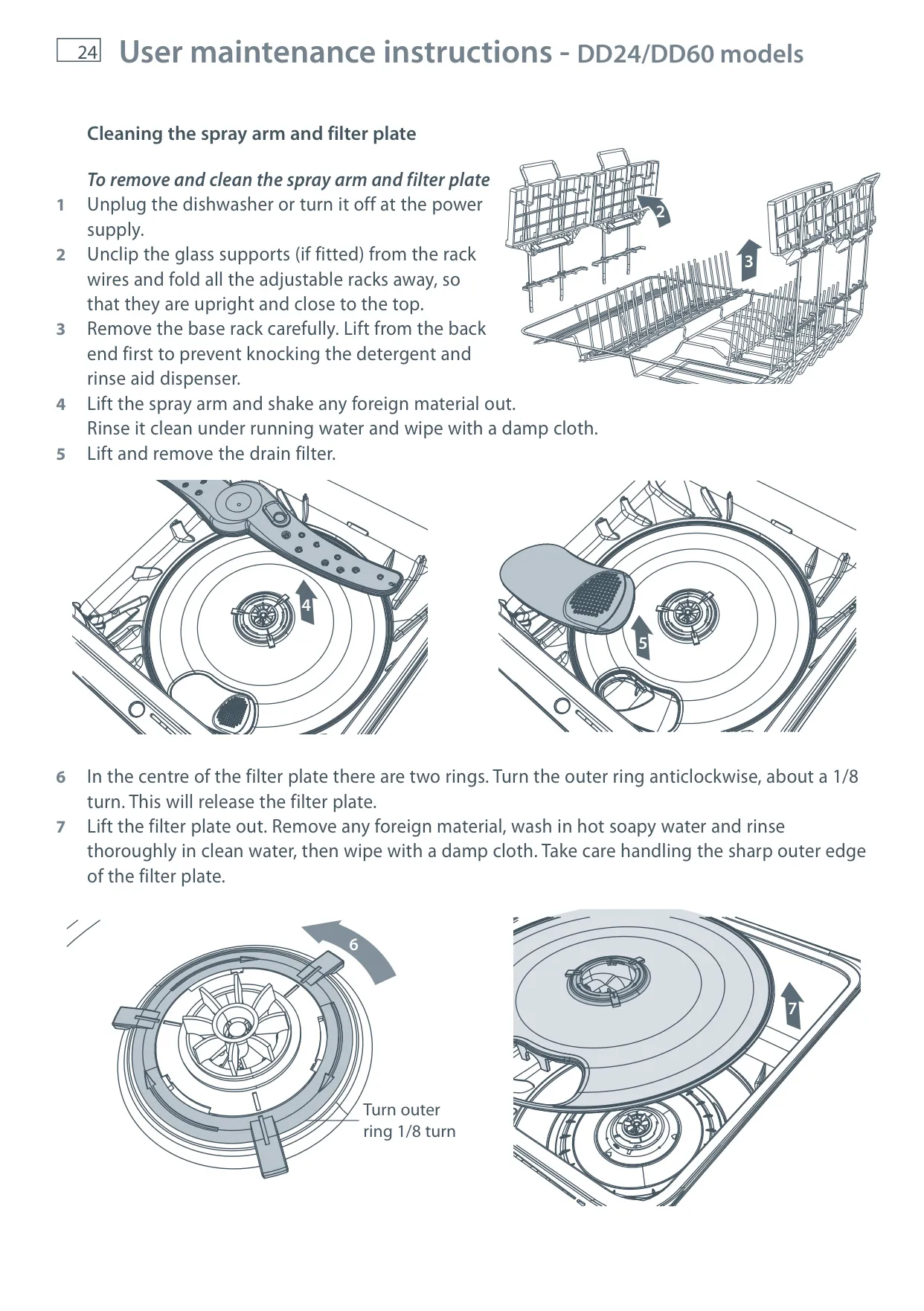
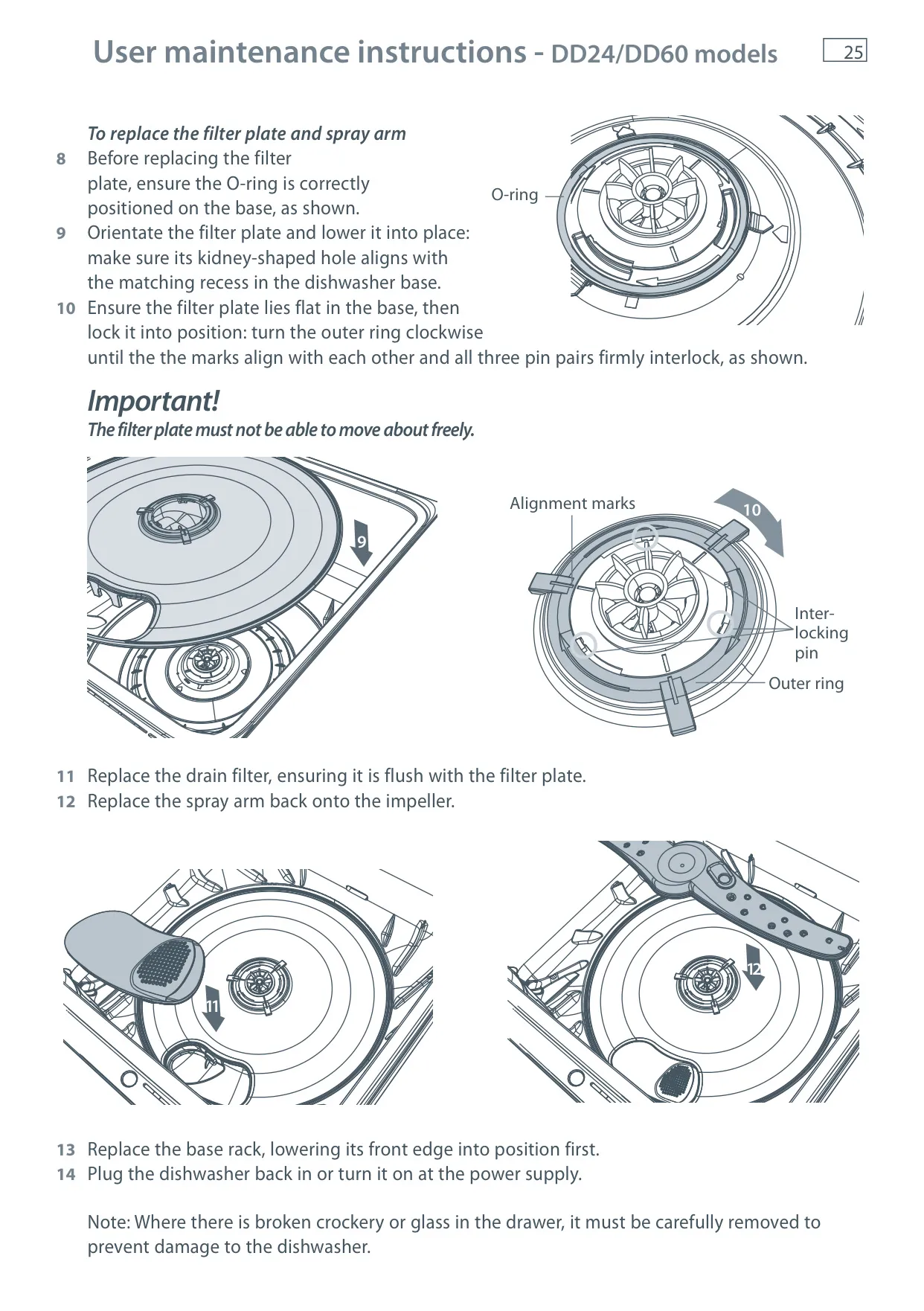
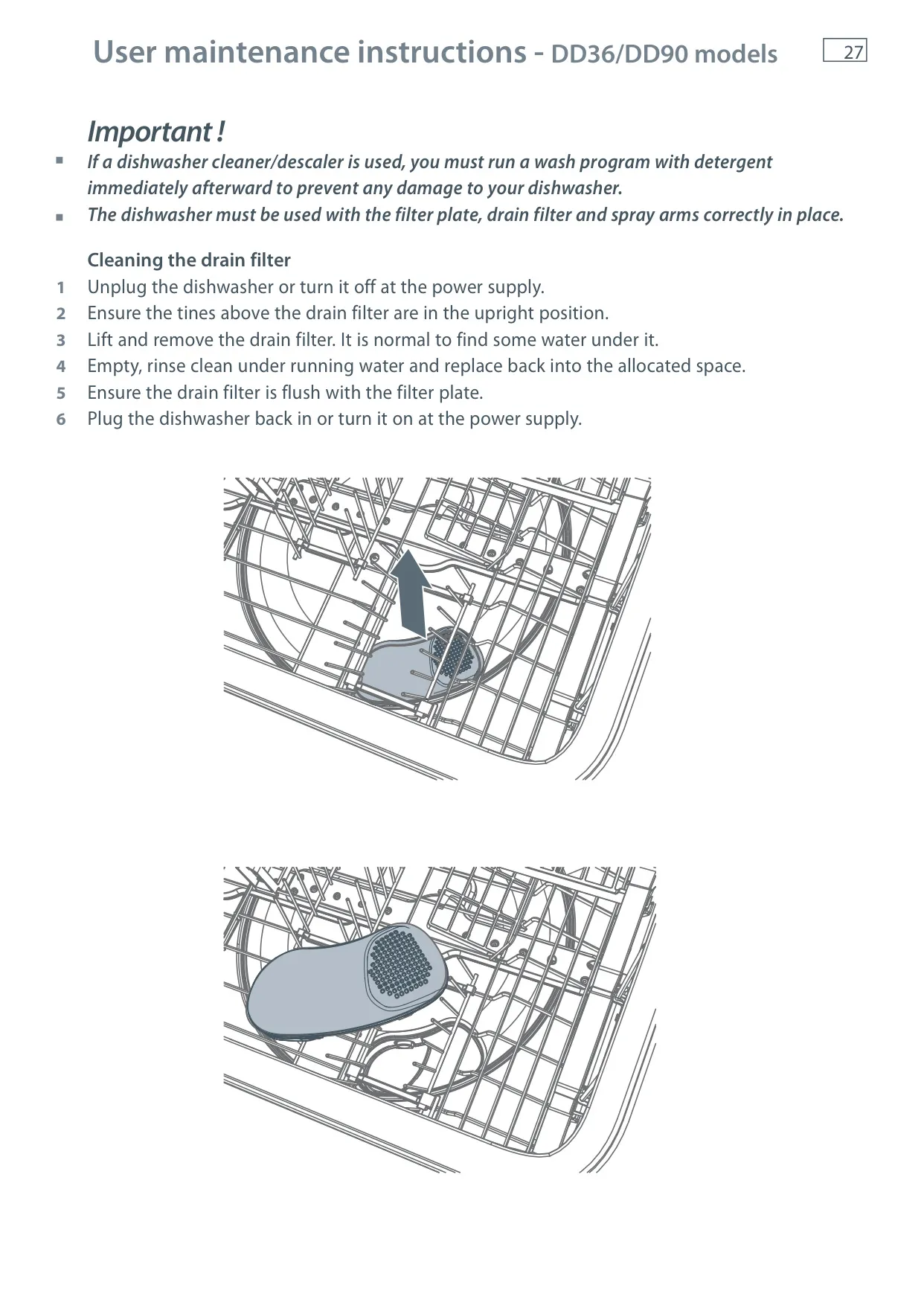
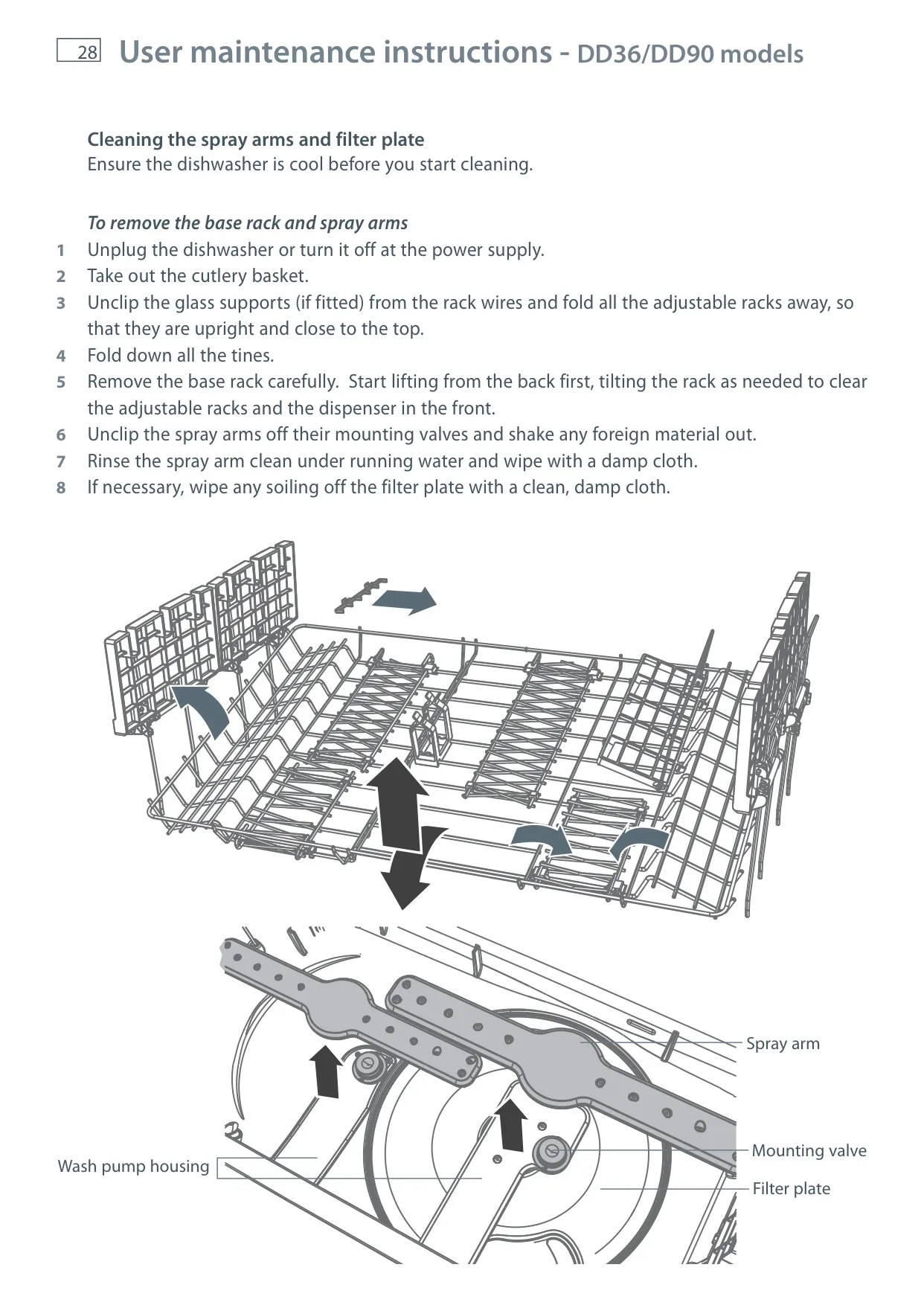
Maintenance is straightforward, promoting long-term appliance health. Regular cleaning of surfaces, the drain filter, spray arm, and filter plate is recommended to prevent food particle buildup and ensure efficient operation. The manual provides clear steps for disassembly and reassembly of these components. Additionally, tips for holiday periods, such as leaving drawers ajar and disconnecting power/water, help prepare the dishwasher for extended non-use.
Frequently Asked Questions (FAQs)
Can't find the answer you need? Here are some frequently asked questions about the Fisher & Paykel Dishwasher DD24, and we answer them below.
Why are my dishes coming out unclean?
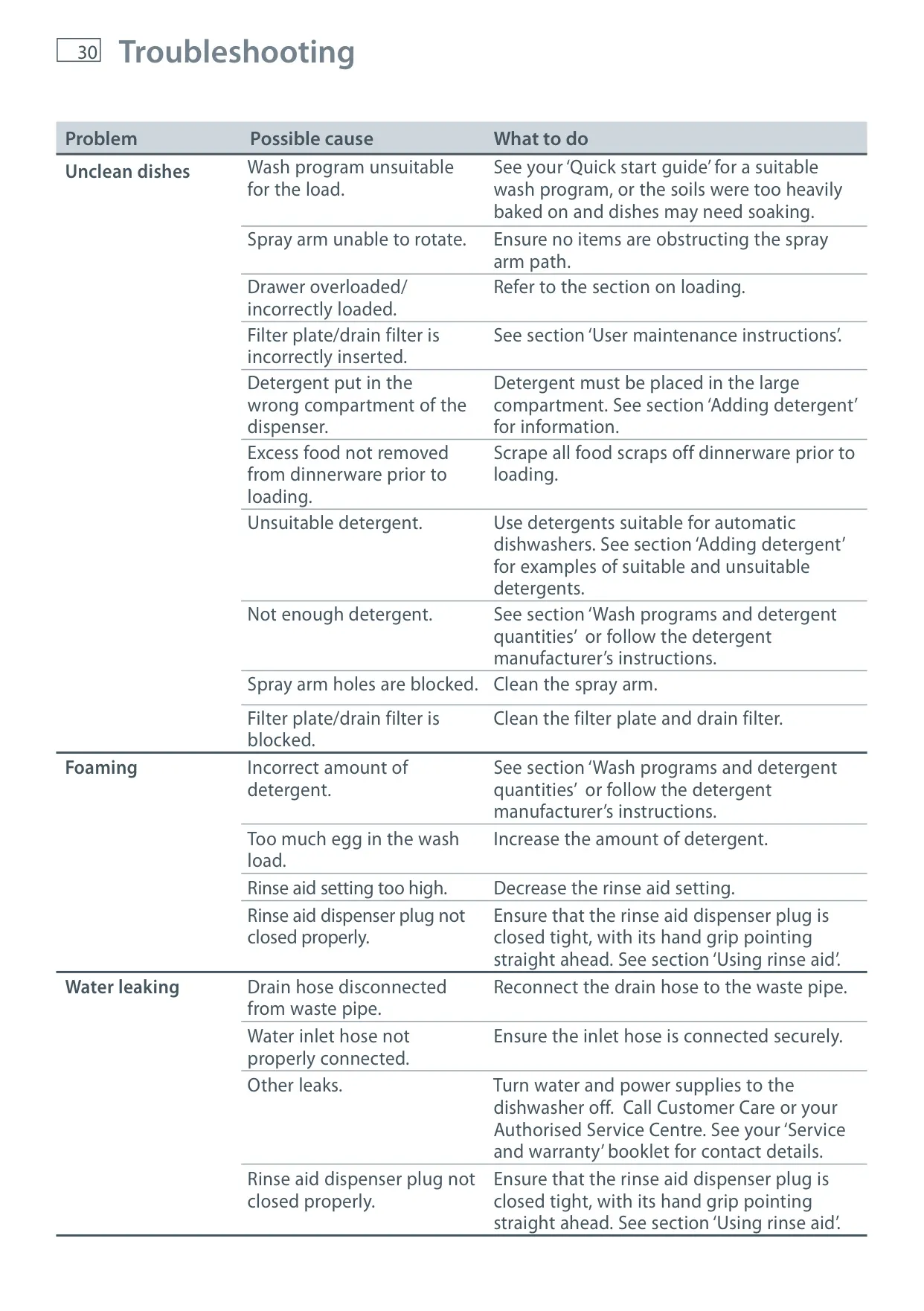
Unclean dishes can result from an unsuitable wash program, an overloaded or incorrectly loaded drawer, or a blocked spray arm or filters. Ensure the spray arm can rotate freely and refer to the loading suggestions in your manual. Also, check that the filter plate and drain filter are correctly inserted and clean.
Why is there excessive foaming during a wash program?
Excessive foaming might be caused by incorrect detergent quantity, too much egg in the wash load, or the rinse aid setting being too high. Make sure the rinse aid dispenser plug is tightly closed. Adjust detergent and rinse aid settings as recommended in the manual.
What should I do if water is leaking from my dishwasher?
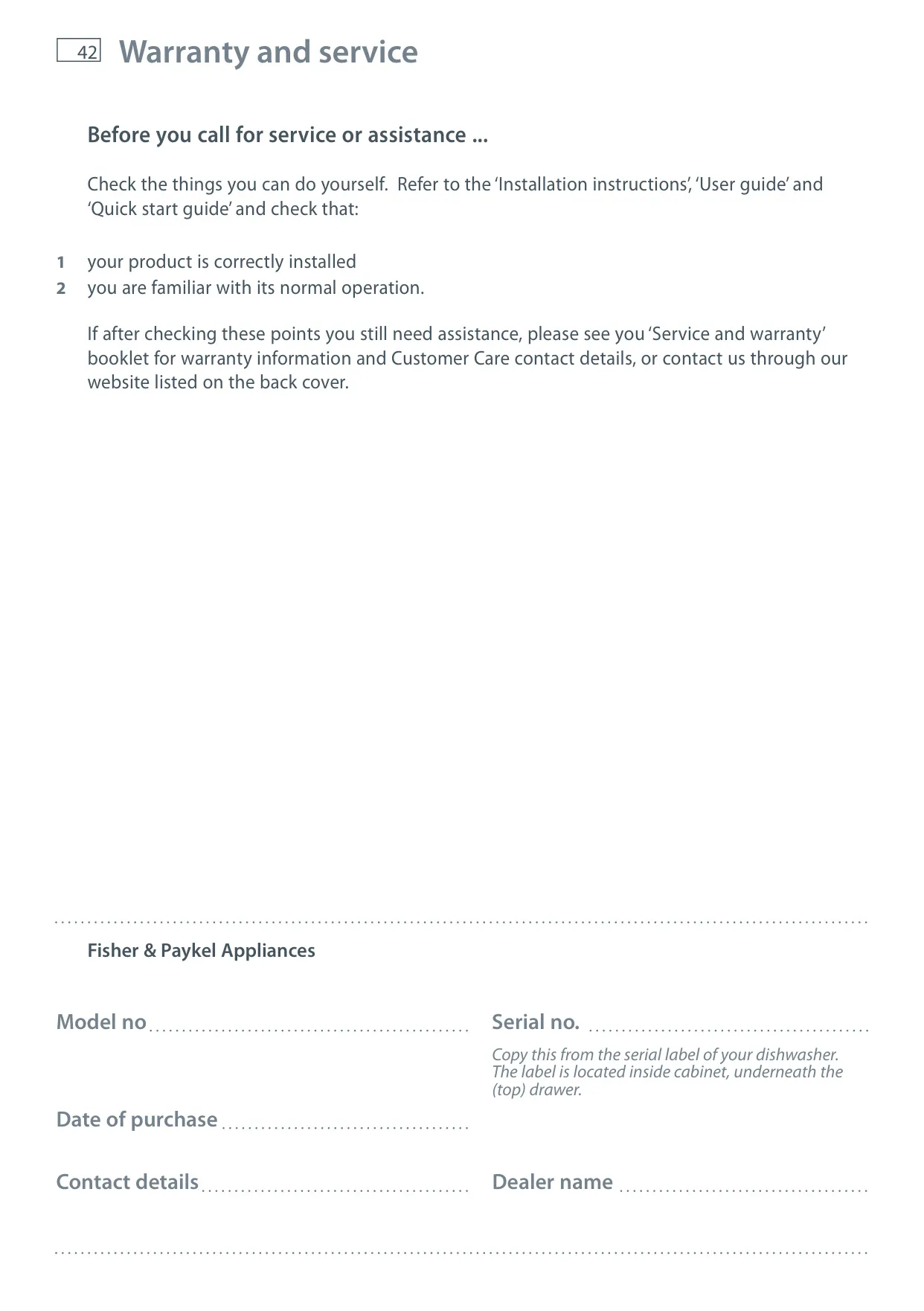
First, check if the drain hose is disconnected from the waste pipe or if the water inlet hose is not properly connected. Also, confirm the rinse aid dispenser plug is closed tightly. If other leaks persist, turn off the water and power supply and contact Customer Care.
My dishwasher drawer will not open, and there's no beeping. What's wrong?
This usually indicates that the Childlock feature or 'Closed drawer autolock' option is active. To resolve, turn off the Childlock by holding down the relevant button until the symbol disappears, or press the button to open the drawer.
The dishwasher will not start. What are the common causes?
Ensure the power supply is connected. Check that the drawer is closed firmly. If your model has three buttons on the front, verify that Keylock or Childlock is not active; turn it off by holding the button until the light goes out. Finally, make sure you have pressed the start button to initiate the cycle.
Why is there fan noise after the wash program has finished?
This is normal. The drying fan continues to run for a set period after a program to assist with drying. It will stop automatically after the set time or when the drawer is opened. In some cases, it may resume if the drawer is closed again.
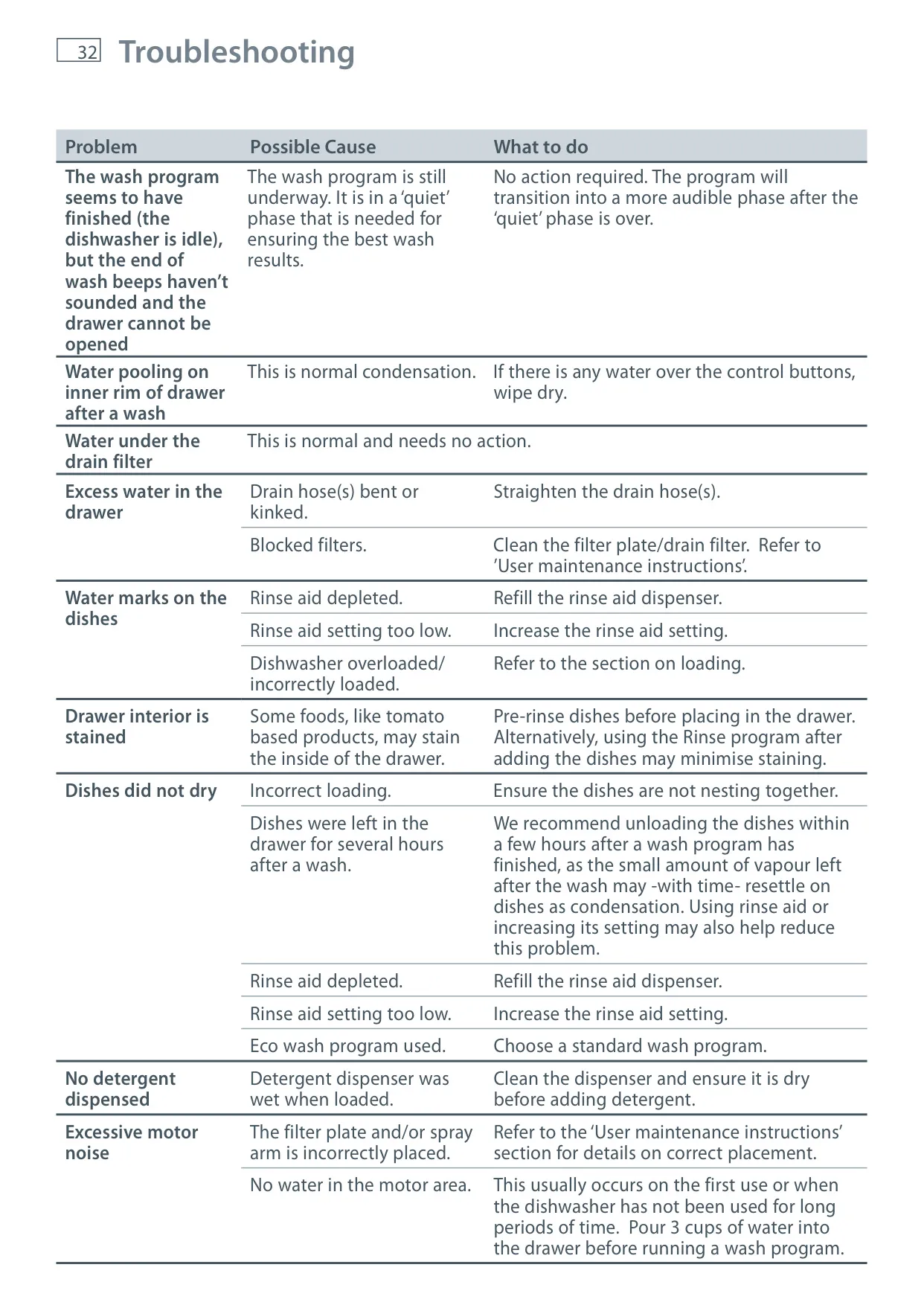
The wash program seems finished, but the end-of-wash beeps haven’t sounded, and the drawer cannot be opened.
The wash program is still underway, currently in a 'quiet' phase necessary for optimal wash results. No action is required; the program will transition to a more audible phase and then signal completion, allowing the drawer to be opened.
I'm seeing water marks on my dishes. How can I prevent this?
Water marks are typically due to depleted rinse aid or the rinse aid setting being too low. Refill the dispenser and increase the setting if needed. Incorrect loading or an overloaded dishwasher can also contribute, so ensure dishes are not nesting together.
Pregunta frecuente
Some foods, particularly tomato-based products, can stain the inside of the drawer. To minimize this, pre-rinse dishes before loading or run a Rinse program after adding them.
My dishes are still wet after the wash program. What can I do?
Ensure dishes are not nesting together to allow proper drying. Unload dishes within a few hours after a wash to prevent condensation from resettling. Refill or increase the rinse aid setting, as it significantly aids drying. If using the Eco wash program, consider a standard wash program for better drying performance.
What should I do if I notice excessive motor noise?
Excessive motor noise can indicate that the filter plate and/or spray arm are incorrectly placed. Refer to the 'User maintenance instructions' section in your manual for details on correct placement. Also, if it's the first use or after a long period of non-use, pour 3 cups of water into the drawer before starting a program to lubricate components.
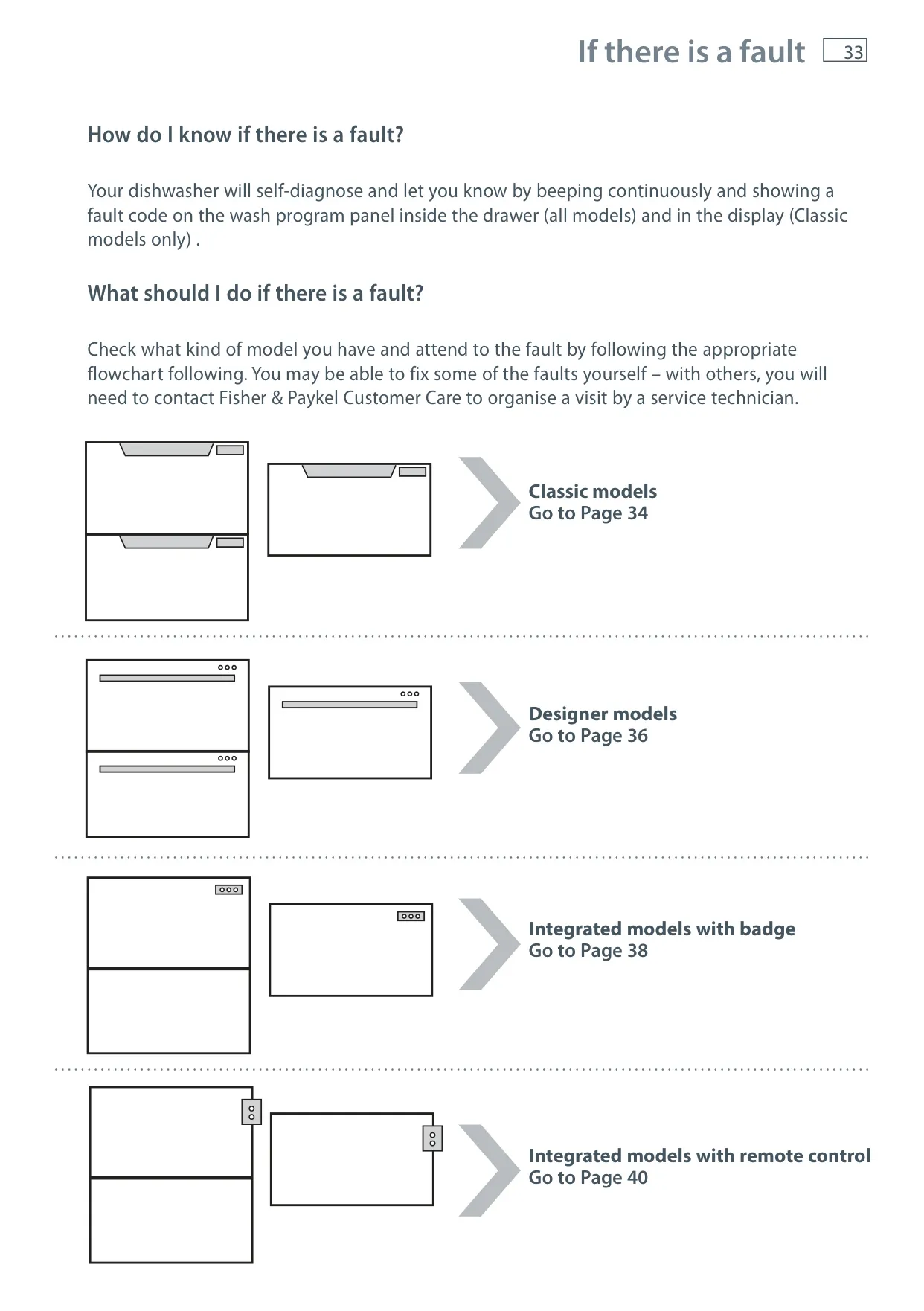
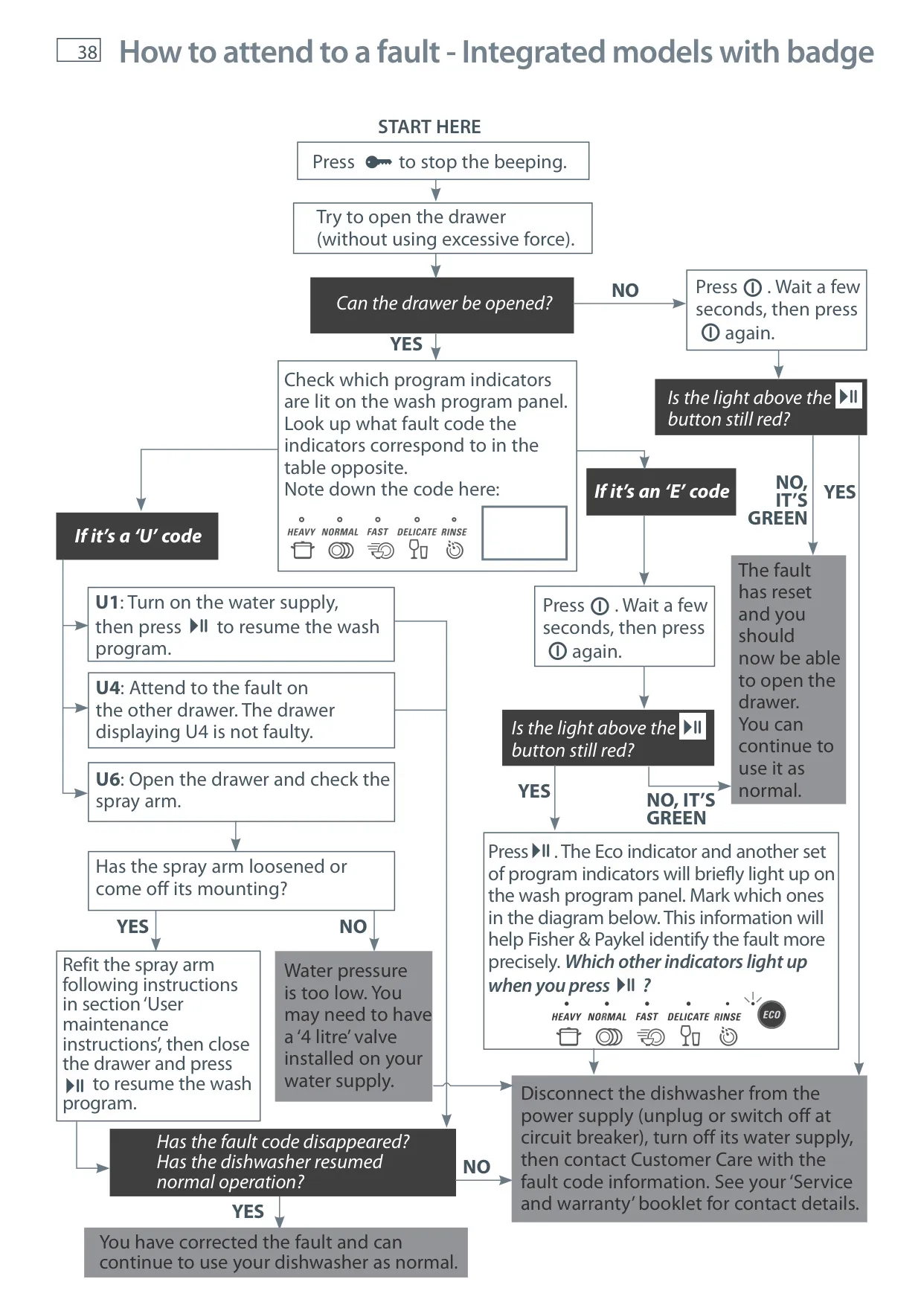
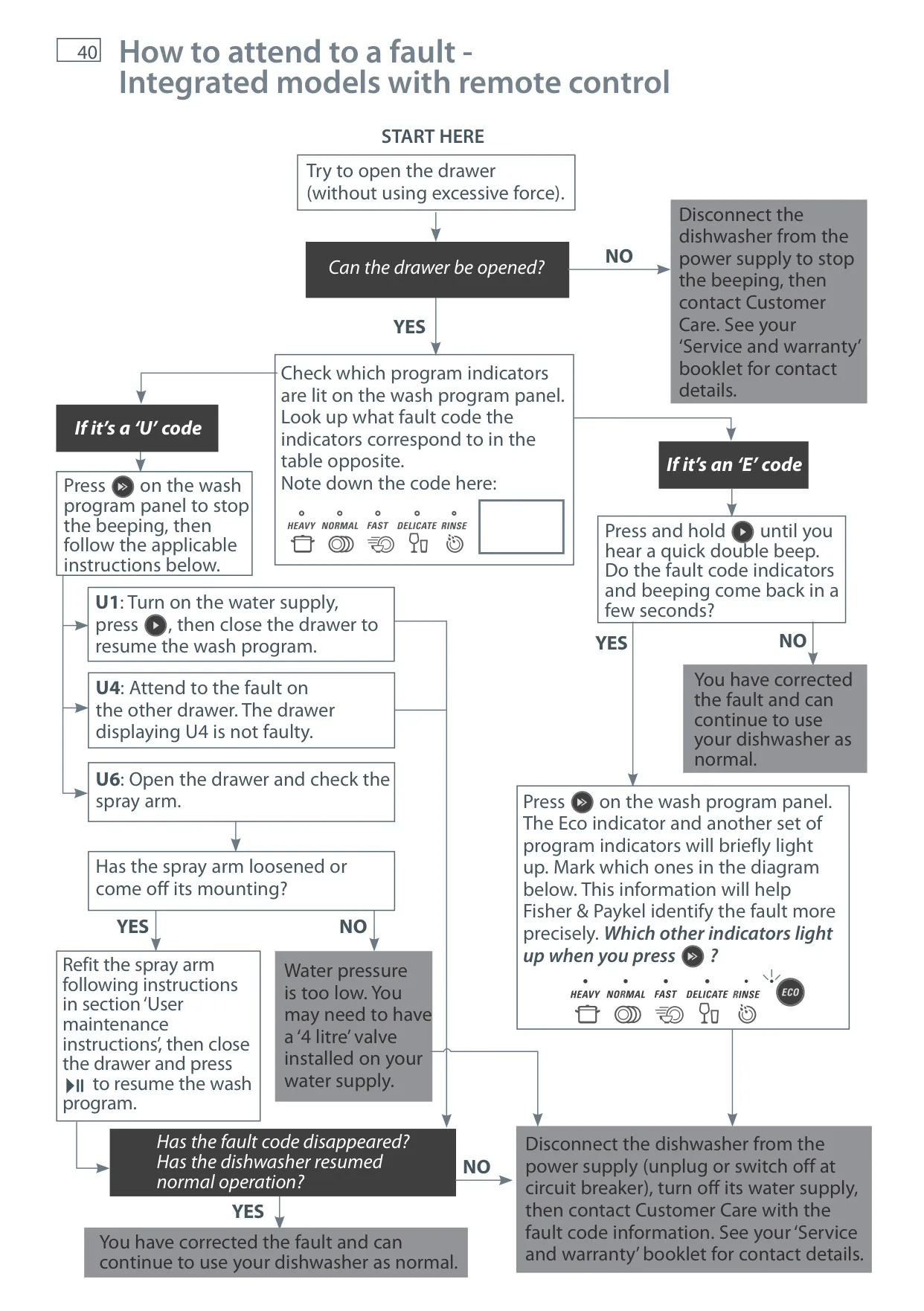
How do I know if there's a fault with my dishwasher?
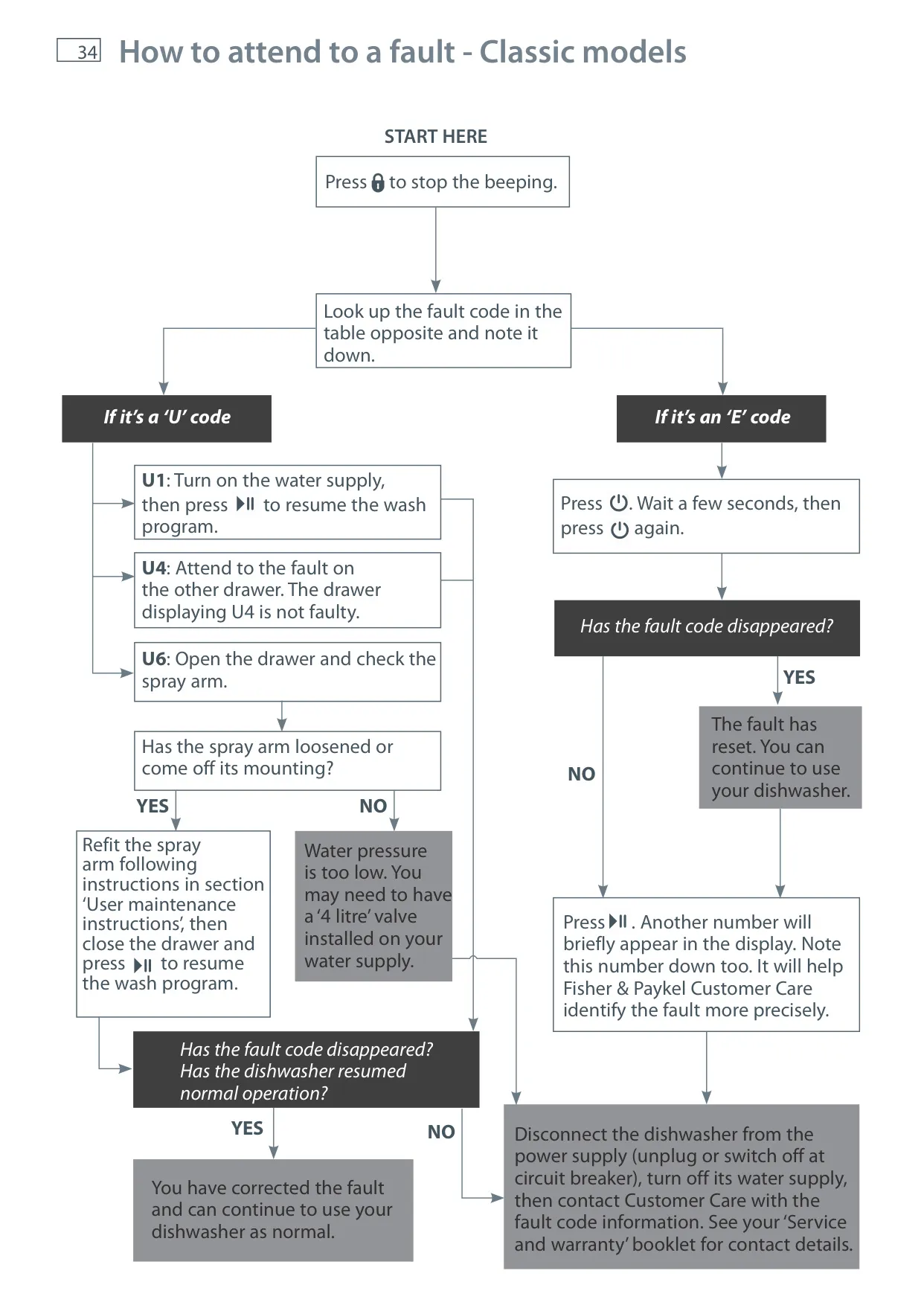
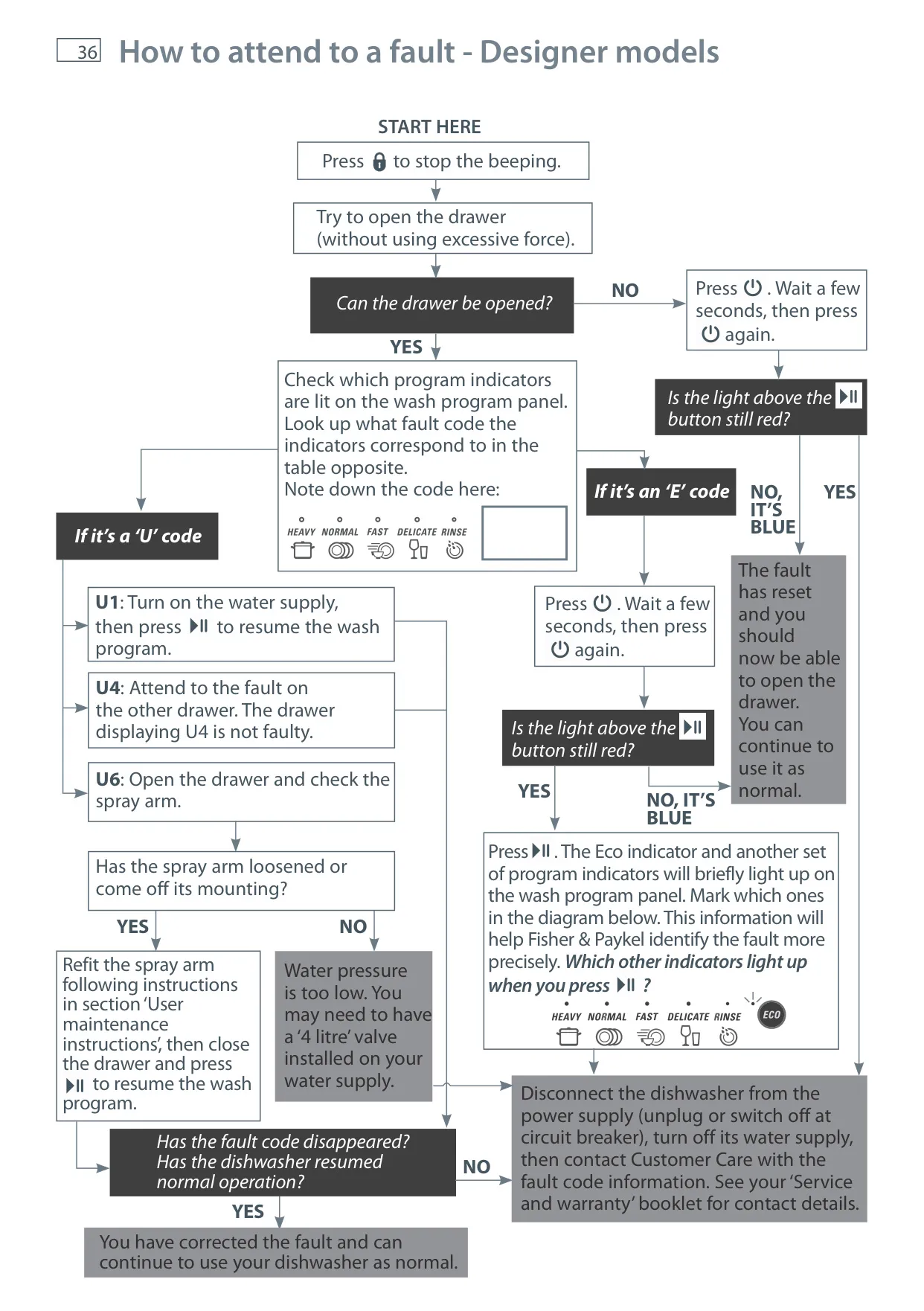
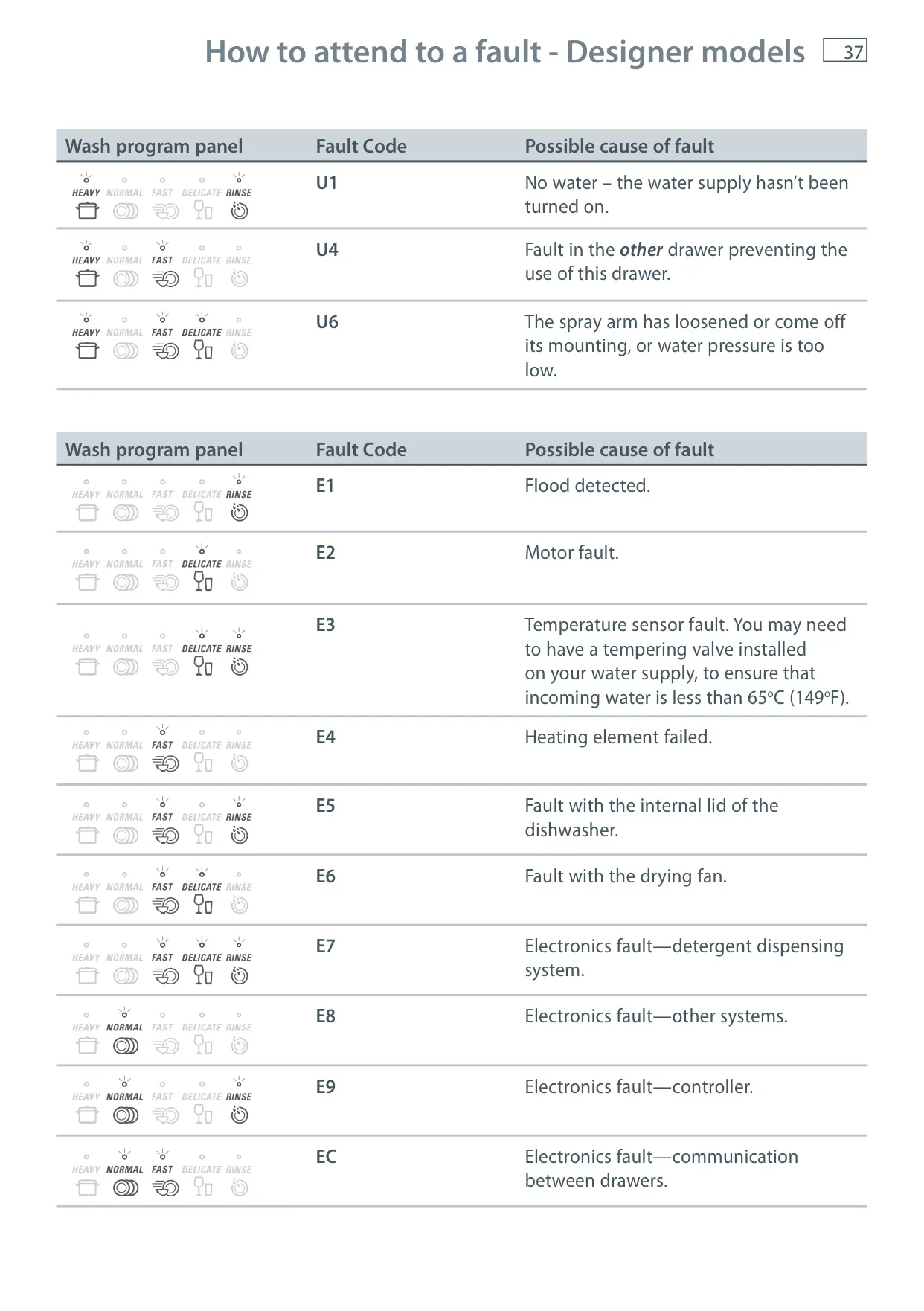
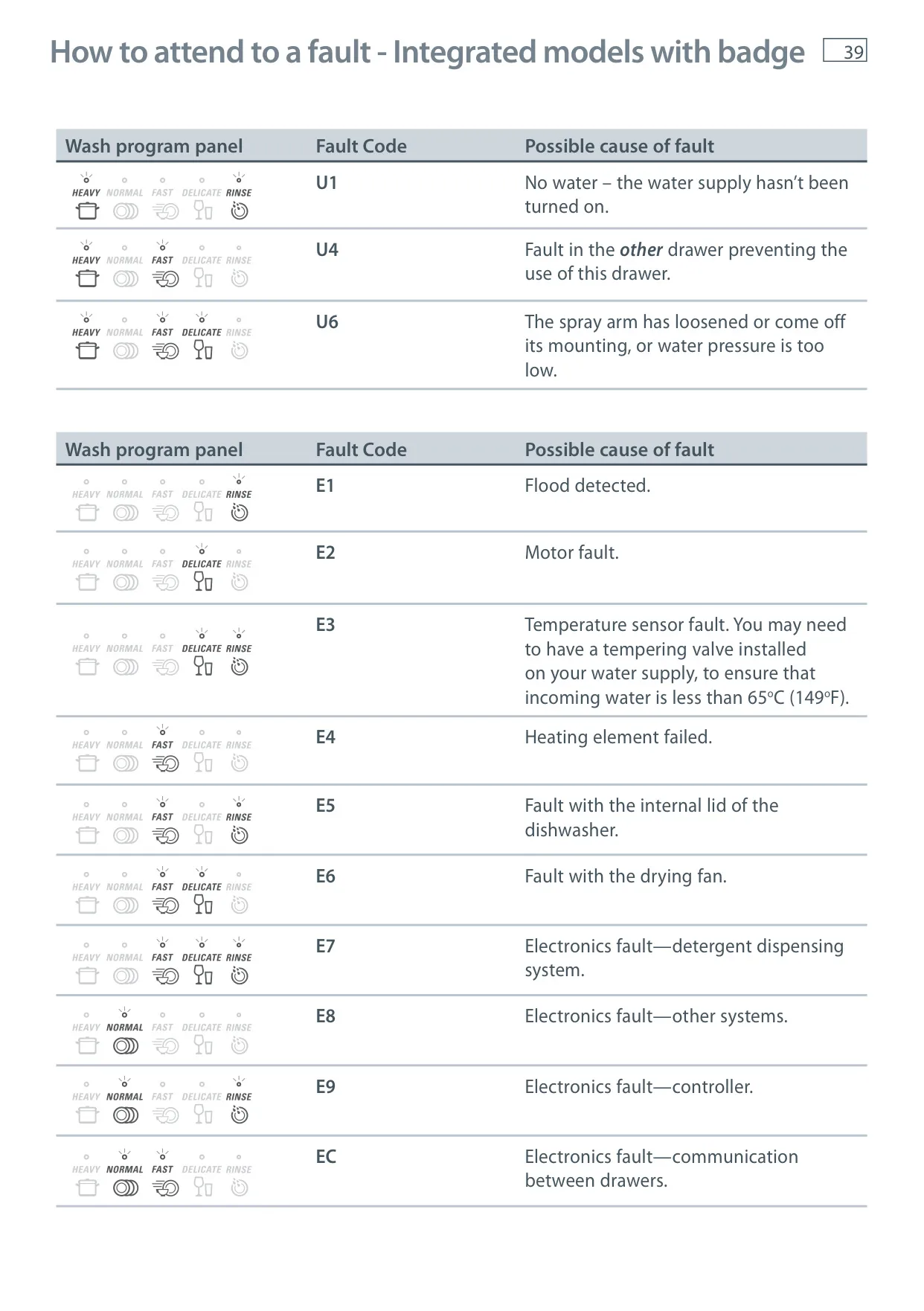
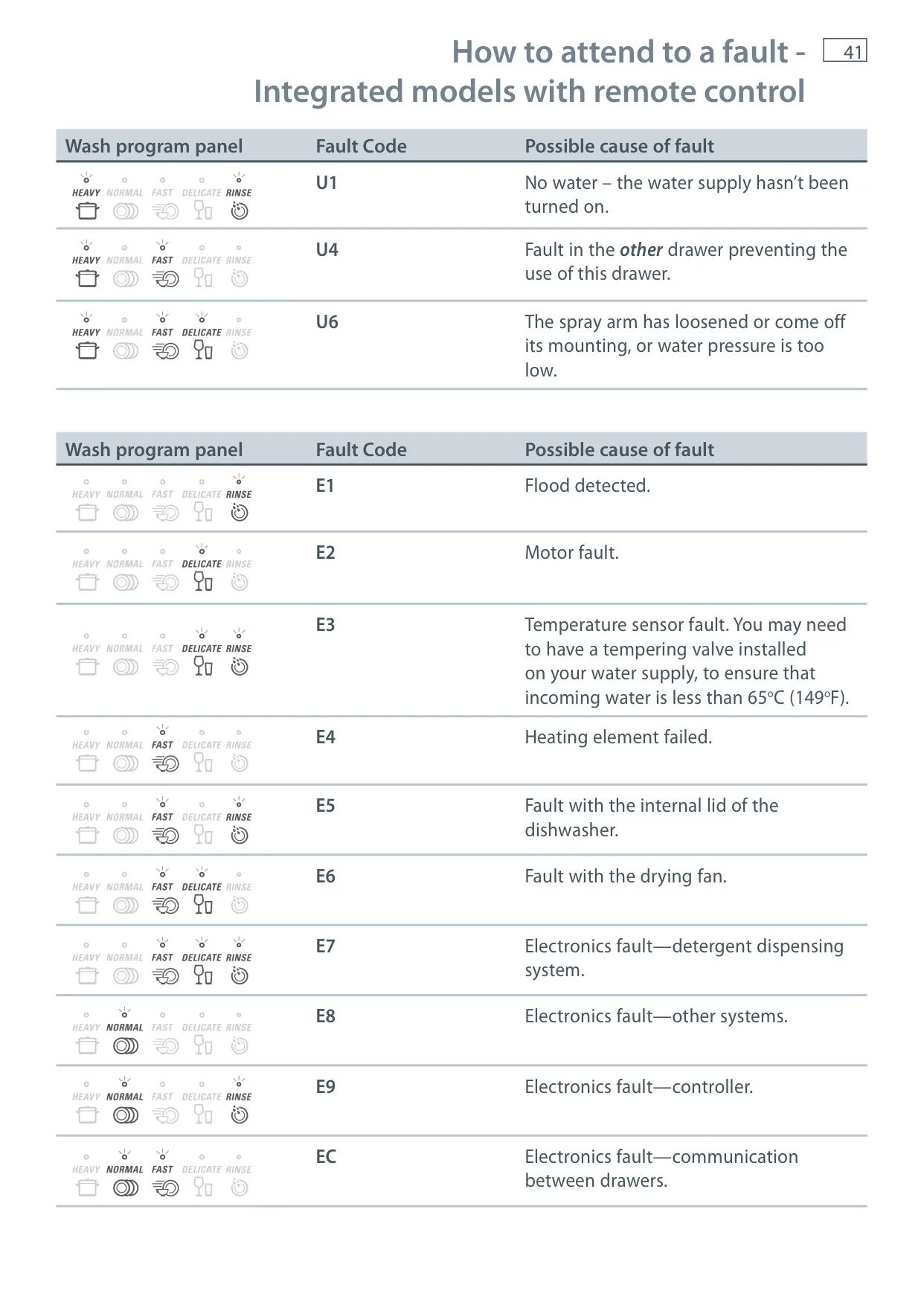
Your dishwasher will self-diagnose and alert you by beeping continuously. A fault code will also be displayed on the wash program panel inside the drawer (and on the electronic display for Classic models).
What does a 'U' code fault mean on my Fisher & Paykel DishDrawer?
'U' codes typically indicate user-attributable issues. For instance, U1 means no water supply (turn on water), U4 points to a fault in the other drawer (if dual), and U6 suggests a loose spray arm or low water pressure. The manual provides specific troubleshooting steps for each 'U' code.
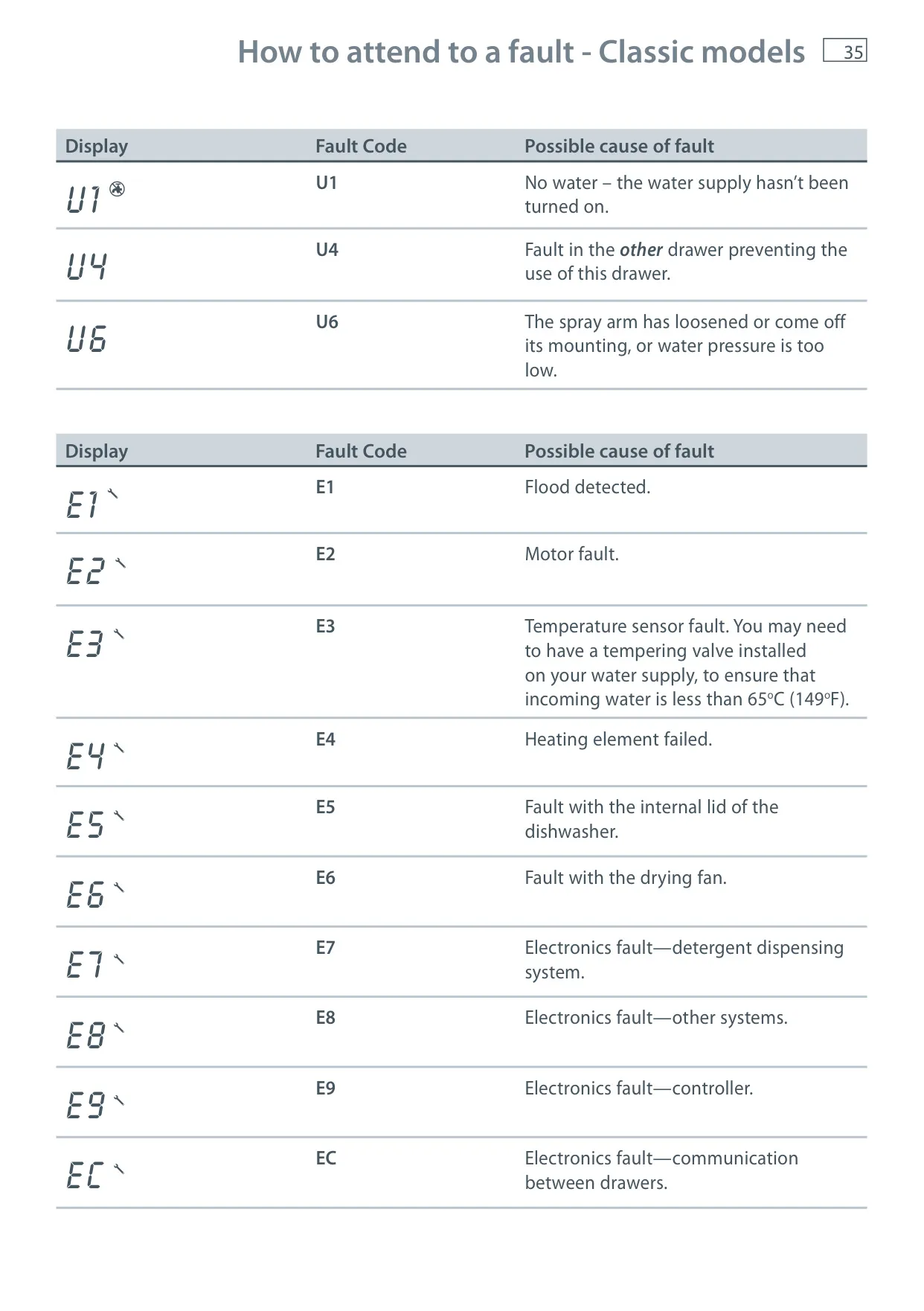
What does an 'E' code fault signify, and how should I address it?
'E' codes generally point to internal technical faults such as flood detection (E1), motor fault (E2), heating element failure (E4), or electronic system errors (E7, E8, E9, EC). These often require attention from a qualified service technician. After noting the code, disconnect power and water, then contact Customer Care.